

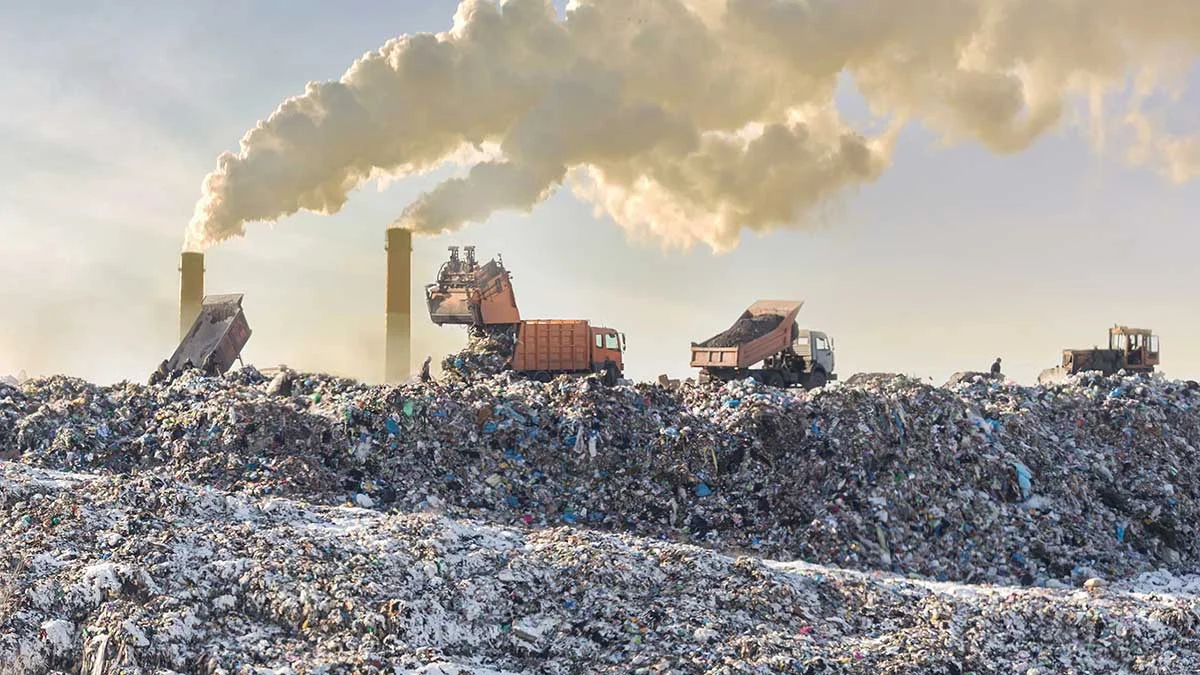
Imagine a global marketplace where for every $100 generated, $31 is quite literally set on fire. It is not lost in a market crash, nor is it sitting in a high-yield savings account. It is simply evaporated—transformed into rotting food, prematurely discarded electronics, and wasted industrial heat. This is not a hypothetical scenario; it is the current reality of our global economy.
According to the groundbreaking Circularity Gap Report 2026, produced by the research organization Circle Economy in collaboration with Deloitte, the world is hemorrhaging value at an unprecedented scale. The report identifies a staggering $29 trillion “Value Gap”—the chasm between the economic wealth we create and the immense value we allow to slip through our fingers annually.
The Magnitude of the Value Gap
The global economy is currently valued at approximately $96 trillion. The Circularity Gap Report 2026 reveals that nearly 31% of that output is squandered. For years, environmentalists have tracked the circularity of our economy by measuring the percentage of materials successfully reused or recycled. The trend has been disheartening: from 9.1% in 2018, the circularity rate dropped to a dismal 7.2% in 2023. This means more than 92% of the materials extracted from the Earth are used once—or never at all—before being relegated to landfills, incinerators, or the environment.
By shifting the metric from "weight of waste" (pounds of plastic or steel) to "financial cost" (trillions of dollars), researchers are attempting to bridge the language barrier between sustainability advocates and corporate boardrooms. When presented with the loss of $29 trillion, the issue stops being a niche ecological concern and becomes a primary fiscal imperative for finance ministers, investors, and CEOs.
A Chronology of Inefficiency: How We Arrived Here
To understand the current crisis, one must look at the evolution of the "take-make-waste" model that has dominated the post-industrial era.
- The Post-War Industrial Boom (1950s–1980s): The global economy prioritized throughput. Efficiency was measured by how much a factory could produce, not by how long a product would last. This era solidified the concept of "planned obsolescence," where products were designed to be replaced rather than repaired to keep production lines humming.
- The Globalized Supply Chain (1990s–2010s): As manufacturing migrated to lower-cost regions, the complexity of products increased. Electronics, in particular, became "black boxes" that were intentionally glued or soldered shut, making them nearly impossible to repair without specialized, proprietary tools.
- The Circularity Awareness Phase (2018–2023): The first Circularity Gap Reports highlighted the decline in material reuse. The data showed that despite the rise of recycling programs, the sheer volume of virgin material extraction was outpacing our ability to loop those materials back into the economy.
- The Financial Realization (2026 and Beyond): The latest report marks a paradigm shift. By assigning a dollar value to waste, the narrative has moved from "we are running out of resources" to "we are failing to manage our capital."
The Anatomy of Waste: Where the Money Disappears
The $29 trillion loss is not distributed evenly. It is systemic, embedded deep within the lifecycle of the goods we rely on daily. The report categorizes these losses into five primary domains:
- Extraction and Harvesting: The initial costs of mining and logging that are lost when raw materials are not captured post-use.
- Manufacturing Inefficiency: The energy and material waste generated on factory floors during the creation of products.
- The "Use Phase" (The Biggest Culprit): Perhaps the most alarming finding is that 40% of the total waste—roughly $12 trillion—occurs after a product reaches the consumer. This happens when a $1,200 smartphone is discarded after 18 months due to a cracked screen or a software update that slows performance, or when a high-end appliance is junked because a single, easily replaceable part fails.
- Distribution and Logistics: The cost of transporting items that are never sold or that break in transit.
- End-of-Life Disposal: The lost value of materials trapped in landfills that could have been recovered for future production.
Why Things Break Too Soon: The Culprit of Premature Obsolescence
The report places the blame squarely on "premature obsolescence." We have built an economy where products are designed to die. Whether through software-induced slowdowns, proprietary fasteners that prevent DIY repairs, or the use of cheap, non-durable components, companies have incentivized the replacement cycle over the maintenance cycle.
The financial cost of this design philosophy is roughly $7.5 trillion annually—the amount lost when long-lasting assets like buildings, industrial machinery, and consumer electronics are retired well before their true useful life has concluded.
Policy Shifts and Official Responses
Governments are beginning to recognize that they cannot legislate their way out of a climate crisis without addressing the economic inefficiency of waste.
The European Union is at the forefront of this shift, with the "Right to Repair" law set to take effect across member states in July 2026. This legislation mandates that manufacturers provide access to repair manuals and spare parts, effectively ending the era of the "disposable" appliance. In the United States, a growing movement is gaining traction; more than a quarter of the American population now resides in states with some form of right-to-repair legislation, putting significant pressure on the electronics and automotive industries.
Corporate leaders, while historically resistant to these regulations, are beginning to see the competitive advantage. Some forward-thinking startups are now specializing in the recovery of rare earth metals from solar panels and batteries—materials that were once considered "economically unrecoverable."
Implications: A Call to Action
For the consumer, the Circularity Gap Report 2026 offers a challenging message: recycling is a mitigation strategy, not a solution. The report argues that true economic efficiency comes from three pillars:
- Using less: Reducing consumption of unnecessary goods.
- Using longer: Investing in products built to endure and choosing repair over replacement.
- Using better: Supporting brands that design for modularity and offer service-based models (such as leasing rather than owning).
For corporations, the report is a "warning shot." The trillions of dollars currently lost to the landfill represent an untapped market. Businesses that transition from selling products to selling "performance" or "longevity" will likely capture the next wave of economic growth.
Conclusion: Turning the Tide
While the researchers admit that the $29 trillion figure carries a margin of error of approximately $5 trillion, the scale of the problem is undeniable. The data provides a bridge between environmental activism and hard-nosed finance.
The question for the next decade is whether global markets will continue to treat this 31% waste as an "externalized cost" or begin to view it as the single greatest investment opportunity in modern history. As the report concludes, the circular economy is no longer just a climate solution—it is the only way to balance the global ledger. For an economy that has run on "take, make, and waste" for a century, the bill is finally coming due. Ignoring it is no longer an option; the numbers are now too large to look away from.
