

By Wyatt Gordon
Note: This article is an expanded continuation of a series exploring the Washington Metropolitan Area Transit Authority’s (WMATA) financial instability. Part one, detailing the historical roots of this "death spiral," can be found here.
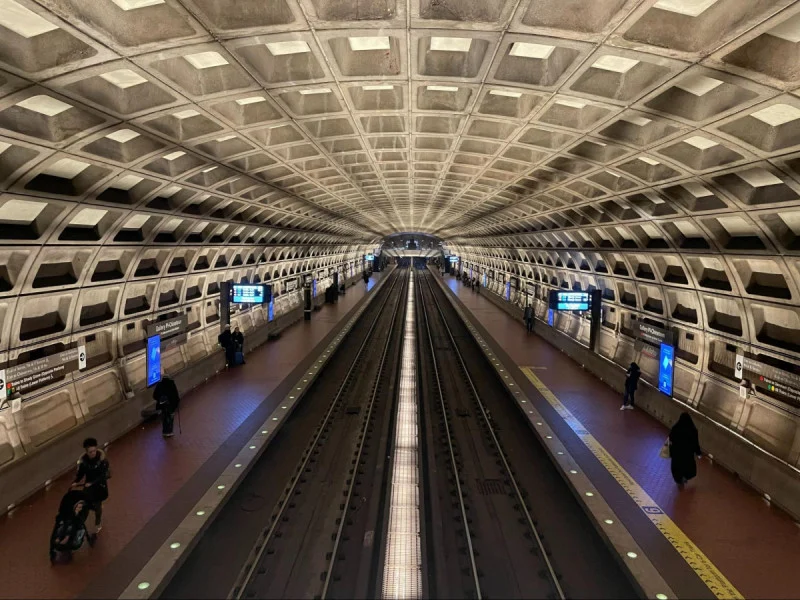
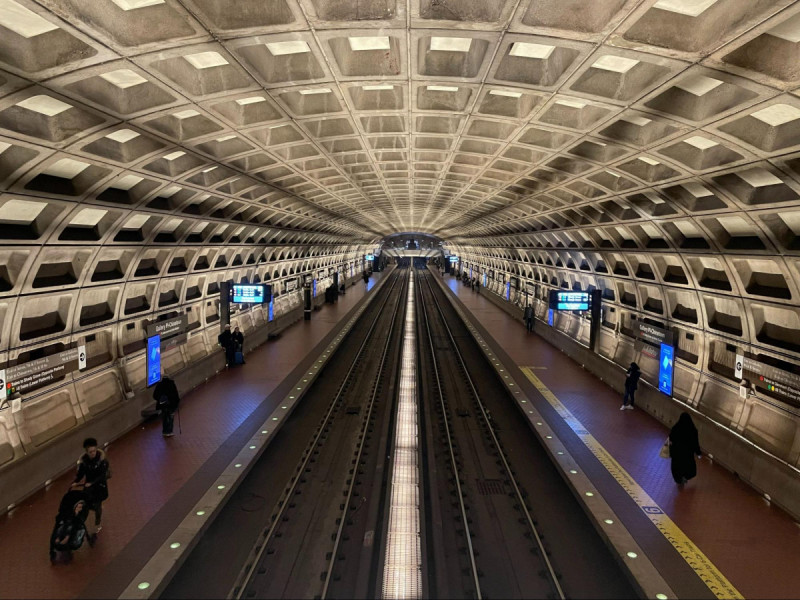
The Washington Metropolitan Area Transit Authority (WMATA) stands at a perilous crossroads. With the clock ticking toward a mid-2024 deadline, the region’s primary transit lifeline faces a staggering, potential 67% reduction in service. This "fiscal cliff"—the byproduct of pandemic-era ridership declines, inflationary pressures, and a fundamentally flawed funding model—threatens to dismantle the economic backbone of the nation’s capital. As state legislatures in Virginia and Maryland rush to finalize their annual budgets, the pressure to secure a stopgap solution has reached a fever pitch.
The Mechanics of the Crisis
The complexity of coordinating a rescue for Metro is amplified by the competitive nature of the three jurisdictions it serves. Washington, D.C., Maryland, and Virginia have historically vied for federal headquarters, corporate relocations, and high-profile entertainment venues, often neglecting the shared infrastructure that makes their regional integration possible.
WMATA’s financial distress is not a new phenomenon; it is a structural inheritance. The transit authority was founded on the flawed premise that farebox revenue could sustain operations, a model that failed to account for the immense costs of bus and paratransit services or the necessity of systemic maintenance. Today, with the post-pandemic shift toward remote work, the traditional "nine-to-five" commuter model that fueled Metro’s budget has evaporated.
Chronology of the Funding Gap
- Pre-2020: Metro operates on a delicate balance of farebox recovery and state/local subsidies, masking long-term structural deficits.
- 2020–2023: Federal COVID-19 relief funding acts as a life raft, allowing WMATA to maintain operations despite plummeting ridership.
- Mid-2023: WMATA leadership signals that the "fiscal cliff" will arrive in 2024 as federal emergency funds dry up.
- January 2024: Maryland and D.C. propose emergency budget allocations; Virginia begins high-stakes legislative negotiations.
- July 2024: The new fiscal year begins; without a permanent funding agreement, the agency faces existential service cuts.
Maryland’s Strategic Pivot
Maryland’s Transportation Trust Fund is currently staring down a $3 billion deficit over the next six years, casting doubt on the state’s ability to provide a consistent lifeline to Metro. Despite this, the administration of Governor Wes Moore has signaled a robust commitment to public transit.
Maryland Department of Transportation (MDOT) officials have proposed a significant increase in subsidies: $150 million for fiscal years 2025 and 2026, scaling up to $250 million annually through 2029. This infusion sits atop the mandatory three percent annual subsidy increases established under the 2018 tri-jurisdictional capital funding agreement.
"If other jurisdictions provide comparable funding under their relative subsidy levels, that allows us to have a reasonable conversation about fare policies, service plans, and the overall fiscal management strategy for WMATA," said Drew Morrison, acting director of MDOT’s Washington Area Transit Office.
Maryland’s readiness to act stems from its direct oversight of the Maryland Transit Administration (MTA). By managing Baltimore’s transit system through similar headwinds—declining revenue and rising labor costs—the state has already implemented many of the "austerity" measures that WMATA is only now beginning to grapple with.
Virginia: A Balancing Act
In Virginia, the challenge is distinct. To meet its obligations, the Commonwealth must identify $130 million in funding, split evenly between the state government and the Northern Virginia localities served by Metro.
The political atmosphere in Richmond is fraught with competing priorities. Lawmakers are currently navigating a legislative "brawl" involving tax reform, school funding, and the controversial proposed Potomac Yard arena. While some observers speculated that Metro funding might be used as a political bargaining chip for the arena, State Senate Majority Leader Scott Surovell dismissed the notion.
"I don’t think Governor Youngkin is hanging WMATA funding on the arena deal," Surovell stated. "If he is, that is news to me because Metro needs to be solvent and funded whether there is an arena or not. All of the construction cranes in Northern Virginia are around Metro stations. Nobody is building anywhere else."
Data supports Surovell’s urgency. Recent population reports indicate that Fairfax County is experiencing a demographic shift, making the retention of "top talent" and the viability of transit-oriented development more critical than ever.
The District’s Ultimatum
The District of Columbia has committed to providing up to $200 million in additional funding, but with a firm set of conditions. In a joint letter, Mayor Muriel Bowser, Council Chairman Phil Mendelson, and Councilmember Charles Allen outlined a framework that demands a complete renegotiation of WMATA’s funding formula.
The District is currently grappling with severe office building devaluations. As remote work becomes a permanent fixture of the D.C. labor market, downtown is losing its identity as a commuter hub. "The future of downtown is not a commuter rail," Councilmember Allen noted. "The future of downtown is a thriving neighborhood where people live, work, and play, and to do that, you’ve got to have robust transit."
Agency Austerity: Efficiency Under Pressure
WMATA General Manager Randy Clarke has been tasked with an impossible mission: maintain high-quality service while cutting costs to the bone. To date, the agency has identified $50 million in recurring savings through the consolidation of call centers, the reduction of non-revenue vehicle fleets, and the centralization of software procurement.
Furthermore, WMATA is tackling the chronic issue of fare evasion. By installing higher, more secure faregates across the system, the agency has already seen a tenfold reduction in evasion at pilot stations. While this is a financial win, it also represents a cultural shift in how the agency manages its public image and passenger interaction.
However, internal austerity has its limits. A wage freeze for non-represented employees has saved $38 million, but Clarke is candid about the risks. "The economy is doing very well, and it is very hard to hire," he noted. "When we say ‘no raises,’ we just have to be honest that this does hurt recruitment and retainment."
The Federal Elephant in the Room
Perhaps the most glaring omission in the regional rescue effort is the federal government. Before the pandemic, federal employees accounted for roughly 40% of rail ridership; today, that figure has plummeted to 14%. Despite occupying two seats on the WMATA board, the federal government has significantly reduced its contribution to employee transit benefits.
"We have inherited this system from the feds, and we are losing leverage with them every day," says Laura Miller Brooks of the Federal City Council. Without federal intervention or a restructuring of the transit compact, the deficit could balloon to $1.5 billion by 2029.
Implications for the Future
The current strategy of "one-time patches" is, by all accounts, unsustainable. The Washington region relies on WMATA to move its workforce, reduce its carbon footprint, and drive economic growth. Yet, the system remains a political orphan, tethered to a 1966 compact that no longer reflects modern realities.
The path forward requires more than just budget reconciliation; it requires a fundamental re-evaluation of how the region views public transit. Whether through the Metropolitan Washington Council of Governments (MWCOG) or a formal renegotiation of the WMATA Compact, the region must move toward a permanent, dedicated funding stream.
As the budget deadlines pass, the question remains: will the region’s leaders rise to the occasion, or will they allow the transit system to slide further into a death spiral? For now, the trains continue to run, but the tracks are increasingly fragile. The next few months of legislative session will determine not just the budget for the coming fiscal year, but the long-term viability of the Greater Washington region itself.
