

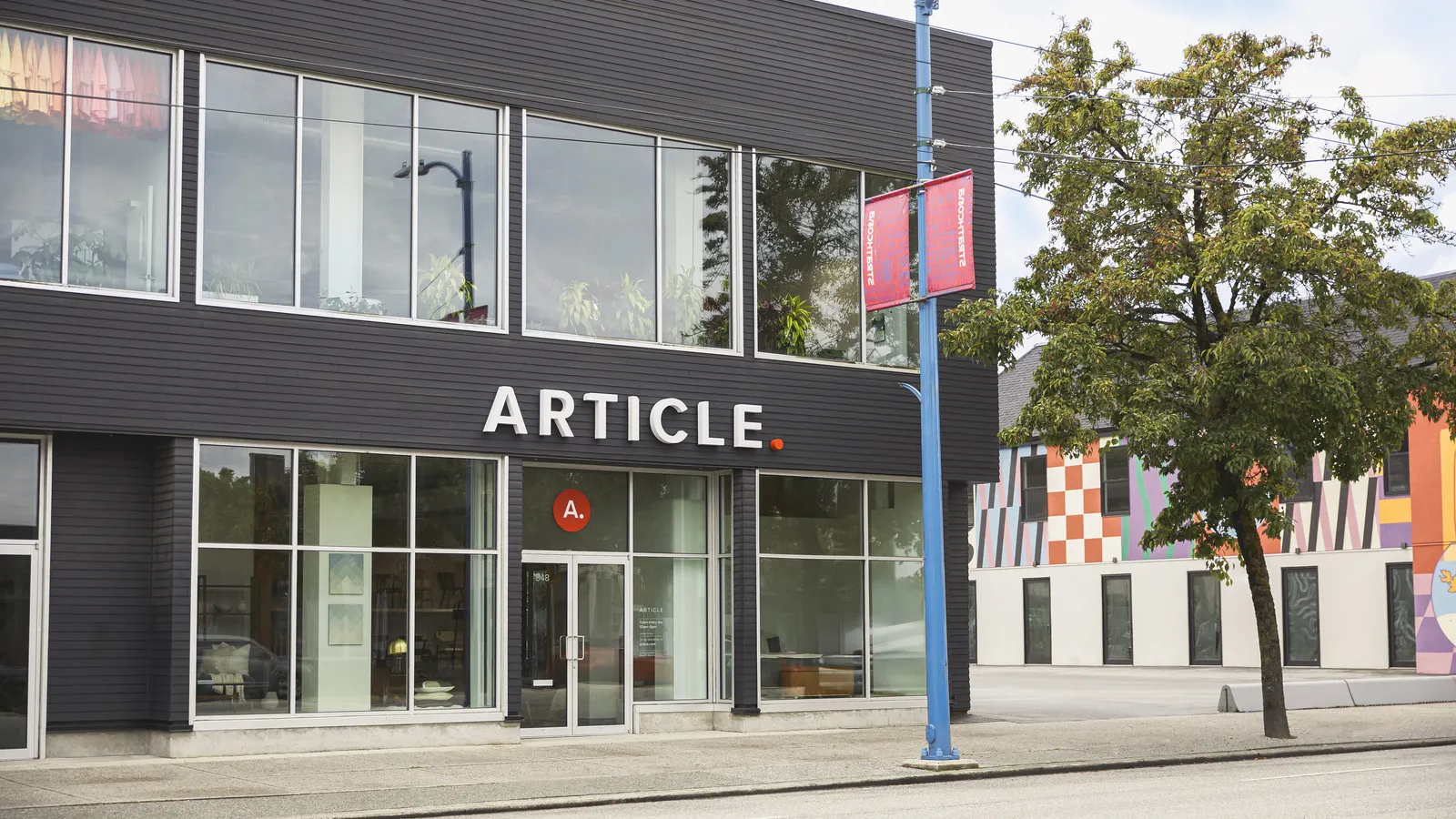
Vancouver, BC – In a significant strategic maneuver, online furniture retailer Article is expanding its physical retail presence, opening new showrooms in key U.S. markets. This move signals a deliberate pivot towards a hybrid brick-and-mortar and e-commerce model, a decision underscored by the company’s deep reliance on the American consumer and a desire to solidify its position in a challenging home furnishings landscape. The expansion comes after a tumultuous period for the company, marked by rapid pandemic-fueled growth followed by a sharp contraction and subsequent rightsizing, a narrative echoed across the broader furniture sector.
Laying the Foundation: Article’s U.S. Market Dominance and Retail Ambitions
Article’s foray into physical retail is not a departure from its core business but rather an "extension of the business we built online," according to Aamir Baig, co-founder and CEO of Article. This sentiment highlights the company’s deep understanding of its customer base and its commitment to a measured, data-driven approach to expansion. The United States represents Article’s largest customer market, accounting for a substantial 80% of its revenue, as reported by The Globe and Mail in March. Within this crucial market, California and Washington State stand out as top performers in e-commerce, solidifying their importance for the company’s growth trajectory.
"The West Coast has always been core to our business and represents roughly a quarter of total purchases," Baig stated in a press release. "It’s where our company is headquartered and where we built early infrastructure to support customer demand." This geographical connection, coupled with strong existing sales figures, makes California and Washington logical and "natural next steps" for Article’s physical retail expansion.
The initial wave of new showrooms will strategically place Article within vibrant commercial hubs. The San Francisco store will be situated in the city’s Design District, a locale synonymous with interior design and home furnishings. Concurrently, the Bellevue location will be housed within the Bellevue Collection, an upscale shopping destination situated just outside downtown Seattle. Both of these new retail spaces are designed to offer more than just a place to browse. They will feature "retail vignettes" designed to inspire customers with curated room settings, comprehensive "swatch libraries" allowing for tactile exploration of materials, and crucially, complimentary interior design services. This integrated approach aims to bridge the gap between online browsing and in-person purchasing, offering a personalized and elevated customer experience.
Article has signaled that these initial openings are just the beginning. The company has outlined plans for up to five additional store locations by early 2027, with Vancouver and Toronto in Canada also slated to receive new showrooms. This ambitious expansion plan indicates a long-term vision for Article, one that embraces a physical presence as a vital component of its overall brand strategy.
A Decade of Disruption: Article’s Rollercoaster Journey Through the Pandemic Era
The current expansion efforts by Article are taking place against the backdrop of a complex and often unpredictable business environment. The company’s 13-year history has been marked by a dramatic arc, significantly shaped by the COVID-19 pandemic and its subsequent economic fallout.
In the early stages of the pandemic, like many businesses catering to the home, Article experienced an unprecedented surge in demand. This boom was largely fueled by lockdowns, a shift towards remote work, and a heightened focus on home improvement and comfort. In March 2022, Article announced a remarkable 45% year-over-year revenue increase, underscoring the success of this period. The company also proudly stated that it had been profitable since 2015, a testament to its early business model.
However, the sustained economic impact of the pandemic and evolving consumer behavior soon presented significant challenges. Just five months after announcing its impressive revenue growth, in August 2022, Article made the difficult decision to lay off 216 employees, representing 17% of its workforce. In a candid statement to staff, Baig attributed this downsizing to a misjudgment of the longevity of the COVID-era demand surge.
"As a result, our financial projections showed that we were operating the business at a size larger than current demand would sustain," Baig explained at the time. "Put simply, we were living beyond our means. I needed to resize our business to restore our position of financial strength." This period of "rightsizing," as Baig termed it, was a difficult but necessary recalibration. By March 2024, speaking with The Globe and Mail, Baig confirmed that these measures had been effective, with Article returning to profitability. The company, however, now operated with a more streamlined workforce of approximately 500 employees, a significant reduction from the peak of around 1,300 in 2022. This narrative of rapid ascent, followed by a sharp contraction and eventual stabilization, is a common theme for many companies that thrived during the pandemic.
Navigating a Shifting Landscape: Industry-Wide Challenges and Emerging Trends
Article’s experience is not an isolated incident within the furniture and home furnishings sector. The entire industry witnessed a substantial boom during the pandemic, driven by increased time spent at home and a desire for comfortable, functional living spaces. However, this surge proved unsustainable as economies reopened and consumer priorities shifted.
Several macroeconomic factors have contributed to a challenging post-pandemic environment for home retailers. A depressed U.S. housing market, characterized by higher interest rates and reduced new construction, has directly impacted demand for home goods. Furthermore, a decline in discretionary spending, as consumers face inflationary pressures and economic uncertainty, has led to a more cautious approach to non-essential purchases. Fluctuating tariff policies have also added complexity and cost to the supply chain for many furniture manufacturers and retailers.
Analysts have consequently projected a period of continued struggle for home furnishings stores. Forecasts for 2026 indicate that the sector may continue to face headwinds, with demand remaining subdued. This outlook underscores the strategic importance of Article’s decision to diversify its customer touchpoints and reinforce its brand presence through physical stores, even as the broader e-commerce landscape evolves.
Resilience and Adaptation: Other Players in the Evolving Home Goods Market
Despite the widespread challenges, the home furnishings sector is not without its success stories. Several companies are demonstrating resilience and adaptability, navigating the post-pandemic landscape with innovative strategies.
Bob’s Discount Furniture, for instance, has shown robust performance, reporting an impressive 8.5% revenue growth in its first quarter. This suggests that value-oriented retailers may be well-positioned to capture consumer spending even in uncertain economic times.
Ikea, the global furniture giant, is also undertaking a significant expansion of its U.S. retail footprint, signaling continued investment in physical stores as a key component of its growth strategy. This move by a well-established player reinforces the notion that brick-and-mortar retail remains relevant, particularly when integrated with a strong online presence.
Wayfair, another prominent digitally native furniture retailer, provides a compelling case study of a company adapting to the changing market. Wayfair has been actively gaining market share in a competitive environment and is also expanding its own brick-and-mortar presence. The opening of its second large-format store in Atlanta is a testament to the evolving strategy of online retailers, recognizing the value of physical showrooms for customer engagement and sales conversion. These examples illustrate that while the home furnishings market is undergoing a significant transformation, strategic adaptation and a multi-channel approach can lead to continued success. Article’s expansion into physical retail can be seen as a move to align with these emerging trends and secure its long-term viability in an increasingly dynamic market.
Implications and Future Outlook: Article’s Strategic Gamble in a Hybrid Retail World
Article’s deliberate expansion into physical retail represents more than just opening new stores; it’s a strategic bet on a hybrid future for furniture commerce. By establishing showrooms in key U.S. markets, particularly on the West Coast, the company aims to:
- Enhance Customer Experience: The inclusion of interior design services, retail vignettes, and swatch libraries in its new stores directly addresses a key limitation of online furniture shopping – the inability to physically interact with products and receive expert guidance. This move aims to build stronger customer relationships and foster brand loyalty.
- Mitigate E-commerce Volatility: The pandemic’s impact highlighted the inherent fluctuations in online demand. A physical retail presence can provide a more stable revenue stream and act as a buffer against the unpredictable nature of e-commerce trends.
- Strengthen Brand Presence and Trust: Brick-and-mortar locations serve as tangible representations of the brand, increasing visibility and building a sense of trust and credibility. For a company primarily known for its online operations, this physical manifestation can be crucial for reaching a broader audience.
- Leverage Existing Infrastructure: As Baig noted, the West Coast has always been a core market. The existing infrastructure and customer base in regions like California and Washington provide a solid foundation upon which to build and support new retail operations.
- Capitalize on Design District Appeal: Locating in areas like San Francisco’s Design District positions Article alongside other design-focused businesses, attracting a targeted demographic of consumers actively seeking stylish and high-quality home furnishings.
The success of this strategy will depend on Article’s ability to seamlessly integrate its online and offline operations, ensuring a consistent brand experience across all touchpoints. The company’s past challenges, while overcome, serve as a reminder of the need for agile management and a keen understanding of market dynamics.
The broader implications for the furniture industry are significant. Article’s move, alongside similar strategies by other digitally native brands like Wayfair and established players like Ikea, suggests a definitive shift towards a blended retail model. As consumer expectations evolve, companies that can effectively bridge the digital and physical realms are likely to emerge as leaders in the future of home furnishings. Article’s strategic pivot is a clear indication that in today’s complex retail environment, a robust online presence is no longer sufficient on its own; a well-executed physical retail strategy is becoming an essential component of long-term success.
