

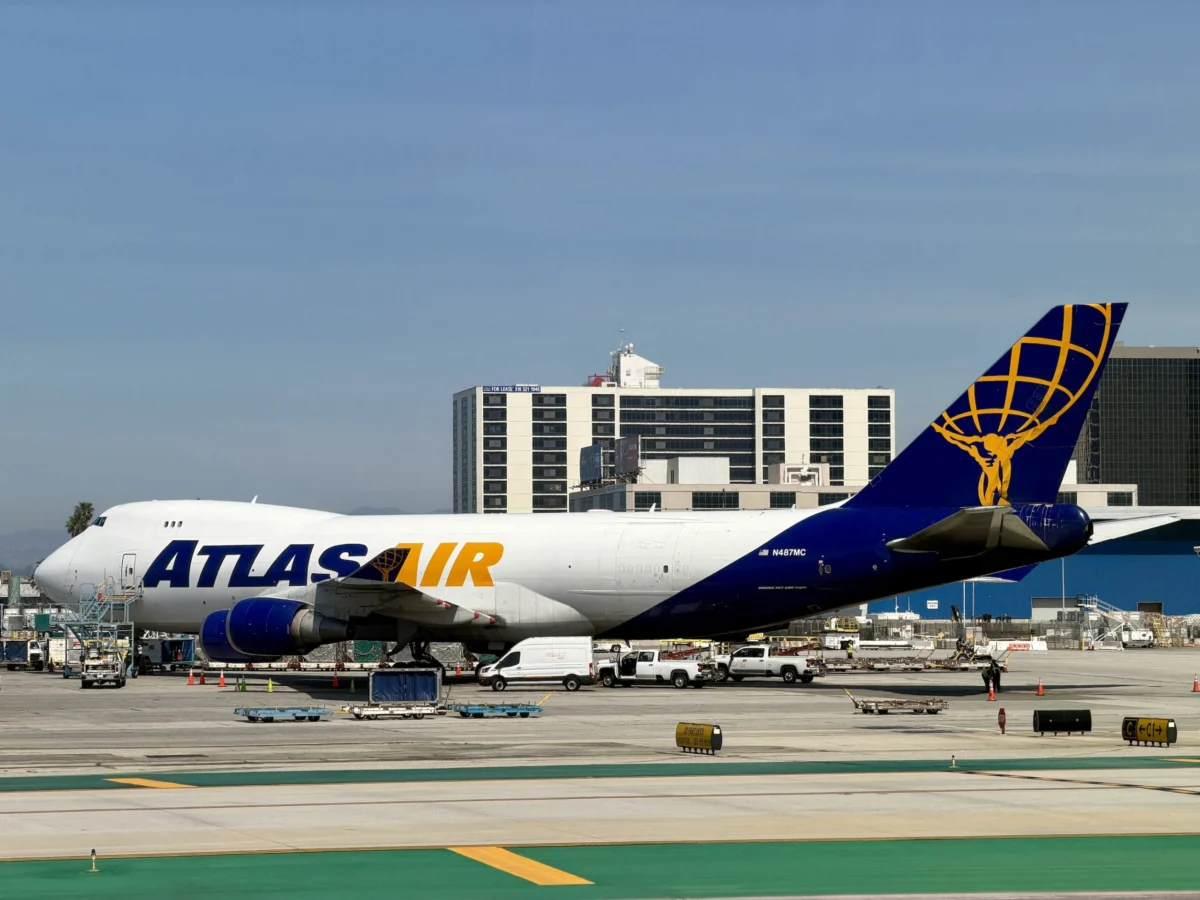
WASHINGTON D.C. — In a move reflecting the deepening economic anxieties triggered by the ongoing conflict in the Middle East, a powerful coalition of American air cargo carriers has launched an intensive lobbying campaign targeting the Trump administration. The National Air Carrier Association (NACA), representing industry titans such as Atlas Air and Amerijet, is formally requesting a temporary suspension of federal excise taxes on commercial aviation fuel. The industry argues that such a reprieve is essential to maintain supply chain stability until global energy markets recover from the shockwaves of the war in Iran and the subsequent closure of the Strait of Hormuz.
The request comes at a critical juncture for the global logistics sector. As the war enters its fourth month, the resulting maritime blockades and supply disruptions have sent jet fuel prices into a volatile spiral, threatening to pass significant costs onto businesses and consumers already grappling with inflationary pressures.
Main Facts: A Sector Under Siege
The crux of the current crisis lies in the strategic bottleneck of the Strait of Hormuz. Traditionally, this narrow waterway facilitates the transit of approximately 20 percent of the world’s total petroleum and natural gas supply. Since the outbreak of hostilities in late February, traffic through the Strait has effectively ceased, creating a vacuum in the global energy market that has proven difficult to fill through alternative routes.
For the air cargo industry, which operates on razor-thin margins and is highly sensitive to fluctuations in operating costs, the fuel spike represents an existential threat. The National Air Carrier Association (NACA) has positioned the tax suspension not as a subsidy, but as a necessary emergency measure to prevent a systemic collapse of air freight capacity.
The specific proposal involves a moratorium on the federal commercial jet fuel tax, currently set at 4.4 cents per gallon. While seemingly small on a per-gallon basis, the cumulative impact on long-haul cargo flights—which can consume tens of thousands of gallons per trip—is immense. For non-commercial aviation, the tax rate is even higher, at 21.9 cents per gallon, placing a disproportionate burden on charter operators and supplemental carriers.
Chronology: From Conflict to Market Volatility
The current crisis followed a rapid and destabilizing timeline that began in the first quarter of the year:
- Late February: Hostilities break out in Iran, leading to an immediate heightened security posture in the Persian Gulf.
- February 27: The baseline price for jet fuel sits at a manageable $99.40 per barrel.
- March: As the conflict escalates, insurance premiums for tankers skyrocket, and the Strait of Hormuz is effectively closed to commercial traffic. Global supply chains begin to pivot, but the immediate shortfall triggers panic buying in the energy sector.
- April 6: Jet fuel prices reach a historic peak of $209.00 per barrel, representing a more than 100 percent increase in just five weeks.
- Late April – Early May: Market volatility continues, though a slight cooling begins as alternative supply routes from West Africa and the Americas are established.
- May 15: Data from the International Air Transport Association (IATA) and Platts indicates the global average jet fuel price has settled at $162.55 per barrel. While down 22.2 percent from the April peak, it remains 63.5 percent higher than pre-war levels.
- Late May: NACA and other industry groups formalize their request to the White House, citing the "unsustainable" nature of current pricing.
Supporting Data: The Economic Weight of Aviation Fuel
To understand the urgency of the lobbying efforts, one must look at the raw data governing the aviation economy. According to IATA, fuel typically accounts for 20 to 30 percent of an airline’s total operating expenses. At current prices, that figure can climb to nearly 50 percent for cargo carriers operating older, less fuel-efficient fleets.
The Pricing Gap
Despite a recent five-week downward trend in fuel prices, the industry remains in a state of "price shock." The current average of $162.55 per barrel is still significantly higher than the budgetary forecasts most airlines created at the start of the fiscal year.
| Period | Price Per Barrel (Avg) | % Change from Feb 27 |
|---|---|---|
| Pre-War (Feb 27) | $99.40 | — |
| Peak (April 6) | $209.00 | +110.3% |
| Current (May 15) | $162.55 | +63.5% |
The Tax Burden
The federal excise tax serves as a dedicated revenue stream for the Airport and Airway Trust Fund. However, NACA argues that in times of national emergency, the immediate health of the supply chain must take precedence over long-term infrastructure funding.
- Commercial Jet Fuel: 4.4 cents/gallon
- Non-Commercial Jet Fuel: 21.9 cents/gallon
For a heavy-lift cargo aircraft like a Boeing 747-8F, which can carry over 50,000 gallons of fuel, the commercial tax adds approximately $2,200 to each long-haul flight. For a fleet operating hundreds of flights weekly, these costs aggregate into millions of dollars in additional monthly overhead.
Official Responses: Washington and the Legislative Path
The Trump administration has signaled a willingness to entertain tax relief, though the specifics remain a point of contention between the executive and legislative branches.
The Administration’s Stance
President Donald Trump has expressed public support for a federal gas tax suspension, though his initial comments focused primarily on non-aviation fuels (gasoline and diesel) to provide relief to American commuters. However, sources within the administration suggest that the White House is "actively reviewing" the NACA proposal, recognizing that air cargo is the backbone of the "just-in-time" delivery economy.
Legislative Initiatives
In Congress, two primary tracks for relief have emerged:
- The Gas Tax Suspension Act (Senate): Introduced by Senator Josh Hawley (R-Mo.), this bill seeks to cut the tax rate on non-aviation gasoline and diesel to zero for a 90-day period. While it offers relief to truckers and motorists, it currently excludes the aviation sector, a gap NACA is working to bridge.
- The Comprehensive Transportation Relief Bill (House): Representative Jeff Van Drew (R-N.J.) has introduced more expansive legislation. His bill would suspend both ground and aviation fuel taxes for a period of 18 months. Van Drew argues that a 90-day window is insufficient given the likely duration of the Middle East conflict and the time required for energy markets to achieve true equilibrium.
George Novak, President and CEO of NACA, has been vocal in his support for the Van Drew approach. "A suspension of federal excise taxes would provide immediate operational relief to carriers, help preserve critical air transportation capacity, and support supply chain stability," Novak stated in a recent briefing.
Global Perspectives: The European and Asian Response
While the U.S. focuses on tax policy, other regions are adopting different strategies to mitigate the impact of the Strait of Hormuz blockage.
Europe’s Strategic Pivot
In Europe, the sentiment is surprisingly more optimistic than it was a month ago. Initially, the European Commission warned of potential jet fuel shortages by late May. However, major carriers like Ryanair and the International Airlines Group (IAG) have successfully pivoted their sourcing.
Ryanair CEO Michael O’Leary recently noted that the airline has "almost zero concerns" over supply, stating that Europe is now "very well supplied" by fuel sourced from the United States, Norway, and West Africa. This shift represents a massive logistical undertaking, effectively bypassing the Persian Gulf entirely. The European Commission remains cautious, however, noting that regional constraints could still arise if the blockage persists, and has prepared emergency fuel stocks for release if necessary.
India’s Price Freeze Demands
In Asia, the situation is more precarious. India, which is heavily dependent on Middle Eastern oil, has seen its airline sector—including Air India and IndiGo—enter crisis talks with state-run refiners. These carriers are lobbying the Indian government to freeze jet fuel prices for domestic flights until the conflict ends, citing mounting losses that could lead to a wave of bankruptcies in the sector.
Implications: The Ripple Effect on the American Economy
The push for a fuel tax suspension is not merely about protecting the profits of cargo giants; it is an attempt to head off a broader economic "ripple effect."
Inflationary Pressures
Air cargo is the primary mode of transport for high-value and time-sensitive goods. George Novak emphasized that increased fuel costs are eventually passed down to the end consumer. "From medical supplies and electronic components to flowers, perishables, and consumer goods, everything becomes more expensive for American businesses and consumers," Novak warned.
If fuel surcharges continue to rise, the cost of life-saving medications, the latest consumer electronics, and fresh food products could see double-digit price increases. In an economy already sensitive to inflation, these "hidden" costs of air freight can have a cooling effect on consumer spending.
Supply Chain Stability
Beyond price, there is the issue of capacity. If smaller, supplemental carriers are forced to ground aircraft due to fuel costs, the total "lift" available in the market decreases. This creates a bottleneck where goods sit in warehouses because it is no longer economically viable to fly them. By suspending the excise tax, the government would essentially be subsidizing the continued flow of goods, ensuring that the American supply chain does not seize up during a period of geopolitical uncertainty.
The Future of the Trust Fund
Critics of the tax holiday point out that the Airport and Airway Trust Fund relies on these taxes for modernization and safety projects. A 18-month suspension, as proposed by Rep. Van Drew, could result in a multi-billion dollar shortfall for FAA projects. Proponents argue, however, that the risk of a systemic economic slowdown far outweighs the delay of infrastructure upgrades.
As the Trump administration weighs its options, the eyes of the logistics world remain fixed on the Persian Gulf and the halls of Congress. The coming weeks will determine whether the air cargo industry receives the "operational relief" it claims is vital for the nation’s economic health, or if it must continue to navigate the most volatile energy market in a generation on its own.
