

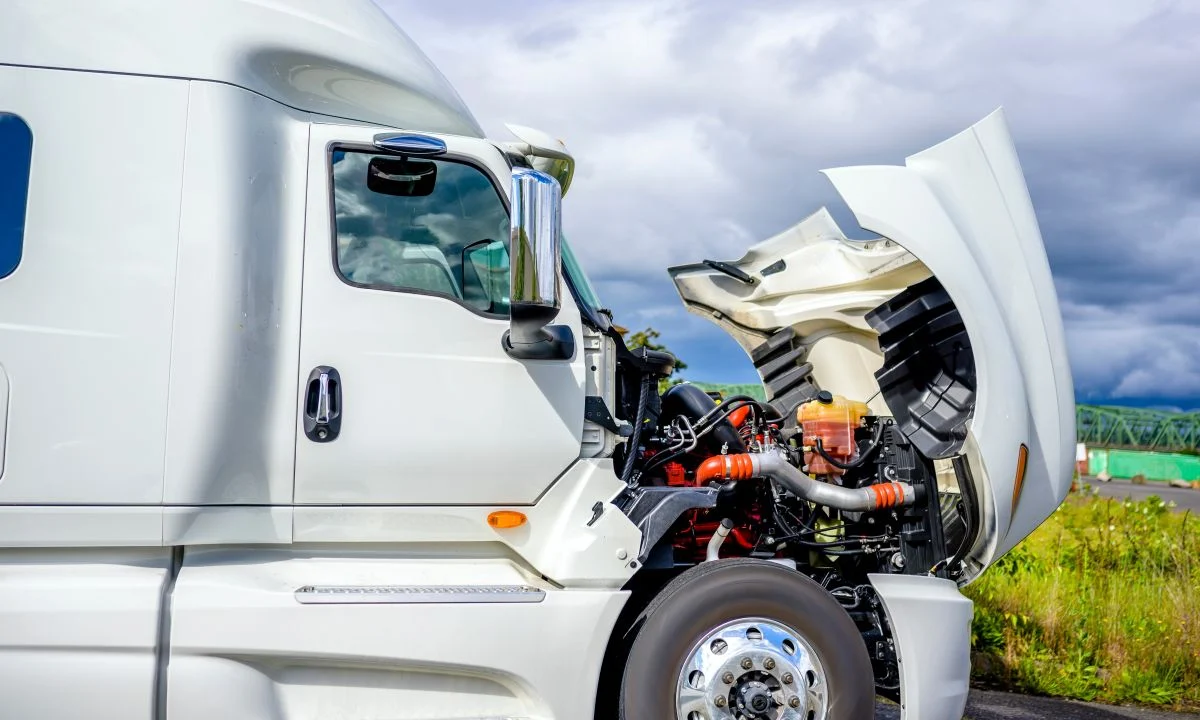
GREENSBORO, N.C. — In the high-stakes world of American logistics, the most expensive sound isn’t a roaring engine; it is the silence of a truck pulled over on the shoulder of an interstate.
When a heavy-duty Class 8 truck breaks down, the immediate repair bill is often the least of the fleet manager’s concerns. The true cost is a cascading failure: a stranded driver requiring hotel accommodations, a $2,000 towing bill, a missed delivery window that triggers contractual penalties, and a frustrated customer who may look elsewhere for their next shipment.
According to research from the American Transportation Research Institute (ATRI), this "silent killer" of profitability costs the U.S. trucking industry more than $25 billion annually in lost productivity. However, a technological shift is underway. Artificial Intelligence (AI) and machine learning are transforming maintenance from a reactive "break-fix" cycle into a predictive science, potentially saving the industry billions and stabilizing a supply chain that has been rocked by volatility.
Main Facts: The High Cost of the "Status Quo"
The logistics industry has historically operated on a "fixed-interval" maintenance schedule. Trucks were serviced every 10,000 or 25,000 miles, regardless of whether they were hauling heavy loads through the Rockies or light loads across the flatlands of the Midwest. This "one-size-fits-all" approach led to two equally expensive problems: over-maintenance of healthy vehicles and catastrophic failure of overworked ones.
Current industry data highlights the severity of the crisis:
- Direct Costs: A single roadside breakdown averages between $450 and $760 in direct repair costs.
- Total Economic Impact: When accounting for towing, driver downtime, and lost revenue, the cost of a single event can easily exceed $5,000.
- Industry Toll: The $25 billion in annual lost productivity represents a significant drag on the U.S. GDP, as 70% of all freight in America is moved by truck.
- The AI Solution: Predictive maintenance systems are now capable of analyzing over 25,000 data points per vehicle daily to identify mechanical "pre-conditions" for failure, allowing repairs to be scheduled weeks in advance.
Chronology: The Evolution of the Connected Truck
The journey from the grease-stained ledgers of the 20th century to the AI-driven dashboards of today has occurred in three distinct phases.
Phase 1: The Reactive Era (Pre-2010)
For decades, maintenance was entirely reactive. Drivers relied on "idiot lights" on the dashboard or physical symptoms—smoke, vibrations, or strange noises—to signal a problem. Data was siloed in paper logs, and fleet managers had little visibility into the health of a vehicle once it left the yard.
Phase 2: The Telematics Wave (2010–2020)
The introduction of Electronic Logging Devices (ELDs) and basic telematics began the digitization of the fleet. Trucks started "talking," sending basic GPS data and engine fault codes back to headquarters. However, this created a "data deluge" problem. Fleet managers were overwhelmed by thousands of minor alerts, many of which were "ghost" codes that didn’t require immediate action. The data existed, but the intelligence to filter it did not.
Phase 3: The AI and Predictive Pivot (2024–2026)
By late 2024, the industry reached a tipping point. Heavyweights like Volvo Trucks North America and Mack Trucks began integrating sophisticated AI models that don’t just report what is happening, but predict what will happen. In October 2024, Volvo unveiled its AI-powered "Adaptive Maintenance" program, marking the first time a major OEM (Original Equipment Manufacturer) replaced fixed service schedules with dynamic, AI-calculated intervals.
Supporting Data: The Economics of Uptime
The shift toward AI is driven by a brutal economic reality. ATRI’s 2025 operational costs report revealed that non-fuel operating expenses rose 3.6% in 2024, reaching the highest levels ever recorded. With average operating margins squeezed below 2% for many sectors, the difference between a profitable quarter and a loss often comes down to vehicle "uptime."
The McKinsey Projection
A landmark study by McKinsey & Company estimated that AI-driven predictive maintenance could:
- Reduce maintenance costs by 10% to 40%.
- Decrease equipment downtime by up to 50%.
- Lower total capital investment in spare parts by 10%.
The "Data Gap" and Productivity
Recent ATRI data shows a slight improvement in reliability, with the average miles traveled between breakdowns increasing from 37,700 to 38,249 in 2024. While this 1.5% increase is modest, it represents millions of dollars in saved revenue. Experts attribute this gain to early-stage preventive maintenance software.
Working Capital Deployment
A 2025 PYMNTS Intelligence study titled "Fleet Operators Tap On-Demand Working Capital Solutions" found that 89% of fleet firms utilized external working capital in 2024. Crucially, the study noted that top-performing firms were no longer using this capital just for fuel or payroll; they were strategically investing in digital fleet management platforms. These "high-tech" fleets realized an average of $15.6 million in bottom-line benefits compared to their less-automated peers.
Official Responses: Insights from Industry Leaders
The transition to AI is being championed by both manufacturers and software strategists who see the current model as unsustainable.
Magnus Gustafson, Vice President of Connected Services at Volvo Trucks North America, emphasizes that the goal is to stop treating every truck the same. "Applying AI to optimize maintenance intervals based on truck specs, operating conditions, and actual use ensures our customers can maximize uptime," Gustafson stated. He noted that Volvo’s Uptime Center in Greensboro now monitors 85,000 trucks, using AI to reduce diagnosis time by 70%.
Stefano Daneri, Fleet Ecosystem Strategist at Fleetio, points to the rising cost of human capital as a driver for AI adoption. "Parts and labor costs are up more than 10% year over year," Daneri told PYMNTS. "Fleets are holding onto vehicles longer to avoid the high cost of new replacements, but that means they are absorbing a hidden cost in more frequent downtime. AI is the only way to manage that risk without ballooning the budget."
Industry analysts at ATRI suggest that while the technology is proven, the "human element" remains a hurdle. Carriers often run on legacy systems that don’t "talk" to new AI software. The challenge for 2026 and beyond is not the lack of data, but the "data gap"—the inability of small and mid-sized carriers to integrate these insights into their daily workflows.
Implications: A New Era for Logistics and Labor
The widespread adoption of AI in trucking maintenance carries profound implications for the global economy, the environment, and the labor market.
1. Supply Chain Resiliency
In a "just-in-time" economy, a single broken-down truck carrying semiconductors or perishable pharmaceuticals can stall a factory line or empty a grocery shelf. By moving toward a zero-breakdown model, AI provides a level of predictability that helps stabilize the entire supply chain, making it more resilient to external shocks.
2. The Driver Retention Crisis
The trucking industry faces a chronic driver shortage. One of the primary reasons drivers leave the profession is the frustration of being stranded on the roadside. By using AI to ensure drivers are always in well-maintained, safe vehicles, fleet operators can improve job satisfaction and reduce the high costs associated with driver turnover.
3. Environmental Impact
A well-maintained engine is a more efficient engine. AI systems that monitor oil viscosity, tire pressure, and aerodynamic sensor data ensure that trucks operate at peak fuel efficiency. Even a 1% increase in fuel efficiency across a national fleet results in a massive reduction in carbon emissions, helping the industry meet increasingly stringent ESG (Environmental, Social, and Governance) targets.
4. The Democratization of Data
While large fleets like J.B. Hunt or Schneider have the capital to build proprietary AI tools, the emergence of SaaS (Software as a Service) platforms is beginning to democratize these tools for "mom-and-pop" operators who own five trucks or fewer. This shift is essential for the industry’s health, as these small operators make up the vast majority of the American trucking landscape.
5. Shift in the Mechanic’s Role
The role of the diesel technician is evolving from a purely mechanical trade to a data-centric one. Future mechanics will need to be as comfortable with a tablet and diagnostic software as they are with a wrench. This "upskilling" of the workforce may lead to higher wages but also requires a significant overhaul of vocational training programs.
Conclusion
The $25 billion lost to truck breakdowns is no longer being viewed as an inevitable cost of doing business. As AI matures from a buzzword into a mission-critical tool, the "predictive revolution" is set to redefine the economics of movement. For fleet operators in 2026, the competitive edge is no longer just about who has the most trucks—it’s about who has the smartest ones.
