

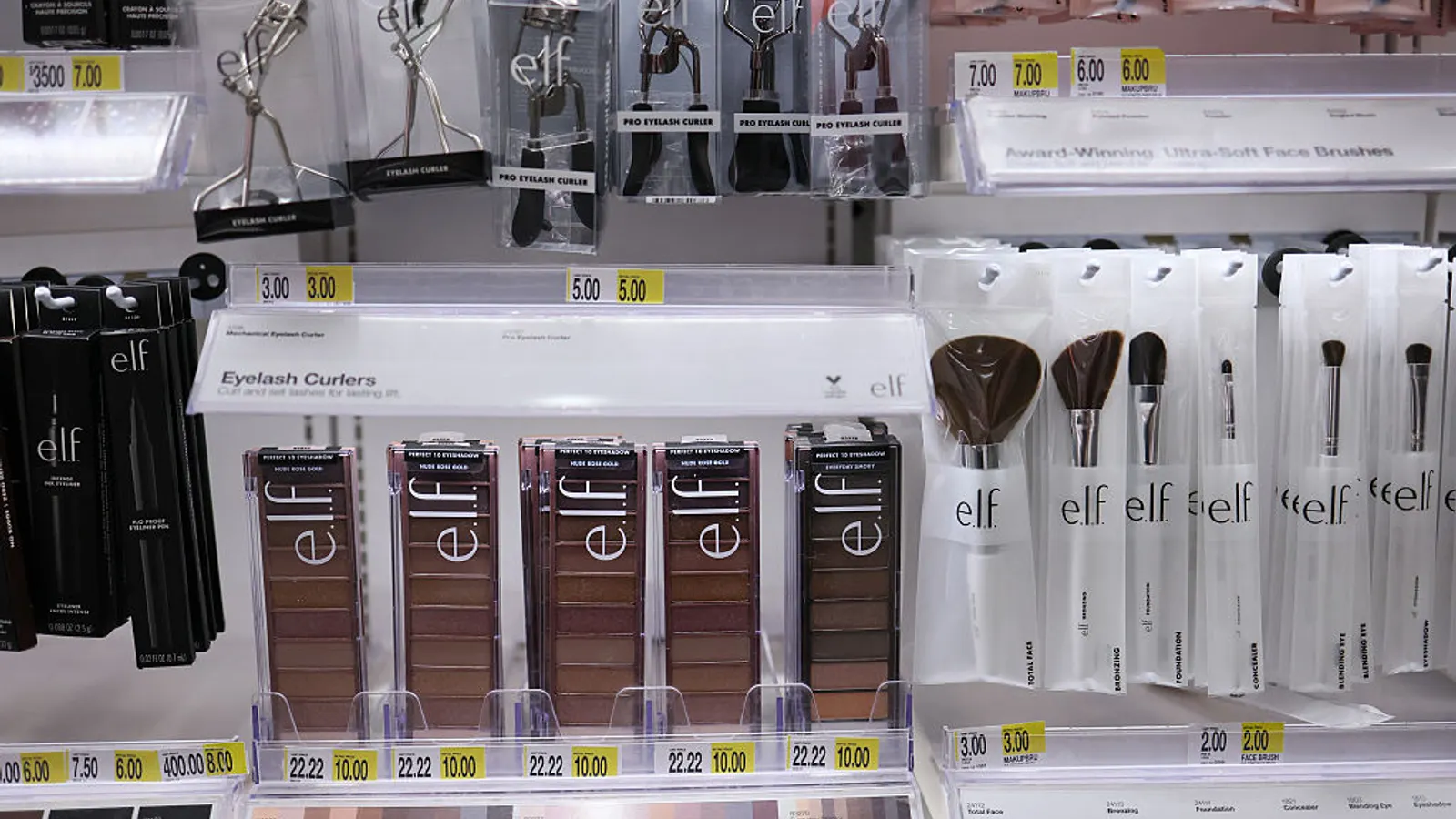
[City, State] – [Date] – E.l.f. Beauty, a titan in the mass-market beauty industry, is currently engaged in a strategic recalibration of its pricing strategy, responding to a complex interplay of global economic pressures, shifting consumer sentiment, and the lingering impact of past tariff-related expenses. The company’s recent performance and forward-looking statements reveal a delicate balancing act, as it seeks to maintain profitability and market share amidst inflation, geopolitical instability, and ambitious growth objectives.
The Genesis of Pricing Pressure: Inflation and Tariffs Take Their Toll
Last year, E.l.f. Beauty made a significant announcement: a $1 price increase across all E.l.f. brand Stock Keeping Units (SKUs). This decisive action was primarily attributed to the dual pressures of escalating inflation and the imposition of tariffs, factors that were beginning to exert considerable strain on the company’s cost structure. At the time of this pricing adjustment, the company was grappling with tariff rates that reportedly exceeded 55%, a substantial burden on imported goods and raw materials.
The decision to absorb some of these increased costs by passing a portion onto consumers was presented as a necessary measure to safeguard margins and ensure the long-term viability of its product offerings. However, this move occurred against a backdrop of increasingly challenging economic conditions. The global landscape has been further destabilized by geopolitical events, notably the ongoing conflict in Iran, which has had ripple effects on global commodity markets and fuel prices. These external shocks have collectively contributed to a significant dampening of consumer sentiment, making shoppers more price-sensitive and scrutinizing their purchasing decisions.
A Calculated Risk: Initial Success and Subsequent Unit Declines
During a recent investor call, E.l.f. Beauty CEO Amin acknowledged the initial success of the company’s pricing strategy from a revenue perspective. "From an external standpoint, the pricing action was successful," Amin stated. "Obviously, we had 55% tariffs, even higher than that at the time we made the pricing move, plus inflationary pressures that caused us to take a dollar price increase. Overall, as everyone has seen, our dollars increased with that, but our units fell off."
This statement underscores a critical observation: while the $1 price increase did contribute to an increase in dollar sales, it also led to a noticeable decline in the number of units sold. This phenomenon is a classic indicator of price elasticity, where a price hike, even a modest one, can deter a segment of price-conscious consumers, particularly in the mass market where value is a primary driver. The company’s ability to maintain its market position hinges on its capacity to mitigate this unit decline without sacrificing revenue growth.
The Search for Equilibrium: Testing the Waters with Price Adjustments
In response to the observed unit fall-off, E.l.f. Beauty is now actively engaged in testing various pricing adjustments. The company is meticulously analyzing data to identify the optimal price points that can restore unit volume without unduly compromising profitability. This iterative process of testing and refinement is crucial for navigating the current economic climate and ensuring that the company’s value proposition remains compelling to its target audience.
Amin elaborated on the efficacy of these tests, highlighting a particularly encouraging outcome with the company’s skin tint products. "We saw a pretty big fall off on units from where before we took pricing, to after we took pricing," Amin remarked. "As we started doing some of these tests, we’ve seen really strong unit recovery on, for example, the skin tints at $18 [reduced to] $14, a 40% lift almost right away, and across all customers that we tested that in, gives us confidence."
This substantial unit recovery of approximately 40% on skin tints, achieved by reducing the price from $18 to $14, provides a strong signal to the company. It suggests that for certain product categories, a downward price adjustment can indeed stimulate demand and recapture lost sales volume. The fact that this positive response was observed across all tested customer segments further bolsters the company’s confidence in this approach.
Digital Channels Drive Recovery: E-commerce and Social Media Performance
The company’s strategic pricing tests have also yielded impressive results in the digital realm. Amin reported significant lifts in sales across key online platforms. "We saw a 38% lift on Amazon and a 36% lift across all retailers, including a triple-digit sales lift on TikTok Shop," he stated. These figures highlight the growing importance of e-commerce and social commerce channels in E.l.f. Beauty’s sales strategy.
The triple-digit sales lift on TikTok Shop, in particular, is a testament to the platform’s burgeoning influence in driving consumer purchasing decisions, especially among younger demographics. This success reinforces the company’s intention to strategically leverage these channels for future pricing initiatives. Amin added that the company planned to "test our way into which are the right families to be able to make that action on," indicating a data-driven approach to rolling out price adjustments across its diverse product portfolio.
The Rhode Acquisition: A Strategic Diversification and its Financial Ramifications
Adding another layer to E.l.f. Beauty’s recent financial narrative is the significant acquisition of Hailey Bieber’s Rhode beauty brand in August 2025. This strategic move, valued at $1 billion, has already demonstrated considerable impact. The Rhode acquisition brought in over $500 million in global retail sales and approximately $390 million in net sales, contributing to a remarkable 80% year-over-year net sales growth.
However, this substantial growth came at a financial cost. The company reported a net loss of $49.4 million for the fourth quarter, a stark contrast to the net income of $28.3 million recorded in the same period the previous year. This swing in profitability is largely attributable to the accounting implications of the acquisition, including amortization of acquired intangibles and other integration-related expenses. While the Rhode acquisition represents a significant expansion of E.l.f. Beauty’s brand portfolio and market reach, its immediate financial impact underscores the complexities of large-scale mergers and acquisitions.
Addressing Persistent Cost Headwinds: Tariffs, Fuel, and Future Outlook
Looking ahead, E.l.f. Beauty’s Chief Financial Officer, Mandy Fields, reiterated the company’s ongoing efforts to mitigate cost pressures. She expressed the hope of recouping some of the tariff-related expenses incurred in fiscal year 2027. Simultaneously, the company remains vigilant in monitoring the impact of rising fuel costs, a direct consequence of the geopolitical tensions in the Middle East.
"As we consider the conflict in the Middle East, we are starting to see some inflationary pressure on commodities and transportation costs like many other companies have spoken about," Fields commented during the call. She cautioned that the company "could face $15 million to $20 million of incremental cost headwinds in fiscal ’27." This projection highlights the persistent nature of these economic challenges and their potential to impact future profitability.
To counter these potential cost increases, Fields revealed that the company is actively pursuing a refund on the substantial IEEPA tariffs paid in the previous year, amounting to approximately $58.5 million. However, she emphasized that the company’s current outlook does not incorporate the impact of oil prices or tariff refunds due to the volatile and fluid nature of these situations. This cautious approach reflects a pragmatic understanding of the unpredictable global economic landscape.
Navigating the Fiscal Horizon: Gross Margins and Sales Projections
Fields provided further insights into the company’s financial projections for fiscal year 2027. She indicated that the gross margin is expected to remain approximately flat year over year, suggesting a stable operational efficiency despite the prevailing cost pressures.
Regarding sales performance, Fields anticipates a decline in net sales for the first quarter, projected to be in the "high single digits." However, she expects a strong rebound in the second quarter, with growth projected in the "mid-teens range." This projected recovery is attributed to two key factors: the annualization of the Rhode acquisition and the company lapping the decision to temporarily halt shipments in the second quarter of the previous year for orders that did not reflect the price increase. This strategic pause, while impacting short-term sales, was a necessary step to align with the company’s adjusted pricing strategy.
In conclusion, E.l.f. Beauty is navigating a dynamic and challenging economic environment. The company’s strategic pricing adjustments, driven by data and a keen understanding of consumer behavior, are a testament to its agility. While the Rhode acquisition injects significant growth, it also presents integration complexities. The persistent threat of inflation and geopolitical instability necessitates a cautious yet proactive approach, as E.l.f. Beauty strives to balance revenue growth, profitability, and its commitment to delivering accessible beauty products to a broad consumer base. The company’s ability to adapt and innovate in response to these evolving market forces will be critical to its continued success.
