

By Sam Haysom
June 3, 2026
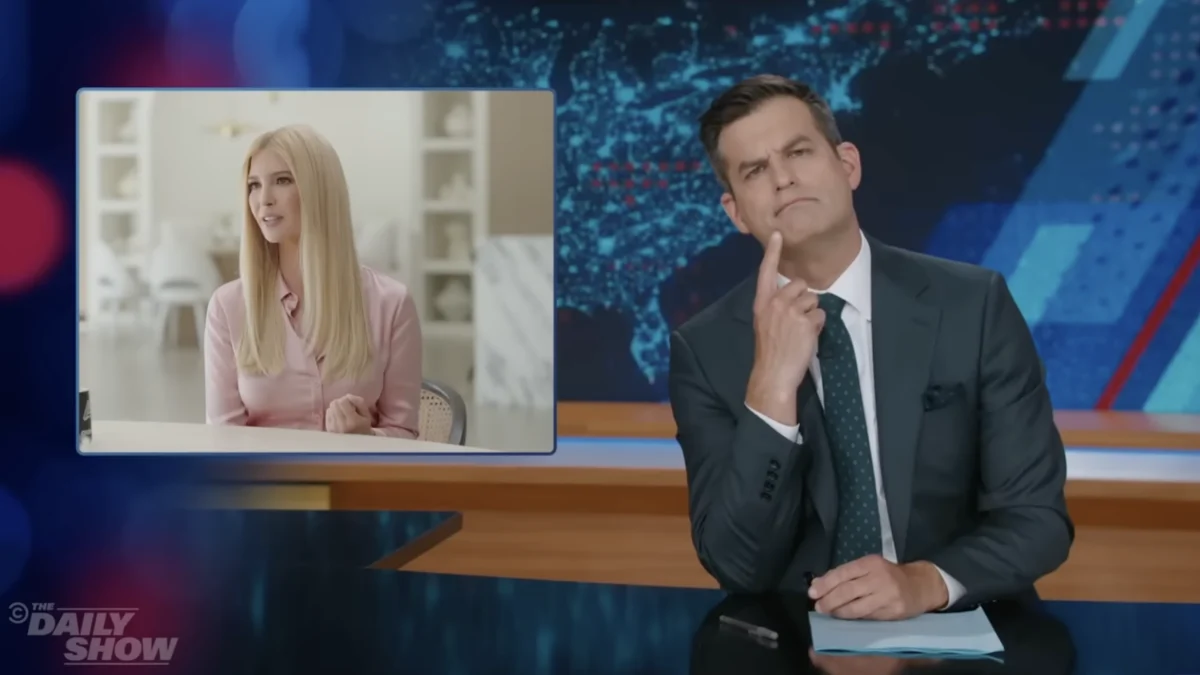
In an era defined by global economic volatility and a pervasive cost-of-living crisis, the optics of extreme wealth have become a focal point of cultural friction. This week, that tension reached a boiling point on The Daily Show, as host Michael Kosta took aim at Ivanka Trump and Jared Kushner’s latest venture: the development of a private island in the Mediterranean.
While the couple frames the project as a philosophical endeavor rooted in architectural innovation and personal growth, late-night satire has served as a mirror for the public’s frustration, cutting through the jargon of luxury branding to offer a blunt assessment: wealth, in its most isolated form, is increasingly out of touch.
The Core Controversy: Luxury in the Age of Austerity
The disconnect between the global economic climate and the lifestyle of the ultra-wealthy has rarely been more apparent. As millions of households grapple with soaring inflation, rising mortgage rates, and the tightening of belts, the news that Ivanka Trump and Jared Kushner are embarking on a project to develop a private Mediterranean island has been met with a mixture of bewilderment and indignation.
On The Daily Show, Michael Kosta addressed the announcement with characteristic sharp-wittedness. "For those of you who are thinking, ‘Hey, before buying a private island, shouldn’t billionaires maybe read the room?’ what you don’t understand is the island doesn’t have rooms yet," Kosta joked. "They can’t lay the foundations for those rooms until they’ve burned down all those stupid trees, okay?"
The satire highlights a growing resentment toward the "aesthetic of exclusivity." When the average citizen is concerned with the basic cost of utilities and groceries, the spectacle of a billionaire couple terraforming a Mediterranean landscape to suit their personal living preferences creates a jarring visual of inequality.
A Chronology of the Project
The transition of the couple from political figures to private real estate developers has been a gradual process since their departure from the White House.
- Early 2025: Rumors began circulating regarding the couple’s interest in acquiring a significant land parcel in the Mediterranean. Real estate analysts noted their shift toward high-end, off-grid hospitality assets.
- Late 2025: The couple officially confirmed they had secured a long-term lease/purchase agreement on a private island, citing the need for "privacy and sustainable development."
- Spring 2026: Trump began appearing on select podcasts, including an interview with David Senra, to discuss the philosophy behind the project.
- June 2026: The project hit the mainstream news cycle, prompting widespread debate on social media and, subsequently, the viral segment on The Daily Show.
During her appearance on the David Senra podcast, Trump described the development as "the culmination of all of my experience in real estate." She framed the project as a "tangible manifestation" of how she believes the modern elite—and perhaps the world—is moving toward a new mode of existence.
Supporting Data: The Cost-of-Living Context
To understand why the public reaction has been so visceral, one must look at the current financial data. According to recent reports from outlets like USA Today, the global cost-of-living crisis has not abated as hoped.
- Housing Affordability: Mortgage rates in Western economies remain near multi-year highs, making home ownership a receding dream for the middle class.
- Consumer Sentiment: Surveys conducted throughout the first half of 2026 indicate that over 65% of households feel "moderate to high" financial stress regarding daily expenses, including fuel, healthcare, and food.
- The Wealth Gap: Data from international financial institutions suggests that the gap between the top 0.1% and the remainder of the population has widened further in the post-pandemic recovery era, exacerbated by inflationary pressures that disproportionately affect those with lower disposable incomes.
When set against these metrics, Trump’s language—using terms like "spiritual journey" and "tangible manifestation"—feels to many like a tone-deaf exercise in privilege.
The Philosophy of the "Private Sanctuary"
Ivanka Trump’s defense of the project centers on the idea of creating a living space that reflects her personal journey. In the interview with Senra, she noted, "It feels more like a challenge than anything else… a lot of reflection on how I want to live, how I think people increasingly are wanting to live."

This rhetoric is a classic example of "lifestyle-as-leadership." By branding the island as a "manifestation" of how people should live, the developers are attempting to elevate a private land purchase into an act of cultural contribution. However, as Michael Kosta aptly pointed out, this is a bridge too far for many viewers.
"Come on, lady, you’re rich, and you bought an island, just say that!" Kosta shouted during his segment. "Not everything has to be a deep, spiritual journey, you know?"
Kosta’s critique strikes at the heart of modern celebrity branding: the tendency to cloak simple material accumulation in the language of enlightenment, mindfulness, or professional "vision."
Implications: A Shift in Public Perception
The fallout from this incident suggests a deeper shift in how the public interacts with the ultra-wealthy. In previous decades, the "private island" trope was often viewed through a lens of aspiration—a goal for the successful. Today, it is increasingly viewed through a lens of environmental and social skepticism.
1. The Environmental Cost
Large-scale development on private islands often faces intense scrutiny regarding ecological impact. From the destruction of natural habitats to the carbon footprint of construction in remote locations, the environmental cost is a significant point of contention.
2. The PR Failure of "Relatability"
Trump’s attempt to frame the project as a response to how "people" want to live is a critical PR failure. It ignores the reality that most people are struggling to maintain their current living standards, let alone conceptualizing a "tangible manifestation" of a new life on a private island.
3. The Role of Satire
Shows like The Daily Show have become the primary vehicle for public pushback. By distilling complex, often infuriating news stories into short, digestible segments, these shows provide a necessary catharsis for an audience that feels increasingly disenfranchised by the actions of the political and economic elite.
Conclusion: The "Read the Room" Reality
The incident serves as a poignant reminder that in a polarized and economically strained world, the "optics of wealth" matter. While Ivanka Trump and Jared Kushner continue to pursue their real estate ambitions, the reaction from the public—and the sharp critique from figures like Michael Kosta—demonstrates that the appetite for "inspirational" billionaire narratives is at an all-time low.
As the couple continues to build their Mediterranean retreat, they are discovering that in the digital age, privacy is harder to buy than an island. Every interview, every statement, and every architectural choice will be scrutinized against the backdrop of a public that is no longer content to accept the "spiritual" framing of extreme luxury.
Ultimately, as Kosta concluded, sometimes the most refreshing thing a person in a position of extreme privilege can do is drop the pretense. If you have the money to buy an island, the public might prefer you just admit it—without the philosophical padding.
