

By Anne Kadet
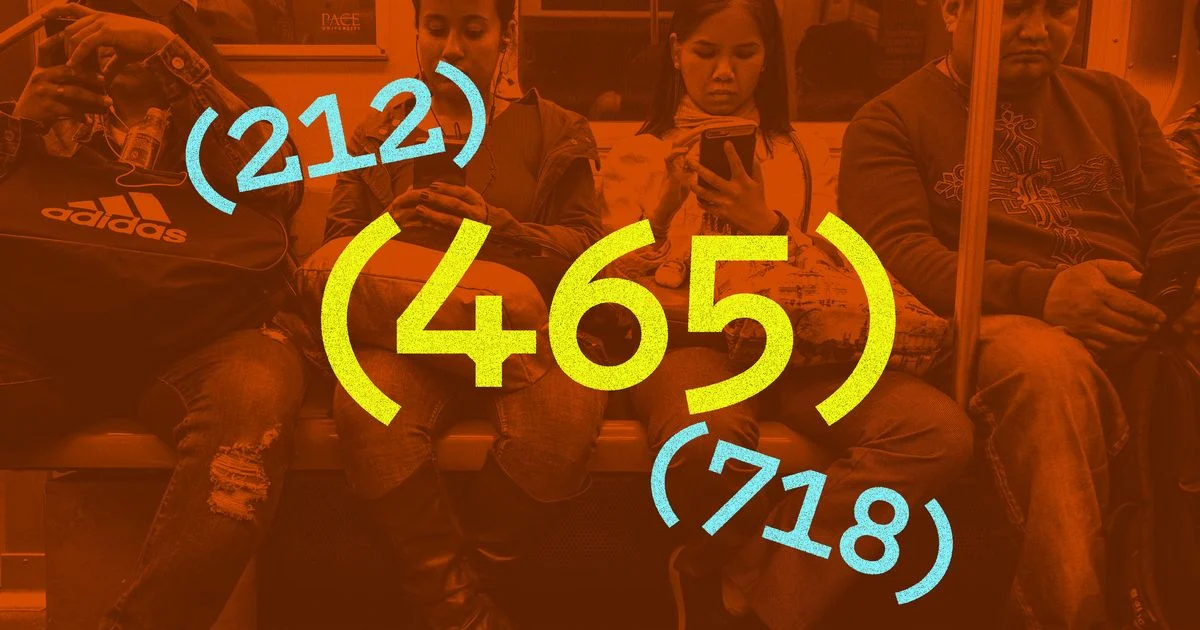
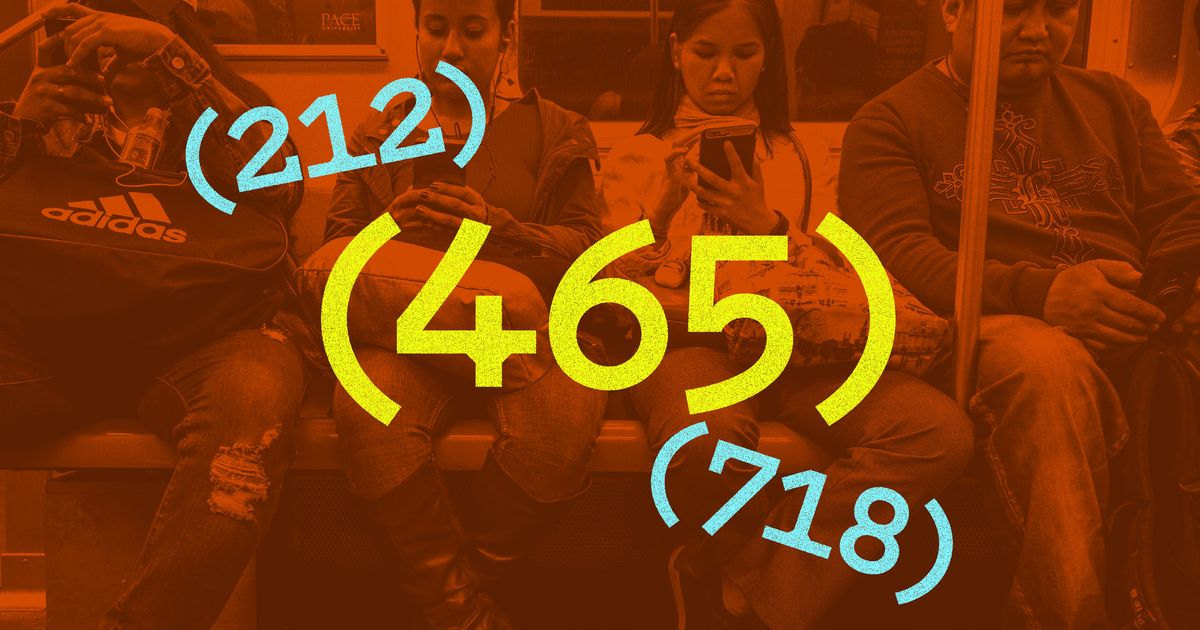
For decades, the three-digit prefix preceding a New York City phone number served as a subtle social marker, a geographical signifier, and, occasionally, a badge of urban seniority. But as of June 18, 2026, the city’s complex tapestry of telecommunications is adding a new, unfamiliar thread: 465. As the latest area code to be introduced to the five boroughs, the 465 prefix arrives not with a fanfare of prestige, but as a pragmatic, if unglamorous, solution to a problem that has plagued the city for years: we are simply running out of room.
The introduction of 465 marks the eighth area code in New York City’s history. For those living in Brooklyn, the Bronx, Queens, Staten Island, and the neighborhood of Marble Hill, requesting a new landline or mobile service may soon result in being assigned a number starting with these three digits. While the shift is a mundane logistical necessity for the telecommunications industry, it serves as a stark reminder of the city’s insatiable appetite for connectivity in an era defined by constant communication, multi-device ownership, and the relentless rise of automated spam.
A Brief History of the NYC Area Code
To understand the significance of the 465 arrival, one must look back at the origins of the North American telephone numbering system. In 1947, when the national area-code structure was first established, New York City was a monolithic entity in the eyes of the telecom giants. Manhattan was assigned the iconic 212 prefix, primarily because it was the easiest to dial on the heavy, rotating dials of the era’s rotary phones.
For nearly four decades, that single code sufficed. It wasn’t until 1984—a year perhaps ironically associated with surveillance—that the sheer volume of New Yorkers demanding phone lines necessitated a split. The city was divided: Manhattan kept 212, and the "outer boroughs" were relegated to the 718.
The subsequent years saw a rapid, almost breathless, expansion of the city’s telephonic geography. As mobile phones and pagers transitioned from luxury items to basic human necessities, the system groaned under the weight of new subscriptions. 1992 brought the 917 area code to accommodate the mobile explosion. By 1999, the demand had reached a fever pitch, resulting in the "overlay" system, which introduced 646 for Manhattan and 347 for the outer boroughs.
The digital sprawl continued in the 21st century: 929 arrived for the outer boroughs in 2011, followed by Manhattan’s 332 in 2017. Then, for a brief window, the city experienced a relative calm. That silence, however, was merely the lull before the inevitable exhaustion of available numbers.
The Mechanics of Scarcity: Why 465?
The decision to implement 465 was not made by the City of New York, nor by any local governing body. Instead, it originated from the offices of the North American Numbering Plan Administrator (NANPA) in New Brunswick, New Jersey.
NANPA functions as an impartial, nongovernmental entity overseen by the Federal Communications Commission (FCC) and the broader telecommunications industry. Their task is daunting: manage the distribution of phone numbers across an entire continent. Last year alone, NANPA issued over 48 million numbers to telecom providers like AT&T, Spectrum, and Verizon, typically in massive, 10,000-number blocks.
When an alarm was sounded several years ago that the outer boroughs were projected to exhaust their available numbers by the end of 2026, NANPA initiated a relief plan. The process of selecting a new code is, contrary to popular belief, devoid of aesthetic or sentimental consideration.
"Back in 1947, 212 was chosen for its utility," explains industry analyst David Day, founder of the number-brokering service 212areacode.com. "Today, that luxury is gone. NANPA cannot assign codes based on ‘jazziness’ or how good they look on a business card. They have to select from an inventory of available prefixes while ensuring they don’t clash with existing central office codes already in use."
This restriction is why New Yorkers are receiving the somewhat utilitarian 465 instead of a more rhythmic or memorable sequence like 420 or 999. It is the result of a complex, automated sorting process designed to prevent dialing errors and technical overlap within the local network.
The Economics of Status: The 212 Premium
The introduction of 465 is expected to have an immediate, if localized, impact on the secondary market for telephone numbers. For years, David Day has operated at the intersection of vanity and utility, buying and selling "premium" phone numbers.
"There is a definite social hierarchy to area codes in this city," says Day. "A 212 number is the gold standard. It suggests that a business—or an individual—has been in the city for a long time. It conveys stability, history, and, to some extent, status."
Day’s business model is simple: he acquires blocks of numbers from failing or closing businesses and resells them to new market entrants. A random 212 number might sell for $150, but "vanity" numbers—those that are easy to dial or possess a repetitive pattern—can command thousands. His inventory includes gems like 212-666-4444, listed at $35,000.
For many firms, purchasing a block of 212s is a strategic move to mask their "newcomer" status. A national law firm opening a satellite office in Midtown doesn’t want a 465 or 929 prefix; they want the instant legitimacy that a 212 provides. Even among individuals, the vanity market is robust. In an age where most calls are filtered through screens, having a "veteran" area code like 917 or 212 is a way of signaling belonging in a city that is notoriously difficult to break into.
"People are going to look at that 465 and ask, ‘What is that? Is that Ohio?’" Day predicts. "That stigma, as irrational as it is, drives people to my website."
Infrastructure and the Future of the Grid
The Department of Public Service, which regulates utilities in New York State, estimates that the 465 area code will provide enough capacity for approximately 7.92 million new numbers. Based on current growth trends, they expect this supply to last for roughly 11 years.
But what happens when 465, too, is exhausted? The telecommunications industry is already exploring long-term solutions. One of the most frequently discussed proposals involves expanding the standard 10-digit format to 11 digits. This could involve introducing a four-digit area code, effectively transforming the classic "212-XXX-XXXX" into a "2120-XXX-XXXX" format.
Such a shift would be a massive technical undertaking, requiring updates to every piece of hardware and software that interacts with the North American Numbering Plan. However, it would offer a reset button, allowing for a consolidation that might return the city to a single, unified area code—at least until the next explosion in device connectivity.
Implications for the Modern New Yorker
The roll-out of 465 is a quiet, bureaucratic moment that nonetheless reflects the changing nature of urban life. We live in an era of "number bloat," where the average professional maintains a personal cell, a work cell, and perhaps a VOIP number for a home office or a side hustle. Furthermore, the prevalence of spam callers, who frequently "spoof" local area codes to bypass caller ID filters, has forced consumers to value their numbers more highly than ever.
As we move forward, the 465 code will become just another part of the New York landscape, joining the ranks of the 718s and the 917s. It will eventually be stripped of its "newness," becoming simply another way to reach a neighbor. But for the moment, its arrival serves as a reminder of the city’s constant state of growth—a place where even the intangible real estate of a phone number is subject to the pressures of supply, demand, and the relentless march of technological progress.
Whether 465 becomes a symbol of the "new" New York or simply another digit in the digital noise, its arrival is a milestone that chronicles the city’s ongoing, complicated, and increasingly crowded relationship with the technology that keeps it connected.
