

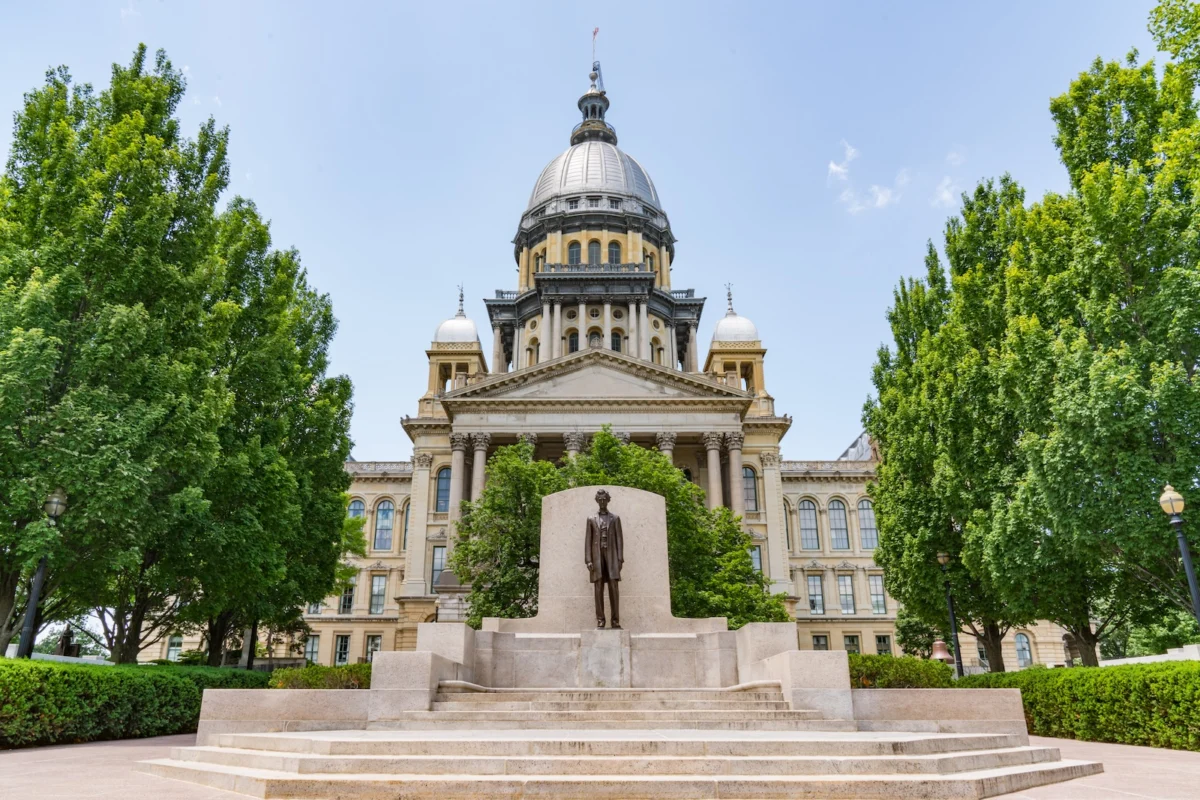
As National Homeownership Month dawned this June, the atmosphere in Springfield was notably devoid of the legislative victory Governor J.B. Pritzker had hoped for. His sweeping "Building Up Illinois Developments" (BUILD) plan—an aggressive, multifaceted strategy designed to fundamentally reshape the state’s housing landscape—ended its spring session not with a bang, but with a quiet, indefinite stall.
The failure to bring these proposals to a vote before the legislature adjourned serves as a stark reminder of the immense political friction inherent in land-use reform. While the Governor’s office frames the setback as a strategic pause rather than a defeat, the delay leaves the state’s housing crisis—characterized by a deficit of an estimated 270,000 units—largely unaddressed as the 104th General Assembly looks toward the fall veto session.
The BUILD Plan: A Vision for Density and Deregulation
Governor Pritzker’s BUILD plan was envisioned as a comprehensive solution to the supply-side constraints choking Illinois’ real estate market. The proposal aimed to dismantle long-standing barriers that have historically favored low-density sprawl over functional urban development.
Key provisions of the plan included:
- Zoning Preemption: Stripping local governments of the power to block multifamily housing on residential lots exceeding 2,500 square feet.
- "Missing-Middle" Legalization: Mandating the legalization of accessory dwelling units (ADUs) and duplexes/triplexes statewide to increase density.
- Regulatory Streamlining: Establishing strict deadlines for permit reviews to prevent the "death by a thousand cuts" caused by bureaucratic delays.
- Parking and Design Reform: Eliminating excessive parking minimums that artificially inflate construction costs and permitting single-stair construction for buildings up to six stories to facilitate cost-effective development.
- Fee Standardization: Replacing unpredictable, localized impact fees with a uniform, transparent formula.
Proponents, led by the Illinois REALTORS, argued that these measures were essential to address the state’s chronic housing shortage. By removing the discretionary power of local municipalities, the plan sought to create a predictable environment for developers, effectively lowering the cost of entry for new construction.
A Chronology of the Legislative Impasse
The legislative journey of the BUILD plan was marked by an intense clash between executive ambition and municipal preservationism.
February: During his State of the State address, Governor Pritzker formally introduced the BUILD initiative, anchoring his housing agenda with a request for $250 million in state funding to support site preparation and first-time homebuyer assistance.
March – April: As the session progressed, the Illinois Municipal League (IML) mobilized a massive lobbying effort against the zoning components of the plan. Suburban mayors, fearing a loss of local control, held a series of press conferences across the state in May to denounce what they labeled an "unconstitutional overreach" into municipal self-governance.
May 31: In a last-minute tactical pivot, state Sen. Rachel Ventura introduced the "Restock the Block Act" via an amendment to an unrelated bill regarding hygiene dispensers. The amendment sought to penalize institutional investors (those owning 10+ homes or $30M+ in assets) by imposing escalating annual fees and a 90-day "right of first refusal" for individual homebuyers.
June 1: The Restock the Block Act passed the Senate in the early morning hours but failed to reach the House floor for a vote before the session concluded. Simultaneously, the core BUILD plan remained trapped in committee, ending the spring session without a single vote taken on the floor of either chamber.
Supporting Data: The Scope of the Crisis
The urgency behind Pritzker’s push is grounded in sobering statistics. Illinois faces a structural housing deficit of approximately 270,000 units, a gap that has pushed home prices to historic highs and rendered the "American Dream" increasingly elusive for middle-class families.
The cost of development has been exacerbated by the very policies the BUILD plan sought to overturn. In many suburban jurisdictions, impact fees—charges levied on developers to fund public infrastructure—can add tens of thousands of dollars to the cost of a single new home. Furthermore, the reliance on outdated zoning codes that mandate large lot sizes and excessive parking has effectively banned the construction of the "missing middle"—the townhomes, garden apartments, and courtyard buildings that once defined the affordable housing stock of the early 20th century.
Comparatively, Illinois is trailing behind other states that have successfully navigated these political minefields. California, Texas, Colorado, and Florida have all passed legislation that limits local zoning authority, though these states continue to battle legal challenges and attempts by local governments to circumvent the new mandates.
Official Responses and Political Rhetoric
The stalemate has drawn sharp lines between state and local leaders.
Governor Pritzker, maintaining an optimistic tone, described the setback as a "delay" rather than a defeat. "I believe that the people of Illinois want action on housing," Pritzker remarked at a press conference. "They want to make sure we make it easier for people to build homes." His administration remains encouraged by the fact that the $250 million earmarked for housing in the state budget survived the legislative process, even if the regulatory reforms did not.
Conversely, the Illinois Municipal League has championed the stall as a victory for democracy. "Zoning is a core function of self-governance," a representative for the IML stated. "Municipalities are best equipped to understand the needs, infrastructure capacities, and character of their own communities. A one-size-fits-all mandate from Springfield is not the solution to a complex market issue."
The Illinois REALTORS, however, remain committed to the fight. Having spent five years advocating for these specific reforms, they view the Governor’s stance as a necessary acknowledgment of the state’s economic reality.
The Rise of Institutional Investor Legislation
Perhaps the most controversial aspect of the session’s end was the sudden emergence of the "Restock the Block Act." This bill represents a growing national trend of states attempting to curb the influence of large institutional rental owners, such as private equity firms and hedge funds, in the single-family housing market.
The proposal was aggressive:
- Fees: Institutional owners would pay an annual fee of 10% of the property value for every home owned beyond the 10th property, with that fee escalating to 50% for larger portfolios.
- Wait Periods: A 90-day window would be mandated before an institutional investor could purchase a home listed for sale, theoretically giving individual families an advantage.
- Funding: Revenue generated from these fees would be funneled into the Illinois Affordable Housing Trust Fund.
While the bill failed to pass the House, its introduction signals that housing policy in Illinois is shifting away from purely supply-side stimulus toward a more interventionist approach aimed at protecting individual homeowners from corporate competition.
Implications: What Comes Next?
The 104th General Assembly does not officially adjourn sine die until January 2027. This provides a legislative window of opportunity that the Governor’s office is clearly preparing to exploit. The fall veto session, typically reserved for reviewing gubernatorial vetoes, may now serve as a secondary stage for the housing battle.
The Path Forward
For housing advocates, the next six months will be defined by negotiation. The "intractability" of local municipalities noted by political analysts suggests that the Governor may need to compromise on his "by-right" zoning mandates. Potential middle-ground solutions could include:
- Incentive-Based Reform: Rather than removing zoning authority, the state could offer grants to municipalities that voluntarily adopt "missing-middle" friendly zoning codes.
- Targeted Preemption: Focusing on transit-oriented development (TOD) rather than universal statewide zoning mandates, which may prove more politically palatable to suburban constituents.
A Test of Executive Power
The ultimate implication of this struggle is a test of Governor Pritzker’s political capital. If he is to succeed, he must demonstrate that the housing crisis is not just an urban or state-level concern, but a pocketbook issue for suburban voters who are currently being priced out of their own hometowns.
As the state enters the second half of the year, the housing debate will likely become a litmus test for the balance of power between the Statehouse and City Hall. Whether Pritzker can force the legislature to adopt his vision or whether the municipal coalition remains strong enough to preserve local control remains the defining question of Illinois’ political and economic future. For now, the builders, the buyers, and the policymakers are all in a state of watchful waiting.
