

For decades, a silent, polite, and deeply entrenched civil war has simmered along the American East Coast. It is not fought over politics, regional cuisine, or professional sports allegiances. Instead, it is a battle of aesthetics and heritage centered entirely on the deck shoe. The combatants? The loyalists of Sperry Top-Siders and the devotees of Sebago Docksides.
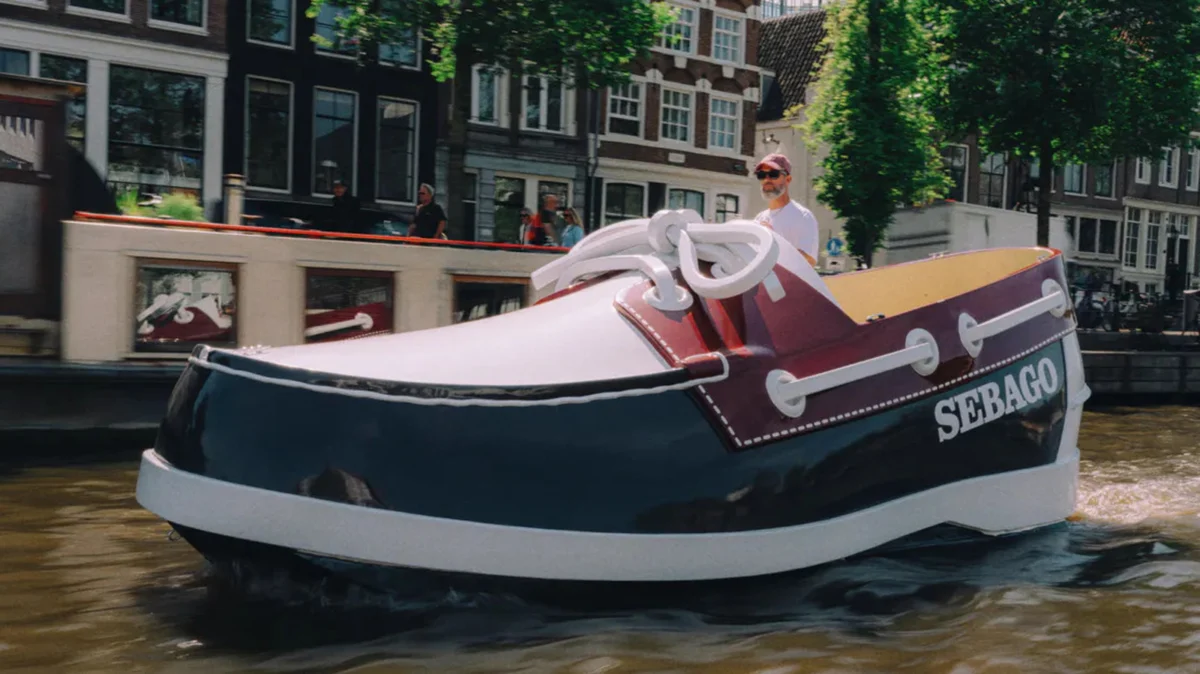
While the rivalry is often played for laughs in social circles, the stakes are high in the world of heritage footwear. However, the balance of power may have shifted permanently. To mark its 80th anniversary, Sebago has unveiled a marketing masterstroke that renders all previous promotional efforts by its rivals moot: a fully functional, boat-shoe-shaped vessel, affectionately dubbed the "Seba-boat," that has spent the last several months touring the canals of Europe.
The Main Facts: A Floating Icon
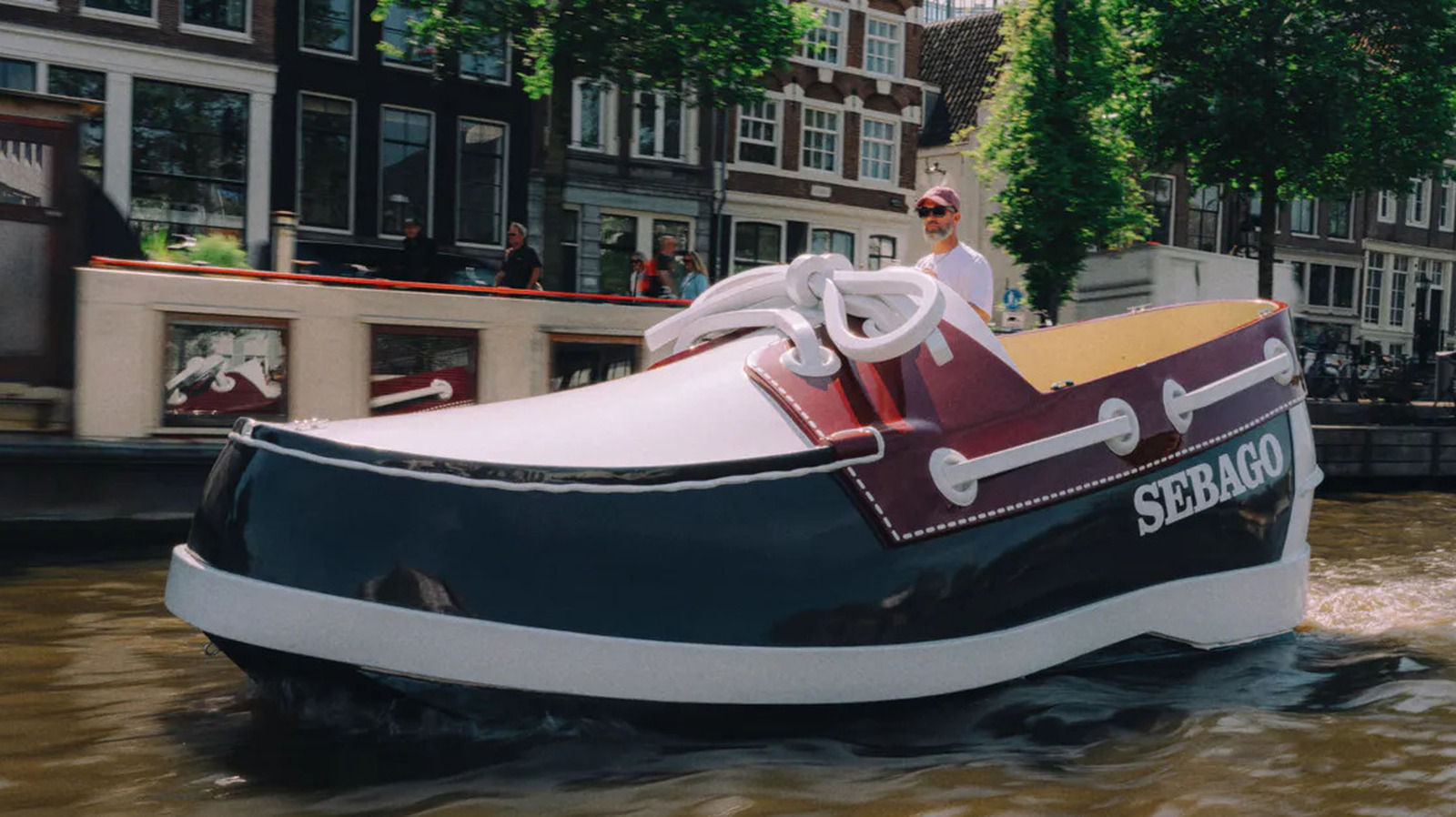
The craft in question is a literal, oversized replica of the classic Sebago Docksides boat shoe. It is not merely a fiberglass shell; it is a fully operational, electric-powered watercraft that serves as a high-visibility, "floating billboard" for the brand.
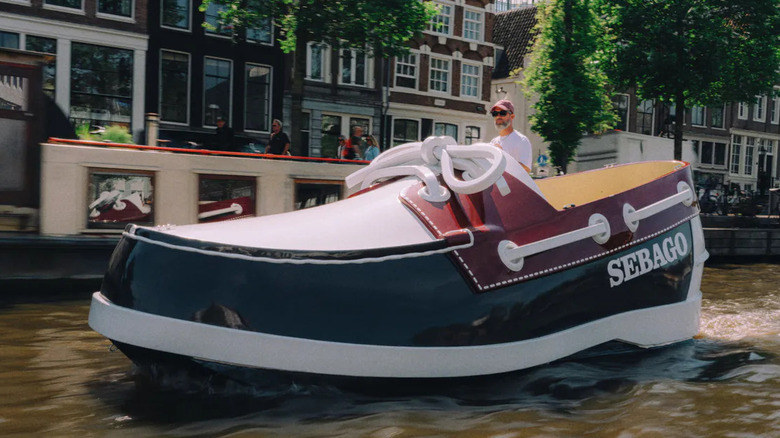
The vessel recently captivated onlookers in the canals of Amsterdam before migrating south to Italy. Its primary purpose is to serve as the centerpiece of Sebago’s 80th-anniversary celebrations, physically embodying the brand’s nautical DNA. By taking a product designed for the deck and placing it directly into the water, Sebago has executed a rare feat of experiential marketing that is both absurdly literal and undeniably compelling.
A Chronology of the Seba-Boat
The history of this peculiar vessel is as fascinating as its current tour. Contrary to initial assumptions that the boat was a bespoke commission created for this year’s anniversary, the reality is far more storied.
- The Origins: The boat was originally conceived by the historic Sebago team decades ago, serving as a promotional tool during the brand’s mid-century expansion.
- The Dormancy: Following changes in corporate structure and regional management, the boat was relegated to a warehouse outside of London. It sat for years as a forgotten piece of corporate memorabilia, serving as the European headquarters for the brand during the pre-Brexit era.
- The Acquisition: When BasicNet—the current parent company of Sebago—acquired the brand, they began an inventory of "semi-abandoned assets" scattered across global warehouses.
- The Restoration: Recognizing the vessel’s potential, the new ownership team undertook a complete restoration. This process included a critical mechanical upgrade: the conversion of the vessel to modern electric propulsion, allowing it to navigate sensitive urban waterways like those in Amsterdam and Florence.
- The Grand Tour: In 2024, the boat emerged from its slumber. It made appearances in Milan and Amsterdam before being featured as a design object at the prestigious Pitti Immagine Uomo menswear show in Florence, Italy.
Supporting Data: The Anatomy of the Vessel
While specific technical specifications regarding the boat’s original displacement or hull construction remain guarded by the company’s internal archives, the restoration details provide a window into the brand’s commitment to this project.
The transition to electric power is perhaps the most significant aspect of the boat’s modern life. By removing an aging, likely inefficient combustion engine in favor of an electric drivetrain, Sebago has ensured that the boat can operate in the strictly regulated, low-emission zones that define modern European canal systems. This move is not only environmentally conscious but also ensures the longevity of the asset for future public relations campaigns.
The boat’s dimensions are designed to mirror the proportions of the classic Docksides loafer, complete with oversized laces and stitching details that are visible even from a distance. It is, in every sense of the word, a triumph of brand identity.
Official Responses and Strategic Intent
Lorenzo Boglione, the co-CEO of BasicNet, has been the primary voice behind the return of the Seba-boat. In his statements to industry press, he emphasized that the discovery of the boat was a serendipitous moment that aligned perfectly with the company’s vision for the brand’s 80th anniversary.
"When we acquired the brand, there were a number of semi-abandoned assets sitting in warehouses around the world," Boglione noted. "Our first priority was to secure and register the brand properly worldwide. After that, we turned our attention to those assets, including shoe lasts held by suppliers and, notably, the boat stored in a warehouse outside London."
Boglione’s reflection on the vessel highlights the "wow factor" that the company aims to capitalize on. He describes the boat as a "design object," noting that once the company understood its "beauty, logic, and unexpectedness," the decision to turn it into a touring centerpiece became a "natural idea." By framing the boat as an object of curiosity rather than a simple marketing stunt, Sebago has successfully elevated the perception of the brand from a traditional footwear manufacturer to a lifestyle powerhouse capable of whimsical, high-impact storytelling.
Implications for the Footwear Industry
The success of the Seba-boat tour presents a significant challenge to competitors like Sperry. In the saturated market of lifestyle footwear, the battle for consumer loyalty is rarely won on features alone—it is won on heritage and emotional connection.
1. The Power of "Heritage-Mining"
Sebago’s success demonstrates the value of digging through corporate archives. Many legacy brands hold dormant assets that, with the right investment in restoration, can be more effective than a multi-million-dollar social media ad campaign. The "Seba-boat" feels authentic because it is authentic; it carries the weight of history that a newly manufactured, CGI-enhanced campaign cannot replicate.
2. Experiential Marketing as a Differentiator
In an era where brick-and-mortar retail is struggling, the physical presence of a giant boat shoe in a canal provides a level of engagement that digital marketing cannot match. It forces pedestrians to stop, photograph, and share—creating a cycle of organic publicity that provides a high return on investment.
3. The Future of the "Shoe-Boat"
The question remains: will this be a one-off event, or will we see more "product-as-vessel" marketing in the future? If the feedback from the Pitti Uomo crowd is any indication, the industry is hungry for this kind of creative engagement. For now, the boat remains a traveling emissary for Sebago, moving from city to city and reminding the public that when it comes to nautical heritage, Sebago is willing to go to lengths that its competitors have yet to imagine.
For the Sperry loyalists, the arrival of the Seba-boat is undoubtedly an "incon-sole-able" moment. It has raised the bar for what a footwear brand can do to assert its dominance. Whether Sperry will attempt to counter with its own maritime spectacle remains to be seen, but for the time being, the waters belong to Sebago. The company has proven that sometimes, the best way to get ahead is to stop looking at the ground and start looking at the horizon.
