

Across the United States, a critical debate continues to shape the urban landscape: how do we move people efficiently in a post-pandemic world? While the roar of construction equipment signals progress in corridors from Seattle to Miami, the national pace of fixed-guideway transit expansion remains a study in contrasts. As cities grapple with shifting commuting patterns, climate goals, and the need for economic connectivity, the focus has increasingly moved toward "bus-first" strategies while high-capacity rail projects face a slower, more deliberate crawl.
The State of Transit Expansion: A National Snapshot
The current landscape of U.S. public transportation is defined by a shift in priorities. Nationwide, the transit infrastructure pipeline is robust, with approximately 138 kilometers of new light rail or streetcar lines, 34 kilometers of metro lines, 310 kilometers of new and improved bus lines, and 234 kilometers of regional or commuter rail currently under construction.
However, the completion rate in 2024 was notably modest. American cities added only 29 kilometers of light rail, and the nation saw zero new metro rail service openings. This deceleration is not necessarily a sign of waning interest, but rather a reflection of a strategic pivot. Modern transit planning is increasingly favoring Bus Rapid Transit (BRT) and Arterial Rapid Transit (ART)—solutions that can be implemented faster and at a lower cost per mile than heavy rail, while still providing the speed and reliability that commuters demand.
Historical Context and Political Cycles
When viewed through a historical lens, the current era of transit expansion is modest. During the Biden Administration, the U.S. saw roughly 130 kilometers of new metro, light rail, and streetcar lines open. While this represents a slight uptick from the Trump Administration—which saw fewer than 100 kilometers of new lines, the lowest level since the 1970s—the pace remains significantly slower than the infrastructure booms of the Clinton, Bush, and Obama eras (1993–2016). The glory days of massive subway and elevated rail expansion, which defined the 1970s and 80s, appear to be firmly in the rearview mirror as construction costs skyrocket and environmental reviews grow more complex.

2024: A Year of Measured Progress
While 2024 was not a banner year for mega-projects, it served as a foundational period for regional connectivity.
- Chicago, IL: The Northwest Indiana Double Track Project (41.5 km) was a major win for regional rail. By adding a second track to the South Shore Line, the project significantly improves service frequency and reliability for commuters traveling between Indiana and downtown Chicago.
- Indianapolis, IN: The city launched its second BRT line, the 16 km Purple Line, connecting the northeast corridor and building upon the success of the Red Line.
- Los Angeles, CA: A 2.3 km extension of the K Line (Crenshaw Line) brought the city closer to a seamless connection between its rail network and LAX.
- Madison, WI: The city’s inaugural rapid transit route, the 26.7 km Rapid Route A, introduced high-frequency electric bus service with dedicated lanes and signal priority.
- Miami, FL: The 14.3 km Downtown Miami Link finally bridged the gap between the Tri-Rail commuter system and the downtown core, utilizing existing Brightline infrastructure.
- Seattle, WA: Seattle remained a standout, opening the 13.7 km Lynnwood Link on Line 1 and the 10.1 km Line 2 (East Link) segment between South Bellevue and Redmond. Additionally, the RapidRide G line and the Swift Orange line expanded bus connectivity in the greater Puget Sound region.
2025: Key Openings and Regional Transformations
Looking ahead to 2025, the map of American transit is set to expand in meaningful ways. Several cities are poised to flip the switch on projects that have been in the works for years.
Light Rail and Streetcar Growth
- Kansas City, MO: The Main Street Streetcar extension is set to more than double the length of the city’s existing line, connecting Union Station to the University of Missouri at Kansas City.
- Los Angeles, CA: The A Line (formerly the Gold Line) will extend to Pomona, pushing its status as the world’s longest light rail line even further. Additionally, the OC Streetcar will finally serve Santa Ana and Garden Grove, marking a return to the region’s historical transit roots.
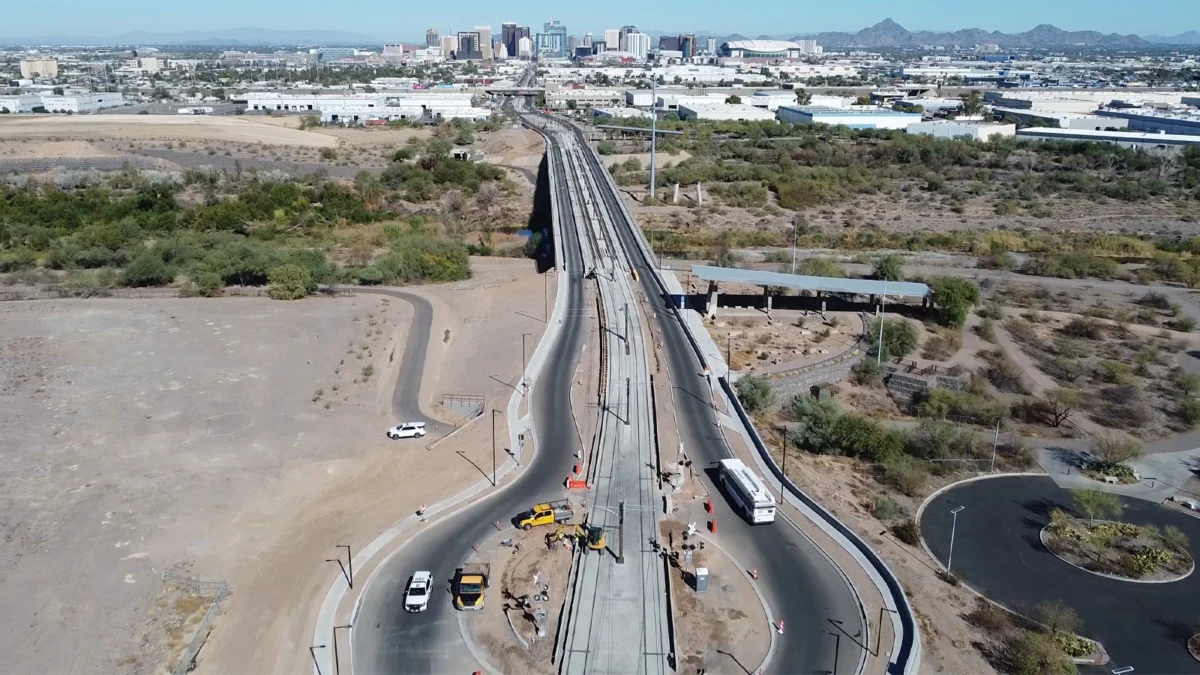
- Phoenix, AZ: The South Central Corridor extension will add a vital new light rail branch, linking downtown Phoenix to the southern reaches of the city.
- Seattle, WA: Line 2 will reach a major milestone by finally connecting Bellevue to downtown Seattle via a bridge over Lake Washington, alongside an extension to downtown Redmond.
The Return of the Subway
While the trend has been away from heavy rail, there are notable exceptions. In 2025, Los Angeles will extend the D Line (Purple) subway into the Mid-Wilshire district—the first of three planned phases. In Honolulu, the automated "Skyline" light metro will expand past the airport to Middle Street, though a full arrival into the downtown core is not expected until 2031.
The Bus Revolution
Bus-based solutions are taking center stage. Atlanta is launching its first BRT project, the 5.4 km "Rapid Summerhill" line, alongside two new Arterial Rapid Transit (ART) lines. Austin is set to open its Expo Center and Pleasant Valley lines, the first major deliverables from the 2020 "Project Connect" referendum. In the Twin Cities, the Gold Line will debut as Minnesota’s first dedicated-lane BRT, and the B Line will bring high-frequency service to the Uptown Minneapolis-to-St. Paul corridor.

Supporting Data: The Infrastructure Pipeline
| Project Type | Kilometers Under Construction |
|---|---|
| Light Rail / Streetcar | 138 km |
| Metro Lines | 34 km |
| Bus Rapid Transit (BRT/ART) | 310 km |
| Regional / Commuter Rail | 234 km |
Data compiled from Transit Explorer.
Official Perspectives and Voter Mandates
The shifting tide toward BRT is heavily influenced by local voter referenda. In cities like Columbus and Nashville, voters have recently approved massive funding packages specifically earmarked for transit modernization. These local mandates provide the financial runway that federal grants often require, signaling that while the appetite for "prestige" rail projects may be cooling, the demand for high-quality, reliable daily transit is at an all-time high.
Conversely, the "lame-duck" funding approval for the Chicago Red Line extension at the end of 2024 underscores the reliance of major rail projects on federal partnership. Without consistent, long-term capital support, these multi-billion-dollar endeavors remain highly vulnerable to economic shifts and political turnover.
Implications for the Future of Urban Mobility
The transition toward BRT and ART carries profound implications for the American city. First, it represents an admission that "speed to delivery" is now the primary metric of success. Building a light rail line takes a decade or more; building a high-quality BRT line can often be done in three to five years. For city planners, the ability to show tangible results to taxpayers is a political imperative.

Second, the geographic distribution of these projects reveals a maturing transit market. Cities that previously lacked any fixed-guideway transit—like Indianapolis and Madison—are now pioneering their own models, while legacy cities like New York, Boston, and D.C. struggle with the high cost of maintaining and expanding aging, complex subway networks.
Finally, the 2025 outlook suggests a focus on "network density." Rather than just extending lines further into the suburbs, cities are prioritizing connections between existing hubs, such as the LAX transit center project or the linking of Bellevue and Seattle. By creating a web of transit rather than isolated spokes, these cities are attempting to make public transportation a viable alternative to the private automobile for the "middle-of-the-day" trip, not just the peak-hour commute.
As we move through 2025, the success of these new corridors will be measured by ridership numbers and the degree to which they catalyze transit-oriented development. While the pace of construction may not rival the mid-20th century, the quality and utility of the infrastructure being built today may well be more attuned to the needs of a modern, flexible, and environmentally conscious workforce.
