

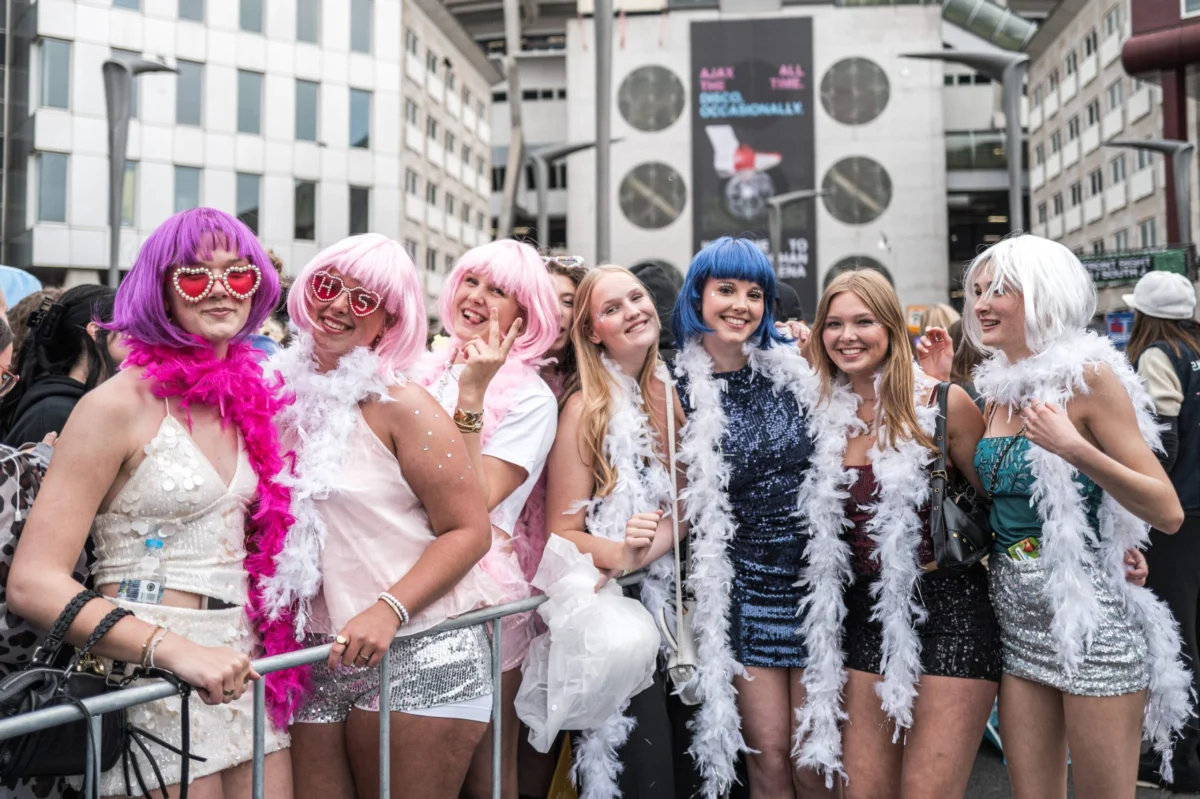
While central bankers in the United States and across Europe typically concern themselves with energy crises, supply chain bottlenecks, and the geopolitical tremors of the Middle East, a recent economic anomaly in the Netherlands has left policymakers reaching for an unlikely culprit: a pop star.
Harry Styles, the global music sensation, recently concluded a 10-day residency in Amsterdam that has been identified by the Dutch central bank as a significant driver of national inflation. The "Together, Together" tour, which saw thousands of Gen Z and Millennial fans descend upon the city, resulted in a localized economic spike so pronounced that it caught the attention of the European Central Bank (ECB) and influenced broader monetary policy.
The Anatomy of an Inflationary Surge
The economic ripple effect began in May, when Styles turned the Dutch capital into the exclusive mainland European hub for his tour. Spanning from May 16 to June 5, the residency transformed Amsterdam into a focal point for international tourism, drawing dedicated fans from across the continent and even the United States.
The influx of visitors created an unprecedented strain on local infrastructure, most notably the hospitality sector. Data released by the Dutch central bank indicates that hotel prices in the Netherlands surged by an average of 21% in May alone. This specific inflationary pressure was not merely a footnote; it contributed 0.4 percentage points to the country’s monthly inflation rate—a figure representing more than half of the total increase recorded between April and May. As a result, the Netherlands saw its overall inflation rate climb from 2.8% to 3.5% during that period.
Bas ter Weel, director of monetary affairs at the Dutch central bank, did not mince words regarding the magnitude of the event. "Harry Styles really breaks everything," ter Weel remarked in an interview with Dutch radio outlet BNR, highlighting that the residency produced one of the most severe tourism-driven price spikes the nation has witnessed in recent years.
Chronology of a Concert-Induced Spike
The sequence of events leading to this inflationary ripple can be broken down into a distinct timeline of demand-driven economic shifts:
- Pre-Residency Anticipation: As news of the exclusive residency broke, booking patterns for Amsterdam hotels shifted drastically. Early demand indicators showed a decoupling from standard seasonal travel trends.
- Mid-May (The Residency Commences): As the tour began on May 16, the sheer volume of international arrivals overwhelmed the city’s capacity. With limited hotel inventory, dynamic pricing algorithms—used by most major hotel chains and booking platforms—pushed room rates to record highs.
- Late May (Economic Data Collection): During the tail end of the residency, the Dutch central bank began compiling the May inflation data. Analysts noted that the "services inflation" category was being disproportionately inflated by the hospitality sector.
- June (Policy Response): By the time the ECB met in June, the data had been fully processed. The central bank cited "concert-related hotel prices in the Netherlands" as a key factor in the acceleration of services inflation. This realization occurred in the context of the ECB’s broader decision to raise its benchmark interest rate by 0.25 percentage points to 2.4%.
Official Responses and the ECB Perspective
The European Central Bank, under the leadership of President Christine Lagarde, has been hyper-vigilant regarding "sticky" inflation—a term used to describe price increases that do not subside easily. While the ECB avoided naming Harry Styles directly in official press releases, the minutes from their June policy meeting explicitly identified the Dutch concert-related hotel price surge as a catalyst for inflationary pressure.
For the ECB, the "Styles Effect" served as a cautionary tale regarding how discretionary spending on "experiences" can create localized economic shocks. While blockbuster tours by the likes of Bruce Springsteen and Taylor Swift have historically provided boosts to local economies, the concentration of Styles’ residency in a single city created a bottleneck that transformed a celebratory event into a macroeconomic data point.
The ECB’s subsequent interest rate hike reflected a broader concern: that consumer spending in the services sector—even when driven by entertainment—remains robust enough to challenge central bank efforts to cool the economy.
The Gen Z Paradox: Financial Literacy and Economic Might
The economic impact of the tour was felt most acutely by the fans themselves. Many concertgoers, enticed by tickets that at one point dropped to as low as €50 ($57), found that the true cost of the experience was not the music, but the lodging.
The Cost of "The Experience Economy"
On social media platforms like TikTok, the reality of the price gouging was laid bare. One attendee documented a 10-day stay on a canal houseboat, noting that because they could not afford the inflated hotel rates, they were forced to shower offsite. Another user shared that they paid roughly €900 ($1,030) for five nights in a room they described as a "tiny box."
These stories reflect a broader, more complex trend in the behavior of Gen Z. Despite significant anxiety regarding traditional financial milestones—with one-third of Gen Z believing they will never own a home—this demographic continues to prioritize "experience spending."
Financial Literacy vs. Long-Term Strategy
The critique often leveled against younger generations is one of poor financial literacy. Indeed, recent reports from TIAA and the Global Financial Literacy Excellence Center (GFLEC) show that Gen Z scores lower than other age groups on basic financial literacy metrics. Critics argue that the willingness to spend thousands on a concert trip, while simultaneously fearing for one’s long-term housing security, highlights a failure to prioritize capital accumulation.
However, a more nuanced look suggests that Gen Z may be operating on a different set of financial principles. Research indicates that the average Gen Zer has begun saving for retirement approximately 15 years earlier than Baby Boomers. This suggests that for many young adults, the "splurge" on concerts is not a sign of fiscal negligence, but rather a calculated trade-off. By sacrificing traditional savings for meaningful experiences, they are attempting to maximize utility in an era where long-term assets like real estate feel increasingly unattainable.
Macroeconomic Implications
The Dutch central bank’s analysis of the Harry Styles residency provides a fascinating look at the modern consumer economy. There are, as Bas ter Weel pointed out, two sides to the coin.
From one perspective, the residency was a clear inflationary negative; it caused temporary, sharp increases in the cost of living for residents and visitors alike, and forced policymakers to consider these events when setting interest rates. The "concert-driven inflation" adds a layer of complexity to central bank mandates that are traditionally calibrated for commodity prices and employment data.
Conversely, the residency was a massive boost to the Dutch service economy. Hotels, restaurants, transport providers, and retail outlets saw a massive infusion of capital that would not have existed otherwise. The episode serves as a powerful reminder of the outsized influence that the "experience economy" now holds over the broader financial landscape.
As central banks continue to monitor the post-pandemic recovery, the Harry Styles incident in Amsterdam suggests that they can no longer ignore the cultural calendar. When thousands of fans move in unison across borders to support a global superstar, the economic fallout is no longer confined to the concert venue—it is felt in the interest rates set in Frankfurt and the price of a hotel room on a quiet canal in the Netherlands.
Ultimately, the event underscores a shift in economic power dynamics. Gen Z, while often criticized for their financial habits, has demonstrated that their collective preferences can dictate local, and sometimes regional, economic outcomes. Whether the ECB will continue to treat "concert-related inflation" as a persistent variable in their future deliberations remains to be seen, but one thing is clear: in the modern economy, the fan experience is now a material economic force.
