

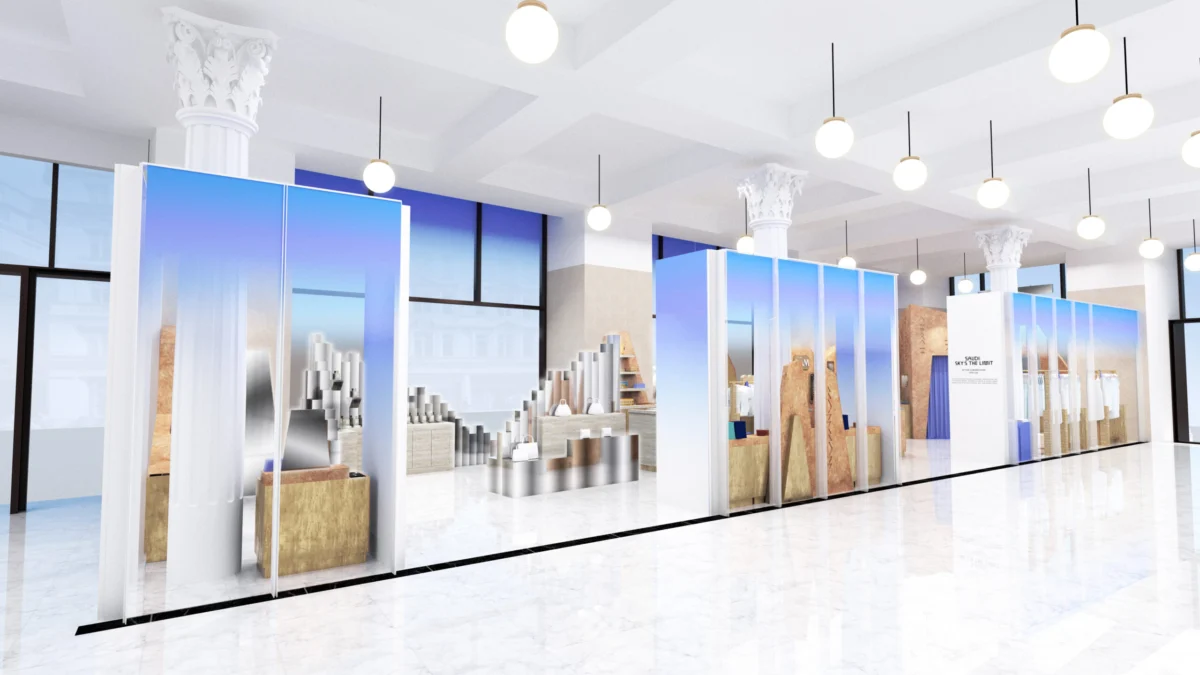
LONDON — In the heart of London’s West End, the iconic yellow-branded windows of Selfridges are framing a new narrative. The world-renowned department store has unveiled its latest high-profile takeover of "The Corner Shop," transforming the prime retail space at the intersection of Oxford and Duke Streets into an immersive cultural destination titled "Saudi: Sky’s the Limit."
This ambitious activation, which runs through September 5, features a curated selection of over 20 Saudi Arabian brands spanning fashion, beauty, jewelry, and gastronomy. It represents a significant milestone in the kingdom’s ongoing efforts to export its "soft power" and creative talent to a global audience.
I. Main Facts: A New Era of Retail Diplomacy
The "Saudi: Sky’s the Limit" showcase is more than a mere retail pop-up; it is a strategic partnership between Selfridges and Milaf Global, a company owned by Saudi Arabia’s Public Investment Fund (PIF) and a leading player in the kingdom’s food and beverage sector. This collaboration is rooted in a deep financial and strategic tie: PIF currently holds a 40 percent stake in Selfridges, acting as a key partner to the majority owners, Thailand’s Central Group.
The Immersive Destination
The Corner Shop, Selfridges’ rotating experimental space, has been redesigned to reflect a blend of traditional Saudi heritage and contemporary innovation. The goal is to provide an "immersive destination" where international shoppers can engage with Saudi culture through multiple senses.
The brand roster includes:
- Gastronomy: L’âm, the Paris-based bakery founded by Saudi entrepreneur Abdullatef Alrashoudi, makes its highly anticipated London debut. Other food participants include Jazean, Bath, and Ganache.
- Fashion and Streetwear: 1886, a pioneer in the Saudi streetwear scene known for blending technical fabrics with urban aesthetics.
- Jewelry and Accessories: Contemporary designs from Jeed, highlighting the kingdom’s modern craftsmanship.
- Beauty and Wellness: Luxury fragrances from Assaf and premium wellness products from Kayanee, a brand specifically designed to promote lifestyle and health within the kingdom.
- Homeware: Design-led pieces from Artfeena that incorporate traditional motifs into modern domestic objects.
This activation coincides with Selfridges’ broader summer theme, "Dream On," an experiential campaign celebrating imagination and original experiences. By positioning Saudi brands within this framework, Selfridges is inviting its global clientele to "disconnect from the everyday" and explore a world where Middle Eastern heritage meets futuristic design.
II. Chronology: The Evolution of Saudi Design in London
The current takeover is the culmination of a multi-year strategy to integrate Saudi design into the Western luxury market. The relationship between the Saudi creative sector and London’s retail giants has matured rapidly over the last 24 months.
June 2025: The Collective Debut
The precedent for "Sky’s the Limit" was set in June 2025, when six Saudi fashion brands made a collective debut at Selfridges. This two-month summer pop-up was a pilot program supported by the Saudi Fashion Commission and the Cultural Development Fund. The brands featured—Noble & Fresh, Nora Al Shaikh, Mona Alshebil, ArAm by Arwa Alammari, Samar Nasraldink, and jewelry brand Apoa—were handpicked by Selfridges’ buying team, signaling that Saudi design met the rigorous aesthetic standards of Oxford Street.
The Rise of the "Saudi 100 Brands"
Parallel to these retail activations, the Saudi Fashion Commission launched the "Saudi 100 Brands" program. This initiative provided mentorship, sales opportunities, and international exposure for a century of emerging designers. Many of the brands currently featured in the "Sky’s the Limit" activation are alumni or beneficiaries of the ecosystem created by this program, illustrating a clear pipeline from domestic talent development to international retail placement.
The Shift in Ownership
The timeline of this partnership is also inextricably linked to the corporate restructuring of Selfridges itself. Following the financial difficulties of its previous co-owner, Signa, the Public Investment Fund (PIF) increased its involvement, eventually securing a 40 percent stake. This investment provided the kingdom with a "home" in one of the world’s most prestigious retail environments, facilitating a direct channel for Saudi brands to access the London market.
III. Supporting Data: The Economic Engine of Saudi Fashion
The "Sky’s the Limit" activation is not merely a cultural exchange; it is backed by staggering economic projections and the overarching goals of Saudi Vision 2030.
Market Valuation and Growth
According to data released by the Saudi Fashion Commission, the kingdom’s fashion industry was valued at $30 billion in 2023. This figure is on a steep upward trajectory, with forecasts predicting the market will reach $42 billion by 2028.
Key economic indicators include:
- GDP Contribution: Fashion currently contributes approximately 2.5 percent to Saudi Arabia’s total GDP.
- Employment: The sector is a primary driver for the kingdom’s "Saudization" goals, providing thousands of jobs for young creatives and entrepreneurs.
- Retail Dominance: Saudi Arabia represents the largest retail market in the GCC (Gulf Cooperation Council), yet the kingdom is now pivoting from being a net importer of luxury goods to an exporter of domestic luxury brands.
The PIF Factor
The involvement of Milaf Global and the PIF underscores the state-level importance of these retail ventures. The PIF, which manages over $900 billion in assets, is tasked with diversifying the Saudi economy away from oil. By investing in Selfridges and promoting domestic brands like Kayanee (a PIF-owned wellness brand), the fund is creating a vertically integrated ecosystem where Saudi capital supports Saudi creativity on the global stage.

IV. Official Responses: A Vision of Collaboration
Leadership from both Selfridges and Milaf Global have emphasized that this partnership is built on a shared commitment to "retail theater" and cultural diversity.
Bander Alqahtani, CEO of Milaf Global, highlighted the strategic importance of the London location:
"The activation highlights how Saudi brands combine heritage with innovation to deliver world-class consumer experiences. Visitors will experience an immersive destination inspired by Saudi culture and contemporary creativity through curated retail experiences, product showcases, storytelling, tastings, and cultural moments."
Alqahtani further noted that this is a springboard for future expansion:
"’Saudi: Sky’s the Limit’ is not only a showcase of exceptional products; it is a platform for long-term international collaboration and sustainable growth. We believe this partnership will create lasting connections and encourage more Saudi brands to reach new audiences around the world."
From the perspective of the retailer, Judd Crane, Selfridges’ Executive Director of Buying and Brand, framed the event as an exercise in discovery:
"The partnership reflects our commitment to supporting emerging talent and celebrating the diversity of makers and designers beyond the traditional fashion capitals of Paris, Milan, London, and New York. It is a unique destination that showcases a curated edit of some of the very best in Saudi fashion, beauty, and confectionery."
V. Implications: Reshaping Global Luxury and Soft Power
The "Saudi: Sky’s the Limit" takeover has profound implications for the future of the luxury industry, the perception of the Middle East, and the mechanics of global retail.
1. The Redefinition of "Luxury Capitals"
For decades, the luxury world has been Eurocentric, revolving around the "Big Four" fashion cities. The aggressive entry of Saudi brands into Selfridges suggests a shift toward a more polycentric luxury market. As Saudi designers master the balance between their unique cultural heritage (such as intricate embroidery and modest silhouettes) and global trends (streetwear and sustainable wellness), they are carving out a distinct niche that appeals to a diverse, international demographic.
2. Retail as Diplomacy
This activation serves as a form of cultural diplomacy. By showcasing the "spirit of innovation" and the "creativity" of Saudi youth, the kingdom is using the high-visibility platform of Oxford Street to reshape its international image. For the average London shopper, the "Saudi brand" is being rebranded from one of oil and finance to one of design, flavor, and artistic expression.
3. The Future of Selfridges
Under the 40/60 ownership split between PIF and Central Group, Selfridges is likely to become an even more frequent stage for such cross-cultural experiments. The success of the Corner Shop takeovers suggests that "retail theater"—where the store acts as a gallery or a theater rather than just a warehouse for goods—is the only way for physical department stores to survive the e-commerce era.
4. Opportunities for Small and Medium Enterprises (SMEs)
By lowering the barrier to entry for Saudi brands like Jeed or 1886 to enter a store as prestigious as Selfridges, the kingdom is accelerating the growth of its SME sector. Success in London often translates to credibility in other markets, such as New York or Tokyo, potentially leading to a wave of Saudi-led international retail expansions.
Conclusion
As the "Saudi: Sky’s the Limit" installation draws crowds at the Corner Shop, it stands as a testament to the speed of Saudi Arabia’s cultural transformation. What was once a closed market is now a burgeoning exporter of style and substance. For Selfridges, the partnership secures its position as a global leader in retail innovation, proving that in the modern economy, the sky is indeed the limit when capital meets creativity.
