

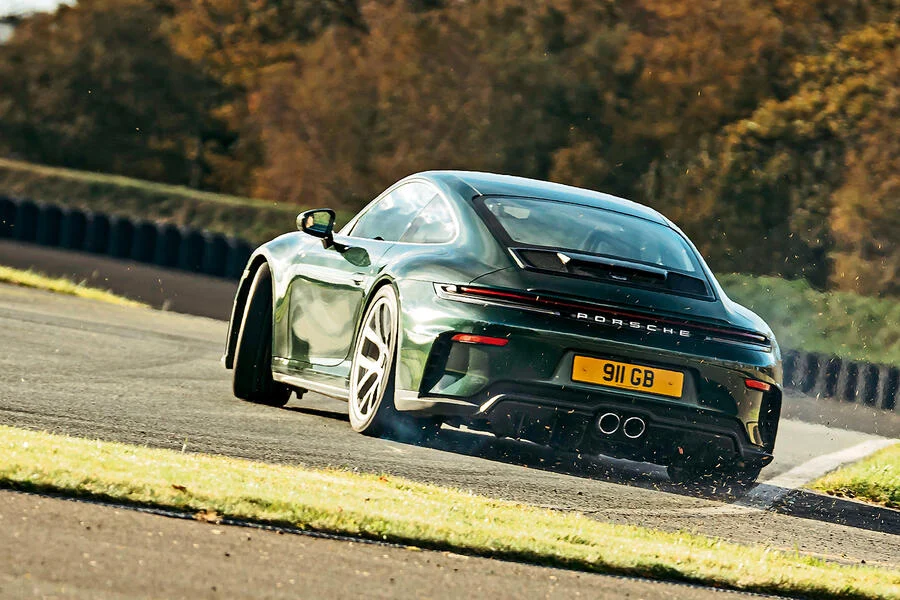
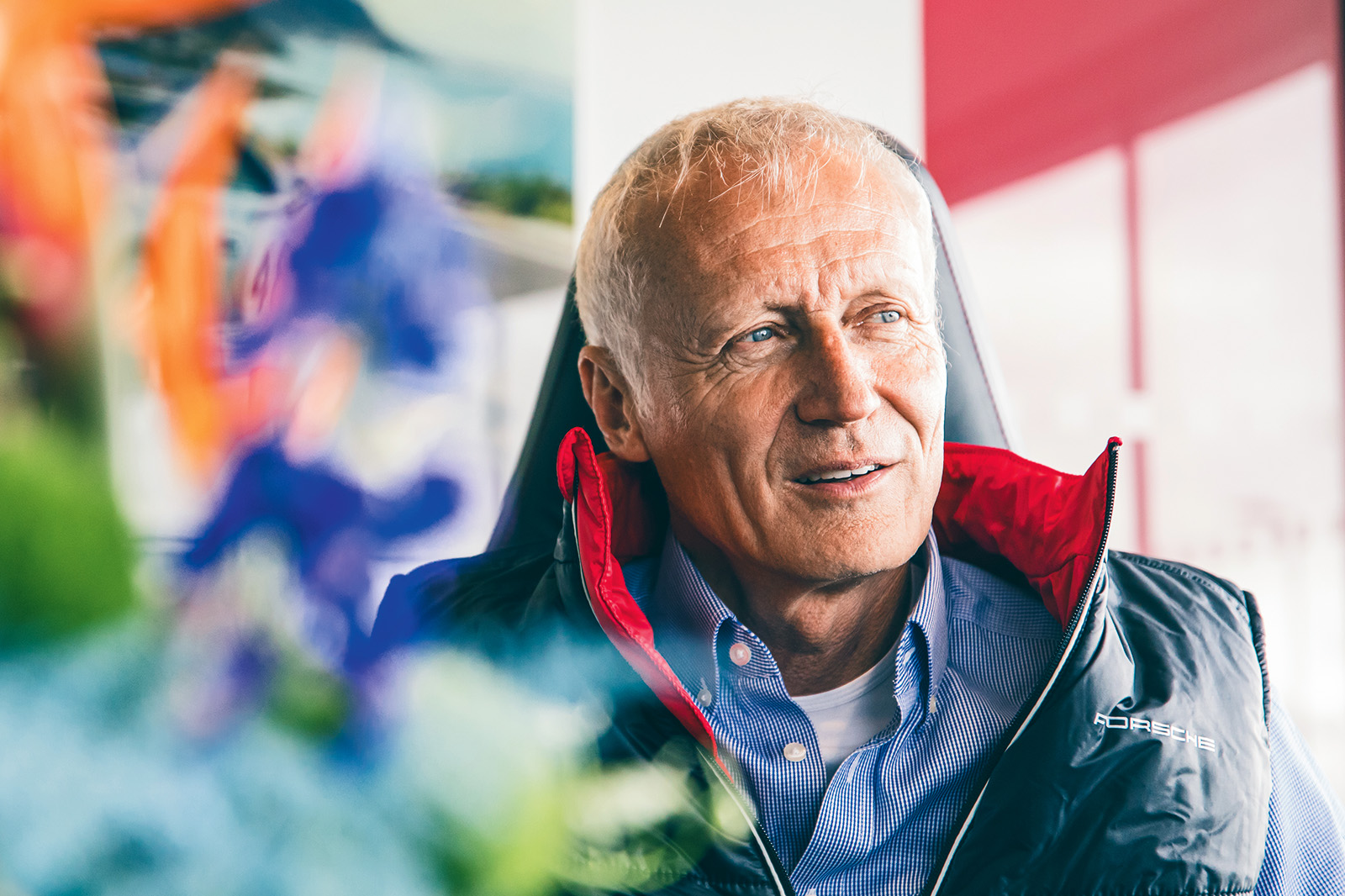
At the Porsche Experience Centre in Silverstone, the atmosphere is electric. It is the Sunstede Festival, a sprawling celebration marking 75 years of the Porsche marque in the United Kingdom. Among the enthusiasts, collectors, and engineers, one figure commands a level of reverence usually reserved for global icons: Andreas Preuninger.
As the head of Porsche’s GT division for the past 25 years, Preuninger is the mastermind behind the most visceral, track-focused road cars ever to wear the Stuttgart crest. To the assembled crowd, he is more than an executive; he is the custodian of the "GT" soul. In an exclusive insight into the future of the 911, Preuninger confirms that despite the encroaching shadows of electrification and tightening emissions regulations, the legend of the GT3 is not merely surviving—it is evolving.
The Evolution of an Icon: A Quarter-Century of GT Excellence
To understand where Porsche is going, one must appreciate the trajectory Preuninger has steered over the last two and a half decades. Since taking the helm of the GT arm, he has transformed what was once a niche department into the gold standard for high-performance sports cars.
The Chronology of Greatness
- 1999: The inception of the modern GT era. Preuninger’s influence begins to manifest as Porsche leans further into motorsport-derived engineering for road-legal platforms.
- 2003: The launch of the 996 GT3 RS, a car that cemented the "RS" (RennSport) moniker as the ultimate badge of honor for purists.
- 2009: The 997 GT3 RS 3.8 arrives, introducing the concept of extreme aerodynamic precision paired with a high-revving, naturally aspirated flat-six.
- 2013: The 991 generation launches, bringing active rear-axle steering and dual-clutch transmission (PDK) to the GT3, a controversial move that proved to be a masterstroke in lap-time dominance.
- 2021: The 992 GT3 debuts with a double-wishbone front suspension, a radical departure from the traditional MacPherson strut, signaling a new era of front-end grip.
- 2024 and Beyond: The focus shifts toward integrating sophisticated digital chassis control with the mechanical purity that defines the GT experience.
Supporting Data: Why the Formula Persists
Critics often argue that the natural laws of physics and the regulatory landscape will eventually render the high-revving, internal combustion engine (ICE) obsolete. However, Preuninger’s team utilizes a data-driven approach to prove that the GT3’s platform has significant headroom for improvement.
Current testing cycles show that despite added weight from safety and emissions equipment, power-to-weight ratios in the latest iterations remain industry-leading. By utilizing lightweight materials—carbon fiber, magnesium, and aluminum alloys—Porsche has successfully offset the mass of hybrid-ready chassis components.
Furthermore, the introduction of "synthetic fuels" (e-fuels) has become a pillar of Preuninger’s argument for the longevity of the GT brand. By testing these fuels at the highest levels of motorsport, Porsche is proving that the visceral, high-RPM exhaust note and throttle response of a naturally aspirated engine can coexist with a carbon-neutral outlook.
The Preuninger Philosophy: Mechanical Purity Meets Digital Precision
When asked why future GT3s will continue to improve, Preuninger points to the "virtuous cycle" of the GT department. Unlike standard production lines, the GT team operates with a degree of autonomy that allows for rapid prototyping and track-based validation.
The Role of Feedback
"We don’t just build cars for the data sheet," Preuninger explains. "We build them for the driver’s feedback." This philosophy is why the 911 GT3 remains one of the few cars on the planet that prioritizes steering feel and mechanical connection over pure, unadulterated acceleration.
The integration of advanced aerodynamics—specifically the swan-neck wing and the underbody diffusers—has allowed the GT3 to achieve downforce figures that were once the exclusive domain of prototype race cars. As the technology trickles down from the Porsche 911 RSR and GT3 R race programs, the road-legal variants become faster not by adding raw horsepower, but by mastering the air around them.
Official Responses and Strategic Vision
Porsche’s top brass has remained remarkably consistent in their support of the GT division. While the company pushes aggressively toward an all-electric lineup for the Macan, Cayenne, and eventually the 718 Boxster and Cayman, the 911 is designated as the "last bastion" of the ICE engine.
Preuninger has hinted that the future of the GT3 involves a delicate balancing act. "We are not afraid of new technology," he notes, "but we are protective of the sensation." This suggests that if hybrid technology is introduced to the GT3 line, it will not be to prioritize efficiency in the traditional sense, but to provide a torque-fill that enhances the naturally aspirated experience, ensuring the engine stays in its "sweet spot" across a wider rev range.
Implications for the Future of Performance
The implications of Preuninger’s long-term vision are profound for both the automotive industry and the collector market.
1. The Preservation of the Driver’s Car
As autonomous driving technology and heavy, battery-electric platforms dominate the mainstream market, the GT3 acts as an anchor for the automotive enthusiast. Preuninger’s commitment ensures that, for the foreseeable future, the "analog" feel of a sports car will be preserved, even as the underlying mechanical systems become increasingly digital.
2. Market Value and Collectibility
The "Preuninger Era" of cars has already become a blue-chip asset class. Investors are looking closely at his statements regarding the transition to hybrid systems, betting that the final pure-ICE GT models will become the most sought-after collector cars in history.
3. Engineering Prowess
The GT division serves as the R&D lab for the entire Porsche brand. The innovations tested on the GT3—be it suspension geometry, cooling systems, or active aero—frequently find their way into the standard Carrera models two or three years later. Thus, the improvement of the GT3 is essentially the improvement of the entire 911 lineage.
Conclusion: The Road Ahead
As the Sunstede Festival draws to a close, the roar of a 992 GT3 RS echoing across the Silverstone circuit serves as a reminder that this is not a brand in decline. Andreas Preuninger’s 25-year tenure has been defined by the refusal to accept the status quo.
He acknowledges that the hurdles—be they noise regulations, crash safety standards, or the shift toward sustainability—are higher than ever. Yet, he maintains a quiet, almost mischievous confidence. "The car is a living thing," he says. "As long as there is a passion for the act of driving, there will be a way to make the GT3 faster, sharper, and more rewarding."
For Porsche enthusiasts, the message is clear: the transition to a new era does not mean the end of the driving experience. Under Preuninger’s guidance, the future of the 911 GT3 is not just about survival; it is about the continued pursuit of automotive perfection. As long as the GT boss holds the keys, the 911 will continue to set the pace for the rest of the world to follow.
