

For decades, the standard approach to pet ownership in the home was one of compromise. We tucked plastic crates into dark corners, resigned ourselves to mismatched water bowls tripping us in the kitchen, and draped sofa covers over our furniture in a desperate attempt to fend off shedding and claw marks. Pets were our beloved companions, but they were treated as guests who hadn’t quite learned the house rules.
That narrative is undergoing a seismic shift. Today, the modern homeowner is moving away from treating pet essentials as an afterthought, opting instead for a sophisticated, integrated approach that treats our four-legged roommates with the same design rigor as any other family member. This is no longer just about buying a nicer cat tree; it is about architectural and interior design that elevates the quality of life for humans and animals alike.
The Evolution of the Pet-Friendly Home
The current trend in interior design reflects a broader cultural change: pets are increasingly viewed as core family members. As such, the "pet-friendly" label has evolved from a marketing buzzword for stain-resistant rugs into a comprehensive philosophy of space planning.
Design professionals are now fielding requests for "built-in" pet solutions as frequently as they handle requests for kitchen remodels or home office setups. The philosophy is simple: a home should not have to sacrifice aesthetic integrity to accommodate the slightly more chaotic reality of living with animals.
Chronology of the Shift
- The "Afterthought" Era (1990s–2010s): Pet accessories were purely utilitarian. If it wasn’t plastic, metal, or hidden, it was considered a design failure.
- The "Performance" Boom (2015–2020): The rise of high-tech performance textiles changed the market. Suddenly, homeowners could have light-colored sofas that didn’t hold onto pet hair or odors, marking the first real intersection of high design and pet utility.
- The Integrated Era (2021–Present): We are currently in a phase where "stealth design" reigns supreme. Pet stations, washing areas, and integrated feeding zones are being baked into floor plans at the architectural stage rather than being retrofitted later.
Expert Perspectives: Marrying Form and Function
The design community is embracing this challenge with enthusiasm. Morgan Blinn of the Steamboat Springs-based firm Rumor Designs argues that the era of sacrificing beauty for utility is officially over.
"Homeowners shouldn’t have to sacrifice beautiful finishes for their pets," Blinn explains. "Fortunately, the industry is catching up. We are seeing brands offer durable, high-end materials that are specifically engineered to withstand the wear and tear of pet ownership without looking industrial or clinical."
Courtney B. Smith, principal of her eponymous Marin County firm, echoes this sentiment, emphasizing that the key to a successful pet-friendly home is consistency. "The best way to design a home that works as well for pets as it does for humans is to integrate the necessities using the same thought and taste level you do for other decor and furniture selections," Smith says. "If you treat the dog bed with the same design intent as you do a bespoke armchair, you don’t end up with an ‘eyesore’—you end up with a cohesive living space."
Designing for Daily Rituals: Practical Applications
When we look at how these theories manifest in the physical space, it becomes clear that smart design is about managing the rituals of pet ownership: feeding, sleeping, and grooming.
The Pet-Washing Station: A Mudroom Essential
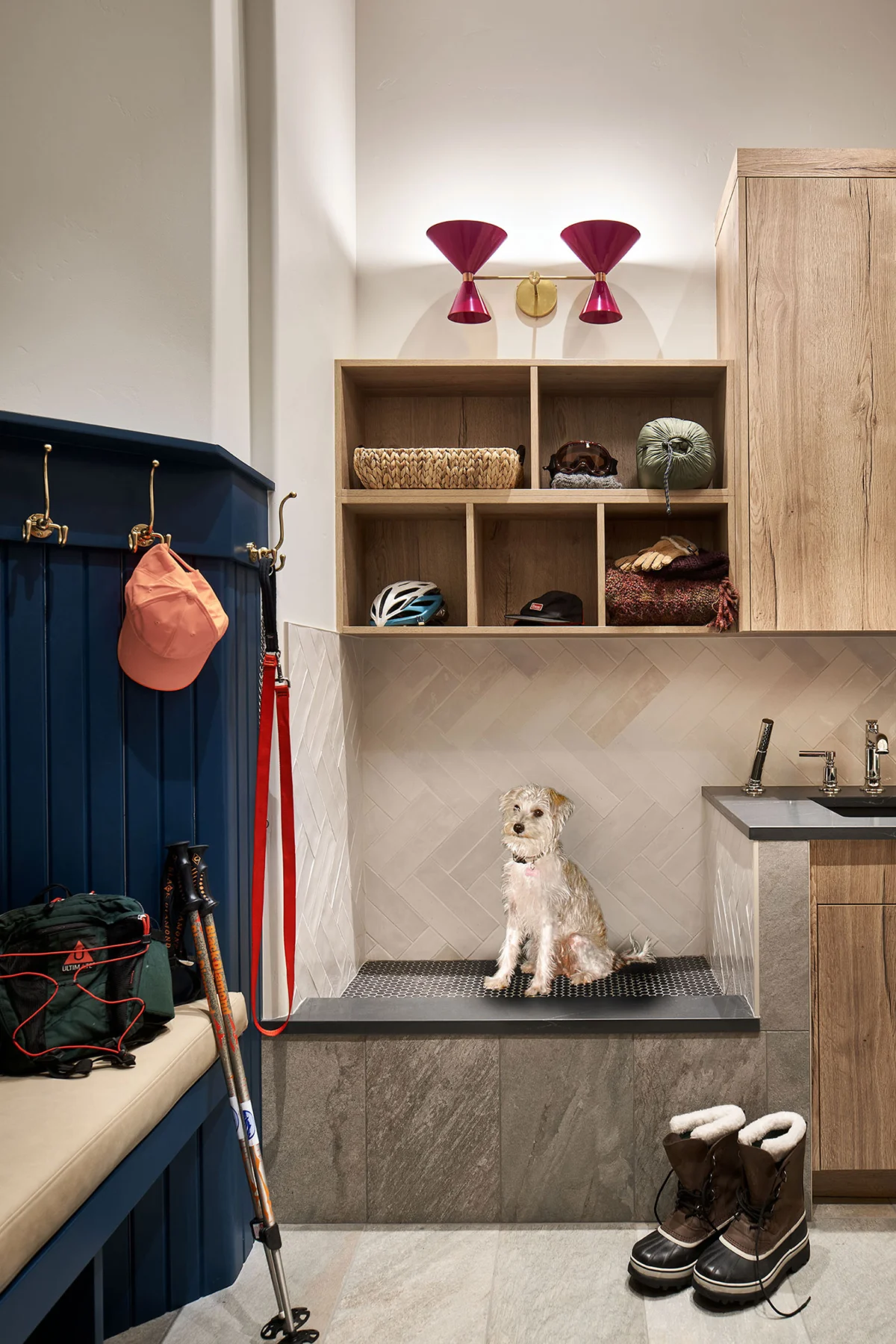
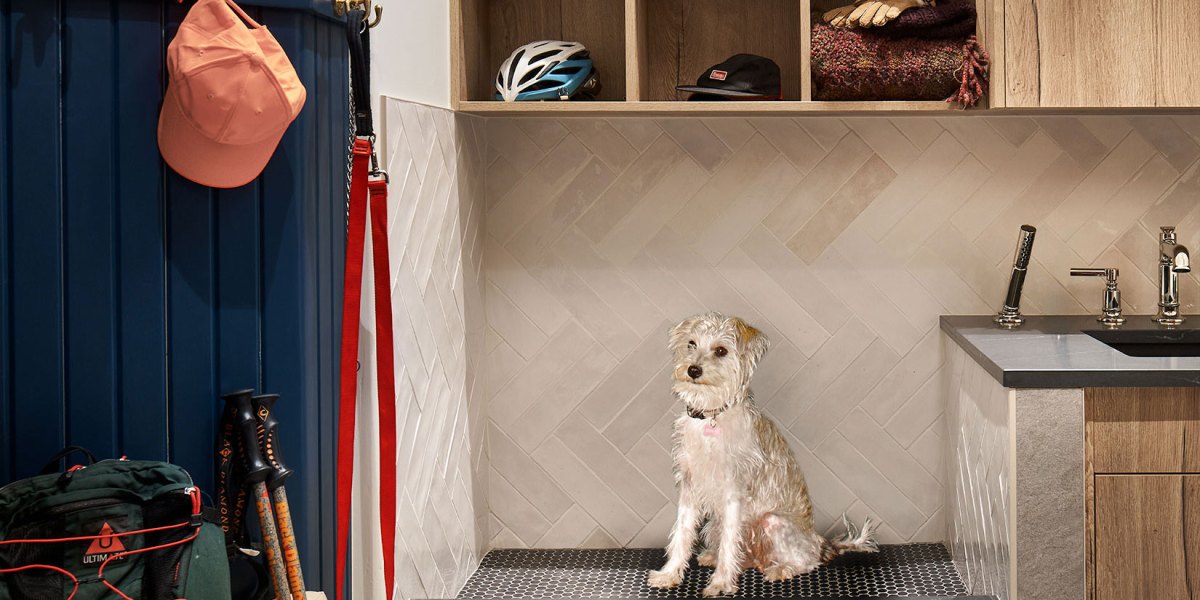
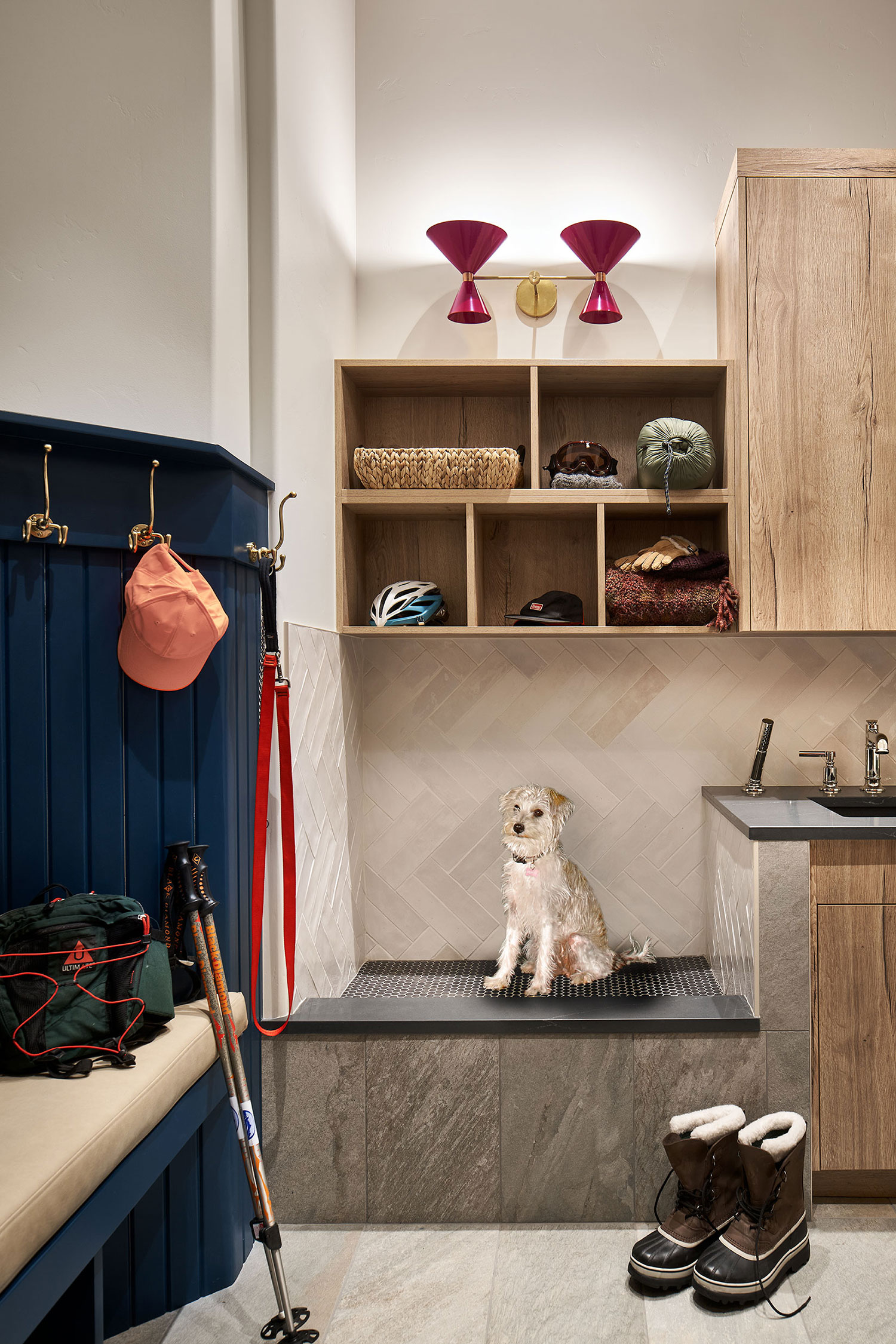
One of the most requested features in high-end homes today is the dedicated pet-washing station. No longer relegated to the backyard hose, these stations are being integrated into mudrooms and laundry areas. Blinn recently designed a station for a client that has become the "underdog" of the home.
By installing a handheld nozzle and a raised floor, the design creates an intuitive, ergonomic experience for the owner and a stress-free environment for the pet. This isn’t just a luxury; it is a functional necessity for households in active climates where muddy hikes or beach days are part of the daily routine.
Discretion and Hidden Storage
Kristina Khersonsky of the Los Angeles-based STUDIO KEETA notes that the goal is not to erase the pet’s presence—a house should feel lived in—but to ensure their rituals don’t disrupt the flow of the home.
"The magic lies in careful planning upfront," Khersonsky notes. "If you are in the middle of a renovation, why not integrate a feeding zone directly into the kitchen millwork? We are seeing a move toward ‘hidden’ infrastructure—leash displays integrated into custom cabinetry or crate areas tucked behind elegant millwork."
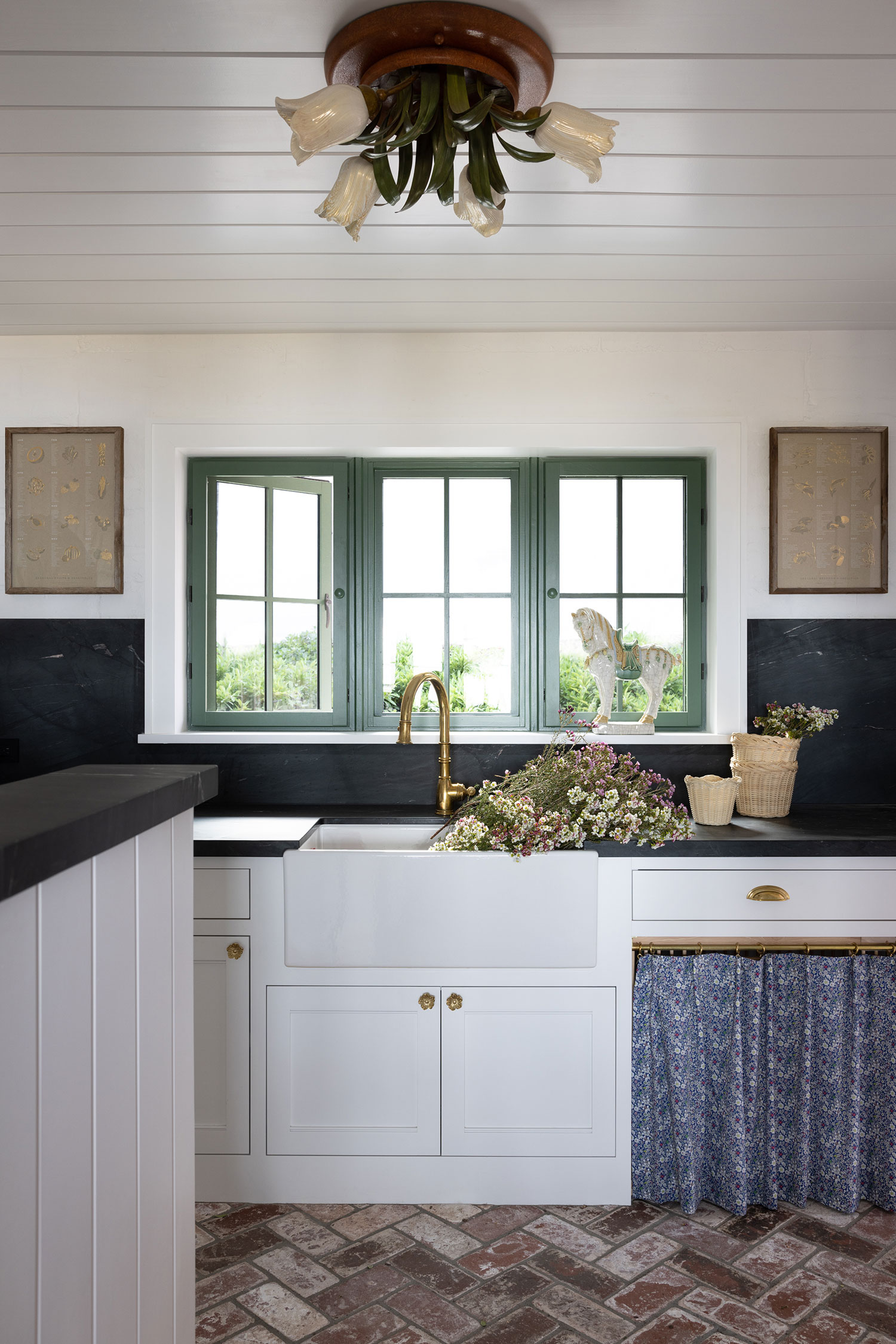
Smith takes this a step further, often utilizing clever, low-cost solutions to hide the more "utilitarian" aspects of pet ownership. Her use of floral café curtains to conceal crate areas in laundry rooms proves that you don’t need a massive budget to achieve a sophisticated look. "Rather than cluttering corners with plastic bins, we up-level the basics," she adds. "Form and function are not enemies; they are partners."
Material Science: The Under-the-Hood Innovation
The most critical component of a pet-friendly home is, perhaps ironically, what you don’t see. The choice of materials dictates how well a home ages under the paws of a pet.
The Rise of Performance Textiles
The "abrasion test" is now a standard metric for interior designers selecting fabrics for clients with pets. The industry has made massive strides in performance textiles, moving away from the stiff, plastic-like feel of early outdoor fabrics toward soft, luxurious weaves that are virtually indestructible. These fabrics are now the gold standard for upholstery in family-centric homes, offering peace of mind without sacrificing the tactile quality of a high-end living room.
Flooring and Surface Durability
Lindsay Olson of Lulu Designs warns against the common pitfalls of flooring selection. "I avoid high-gloss finishes and narrow planks, which amplify every scratch and imperfection," she says.
Instead, Olson advocates for:
- Wide-plank oak with a matte finish: The grain and matte texture help mask the inevitable scratches from claws.
- Honed stone: Unlike polished marble, honed stone offers a grip for pets and hides dust and hair far more effectively.
- Large-format tile with minimal grout: Smaller tiles often result in high-maintenance grout lines. Large-format slabs provide a seamless surface that cleans up in seconds, making them ideal for high-traffic zones like entryways and kitchens.
Implications for the Future of Real Estate
As the market continues to evolve, the "pet-readiness" of a home is becoming a legitimate selling point in the luxury real estate market. Just as a gourmet kitchen or a home gym can drive up property value, a thoughtfully designed mudroom with a pet station or a kitchen with integrated feeding stations is increasingly viewed as an asset.
Furthermore, this shift indicates a move toward more "human-centric" design in general. If a home is built to withstand the chaotic energy of a dog, it is often better equipped to handle the wear and tear of children, guests, and the general passage of time.
Conclusion: The "Paw-fect" Balance
Designing for pets is no longer about compromise; it is about creating a home that functions as a sanctuary for every member of the household. By prioritizing durable materials, intentional storage, and seamless integration, designers are proving that we don’t have to choose between a stylish home and a happy pet.
As the lines between our living spaces and our pets’ needs continue to blur, we find that the most successful homes are those that acknowledge the reality of our lives. When we design for the messy, joyful, and often unpredictable nature of our furry companions, we ultimately create homes that are more resilient, more comfortable, and, quite simply, more human.
