

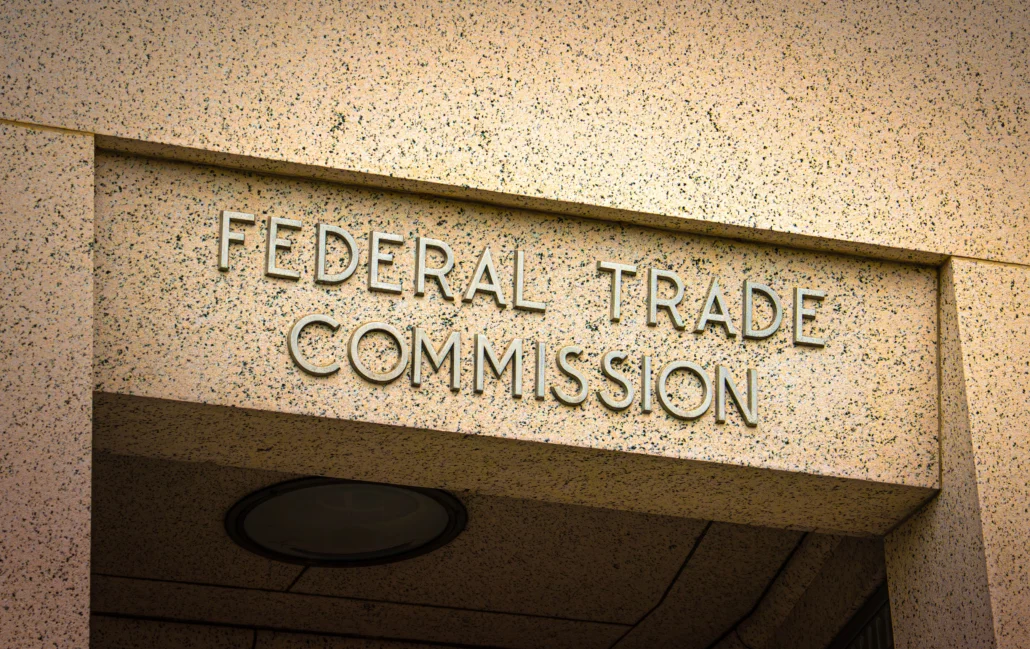
WASHINGTON, DC — In a landmark development for digital privacy and market fairness, the National Consumers League (NCL)—supported by a coalition of 26 prominent public interest organizations—has formally petitioned the Federal Trade Commission (FTC) to adopt a robust enforcement policy against the burgeoning practice of "personalized pricing." Also known as "surveillance pricing," this opaque business model uses real-time data collection to tailor prices based on an individual’s perceived willingness or desperation to pay.
The submission of these comments marks a critical inflection point in the ongoing debate over how much power corporations should wield over consumers in an era of hyper-connectivity and pervasive data tracking.
Main Facts: The Fight Against Algorithmic Exploitation
The core of the NCL’s argument is that the current landscape of digital commerce has shifted from competition-based pricing to surveillance-based exploitation. By aggregating vast amounts of consumer data—ranging from browsing history and location data to device type and purchase habits—companies are increasingly moving away from "sticker prices" toward dynamic models that treat every consumer as a unique financial target.
The NCL supports the FTC’s preliminary view that failing to disclose personalized pricing is a deceptive practice under current law. However, the coalition is pushing for a much broader interpretation: they argue that disclosure alone is insufficient. Their filing asserts that even if a company informs a consumer they are being charged a premium based on their personal data, certain predatory pricing strategies are inherently abusive and should be categorically prohibited.
"The idea that businesses can spy on us without limit, and be financially rewarded for the same behavior, is fundamentally repulsive," said Eden Iscil, Senior Public Policy Manager at the NCL. "Companies need to focus on competing and improving their product rather than invading our privacy."
Chronology: The Rise of the Data-Driven Marketplace
The transition to surveillance pricing did not happen overnight. To understand the current regulatory push, one must look at the evolution of e-commerce over the last two decades.
- 2000s: The Rise of Dynamic Pricing: Initially introduced by airline and hospitality sectors, dynamic pricing was marketed as a way to optimize supply and demand. Algorithms adjusted prices based on seasonal trends, seat availability, and general demand.
- 2010s: The Data Mining Boom: As social media platforms and mobile applications became ubiquitous, the granularity of data collection increased exponentially. Companies began to link digital identities to physical habits, creating "digital twins" of consumers.
- 2020–2023: The Integration of AI: The advent of generative AI and machine learning allowed for the real-time processing of massive datasets. Prices could now be calculated in milliseconds based on a user’s battery level, location, and previous search history.
- 2024–2025: Regulatory Scrutiny: The FTC, under Chairperson Lina Khan, began prioritizing the investigation of "junk fees" and algorithmic harms. The current proposed policy regarding personalized pricing is the result of growing bipartisan concern that these practices undermine the foundational principles of a free and fair market.
- February 2025: The NCL and its coalition partners submitted their formal comments to the FTC, signaling a major push for federal intervention.
Supporting Data: Examples of Algorithmic Harm
The FTC’s policy proposal highlighted several harrowing, albeit hypothetical, scenarios that illustrate the potential for abuse. These examples served as the catalyst for the NCL’s aggressive stance.
1. The Medical Emergency Markup
The commission identified a scenario where rideshare platforms could potentially identify that a user is requesting a ride to a hospital emergency room. By sensing the urgency of the situation, the algorithm could theoretically raise the fare, knowing that the consumer’s need for medical attention outweighs their price sensitivity.
2. The Familial Status Penalty
Another area of concern involves grocery or retail platforms that utilize data to identify household composition. An algorithm could identify a parent of multiple children and increase the price of essential goods, betting that the parent lacks the time or flexibility to "shop around" for lower prices.
3. Socio-Economic Profiling
Data brokers often sell "propensity scores" that estimate a consumer’s wealth or debt burden. If a merchant uses this data to charge higher prices to those who are less likely to notice, or lower prices to those who are wealthy enough to be "price sensitive," the practice creates a cycle of economic inequality that is hidden from public view.
Official Responses and Coalition Support
The NCL did not act in isolation. The strength of their submission lies in the interdisciplinary support they received during the drafting process. Legal expertise was provided by the Center for Consumer Law & Economic Justice at the U.C. Berkeley School of Law, which served as counsel. Additional policy support was garnered from the National Consumer Law Center (NCLC) and Truth in Advertising, Inc.
These organizations collectively argue that surveillance pricing often crosses the line into illegal discrimination. They point out that federal and state laws already prohibit businesses from discriminating against protected classes. If an algorithm systematically charges higher prices to people based on their disability, race, or familial status—even if that discrimination is "indirect" or "proxy-based"—it likely violates the Civil Rights Act and various state-level anti-discrimination statutes.
The FTC is currently reviewing these comments, and industry stakeholders are expected to lobby heavily against a strict ban, arguing that "personalized pricing" is merely a modern iteration of "market efficiency."
Implications: The Future of Consumer Privacy
If the FTC moves forward with a restrictive policy, the implications for the digital economy would be profound.
A. The Death of Opaque Pricing
Retailers would be forced to move toward transparent, uniform pricing models. This would require companies to dismantle the sophisticated AI infrastructure that currently supports their dynamic pricing engines, potentially leading to a massive shift in how marketing budgets are allocated.
B. Increased Liability for Data Brokers
The coalition’s argument suggests that companies cannot hide behind the excuse that their algorithms are "black boxes." If a company uses data to facilitate discriminatory pricing, they would be held strictly liable for the outcomes of those decisions, regardless of whether a human programmer intended for that outcome to occur.
C. A Shift in Competitive Strategy
As Eden Iscil noted, the goal is to shift corporate focus back toward the product. By removing the ability to "squeeze" extra value out of individual consumers through surveillance, companies would be forced to compete on price, quality, and service—the traditional pillars of a functioning capitalist economy.
D. Potential Litigation Waves
Should the FTC adopt the NCL’s recommendations, we can expect a wave of class-action lawsuits. Consumer advocates will likely use the FTC’s findings as a foundation to sue companies that continue to utilize discriminatory pricing models, arguing that such behavior is not only unethical but legally actionable under the FTC Act.
Conclusion: A Call to Action
The submission by the National Consumers League is a warning shot to the tech and retail industries: the era of unchecked digital surveillance is facing a reckoning. As the FTC weighs its next steps, the debate is no longer about whether personalized pricing is "efficient," but whether it is compatible with a society that values privacy, equity, and fair play.
For consumers, the path forward remains uncertain. However, the alignment of 27 major public interest organizations suggests that there is a growing consensus: in the digital marketplace, the consumer should not be the product.
For more information on the National Consumers League and their ongoing advocacy, please visit www.nclnet.org.
About the National Consumers League (NCL)
Founded in 1899, the National Consumers League is America’s pioneer consumer organization. Our mission is to protect and promote social and economic justice for consumers and workers in the United States and abroad. Through research, advocacy, and education, the NCL has been the leading voice for the American public in the halls of government for over 125 years.
