

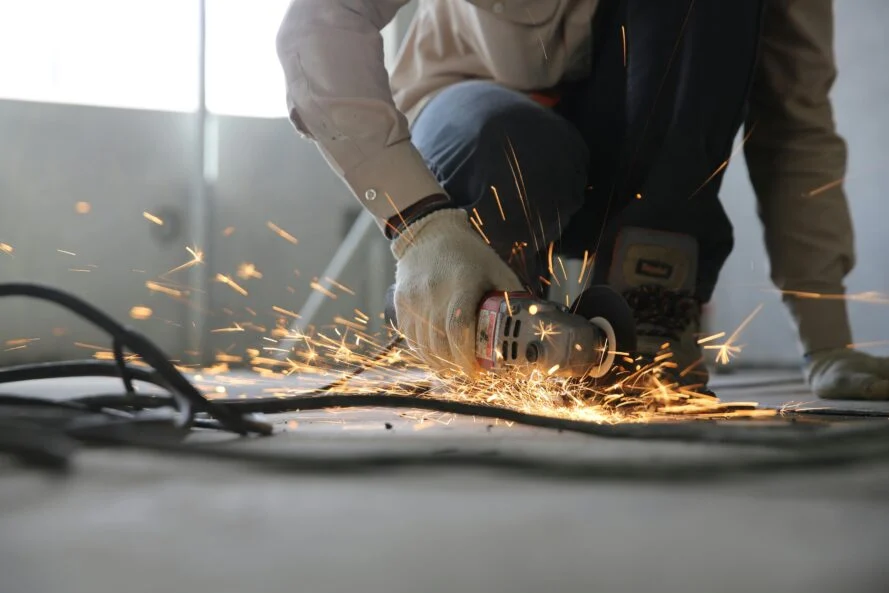
In the world of professional fabrication, woodworking, and metal restoration, the difference between a amateurish finish and a master-class result often boils down to tool accessibility. When a workpiece presents a narrow opening, a complex curved edge, or an awkward, fixed position, the standard stationary belt sander—while powerful—often proves to be a liability. It is in these precise, high-stakes scenarios that the portable belt sander emerges not just as an accessory, but as an essential piece of infrastructure for any serious workshop.
By shifting the philosophy from "bringing the work to the machine" to "bringing the machine to the work," craftsmen can achieve a level of control previously reserved for manual, time-consuming hand-sanding. Whether you are dealing with intricate furniture joints or industrial-grade weld cleanup, understanding the nuances of these compact power tools is vital for modern project success.
The Evolution of Sanding: Why Compact Tools Matter
Historically, sanding was a binary choice: either you used a heavy-duty, stationary machine that provided speed but lacked agility, or you relied on manual sanding blocks that offered control but demanded grueling physical labor. The modern portable belt sander serves as the bridge between these two extremes.
Main Facts: The Anatomy of Efficiency
The utility of a compact belt sander lies in its design geometry. Unlike broad-faced sanders, these tools feature specialized sanding arms—often slim and adjustable—that allow the operator to navigate around brackets, inside frames, and along narrow metal sections. Key features that define a high-performing portable unit include:
- Belt Width Versatility: Narrower belts allow for surgical material removal, while wider belts provide broader coverage.
- Variable Speed Control: The ability to adjust surface feet per minute (SFPM) is critical when transitioning from aggressive stock removal to delicate finishing.
- Ergonomic Weight Distribution: Because the operator holds the tool, balance is paramount to prevent fatigue during vertical or overhead tasks.
- Tracking Mechanisms: Precision alignment prevents the abrasive belt from wandering, ensuring consistent wear and preventing damage to the machine’s housing.
Chronology of Application: From Rough Prep to Polished Finish
Successful sanding is rarely a one-step process; it is a sequential evolution. Understanding when and how to deploy a portable sander is part of the professional workflow.
- Initial Stock Removal: Using coarse-grit abrasives at higher speeds to knock down high spots, remove excess weld material, or strip heavy rust.
- Surface Refining: Transitioning to medium-grit belts to smooth out the transition zones created during the initial pass, ensuring the workpiece maintains its intended structural profile.
- Detailing and Contouring: For projects involving tubes or complex frames, this stage requires switching to specialized heads or flexible belt arrangements that conform to the material’s geometry.
- The Final Pass: Utilizing fine-grit abrasives at slower speeds to achieve a uniform satin or polished finish, removing the microscopic scratches left by earlier, more aggressive stages.
Supporting Data: Selecting the Right Tool for the Material
Not all portable belt sanders are created equal, and selecting the wrong tool for the material can lead to thermal damage or ruined finish quality.

The Pipe Sanding Paradigm
For professionals working with stainless steel railings, handrails, or automotive tubing, a standard flat belt sander is often counterproductive. A dedicated pipe belt sander utilizes a unique "wrap-around" configuration. By allowing the belt to contact a significant percentage of the pipe’s circumference, the machine avoids the "flat-spotting" that occurs when a flat sander is forced against a curve. Data from professional fabricators suggests that using a pipe-specific sander can reduce finish-blending time by as much as 40% compared to traditional methods.
Thermal Management in Metalworking
When sanding metal, heat is the enemy. Excessive friction can lead to discoloration (heat tinting) and, in some cases, the structural softening of thin-gauge materials. Variable speed control is not merely a convenience; it is a necessity. By slowing the belt speed, an operator can manage the thermal energy generated at the contact point, ensuring that material is removed through abrasion rather than heat-induced degradation.
Official Industry Perspectives: The Professional Standard
Leading manufacturers and workshop experts emphasize that the machine’s "arm" is the true differentiator. In professional settings, the ability to rotate or extend the sanding arm is cited as a primary factor in reducing ergonomic strain.
"The goal is never just to remove material," says one senior design consultant in the architectural metalwork sector. "The goal is to maintain the geometric integrity of the piece while removing the imperfection. If the tool forces you into an unnatural wrist position, the likelihood of an ‘accidental touch’—a mark caused by the edge of the belt—increases exponentially."
Professional consensus also highlights the importance of dust and particle management. Whether dealing with wood dust or metallic shavings, the integration of vacuum ports is considered a non-negotiable feature for modern indoor workshops. Professional-grade tools are increasingly designed to interface directly with shop-vac systems, ensuring a safer, cleaner environment that protects the operator from airborne particulates.
Implications for Future Workshop Productivity
The rise of high-performance, portable sanding technology has significant implications for how we approach architectural design and furniture manufacturing.

Increased Design Freedom
When tools are capable of reaching into tight, complex areas, designers are no longer restricted to "sander-friendly" geometries. This opens the door for more intricate, sculptural, and complex metal or wood frames that were previously deemed too difficult to finish properly.
The Shift Toward Modular Fabrication
As portable tools become more powerful and accurate, the reliance on massive, stationary machinery is decreasing. This allows smaller shops to produce work that rivals the quality of large-scale industrial plants. The ability to perform high-quality finishing on-site—rather than in a centralized finishing room—means that large or heavy installations can be adjusted, smoothed, and polished in their final position.
Safety and Ergonomics
The industry is moving toward a greater focus on operator health. Modern portable sanders are designed with better vibration dampening and more intuitive trigger placement. As the workforce ages, the adoption of tools that require less physical force and provide better stability is essential for maintaining high-quality output without compromising the health of the technician.
Best Practices: Ensuring Superior Results
To maximize the longevity of your machine and the quality of your work, consider these essential operational habits:
- The "Test Pass" Rule: Always initiate your work on a scrap piece or a hidden section of the project. This allows you to verify the cutting rate of the abrasive and the heat generation of the current speed setting.
- Don’t Force the Cut: Let the abrasive do the work. If you find yourself applying significant downward pressure, you are likely using an abrasive that is too fine or too dull. Applying excessive pressure leads to uneven surfaces and accelerated belt wear.
- Tracking Maintenance: Never ignore a belt that is drifting. A belt running against the side of the housing will quickly degrade and can cause the drive wheels to wear unevenly, leading to permanent tool damage.
- Abrasive Selection: Think of your belt choice as you would a paint brush. Match the grit and the backing material (ceramic, zirconia, or aluminum oxide) to the hardness of the material you are surfacing.
Conclusion: Investing in the Right Solution
Choosing the right portable belt sander requires an honest assessment of your specific workload. If your day-to-day involves large, flat tabletops, a standard, high-power belt sander is your primary tool. However, if your projects involve complex joinery, custom railing fabrication, or intricate metalwork, the investment in a narrow-arm or pipe-specialized sander will pay for itself in saved time and superior finish quality.
Ultimately, the best tool is one that fits the anatomy of your project. By considering belt width, speed variability, arm flexibility, and proper abrasive matching, you move from being a user of tools to a master of them. In the pursuit of professional-grade craftsmanship, the ability to access and refine the most difficult spaces is what separates the exceptional from the ordinary. As the market for portable power tools continues to innovate, those who prioritize these specific technical capabilities will find themselves with a distinct advantage in both precision and productivity.
