

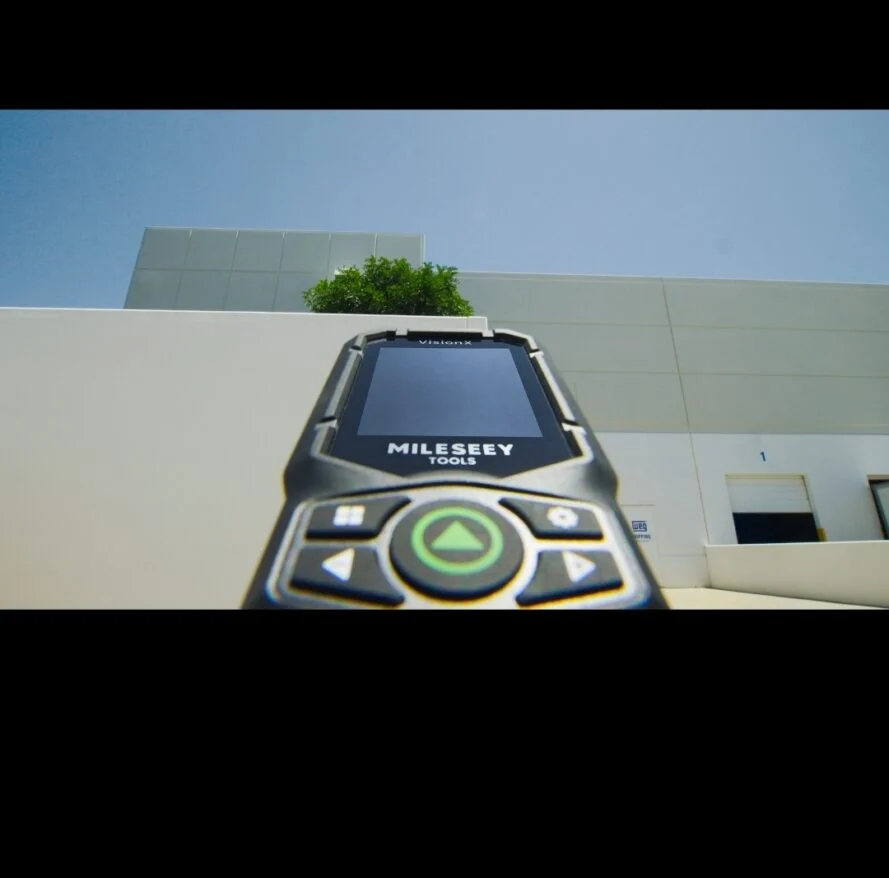
In the modern construction and renovation landscape, the axiom "measure twice, cut once" is undergoing a digital transformation. As the industry moves toward increasingly sophisticated Building Information Modeling (BIM) and cloud-integrated project management, the way professionals capture, store, and share site data has become a critical pillar of project success. At the forefront of this shift is the introduction of the MILESEEY S50 and S50C laser distance meters—tools designed not merely to provide a numerical reading, but to serve as the foundational data nodes for a fully connected construction workflow.
Main Facts: The Digital Evolution of Site Measurement
For decades, the laser distance meter was a standalone utilitarian device—a black box that output a number on a small LCD screen. Today, that paradigm is shifting. The MILESEEY S50 and S50C represent a new generation of "smart" measurement tools that treat dimensions as part of a broader, living project record.
The S50 is engineered for the fast-paced environment of interior renovation, where precision is paramount and space is often at a premium. Its primary value proposition lies in its ability to bridge the gap between physical space and digital documentation. By integrating seamless app connectivity, the device ensures that measurements are instantly logged into project files, eliminating the human error inherent in manual transcription.
The S50C model, conversely, is designed for more demanding, large-scale, or outdoor applications. It features advanced camera-assisted targeting, allowing for high-accuracy readings over long distances where traditional laser dots might be invisible or inaccessible. Together, these tools are moving the industry away from "isolated data points" and toward "contextual site intelligence."

Chronology: The Journey from Analog to Connected Intelligence
To understand the significance of the S50 series, one must look at the evolution of measurement technology in the construction sector:
- The Analog Era (Pre-2000s): Measurement was a labor-intensive, analog process relying on tape measures, physical notebooks, and frequent return trips to sites to verify "forgotten" dimensions.
- The Laser Transition (2000–2015): The introduction of handheld laser distance meters provided a massive leap in efficiency. Professionals could work faster, but the data remained "trapped" on the device, requiring manual entry into software or spreadsheets.
- The Cloud Integration Era (2015–2023): Early connectivity features emerged, allowing basic Bluetooth syncing. However, the ecosystem was often fragmented, with data stored in siloed apps that did not communicate well with broader architecture and engineering software.
- The Contextual Era (2024–Present): With the release of the S50 and S50C, we have entered an era where the measurement is inherently linked to the project’s visual and digital context. The data is now a component of a larger, collaborative digital twin, enabling architects, contractors, and clients to view the same data in real-time.
Supporting Data: The Hidden Costs of Inaccuracy
The push for smarter measurement is not merely a technological trend; it is an economic and environmental necessity. Research into construction workflows consistently highlights that a significant percentage of project waste—both financial and material—stems from poor data at the planning stage.
- Rework Costs: Studies indicate that roughly 5% to 10% of total project costs in the construction industry are attributed to rework, much of which is caused by inaccurate site measurements during the initial survey.
- Material Waste: When measurements are off by even a few centimeters, it leads to the over-ordering of materials. In a large-scale project, this results in significant physical waste that ends up in landfills.
- Time Efficiency: Field professionals report that as much as 20% of their time on-site is spent verifying measurements or correcting discrepancies identified during the installation phase.
By automating the capture process and ensuring that data is synced directly to cloud-based project management platforms, tools like the MILESEEY S50 series directly address these inefficiencies, reducing the need for "repeat visits" and minimizing the margin of error that leads to downstream material waste.
Official Perspectives: The Industry Shift
Industry experts and representatives from MILESEEY emphasize that the goal of these tools is to "democratize" high-quality data. By making professional-grade tools accessible and easy to integrate, smaller renovation teams can now perform with the same level of digital precision as large-scale architectural firms.

"The objective," says a spokesperson for the brand, "is to remove the friction between the physical site and the digital workspace. When a contractor can capture a point-to-point measurement, overlay it onto a digital floor plan, and share it with an architect instantly, the entire project timeline accelerates. It isn’t just about speed; it’s about confidence."
This sentiment is echoed by architects who argue that when measurements are backed by photographic evidence—a feature supported by the S50C’s camera targeting—it creates an "audit trail" for every dimension. If a question arises during the construction phase, the team doesn’t have to guess; they have the original documentation at their fingertips.
Implications for the Future of the Built Environment
The implications of smarter measurement tools extend far beyond the immediate gains in speed. As we look toward the future of the built environment, three primary areas stand out:
1. Sustainability and Resource Optimization
Sustainability is often framed through the lens of green materials and renewable energy systems. However, the "invisible" sustainability of accurate measurement is just as vital. By eliminating the waste associated with inaccurate planning, the construction industry can significantly lower its carbon footprint. Accurate measurement ensures that we only build what is necessary, using exactly the amount of material required.

2. The Rise of the Digital Twin
The industry is moving toward a future where every building has a "digital twin"—a virtual model that is constantly updated to reflect the physical reality of the structure. The S50 and S50C serve as the "sensors" for these twins, feeding accurate, real-time data into the model. This makes maintenance, retrofitting, and future renovations significantly more efficient, as the digital record remains a true reflection of the physical site.
3. Enhanced Collaboration
Construction is a multidisciplinary effort. When architects, engineers, and contractors work from a single, accurate, and shared dataset, the communication silos that often lead to project failures are broken down. The S50 series acts as a "common language" that allows different stakeholders to view the same project context, fostering a culture of transparency and shared accountability.
Conclusion: A Foundation of Better Information
While the MILESEEY S50 and S50C may appear to be small, handheld devices, their impact on the construction sector is profound. They represent a fundamental shift in how we approach the built environment: moving from a mindset of "manual calculation" to one of "project intelligence."
As the construction and renovation industries continue to grapple with the need for greater efficiency and lower environmental impact, the role of these tools will only grow. By capturing data that is rich in context, connected to the cloud, and accessible to the entire project team, these devices are building a better foundation for the future—one measurement at a time.

Technology alone will never be the panacea for the complex challenges of urban development and building performance. However, by ensuring that every project begins with the highest quality of information, we empower professionals to make better decisions, reduce waste, and ultimately create spaces that are more intelligently planned and sustainably executed. In the final analysis, the future of the built environment is not just about the bricks and mortar; it is about the accuracy of the information that guides their placement.
