

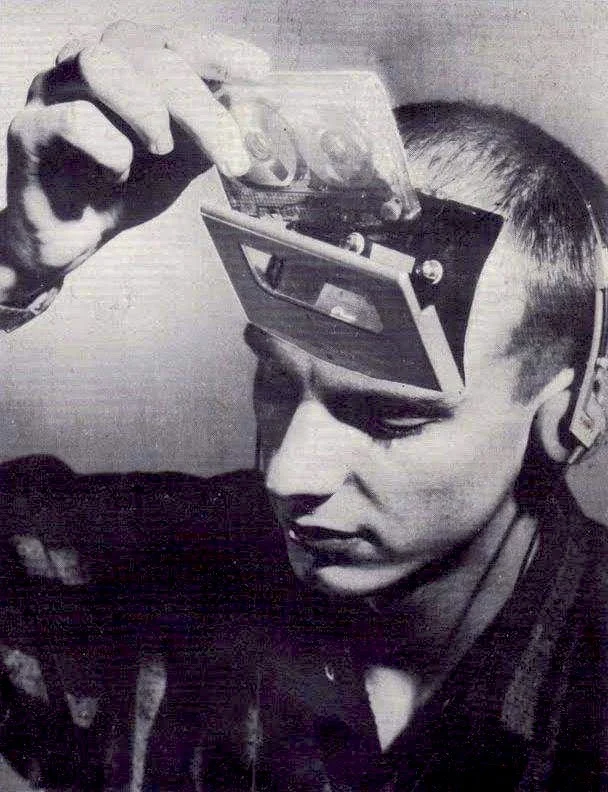
The 2020 Music Group—a collective comprised of critics Alexander Iadarola, Nick James Scavo, and Alec Sturgis—has returned to the pages of Artforum for their second installment of critical inquiry. Their latest column navigates the shifting landscape of contemporary sound, exploring how the democratization of production tools, the ubiquity of algorithmic curation, and the erosion of genre boundaries are redefining what it means to listen in 2026.
The Ambient Ambivalence: From Eno to the Internet-Native
The term "ambient," once a precise signifier for Brian Eno’s 1978 concept of music that is "as ignorable as it is interesting," has become a victim of its own success. In the early 2010s, the label was monopolized by tape-label experimentalists and noise-scene refugees. By the mid-2010s, it had saturated the coffee-shop soundscape. Today, the internet-native ambient scene, thriving on platforms like SoundCloud, has mutated into something far more volatile.
Nick James Scavo notes that this "ambient condition" has permeated all modern listening. If we accept Eno’s definition, our contemporary environment is defined by a paradox: everything is simultaneously ignorable and intensely interesting. This is best exemplified by the work of New York–based artist Daffodil Meadow Scanlan, known as Drumloop.
Drumloop’s work—such as her remix of Isabella Lovestory’s “Whiskey & Coca-Cola”—rejects the "domesticity" of traditional ambient music. Instead of inducing calmness, she uses the ambient trope of "slowness" to scour a track down to its emotional core. A prime example is her 2019 piece, "Tim Hecker’s Amps Drugs feat. Jazz Jennings." By layering a monologue from trans-rights activist Jazz Jennings over Tim Hecker’s cavernous, distressed soundscapes, Drumloop transforms background music into a vessel for raw, unignorable pathos.
Chronology of a Shift: The Rise of Functional Music
The transition from "ambient" as a genre to "ambient" as a state of being is intrinsically linked to the evolution of production technology.
- 1978: Brian Eno releases Ambient 1: Music for Airports, establishing the genre’s foundational philosophy.
- 2011: Tim Hecker releases Ravedeath 1972, signaling a departure toward darker, more claustrophobic soundscapes that challenge the "background music" classification.
- 2023: A New York Times profile highlights Hecker’s own fatigue with the ambient label, noting that the genre has been hollowed out by "lifestyle playlists."
- 2026: The explosion of generative AI tools like Suno shifts the focus toward "Functional Music"—songs generated for specific, non-commercial purposes, such as emotional regulation or personalized digital artifacts.
This chronology marks a move away from the "soulful" human performance—historically guarded by the "Drum Machines Have No Soul" aesthetic—toward the "predictive" generation of audio. Alexander Iadarola observes that modern AI architecture, specifically the "transformer" model, treats audio like language, assigning likelihoods to the next "token" of sound. This results in the creation of music that exists solely for the moment, such as an AI-generated pop song about a specific, fleeting Uber ride.

Supporting Data: The Mechanization of Creativity
The anxiety surrounding music production has shifted from the drum machine—a tool that automates rhythm—to the generative AI platform, which automates the intent of music itself. Iadarola points out that the real potential of these tools lies not in creating radio hits, but in "functional music."
On platforms like Y Combinator’s Hacker News, users have reported using AI to generate tracks that reinforce "grounding" or "breathwork" exercises. This is a radical departure from Satie’s musique d’ameublement (furniture music). While Satie intended his music to be a decorative backdrop, modern functional music is a utility, tailored to the user’s immediate psychological requirements.
The implications are profound. When Mikey Shulman, CEO of Suno, explains that their system is "just something that assigns likelihoods to sequences of tokens," he is describing the end of the composer as a visionary and the beginning of the composer as a prompt-engineer. The question is no longer "is this music good?" but "does this music perform its designated function?"
Official Perspectives: The Limits of Moral Argument
The intersection of music, ideology, and the "invisible hand" was brought into sharp relief this past spring with the premiere of David Lang’s the wealth of nations at the New York Philharmonic.
As critic Alec Sturgis notes, Lang—an arch-post-Minimalist—attempted to set Adam Smith’s 1776 economic treatise to choral-orchestral music. The work began with promise. By using the "elite" form of the symphony to critique capitalism, Lang created a self-aware, gripping exploration of labor. However, Sturgis argues that the piece eventually faltered, shifting into a "languorous" repetition that felt condescending rather than profound.
The contrast between Lang’s earlier, critically acclaimed the little matchgirl passion (2007) and the wealth of nations raises a critical question: Can music truly express a moral argument? In the little matchgirl passion, Lang utilized the spiritual gravity of Bach to facilitate empathy. In the wealth of nations, he attempted to address economic abstraction. Sturgis posits that music fails when it tries to force a moral conclusion on the listener. The most successful works, he argues, are those that provide "space within which to walk toward their own humanity."

Implications: The Recombinant Future
We are living in an era of "total relationality." The ubiquity of mash-ups—where a Tinashe single is overlaid with Nine Inch Nails, or a viral baby-laugh remix trends on social media—demonstrates that our culture has become a massive, recombinant organism.
The "ambient condition" has expanded to include our social interactions and consumption habits. As Nick James Scavo concludes, if "ambient" means "relating to our immediate environment," then we are all living in a permanent ambient state, where the environment is constantly being reshuffled, sampled, and re-contextualized by algorithms and users alike.
The 2020 Music Group’s analysis suggests that the future of music will not be defined by the "genius" of the individual creator, but by the efficiency of the encounter. Whether it is a Drumloop track that captures the specific isolation of a teenager, or an AI-generated song that facilitates a moment of calm in a Philadelphia ride-share, music has become a facilitator of the immediate.
As we move forward, the challenge for the listener is to remain critical in an environment that is designed to be simultaneously ignorable and engaging. If everything is content, and everything is a potential sample, the act of "deep listening" becomes an act of resistance. We must decide what deserves our attention in a world that is increasingly built to function without it. The "invisible hand" of the market may be driving the production of sound, but the human capacity to find meaning in the noise—or to reject it entirely—remains the final frontier of musical aesthetics.
