

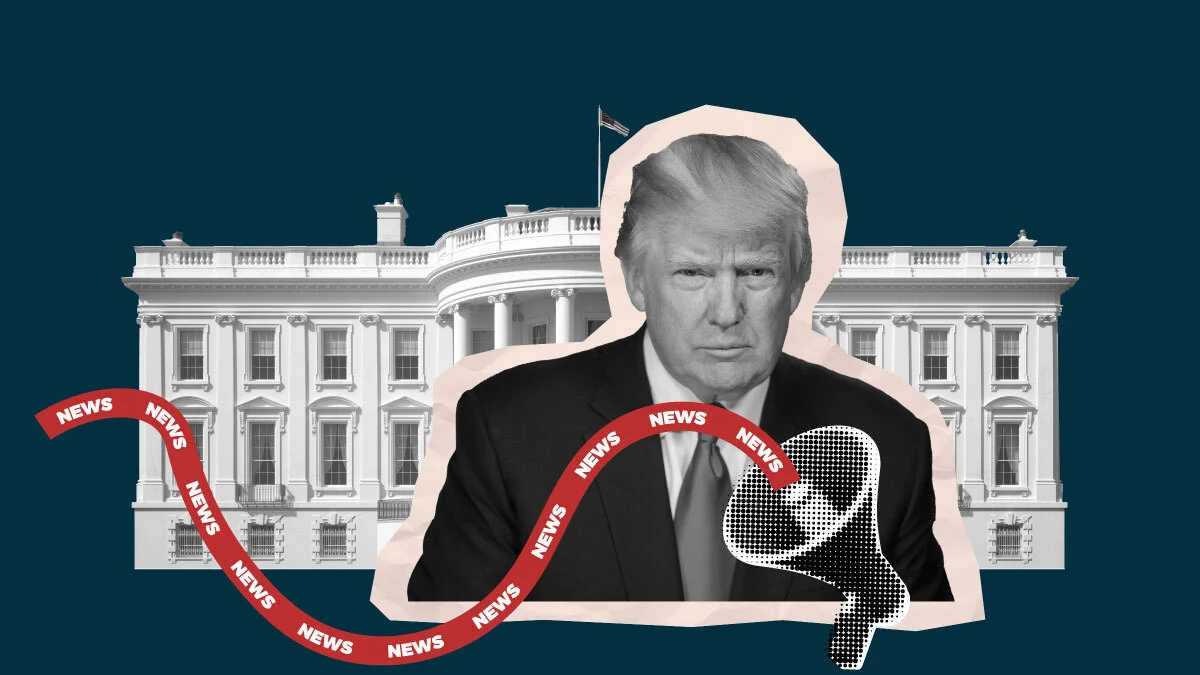
In an unprecedented escalation of executive authority, President Donald Trump has formally established a White House committee tasked with investigating Federal Reserve Governor Lisa Cook over allegations of mortgage fraud. The move marks a significant and controversial chapter in the ongoing tension between the Executive Branch and the Federal Reserve, an institution long shielded by Congressional mandate to operate with structural independence.
The presidential memorandum, published on the official White House website, outlines the administration’s intent to determine if these allegations provide sufficient legal grounds to remove Governor Cook "for cause." This development serves as a direct challenge to the traditional insulation of the nation’s central bank, setting the stage for a constitutional confrontation that could redefine the limits of presidential oversight.
The Core Allegations: A Question of "For Cause" Removal
At the heart of the administration’s inquiry are allegations of mortgage fraud originally brought to light by Bill Pulte, the director of the Federal Housing Finance Agency (FHFA). The allegations center on whether Governor Cook falsified bank documentation to secure mortgage terms reserved for primary residences—which typically offer lower interest rates and reduced down payment requirements—for properties allegedly intended as investment vehicles.
The White House memorandum frames the inquiry as an exercise of executive responsibility. "As President, it is my job to ensure the laws are faithfully executed, including by firing subordinates who cannot be trusted to tell the truth and follow the law," President Trump stated in the document.
The newly formed investigative committee includes the Assistant to the President for Economic Policy, the Chairman of the Equal Employment Opportunity Commission, and the Director of the Office of Government Ethics. This body has been granted a specific mandate: to determine if Cook "made false statements in connection with one or more mortgage instruments." The administration asserts that such conduct, regardless of whether it results in a criminal conviction, constitutes a breach of integrity severe enough to warrant termination for cause.
A Chronology of the Conflict
The path to this current impasse has been marked by a series of legal maneuvers and public accusations:
- Initial Referrals: The controversy began with inquiries into Governor Cook’s personal financial disclosures and mortgage filings, fueled by referrals from the FHFA under Bill Pulte.
- DOJ Involvement: Last year, the Department of Justice (DOJ) launched an investigation into the claims. To date, Governor Cook has not been charged with any crime, a fact her legal team frequently emphasizes.
- The Supreme Court Ruling (June): In a pivotal 5-4 decision, the Supreme Court addressed the scope of the president’s removal power. Chief Justice John Roberts clarified that while the president possesses the authority to remove a Fed governor "for cause," the process must include due process—specifically, notice and an opportunity for the accused to respond.
- The August Demand: In late August, the White House issued a letter, reportedly signed by Deputy Chief of Staff Dan Scavino, notifying Governor Cook that the administration was "considering" her removal and demanding a formal response within three weeks.
- The November Timeline: The current memorandum sets a formal hearing date for November 5 at the White House. Governor Cook has been granted until November 10 to submit a final written statement regarding the findings of the committee.
Supporting Data and Historical Context
The mechanics of the alleged fraud involve the legal distinction between a "primary residence" and an "investment property." Mortgage lenders offer distinct risk-based pricing for these two categories; claiming an investment property as a primary residence can result in substantial financial savings for the borrower through lower interest rates and lower equity requirements.
Interestingly, this focus on mortgage classification has invited scrutiny of the President himself. A December 2025 investigative report by ProPublica highlighted that in 1993 and 1994, Donald Trump signed two mortgages for adjacent properties in Palm Beach, Florida, affirming in both instances that the properties would serve as his principal residence. Critics of the administration have pointed to this history, suggesting that the current investigation into Governor Cook is motivated less by a concern for mortgage integrity and more by a desire to install loyalists within the Federal Reserve.
Official Responses and Legal Defense
Governor Lisa Cook, who secured her position on the Board of Governors following a narrow 50-50 Senate confirmation vote broken by then-Vice President Kamala Harris, has remained steadfast in her defense. Her legal representatives have categorized the White House’s actions as "baseless" and a clear instance of political overreach.
"The attempt to conflate personal financial matters—which have yet to result in any criminal findings—with the administrative governance of the Federal Reserve is a dangerous precedent," one legal analyst noted. Cook’s team maintains that the administration is attempting to weaponize the "for cause" provision to interfere with the Fed’s independent rate-setting functions, which are vital to the health of the national economy.
The White House, however, maintains that the integrity of the Federal Reserve is paramount. By consulting with the Department of Justice and other executive agencies, the administration argues it is performing its due diligence to protect the public trust, suggesting that a Governor who cannot be trusted with personal financial honesty cannot be trusted to oversee the nation’s monetary policy.
Broader Implications for Economic Policy
The implications of this investigation extend far beyond the personal career of Governor Cook. The Federal Reserve was designed by Congress to operate outside the immediate pressures of partisan politics, ensuring that monetary policy decisions—such as interest rate hikes or cuts—are based on macroeconomic data rather than the electoral cycles of the White House.
The Erosion of Institutional Independence
If the President succeeds in removing a sitting Governor through this committee process, it would effectively signal the end of the Fed’s traditional autonomy. Analysts warn that such a move could lead to:
- Increased Market Volatility: Investors rely on the predictability and independence of the Fed. Any sign that the central bank is becoming an extension of the executive office could lead to erratic market behavior.
- Politicization of Monetary Policy: Future administrations might feel emboldened to investigate and remove Fed officials who dissent from the White House’s economic agenda, potentially leading to inflationary pressures if the Fed is pressured to keep rates artificially low for political gain.
- Congressional Pushback: Members of Congress, particularly those who value the independence of the central bank, may view this move as an encroachment on their legislative prerogatives. We can expect intense debate on Capitol Hill regarding the definition of "for cause" and whether the current committee structure violates the separation of powers.
The Legal Threshold for "For Cause"
The Supreme Court’s ruling in June did not explicitly define the limits of "for cause" removal, leaving a significant legal gray area. By proceeding with this committee, the administration is effectively testing the boundaries of the Roberts Court’s logic. If the administration successfully removes Cook, the legal standard for what constitutes "gross negligence" or "untrustworthiness" will be permanently lowered, providing future presidents with a blueprint for restructuring independent agencies to suit their preferences.
Conclusion: A Defining Moment
As the November 5 hearing approaches, the nation watches to see if the White House will successfully navigate the legal requirements set forth by the Supreme Court or if this will result in a prolonged, multi-year court battle.
Governor Cook stands as the focal point of a historic struggle over the structure of American government. Should the committee conclude that her actions merit removal, the Federal Reserve will enter an uncertain era, with its long-standing reputation for independence under significant strain. Conversely, if the investigation fails to produce evidence of "for cause" grounds, it may serve to solidify the very protections the White House is currently seeking to bypass.
In the final analysis, the investigation into Lisa Cook is not merely about a mortgage application; it is about the fundamental nature of the Federal Reserve. As the administration pushes to align the central bank with its executive vision, the constitutional checks and balances of the United States are being put to their most significant test in modern memory. Whether the Fed emerges as an independent arbiter of monetary policy or a tool of the executive branch remains one of the most consequential questions facing the U.S. financial system today.
