

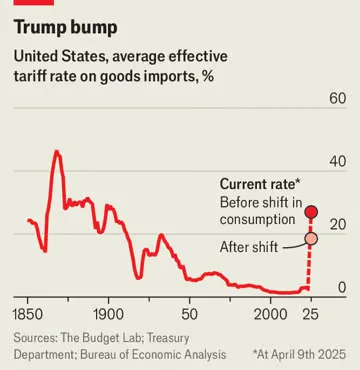
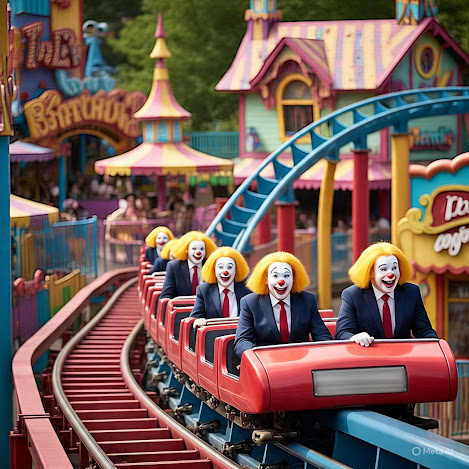
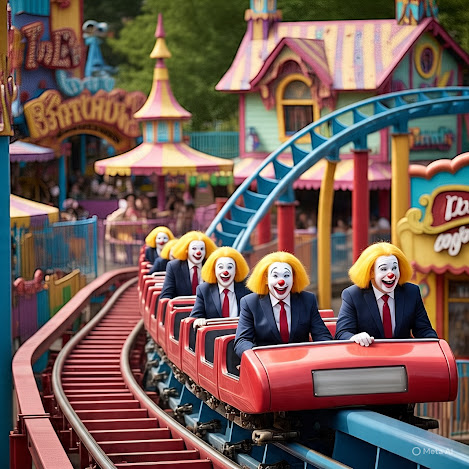
The global financial landscape has spent the better part of 2025 trapped in a state of high-stakes economic theater. Since February, the stock market—often the most sensitive barometer of national stability—has resembled a turbulent roller coaster, defined by sharp, historic plunges followed by equally rapid, gravity-defying recoveries. For the long-term investor, these fluctuations have been more than just a test of nerves; they have served as a persistent reminder that the era of predictable, low-tariff trade is currently undergoing a radical, and potentially hazardous, transformation.
At the heart of this volatility lies a singular, polarizing policy instrument: the tariff. As the U.S. government navigates a complex web of international trade disputes, investors and businesses alike are struggling to decipher whether these measures represent a temporary tactical maneuver or a fundamental shift in the global economic order.
The Mechanics of the Tariff: Who Really Pays?
To understand the current market anxiety, one must first demystify the tariff. Economically, a tariff is nothing more than a sales tax levied by a government on imported goods. While political rhetoric often frames these as costs imposed on foreign entities—such as China, Germany, or Mexico—the reality is significantly more domestic.
When a tariff is imposed, it is paid at the port of entry by the importer of record. Whether it is a multinational conglomerate like Apple, a retail giant like Walmart, or an individual consumer purchasing specialized equipment online, the entity bringing the goods into the country bears the immediate financial burden. Naturally, to preserve profit margins in a competitive market, these importers pass the costs down the supply chain. Ultimately, the consumer experiences this as a broad-based inflationary pressure, effectively acting as a regressive tax on the cost of living.
Furthermore, tariffs extend their reach beyond consumer retail. They inflate the cost of capital investments. When domestic industries, such as the energy or construction sectors, rely on imported raw materials like high-grade steel, copper, or lumber, the cost of building critical infrastructure—from oil rigs to housing developments—surges. This reduction in purchasing power ripples through the entire economy, suppressing discretionary spending and hindering industrial efficiency.
A Chronology of Uncertainty: From February to the Present
The current volatility can be traced back to the early months of 2025. Following a multi-year bull market that saw significant gains, the U.S. stock market reached an inflection point in late February. As the government began signaling a shift toward aggressive, protectionist trade policies, the market responded with a massive correction, shedding approximately 20% of its total value at its lowest point.
The subsequent months have been characterized by a "rhythm of rumor." Every time a government official signaled a potential pause or a reduction in proposed trade barriers, the markets staged a swift recovery. Conversely, announcements of "liberation days" or new, punitive tariff schedules triggered immediate sell-offs. By mid-year, the market has managed to claw its way back to near-peak levels, not because the underlying economic policy has become stable, but because investors are actively pricing in the hope that these high tariffs are merely a temporary, albeit chaotic, negotiating tactic rather than a permanent state of affairs.
Supporting Data: The Case for Free Trade vs. Protectionism
Economists generally view tariffs with skepticism, citing the principle of comparative advantage. When a nation imposes a tariff to protect a specific domestic industry—for example, the automotive sector—it may indeed shield that industry from foreign competition in the short term. GM or other domestic manufacturers might see a temporary boost in sales as the price of competing imports rises.
However, the data suggests that this benefit is illusory. The "success" of the domestic auto industry comes at the expense of the broader economy. Higher vehicle prices decrease the efficiency of logistics providers, such as delivery companies, who then raise prices on goods across the board. Furthermore, by removing the competitive pressure of international rivals, protected domestic companies often face reduced incentives to innovate, leading to long-term stagnation.
The "bipartisan" nature of this trend is particularly concerning to market analysts. While the current administration has taken the lead, recent years have seen both Democratic and Republican leadership utilize trade barriers to appeal to specific voting blocs. The taxation of solar panel components—sheets of glass that serve as the foundation for the next generation of energy efficiency—stands as a stark example of a policy that sacrifices long-term technological and economic gains for short-term political posturing.
Official Responses and the Judicial Response
The Executive Branch maintains that these tariffs are essential for national security and the correction of trade imbalances. The official narrative suggests that by forcing production back to domestic soil, the country will see a resurgence in manufacturing jobs and a stronger, more resilient industrial base.
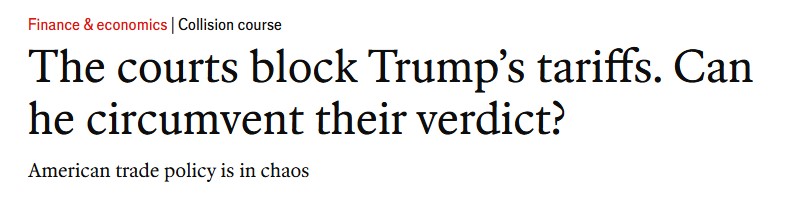
However, this executive overreach is currently being challenged. The judicial system has begun to serve as a critical check on the administration’s ability to unilaterally impose these levies. Legal scholars and organizations like The Economist have documented a growing number of court challenges aimed at curbing the President’s authority to alter trade policy without congressional approval. These cases are testing the strength of the U.S. constitutional system, specifically the separation of powers, as the judiciary attempts to reign in what many view as an "emergency tariff dictatorship."
Implications for the Long-Term Investor
For the individual investor, the current climate presents a difficult question: how should one manage a portfolio in the face of political volatility?
1. The Inventory Lag
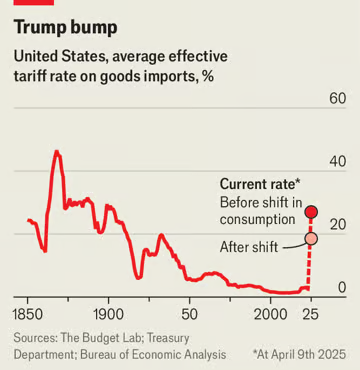
One reason why the immediate impact of these tariffs hasn’t been fully felt in the consumer price index is the nature of global supply chains. The U.S. maintains significant stockpiles of imported goods. Importers, sensing the shift, front-loaded orders, effectively buffering the economy from the immediate price shocks of the new tariff regime. However, as these inventories are depleted and the flow of imports slows significantly—as indicated by indices such as the Freightwaves Ocean Shipping index—shortages and price increases are likely to manifest more aggressively throughout the second half of the year.
2. The Danger of "Panic Selling"
The most significant risk to the average investor is not the market volatility itself, but their reaction to it. History consistently shows that attempting to time the market during periods of geopolitical uncertainty often leads to the realization of losses that would otherwise be temporary. Those who panic-sold during the April dips, for example, locked in losses that were erased within a matter of weeks as the market recalibrated.
3. The "Headline Trap"
In the modern media landscape, the goal of journalism has shifted from objective informing to the generation of "clicks" through outrage and fear. Both sides of the political spectrum utilize media outlets to amplify their narratives, often ignoring the nuance of economic data in favor of headlines that trigger emotional responses. For the investor, the most prudent path is to either ignore the noise entirely or to develop deep subject-matter expertise in specific sectors, allowing one to read primary sources and bypass the sensationalist filter of the 24-hour news cycle.
Conclusion: The Path Forward
The fundamental economic reality is that prosperity is built on collaboration. The U.S. economy, with its 330 million people and free movement of goods across 50 states, is a testament to the power of open trade. While the current tariff experiment poses a genuine threat to that prosperity, the resilience of the markets suggests that the system retains a capacity for self-correction.
The most likely scenario remains that these measures are a transient phase. Whether they are eventually repealed through judicial intervention or discarded once their negative economic effects become undeniable, the long-term outlook remains tethered to global interconnectedness. As the saying goes, "This too shall pass." For the disciplined investor, the strategy remains unchanged: maintain a long-term perspective, ignore the daily headlines, and remain invested in the broader potential of the global economy. By focusing on fundamental value rather than the transient whims of political maneuvering, the individual investor can navigate the current turbulence and emerge on the other side of this "circus" with their financial goals intact.
