

Welcome back to TechCrunch Mobility, your definitive guide to the rapidly evolving landscape of global transportation and the burgeoning role of artificial intelligence in defining how we move. As we pivot toward the future, the integration of software and hardware is no longer just a trend—it is the foundational architecture of the next century of logistics.
I am writing this fresh off a rejuvenating excursion through New Hampshire’s White Mountains. While the crisp autumn air provided a necessary respite, the focus now shifts entirely to San Francisco for Disrupt 2026. The energy surrounding this year’s conference is palpable, and I look forward to connecting with the innovators who are turning the impossible into the routine. For those planning to join us, use code mobility30 for a 30% discount on your registration.
Now, let’s unpack the critical developments shaping the industry this week.
The Regulatory Milestone: Clearing the Path for Autonomous Freight
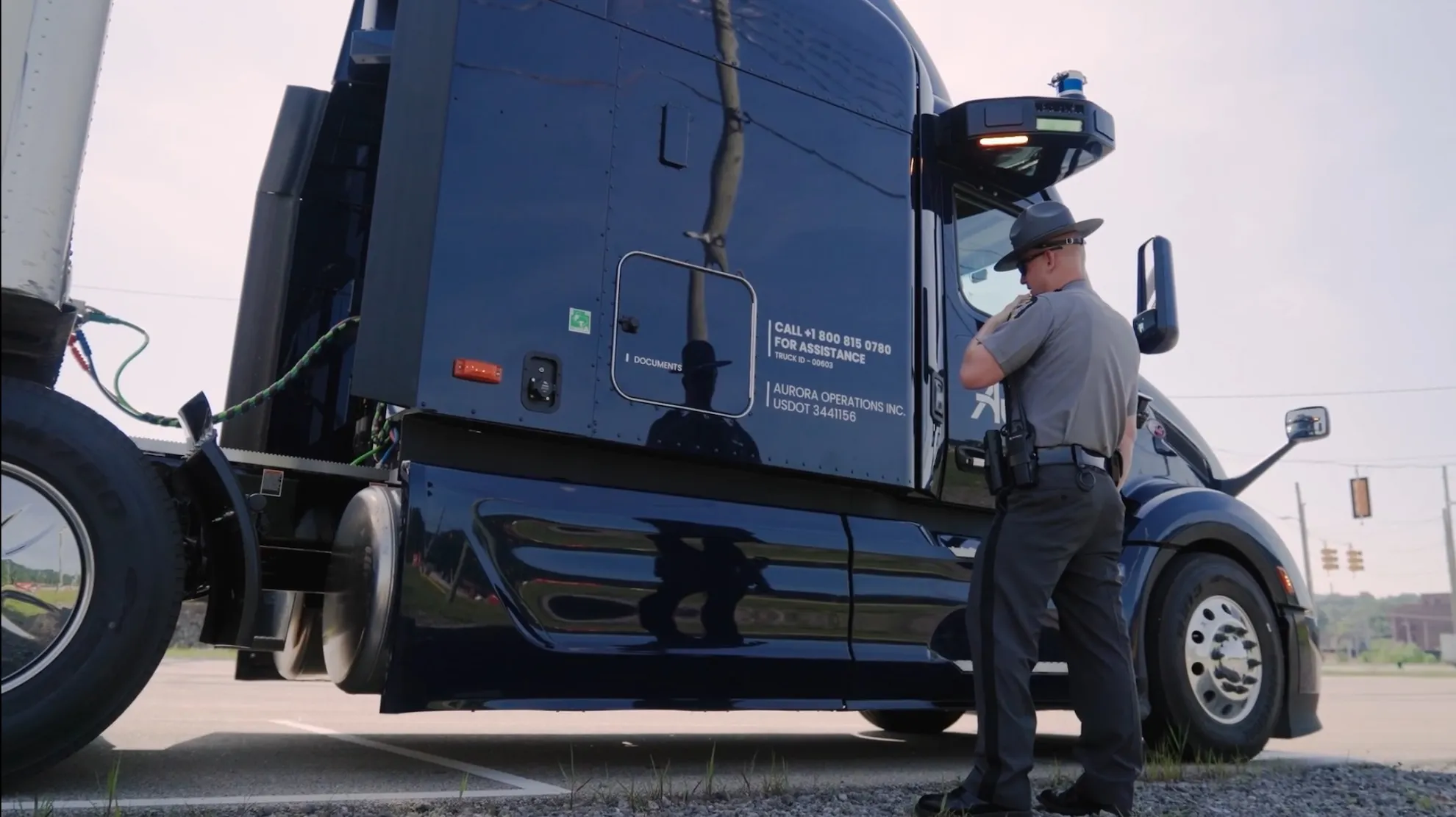
In a landmark decision that promises to accelerate the commercial deployment of autonomous trucking, the Federal Motor Carrier Safety Administration (FMCSA) has issued a five-year exemption for industry leaders Aurora Innovation and Kodiak AI.
The Regulatory Hurdle
For decades, federal safety regulations have mandated that if a commercial vehicle experiences a mechanical failure, the driver must pull over, activate hazard lights, and physically deploy reflective warning triangles on the road within a 10-minute window. This protocol is designed to alert oncoming traffic to a stalled hazard. However, this regulation created an "automator’s paradox": how does an unmanned, AI-driven truck comply with a rule that requires a human presence?

The friction between legacy regulation and modern technology reached a boiling point when Aurora Innovation challenged federal safety regulators in court. After an initial setback, the company escalated the dispute to the District of Columbia Court of Appeals. While a temporary waiver held the line, the legal uncertainty hampered long-term commercialization strategies.
A 21st-Century Solution
The FMCSA’s new five-year exemption effectively replaces the physical triangle requirement with high-visibility, cab-mounted warning beacons. These automated systems are designed to provide immediate, high-intensity visual alerts to other road users the moment a vehicle comes to a stop.
Gerardo Interiano, Aurora’s head of government relations and public affairs, emphasized the broader implications of this ruling:
"This decision underscores the government’s recognition of the economic and community benefits of autonomous trucking. The beacons are a critical, 21st-century solution that enhances roadside safety by immediately alerting other road users without ever needing to put a person in harm’s way."
Daniel Goff, vice president of external affairs at Kodiak AI, echoed this sentiment, framing the move as a catalyst for the "autonomous era of freight movement," which he believes will drastically improve both the efficiency of supply chains and the safety metrics of our highways.

Future Implications
The central question now facing the industry is whether these beacons will transition from an "exemption-based" tool to a mandatory industry standard. If the efficacy of these beacons is proven over the five-year trial, we could see a complete modernization of federal roadway safety protocols, signaling a shift where regulators acknowledge that "human-out-of-the-loop" systems can actually be safer than their human-operated counterparts.
Financial Currents: Capital Injections and Corporate Shifts
The mobility sector remains a magnet for massive capital, though the nature of that funding is shifting from pure venture equity toward sophisticated debt financing and strategic consolidation.
Waymo’s $5 Billion Pivot
In a notable departure from its reliance on Alphabet’s coffers and venture capital, Waymo has secured a $5 billion loan from a consortium of lenders led by Blackstone, PIMCO, and Sixth Street. This marks a significant moment for the robotaxi leader. By tapping into debt markets, Waymo is signaling a maturation of its business model—moving from a research-heavy startup phase into a capital-intensive commercial expansion phase.
The list of participants in this debt round is a "who’s who" of institutional finance, including T. Rowe Price, Apollo, and Fidelity. This influx of capital is earmarked for scaling commercial operations in the U.S. while simultaneously funding aggressive forays into European and Japanese markets.
The Redwood Materials Restructuring
While Waymo expands, other sectors of the green-tech ecosystem are undergoing a period of painful recalibration. Redwood Materials, the battery-recycling powerhouse founded by Tesla co-founder JB Straubel, is navigating a significant restructuring.

Following an initial 10% workforce reduction earlier this year, sources indicate a broader exodus within the company’s executive ranks. The departures of the VPs of engineering, operations, treasury, and external affairs suggest a deep-seated change in leadership strategy as the firm pivots its primary focus toward energy storage solutions.
A Landscape of Deals: From Manufacturing to Catering
The mobility and industrial tech markets remain highly active. Here is a breakdown of the notable deals from the past week:
- Parallel Systems: The rail-tech startup raised $100 million in a Series C round led by AVP. The company is developing autonomous, battery-electric rail vehicles capable of shipping freight across 500-mile corridors without human operators, effectively rethinking the long-haul freight model.
- Flai: AI for the automotive retail sector is heating up. Flai secured $27 million in Series A funding to scale its dealership software, which is currently processing 50,000 service appointments monthly.
- Uber’s Expansion: Uber continues its diversification strategy, announcing a $2.3 billion all-cash acquisition of catering company ezCater. This move signals Uber’s intent to dominate the B2B logistics and corporate food delivery space.
- Bloom: The "Alibaba of American manufacturing" raised $3.6 million in seed funding to streamline industrial supply chains, signaling continued investor interest in domestic manufacturing tech.
Industry Tidbits and Market Movements
- Flock Safety: The surveillance firm is reducing its workforce by 18% (approx. 270 employees) amid mounting public and regulatory scrutiny regarding the privacy implications of its license plate and facial-recognition technology.
- Lucid Motors: Production output fell by 54% in the third quarter compared to the previous year. The company claims this is a strategic choice to align supply with the current demand climate, rather than a production failure.
- Kodiak AI’s Texas Corridor: The company has launched a new 435-mile autonomous route between Dallas and Laredo, partnering with Charger USA to transport refrigerated and dry freight.
- Tesla’s Rebranding: Following pressure from the German Ministry of Transportation, Tesla has renamed its "Full Self-Driving (Supervised)" software to "Tesla Assisted Driving" in the European market.
- Uber & Pony.ai: A new international partnership between Uber and the Chinese autonomous vehicle maker Pony.ai will bring robotaxi services to London, marking a major step for autonomous ride-hailing in Europe.
Preview: Disrupt 2026
The road to Disrupt 2026 is paved with high-level discourse. We have curated a lineup that bridges the gap between hardware, AI software, and public policy.
The Speakers and Sessions
We will kick off the conference on October 13 with Rivian CEO RJ Scaringe, who will discuss the company’s ambitious roadmap for EVs, robotics, and autonomy. Other highlights include:
- Robotics Strategy: A deep dive with Agility Robotics CTO Jonathan Hurst and a panel featuring insights from General Catalyst’s Yuri Sagalov and Baillie Gifford’s Shan Shan.
- AI in High-Stakes Environments: I will sit down with Shield AI CTO Nathan Michael, Waabi founder Raquel Urtasun, and GM’s Mikell Taylor to discuss building AI systems where failure is not an option.
- Physical AI: Foxglove CEO Adrian MacNeil and Bedrock Robotics CTO Kevin Peterson will join me to discuss the journey of moving physical AI from the lab to the real world.
- The Future of Intelligence: The event will feature Max Hodak (Science Corp), Dr. Anna Goldie and Dr. Azalia Mirhoseini (Ricursive Intelligence), and the team behind the Stretch 4 robot from Hello Robot.
With representation from the brightest minds at OpenAI, Nvidia, Anthropic, and leading venture firms like NEA and Greylock, Disrupt 2026 is poised to be the definitive forum for the future of transportation.

Got a tip? Reach out to Kirsten Korosec at [email protected] or via Signal at kkorosec.07, or contact Sean O’Kane at [email protected].
Note: When you purchase through links in our articles, we may earn a small commission. This does not affect our editorial independence.
