

In a landmark move that signals the deepening convergence of Silicon Valley’s computing prowess and Detroit’s industrial might, General Motors (GM) and Nvidia announced on Tuesday a significant expansion of their multi-year partnership. The collaboration is set to touch every facet of the automotive lifecycle, from the digital blueprints of factory floors to the real-time decision-making capabilities of autonomous driving systems.
This strategic pivot underscores a broader industry trend: the modern automobile is rapidly evolving from a mechanical machine into a sophisticated, software-defined data center on wheels. By leveraging Nvidia’s cutting-edge artificial intelligence and high-performance computing (HPC) ecosystems, GM aims to streamline production, enhance manufacturing precision, and accelerate the rollout of its next-generation driver-assistance technologies.
The Foundation: A History of Collaboration
The relationship between General Motors and Nvidia is not a recent development, but rather a trajectory of escalating integration. For years, the two companies have worked in tandem to address the massive computational demands of modern mobility.
Historically, GM utilized Nvidia’s powerful GPU-based infrastructure to train its early AI models, primarily focusing on perception systems for autonomous navigation. This partnership was a cornerstone for Cruise, GM’s former self-driving subsidiary. While the Cruise robotaxi project recently faced significant operational challenges leading to its closure, the technical lessons learned—and the underlying reliance on Nvidia’s high-throughput architecture—have been ported over to GM’s core engineering divisions.
The current announcement represents a departure from purely "in-vehicle" focus. It signals an enterprise-wide commitment to Nvidia’s ecosystem, encompassing both the "brain" of the car and the "nervous system" of the manufacturing plant.
Manufacturing in the Metaverse: The Role of Omniverse
One of the most innovative components of the expanded partnership is the integration of Nvidia’s Omniverse platform. Omniverse is an industrial-grade simulation environment that allows engineers to create "digital twins"—virtual, high-fidelity replicas of physical assets.
For GM, this means that before a single piece of steel is cut or a welding robot is installed on a factory floor, the entire production line can be simulated, tested, and optimized in a virtual space. By using Omniverse, GM can identify potential bottlenecks in the assembly process, optimize the flow of materials, and ensure that robotic arms are positioned for maximum efficiency.
This is not merely a design tool; it is a manufacturing revolution. Digital twinning allows for "what-if" scenarios: managers can simulate the impact of a supply chain disruption or a change in vehicle design on the production line without risking millions of dollars in real-world downtime. This shift toward "virtual commissioning" is expected to reduce the time-to-market for new vehicle models significantly, providing GM with a vital competitive edge in the fast-paced electric vehicle (EV) sector.
The "Software-Defined" Vehicle: Powering the Future
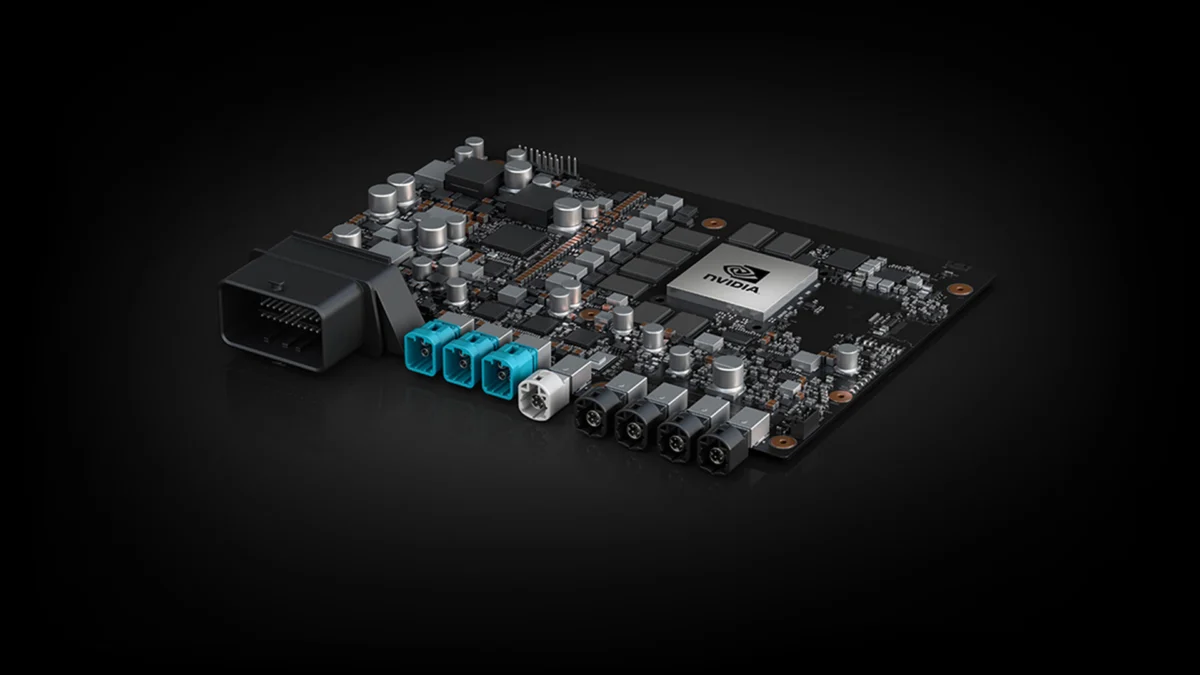
At the heart of the new agreement is the deployment of Nvidia’s DRIVE AGX platform. These high-performance chips are specifically engineered to handle the massive data processing requirements of autonomous driving and advanced driver-assistance systems (ADAS).
Super Cruise and Beyond
GM’s flagship driver-assist system, Super Cruise, has already achieved significant milestones, currently covering over 750,000 miles of mapped roads across the United States and Canada. By integrating the next generation of Nvidia DRIVE chips, GM intends to expand the capabilities of this system. These chips provide the "compute overhead" necessary for more complex tasks, such as navigating urban intersections, recognizing obscure traffic signals, and reacting to unpredictable human behavior—all with lower latency and higher reliability.
The Unified Software Platform
Beyond safety, the partnership addresses the underlying electrical architecture of the vehicle. GM is developing a unified software platform that will serve as the "operating system" for its entire fleet, from entry-level compact crossovers to massive, heavy-duty trucks and SUVs.
This unified architecture is designed to manage everything from infotainment systems and climate control to battery management and autonomous functions. By consolidating these disparate systems onto a centralized computing hub powered by Nvidia silicon, GM can push over-the-air (OTA) updates, allowing vehicles to gain new features and performance improvements long after they have left the dealership lot.
Industry Implications and Competitive Landscape
GM is certainly not acting in isolation. The competition to lead in the software-defined vehicle era is fierce. Automakers globally are scrambling to secure partnerships with silicon giants to avoid becoming mere "hardware assemblers" in an era where software drives value.
Nvidia, meanwhile, has become the de facto standard-bearer for automotive AI. The company counts industry titans like Mercedes-Benz, Volvo, Rivian, and BYD among its partners. By aligning with Nvidia, GM is ensuring that its vehicle architecture remains compatible with the most advanced development tools in the industry, effectively future-proofing its lineup against the rapid pace of technological change.
The Economic Model: Subscriptions and Revenue Streams
The move toward software-defined vehicles is not just about engineering; it is about fundamentally altering the automotive business model. Traditionally, an automaker’s relationship with a customer ended at the point of sale. Today, that relationship is increasingly seen as a recurring revenue opportunity.
GM’s expansion of Super Cruise and the potential for new, software-enabled safety and comfort features allow the company to offer these capabilities through subscription models. This "Software-as-a-Service" (SaaS) approach is highly attractive to investors, as it creates consistent, high-margin revenue streams that are disconnected from the cyclical nature of vehicle manufacturing. By utilizing Nvidia’s chips to power these complex software services, GM is building the infrastructure to monetize the "digital experience" of driving, transforming the car into a platform for continuous service delivery.
Official Responses and Strategic Vision
While specific financial terms of the deal were not disclosed, leadership from both organizations expressed enthusiasm regarding the long-term potential of the partnership.
"This is about more than just chips," noted a representative for GM during the press announcement. "It is about the total integration of the automotive value chain. By moving our manufacturing simulations into the virtual realm and consolidating our vehicle software, we are drastically shortening the feedback loop between design and execution."
Nvidia echoed these sentiments, highlighting that the partnership serves as a validation of their vision for the "Omniverse" and the "DRIVE" platforms. "The automotive industry is in the midst of its most significant transformation in a century," said an Nvidia spokesperson. "Our role is to provide the computational foundation that allows companies like GM to innovate at the speed of software while maintaining the rigor of industrial manufacturing."
Looking Ahead: The Roadmap for 2025 and Beyond
The integration of these new technologies will not happen overnight. GM has indicated that the rollout of these advanced computing architectures will be phased in across their upcoming model years.
Key areas of focus for the next 24 months include:
- Manufacturing Optimization: Widespread adoption of Omniverse across GM’s EV-dedicated plants to refine production efficiency.
- Next-Gen ADAS: The deployment of the latest Nvidia DRIVE chips in upcoming premium vehicle refreshes to bolster Super Cruise capabilities.
- Software Consolidation: The migration of legacy vehicle systems to the new, unified software platform, aimed at reducing complexity and increasing OTA update frequency.
Conclusion: The Convergence of Silicon and Steel
The partnership between General Motors and Nvidia is a testament to the fact that the automotive industry is no longer just about horsepower and torque—it is about intelligence and data. By leaning into the expertise of one of the world’s most sophisticated tech companies, GM is positioning itself to navigate the complexities of the autonomous, electric, and software-defined future.
As the lines between the physical and digital worlds continue to blur, the success of this collaboration will likely serve as a benchmark for the rest of the automotive industry. For the consumer, this means safer, smarter, and more customizable vehicles. For General Motors, it represents a path toward reclaiming the technological high ground in a rapidly changing global market. The "Detroit vs. Silicon Valley" narrative is dead; in its place, a new era of "Detroit and Silicon Valley" has firmly taken root.
