

The global financial landscape is undergoing a tectonic shift, one that promises to rewrite the rules of investment, wealth management, and social impact. As we approach the mid-21st century, a massive transition of assets—often dubbed the "Great Wealth Transfer"—is underway, placing unprecedented financial influence into the hands of a new generation. Among the most significant drivers of this change are women, who are not merely inheriting wealth but actively reshaping the criteria for how capital is deployed, grown, and donated.
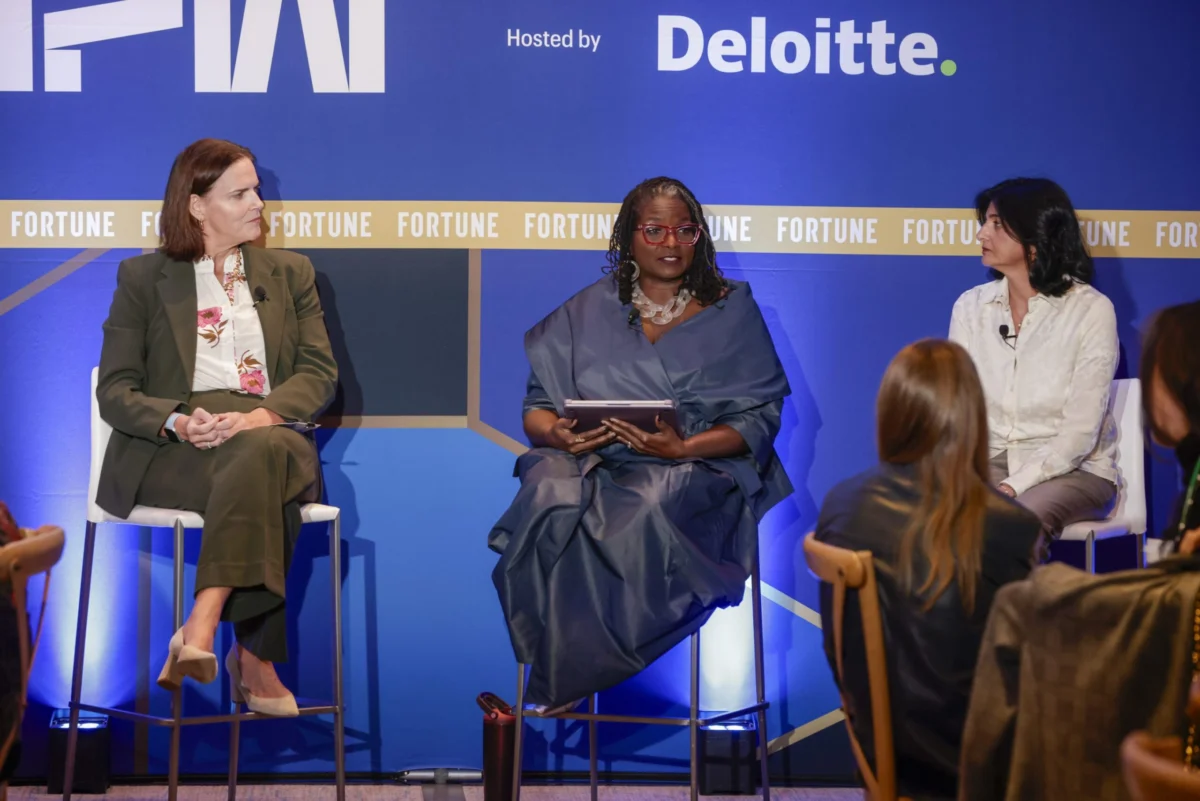
At Fortune’s 26th annual Most Powerful Women conference in Santa Barbara, industry titans gathered to discuss this transition. The consensus was clear: the narrative of finance is moving away from the traditional, male-dominated models of the 20th century toward a more inclusive, values-driven, and impact-oriented future.
The Magnitude of the Great Wealth Transfer
According to projections from Cerulli Associates, an estimated $124 trillion in wealth is expected to change hands by 2048. This is not a static movement of capital; it is a fundamental realignment of power. Of that $124 trillion, approximately $54 trillion is slated to be inherited by women, while $52 trillion will pass to the next generation of heirs, and $18 trillion is expected to flow into charitable vehicles.
Beyond inheritance, the emergence of self-made female wealth is accelerating at a historic pace. Beth Meagher, the U.S. federal health sector leader at Deloitte, notes that women entrepreneurs represent one of the fastest-growing cohorts in the financial ecosystem. Over the past decade, wealth concentration among female entrepreneurs has surged by more than 125%. Furthermore, the financial momentum among female military veterans—a group historically overlooked in discussions of high-net-worth individuals—has seen a staggering 300% growth over the past several years.
"These trends are changing everything," Meagher remarked to Fortune executive editorial director Diane Brady. "We spend a lot of time analyzing frontier models and geopolitical volatility, but this shift is something we have a tremendous opportunity to lead from the front of."
Chronology of a Financial Paradigm Shift
The recognition of this shift did not happen overnight. For years, the financial industry operated under the guise of a "pipeline issue," a common excuse used to explain the lack of gender diversity in investment firms and boardrooms.
- The Early 2010s: As Seema Hingorani, then working at the New York City Pension Fund, surveyed the asset management landscape, she noticed a glaring discrepancy. While global asset managers were eager to solicit business from the pension fund, their internal teams were almost entirely male. When pressed on the lack of women in senior investment roles, the response was always the same: "it’s a pipeline problem."
- 2011: Skeptical of the "pipeline" narrative, Hingorani founded Girls Who Invest, a nonprofit dedicated to training and mentoring undergraduate women for careers in asset management. Since its inception, the program has supported 5,000 women, receiving roughly 4,000 applications annually for its cohort-based training.
- 2017–Present: Morgan Stanley, recognizing the potential for untapped economic power, launched an incubator program specifically designed to support women-led tech startups. This initiative acknowledged that as these female founders scale billion-dollar enterprises, they will fundamentally alter the demand for financial advisory services, preferring institutions that reflect their own values and experiences.
- 2024: The Fortune Most Powerful Women conference serves as a focal point, consolidating the findings of firms like Deloitte and the initiatives of pioneers like Hingorani to define the current, mature phase of this wealth transition.
Supporting Data: A New Financial Identity
The data suggests that this is not merely a change in who holds the money, but how the money behaves. The shift is defined by a rejection of the binary choice between financial profit and social progress.
The growth in female-led wealth is accompanied by a unique set of priorities. Research indicates that women investors are significantly more likely to prioritize ESG (Environmental, Social, and Governance) factors, but with a specific focus on tangible, measurable impact.
- Entrepreneurial Growth: The 125% increase in wealth concentration among female entrepreneurs indicates that women are not just passive recipients of intergenerational wealth; they are active creators of economic value.
- The Veteran Contribution: The 300% growth in wealth among female veterans suggests that the skills honed in service—leadership, risk management, and strategic planning—are translating effectively into the private sector.
- Philanthropic Reimagining: The $18 trillion earmarked for charity is being directed toward models that demand accountability. Unlike traditional "checkbook philanthropy," this new generation views their charitable contributions as social investments that require rigorous oversight and measurable outcomes.
Official Responses and Strategic Pivots
For the financial services industry, the mandate is clear: adapt or risk obsolescence. Firms that fail to address the specific needs and values of this demographic are already seeing the consequences.
"Women are going to have all the wealth," said Seema Hingorani, now a managing director and senior client advisor at Morgan Stanley. She poses a rhetorical question to the industry: "Do you want to have a male financial advisor? If you had a choice, would you want to have a woman financial advisor? A lot of firms out there are hiring all my women, because they get it."
The industry is responding by integrating health services into wealth management—a move spearheaded by firms like Deloitte. Meagher highlights that wealth advisors are increasingly becoming holistic partners, offering guidance on health, education, and justice, rather than just asset allocation.
In the South, the shift is even more pronounced. Carmen James Randolph, CEO of the Women’s Foundation of the South, observes that with 41.5% of America’s women of color residing in the region, a new "frontier for wealth creation" is emerging. Randolph argues that the traditional models of philanthropy, which often functioned as passive charity, are being discarded in favor of models that address root causes. "Old models see philanthropy as charity, and new wealth recipients do not see philanthropy as charity," Randolph explains. "They want to understand and see firsthand the impact that their dollars can have."
Implications: The Future of Capital
The implications of this shift are profound and far-reaching.
1. The Integration of Purpose and Profit
We are entering an era where "impact investing" will no longer be a niche category but a standard expectation. Whether it is affordable housing, maternal healthcare, or educational equity, the new generation of wealth holders is willing to accept smaller financial returns if it means achieving an "outsized impact."
2. A Demographic Reordering of Financial Advice
The advisory industry, historically male-dominated, is undergoing a demographic correction. As wealth flows to women, the demand for female financial advisors, portfolio managers, and venture capitalists will continue to skyrocket. This will force firms to move beyond performative diversity efforts and into genuine structural change to remain competitive.
3. The Democratization of Capital
The focus on regional growth, particularly in the South, suggests that wealth is becoming less concentrated in traditional coastal hubs. By focusing on overlooked populations—such as women of color and female veterans—the financial ecosystem is beginning to tap into previously ignored markets, potentially creating a more resilient and diversified economy.
4. Redefining Success
Ultimately, the transition signifies a shift in the definition of success. The "Great Wealth Transfer" is not just about the movement of dollars; it is about the transition of authority. As women take the helm of this capital, the focus of global investment is likely to shift toward the long-term sustainability of the human condition.
"Women are looking to pull their investments so that they can have an outsized impact," concludes Meagher. As this massive tide of wealth continues to turn, the financial sector must prepare for a future where the bottom line is measured not just in percentages, but in the strength of communities and the health of the planet. The era of the "old boys’ club" is fading; the era of conscious, inclusive, and impact-driven capital has arrived.
