

The landscape of the subcompact SUV market is notoriously crowded, often defined by vehicles that prioritize utilitarian function over aesthetic desire. For years, the Hyundai Bayon—the younger sibling to the globally successful Kona—has occupied this space as a competent but largely understated contender. However, that narrative changed this week at the Paris Motor Show, where Hyundai unveiled an entirely new generation of the Bayon, signaling a definitive departure from its predecessor’s "forgettable" status.
With an aggressive, angular design language, the integration of high-end technology, and the introduction of a genuine hybrid powertrain, the new Bayon is explicitly targeting the segment’s heavyweights, most notably the Ford Puma.
Main Facts: A Bold New Identity
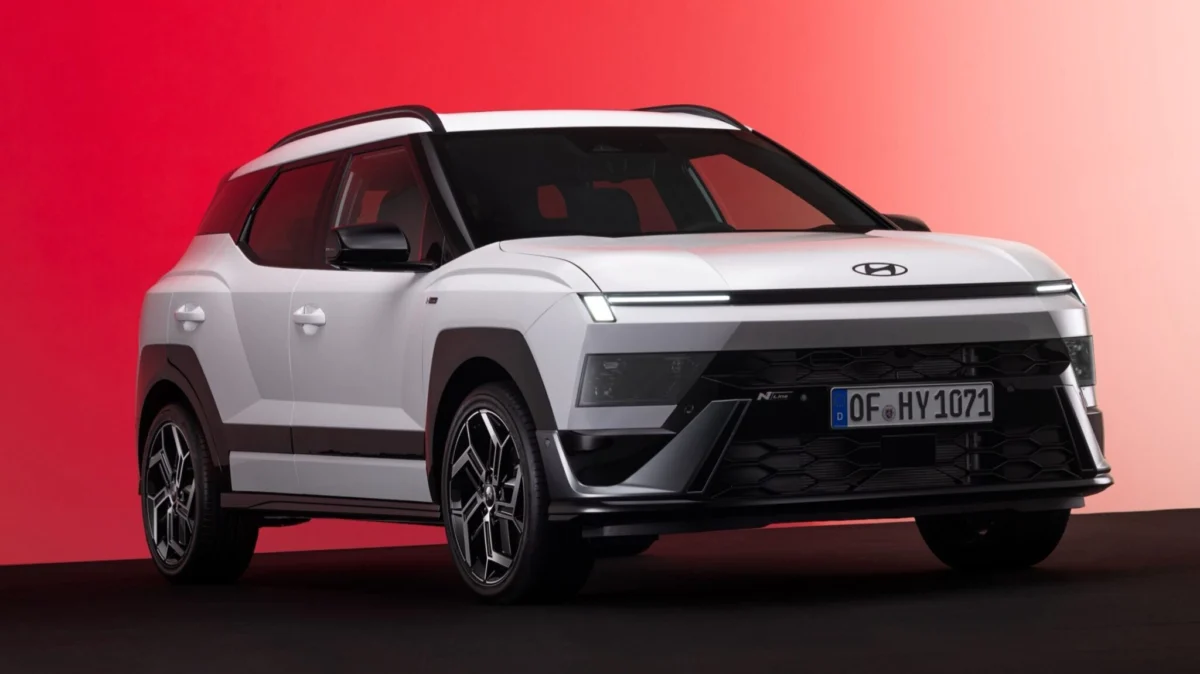
The most immediate takeaway from the reveal is the vehicle’s visual transformation. Abandoning the soft, somewhat generic curves of the previous iteration, the 2027 Bayon adopts Hyundai’s "Art of Steel" design philosophy. This aesthetic, which has already garnered significant praise on the larger Tucson, translates surprisingly well to the smaller dimensions of the Bayon.
The front fascia is now defined by a high-set hood line, boxy fender flares, and distinctive "hockey stick" LED daytime running lights that create a wide, grounded stance. The rear has been equally sharpened, featuring a prominent model name script stretched across the trunk lid.
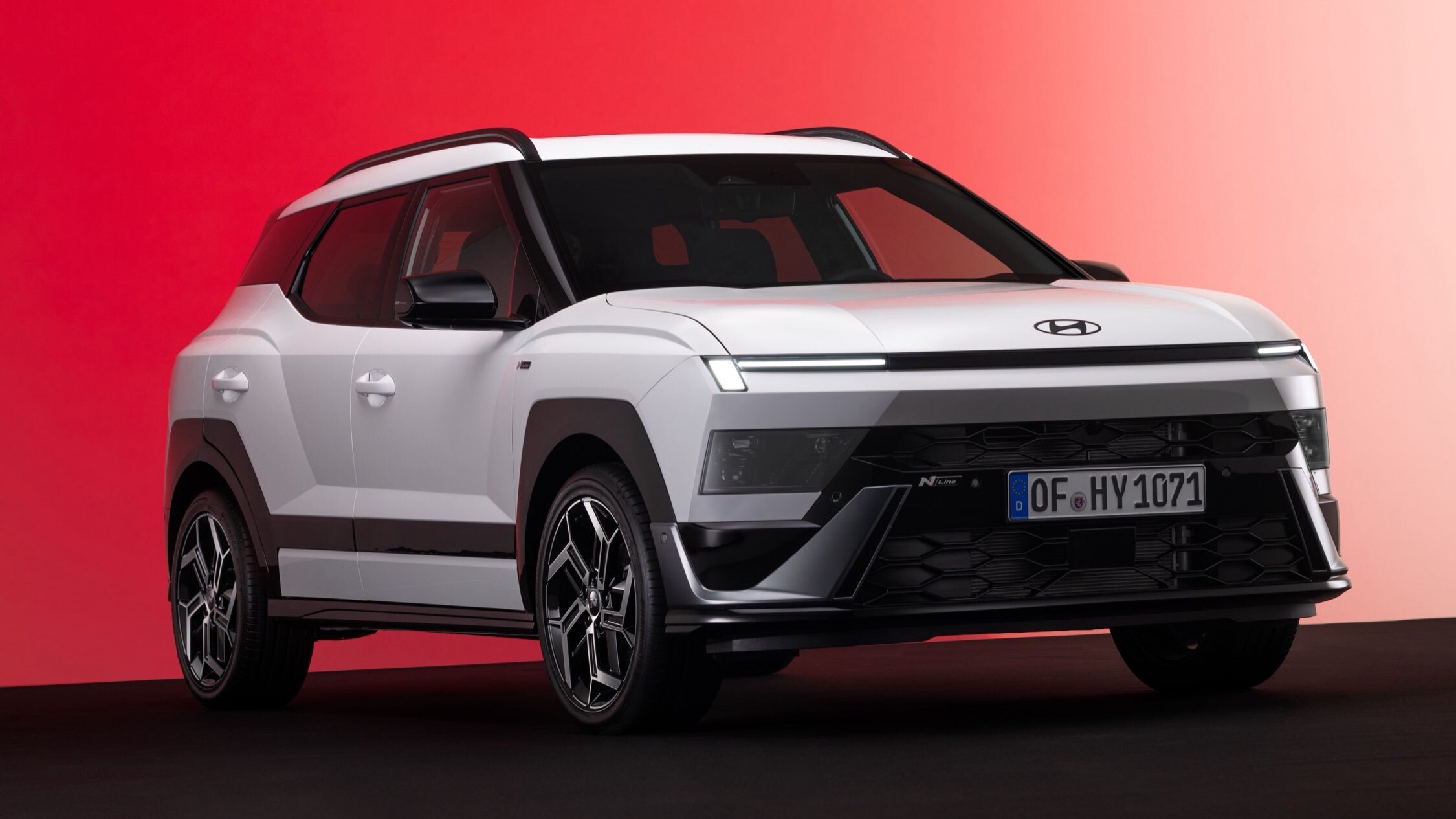
Perhaps the most significant addition for enthusiasts is the debut of the N Line trim. This sport-focused package introduces a more aggressive body kit, 18-inch alloy wheels, and a dual-exhaust setup. Inside, the N Line treatment continues with red contrast stitching, metal-finish pedals, and bolstered seating, bridging the gap between an entry-level crossover and a performance-oriented hatch.
Chronology: The Evolution of the Bayon
To understand the significance of this launch, one must look at the vehicle’s brief but rapid evolution:
- 2021: The original Hyundai Bayon is introduced to the European market, designed specifically to fill the gap below the Kona and provide a more accessible entry point to the SUV lifestyle.
- 2024: Hyundai implements a mid-cycle facelift, attempting to inject some visual flair with a full-width light bar, yet the core architecture remains rooted in the initial 2021 design.
- 2026 (October): The all-new 2027 model is officially unveiled at the Paris Motor Show. It represents a full platform revision rather than a mere cosmetic update, featuring a 0.8-inch (20 mm) wheelbase stretch and an entirely new interior architecture.
- Early 2027: The vehicle is scheduled to arrive at European dealerships, marking the beginning of a new chapter for Hyundai’s subcompact strategy.
Supporting Data: Engineering and Performance
While the exterior is all about "tough" posturing, the engineering beneath the skin reveals a vehicle that is increasingly sophisticated.
Dimensions and Practicality
The 0.8-inch increase in the wheelbase to 102.4 inches (2,600 mm) may seem incremental, but it serves a vital purpose in maximizing cabin volume. By pushing the wheels toward the corners, Hyundai has improved rear-seat legroom and overall ingress. The interior has also seen a massive technological upgrade, headlined by optional dual 12.3-inch displays. The cabin now offers premium features that were once reserved for the mid-size SUV segment, including ventilated seats, a panoramic roof, and a Bose premium sound system.

Powertrain Options
The new Bayon offers a tiered powertrain approach:
- The Entry-Level Engine: A 1.0-liter, four-cylinder T-GDI engine produces 89 hp (90 PS). It is available with either a six-speed manual or a seven-speed dual-clutch automatic.
- The Performance Upgrade: The same 1.0-liter engine is available in a 114 hp (115 PS) tune. This significantly improves drivability, with the 0–62 mph (100 kph) sprint dropping from a sluggish 14.1 seconds to a far more practical 10.8 seconds.
- The Hybrid Milestone: In a major shift, the 2027 Bayon introduces a 1.6-liter HEV (Hybrid Electric Vehicle) powertrain. Developing 136 hp (138 PS), it comes exclusively with a six-speed dual-clutch transmission. Notably, it features steering-wheel-mounted paddles that allow the driver to adjust regenerative braking levels, a feature usually reserved for EVs.
Official Responses and Strategic Positioning
During the Paris press conference, Hyundai executives emphasized that the Bayon is not intended to be an off-roader, despite its rugged exterior styling. The absence of an all-wheel-drive (AWD) option across all trims is a strategic choice to keep the vehicle lightweight, fuel-efficient, and competitively priced for the European urban demographic.
Regarding the technology suite, while the Bayon incorporates the impressive Digital Key 2 (allowing smartphone-based vehicle access), some critics noted the omission of the brand’s new "Pleos" infotainment operating system. Hyundai has maintained that the current software suite offers the highest level of stability for this specific segment, though it leaves some enthusiasts wondering if a mid-cycle software update might be in the cards for 2028 or 2029.
Furthermore, the brand continues to balance form and function. While the climate control system utilizes touch-sensitive buttons—a move that often draws criticism for being less intuitive than physical dials—the retention of other physical switchgear on the center console provides a tactile experience that many competitors have discarded in favor of screen-only interfaces.
Implications: The Battle for the European Market
The implications of this launch are twofold:
1. The Challenge to the Ford Puma
For years, the Ford Puma has dominated the segment by blending a "fun-to-drive" nature with practical crossover utility. With the new Bayon’s increased wheelbase, aggressive N Line aesthetics, and the introduction of a high-performance 136 hp hybrid, Hyundai is clearly attempting to erode the Puma’s market share. By offering a more "grown-up" cabin experience, Hyundai hopes to capture buyers who have outgrown the smaller city cars but are not yet ready for the footprint or price of a full-size SUV.
2. The Geographic Divide
Perhaps the most notable implication for global observers is the continued absence of the Bayon from the North American market. Hyundai’s U.S. division has confirmed that the Kona will remain the brand’s entry-level SUV offering for the foreseeable future. This highlights the divergence between the European market, which demands smaller, hyper-efficient, and maneuverable vehicles, and the American market, which continues to favor larger dimensions.
Conclusion: A New Standard?
The 2027 Hyundai Bayon is a testament to the maturation of the subcompact segment. It is no longer enough to be "just another crossover." By embracing bold design choices, integrating high-end tech, and finally providing a hybrid option that bridges the gap between gas and electric, Hyundai has positioned the Bayon as a serious contender.

While it lacks the all-terrain capability its boxy fenders might suggest, the Bayon excels where its target audience needs it most: in the daily commute, the tight parking garage, and the highway. As it prepares to hit European showrooms in early 2027, the Bayon serves as a reminder that even the smallest vehicles in a brand’s lineup can be a canvas for significant innovation. Whether it can truly dethrone the segment leaders remains to be seen, but for the first time, the Bayon has the presence to demand a seat at the table.
