

In the hallowed halls of American higher education, a quiet but intense period of reassessment is underway. College leaders across the United States are currently navigating a "perfect storm" of existential challenges that threaten to alter the landscape of international enrollment for years to come. On one front, institutions face the looming "demographic cliff"—a predicted, sharp decline in the population of traditional-aged college students within the U.S. On the other, they are grappling with a volatile federal policy environment characterized by stricter visa scrutiny and political rhetoric that has cast a shadow of uncertainty over foreign student recruitment.
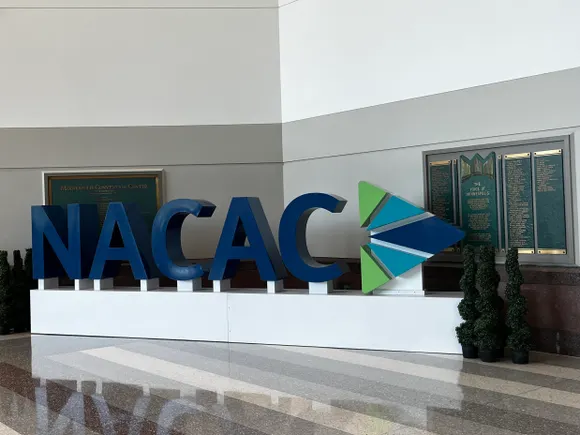
Despite these headwinds, major research universities—including Rice University, the University of Connecticut (UConn), and Northeastern University—are doubling down on their global footprints. During the recent annual conference of the National Association for College Admission Counseling (NACAC), enrollment experts from these institutions convened to discuss the strategies they are employing to maintain their international pipelines, diversify their student populations, and reassure families that the American degree remains a premier global asset.
The Dual Pressure: Demographic Declines and Policy Volatility
The urgency felt by admissions departments is not unfounded. For years, U.S. colleges have relied on international students to bolster their revenue and enrich their campus diversity. However, the intersection of domestic demographic stagnation and shifting federal immigration policies has created a climate of apprehension.
While federal courts have occasionally intervened to temper the most aggressive shifts in immigration policy, the overarching sense of instability persists. Many public institutions have reported tangible hits to their international student numbers this academic year, a trend that experts fear could accelerate if the U.S. continues to signal a restrictive environment to the global community. The stakes are particularly high for public flagships and private research institutions that have historically depended on a steady flow of talent from abroad to fill specialized academic programs and sustain institutional research capabilities.
A Chronology of Strategic Evolution
The response from leading universities has been characterized by a pivot from reactive measures to long-term, proactive investment.
The Shift Toward Diversification
Historically, many U.S. universities operated with a "siloed" recruitment strategy, often focusing heavily on a single country—most notably China—to fill their international seats. Data from the late 2010s showed that at institutions like UConn, as many as 90% of international undergraduates hailed from a single nation.
Recognizing the risks of this over-reliance, institutions began a systematic effort to broaden their reach. Rice University, for example, once saw 41% of its international student body originate from one country. Over the past several years, under the leadership of Yvonne Romero, Vice President for Enrollment and Dean of Admissions and Financial Aid, the university invested $1.5 million over a three-year period to aggressively expand its presence in underrepresented regions. This was not a quick fix; it was a structural overhaul designed to build pipelines that would yield results for decades.
Implementing Financial Accessibility
A critical barrier to international recruitment has always been the "full-freight" model, where international students are expected to pay the entirety of tuition and living expenses. Enrollment experts at the NACAC conference noted that this policy, while fiscally lucrative in the short term, severely restricts the socioeconomic diversity of the international student body.
Both Rice and UConn have transitioned toward more inclusive financial models, working with donors to establish merit-based scholarships specifically for international students. By removing the financial barrier, these universities have successfully signaled that they are not just looking for wealthy applicants, but for the best minds globally, regardless of their economic background.
Supporting Data: By the Numbers
The success of these long-term strategies is beginning to manifest in institutional data, even amid a challenging climate.
- Rice University: In the graduating class of 2023, international students represented 11% of undergraduates from 24 countries. By the class of 2029, that figure has grown to 13% of undergraduates, now hailing from 56 different countries.
- University of Connecticut: Despite facing significant visa hurdles, the university has maintained a steady focus on geographic diversification. While Chinese students still make up a significant portion of their international cohort (60.9% in fall 2025), the institution is actively expanding recruitment in sub-Saharan Africa, a region where it participated in a massive eight-college recruitment tour in 2024.
- Northeastern University: With a robust international presence, Northeastern reported that 33.1% of its student body was international as of fall 2025. While this represents a slight dip from 40.9% two years prior, the university has implemented flexible policies—such as allowing late semester starts for students delayed by visa processing—to mitigate the impact of bureaucratic bottlenecks.
Official Responses and Institutional Philosophy
The leaders at the forefront of this movement emphasize that international recruitment is a "long game" that requires persistence and a human-centric approach.
The "Boots on the Ground" Philosophy
Yvonne Romero of Rice University has championed the importance of physical presence. By opening the Rice Paris Center in 2022, the university has been able to host workshops for European K-12 counselors, demystifying the U.S. application process and building trust. Similar efforts in Sao Paulo, Brazil, have reinforced this strategy.
"My job is not to get the next class," Romero remarked. "It’s to build a pipeline to students from around the world for the next 20 to 25 years."
Leveraging Local Advantage
Institutions are also learning to market their specific geographic locations as assets rather than mere addresses. Vern Granger of UConn highlighted that the university is able to market its location as "very open and very inviting" because of the supportive legislative environment in Connecticut. Conversely, Rice University utilizes its location in Houston—a city with a vast, diverse international population—as a selling point. The city’s large Nigerian community, for instance, provides a "home away from home" for students from that nation, which has seen a doubling of its U.S.-bound students over the last decade.
Transparency and Reassurance
Satyajit Dattagupta, chief enrollment management officer at Northeastern, stressed that universities must act as beacons of transparency. Even when federal policies create confusion, his team maintains a policy of honest, direct communication with prospective families. "They see us as the people that they can ask questions to be reassured," he said. This role as a trusted advisor is critical when families are making what is often the single largest financial and life-altering decision of their children’s lives.
Implications for the Future of Higher Education
The implications of these efforts are profound. The universities that survive and thrive in this era of volatility will be those that view international students not as a revenue stream, but as a vital component of the intellectual and cultural fabric of the institution.
The Persistence of Demand
Despite the tightening of visa regulations—notably in sub-Saharan Africa, where visa denial rates have climbed to nearly two-thirds—the demand for a U.S. education remains remarkably high. Students are drawn to the flexibility of the American curriculum, which allows for interdisciplinary exploration, a feature often absent in more rigid international university systems.
The Call for Optimism
The consensus among the experts is one of cautious optimism. While they acknowledge that federal policy is currently a formidable obstacle, they argue that shrinking from international recruitment would be a tactical error. By maintaining a physical presence, offering financial support, and remaining steadfast in their mission to attract global talent, these universities are positioning themselves to be the destination of choice when the political tide eventually turns.
As Vern Granger aptly concluded, "I am an optimist by nature. I do truly believe that things are going to open up from a federal standpoint." For now, the strategy remains: stay the course, adapt where necessary, and ensure that the door to American higher education remains firmly open to the world.
