

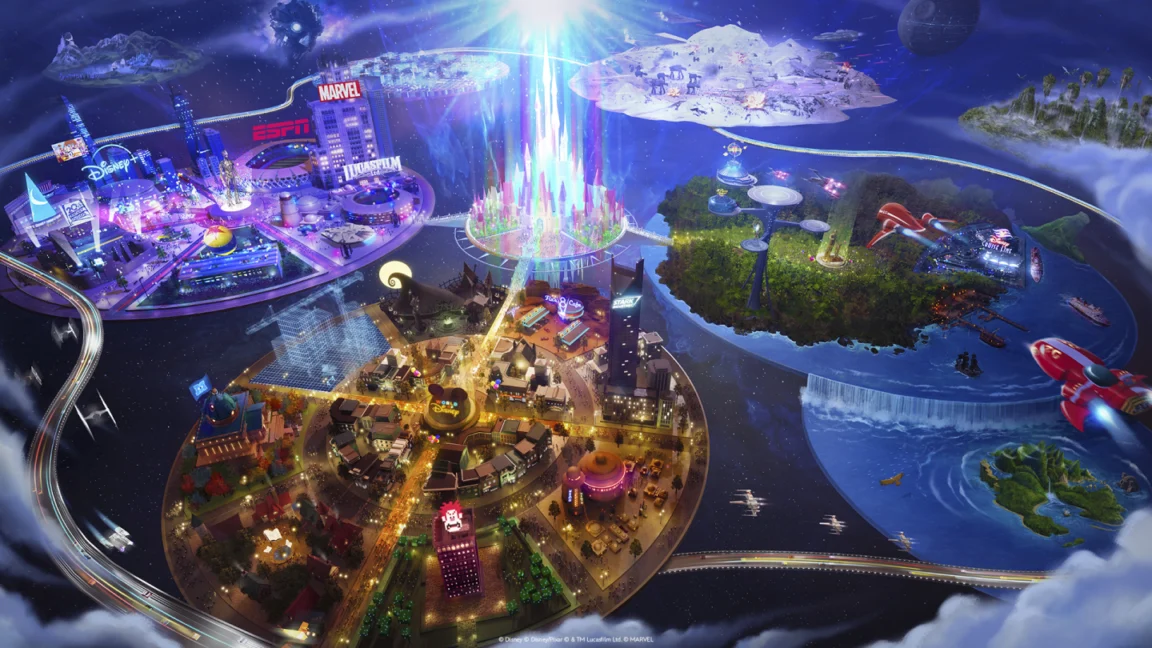
In a move that signals a seismic shift in the video game industry’s approach to software engineering and digital content creation, Epic Games has officially transitioned to an "AI-first" development strategy. The strategic pivot, which mandates that AI models serve as the primary engine for both source code and artistic asset generation, is currently centered on the studio’s high-stakes, $1.5 billion partnership with the Walt Disney Company.
According to reports from Bloomberg, the shift is not merely an experimental phase but a fundamental restructuring of internal workflows at the Unreal Engine maker. This transition has resulted in the indefinite delay of a highly anticipated Marvel- and Star Wars-themed shooter, originally slated for a March 2027 release. As Epic pivots toward a future dominated by generative models—specifically leveraging tools like Anthropic’s Claude—the gaming industry is left to grapple with the implications of a development model that effectively sidelines traditional hand-written code in favor of AI-directed workflows.
The Core Transformation: From Manual Craft to AI Orchestration
The mandate at Epic Games represents a radical departure from the traditional game development pipeline. Historically, AAA game development has relied on thousands of hours of manual labor: programmers writing C++ or Blueprint logic line-by-line, and artists spending weeks sculpting, texturing, and rigging 3D assets.
Under the new directive, these roles are being redefined. Internal communications viewed by Bloomberg indicate that developers are being instructed to cease hand-written coding entirely. Instead, human staff are transitioned into "curators" and "architects," responsible for prompting, refining, and validating outputs generated by large language models (LLMs) and generative art tools. The directive specifies that all art assets must now be produced via "full AI workflows," fundamentally changing the day-to-day existence of Epic’s creative teams.
This transition is not being framed as a cost-cutting measure to reduce headcount, but rather as an effort to exponentially scale creative output. By removing the friction of manual syntax and asset rendering, Epic leadership believes the studio can build larger, more complex virtual environments at a pace previously considered impossible in the AAA space.
Chronology: A Partnership in Flux
To understand the weight of this announcement, one must look at the timeline of the Epic-Disney partnership:
- February 2024: Epic Games and the Walt Disney Company announce a landmark $1.5 billion investment. The partnership is framed as the creation of a "persistent universe" that would exist alongside Fortnite, featuring deep integrations with Disney’s massive intellectual property portfolio, including Marvel, Star Wars, and Pixar.
- Early 2026: Development cycles on the flagship shooter project encounter significant headwinds. Reports suggest that the project faced understaffing and struggled to meet the rigorous technical requirements of building a cross-platform, high-fidelity experience using traditional methods.
- October 2026: As development delays mount, Epic Games initiates a "huge pivot" toward AI-accelerated development. The decision is made to force a transition to an AI-first workflow to break the developmental logjam.
- October 12, 2026: Bloomberg publishes a report detailing the shift and the indefinite delay of the project.
- Post-Announcement: Epic CEO Tim Sweeney confirms the pivot on social media, framing it as a necessary evolution for the company’s internal culture and the broader ecosystem of Unreal Engine users.
Supporting Data: The Scale of the AI Shift
The transition to AI-first development is occurring within the context of a broader industry trend. In 2025 and 2026, major studios have faced increasing pressure to control rising development costs—often exceeding $300 million per AAA title—and to shorten production cycles that have ballooned to five to seven years.
Epic Games, as the creator of Unreal Engine, holds a unique position in this landscape. By dogfooding their own AI-integrated workflows, they are essentially creating a blueprint for the rest of the industry. The data points suggesting a need for this shift are clear:
- Complexity vs. Capacity: Modern game engines have reached a level of complexity where the sheer volume of code required to maintain persistent, online, interconnected worlds has outpaced the ability of human teams to write it reliably within a four-year window.
- Asset Proliferation: The "Disney Universe" requires thousands of unique assets. Using traditional manual modeling, the content pipeline would have required an massive increase in human headcount, which is logistically difficult and financially risky.
- Generative Efficiency: Preliminary internal tests at Epic have shown that AI models can generate functional game logic snippets 40-60% faster than junior developers, provided the human oversight is precise.
Official Responses and Strategic Rationale
Epic Games has been quick to manage the narrative surrounding the pivot, emphasizing that the human element remains at the core of their creative process.
"We’re embracing AI-accelerated development, led by Epic developers who are the visionaries and creative drivers for everything we do," an Epic spokesperson stated. This sentiment was echoed by CEO Tim Sweeney, who took to social media to clarify the company’s vision.
Sweeney’s statement is particularly illuminating regarding the company’s long-term strategy:
"We have a huge pivot underway here at Epic, moving developers around to retool for maximum AI acceleration. The aim isn’t to do the same stuff with fewer people, but to enable everyone here to build MORE and BETTER stuff, and to bring the benefits to all teams using Unreal."
Sweeney argues that the move is an empowering one—a way to remove the "grunt work" of programming and let developers focus on high-level game design and creative direction. However, industry critics and employees alike remain wary, questioning whether "AI-accelerated" will inevitably lead to a thinning of the workforce and a homogenization of game design as AI models begin to pull from similar datasets.
Implications: A New Era for Game Development
The shift at Epic Games carries profound implications for the gaming industry, the workforce, and the end-user experience.
1. The Death of the "Coder" and the Rise of the "Prompt Engineer"
The role of the software engineer in game development is undergoing its most significant change since the advent of high-level programming languages. If code is no longer "hand-written," the value of a developer shifts from their ability to write syntax to their ability to architect systems and troubleshoot AI-generated logic. This requires a new set of skills that focus on system integration, prompt logic, and model tuning.
2. Intellectual Property and Creative Homogenization
Using AI to generate assets—especially for brands as iconic as Star Wars and Marvel—presents a massive creative risk. Disney, known for its strict brand guidelines and quality control, is betting that Epic’s AI models can capture the "soul" of these franchises. If the AI begins to produce derivative or "uncanny" content, the brand damage could be catastrophic. Furthermore, if all studios begin using the same AI models to generate game assets, we may see a decline in the unique visual identities that have historically defined major titles.
3. The Future of the Unreal Engine Ecosystem
Epic’s transition is not just about their internal games; it is a preview of the next iteration of the Unreal Engine. By refining these AI-first workflows, Epic is likely preparing to bake these tools into the engine itself. This would allow third-party studios to adopt the same AI-driven development model, effectively standardizing the AI-first approach across the entire gaming industry.
4. Labor and Stability Concerns
The indefinite delay of the Disney project suggests that the transition to AI is not a "magic button." It involves significant friction, retraining, and potential disruption to morale. As developers are "moved around" to retool, concerns regarding job security and the loss of creative autonomy will likely persist. The industry is watching closely to see if this shift leads to a more efficient development pipeline or if it results in "bloated" AI code that is harder to debug and optimize in the long run.
Conclusion: A High-Stakes Gamble
Epic Games is currently conducting one of the largest experiments in the history of interactive entertainment. By tethering their $1.5 billion Disney collaboration to an AI-first development strategy, they have made themselves the ultimate testing ground for the future of digital creation.
While the vision articulated by Tim Sweeney speaks to a future of boundless creative potential, the reality of an indefinitely delayed project and the abandonment of traditional manual craft suggests that the path to this future is fraught with technical and cultural challenges. Whether this pivot leads to a new golden age of game development or serves as a cautionary tale about the limits of automation remains to be seen. One thing is certain: the era of hand-written game code is drawing to a close, and the age of AI-orchestrated development has arrived.
