

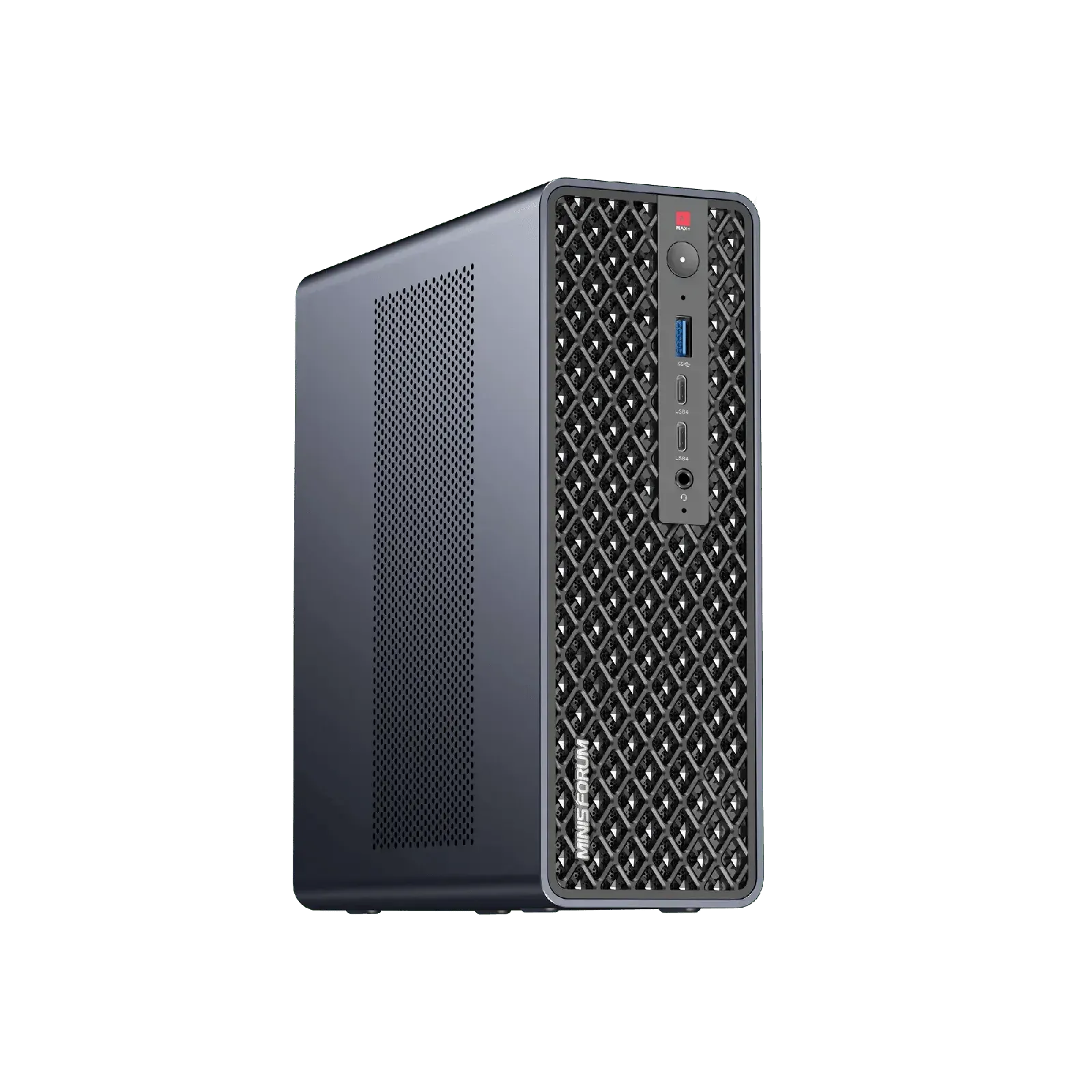
In the rapidly evolving landscape of localized artificial intelligence, the hardware bottleneck has long been the primary constraint for developers and enterprise researchers. While processing power (TOPS) has dominated the marketing headlines of the latest generation of NPUs, the true gatekeeper for running large language models (LLMs) is memory capacity. Enter the Minisforum MS-S1 MAX-P495, a compact workstation that, despite its diminutive 3.5-liter footprint, represents a significant leap forward in local AI accessibility. By packing 192GB of unified memory into a chassis previously reserved for mid-tier configurations, Minisforum is targeting a specific, high-demand niche: professionals who need to run massive, complex models on-premises without the prohibitive costs of enterprise-grade server clusters.
The Core Specifications: Power in a Pint-Sized Package
The MS-S1 MAX-P495 is built around AMD’s cutting-edge Ryzen AI Max+ PRO 495 processor. On paper, the chip is a powerhouse of efficiency, featuring 16 Zen 5 CPU cores and 32 threads, capable of boosting up to 5.2 GHz. However, the headline-grabbing specification is the platform’s AI performance: a total of 131 TOPS (trillions of operations per second), of which the dedicated NPU contributes 55 TOPS.
While these figures are undeniably impressive, they represent only an incremental improvement over the previous generation. The shift from the 5.1 GHz boost clock of the Ryzen AI Max+ 395 to the 5.2 GHz of the 495, along with a modest 10% increase in NPU performance, suggests that AMD’s focus for this refresh was not on raw computational speed, but rather on structural support for memory-intensive workloads.
The machine comes in a single, high-spec configuration: the aforementioned 192GB of unified LPDDR5X memory paired with a 2TB NVMe SSD. With pre-orders now open at a price point of $7,399, the device is scheduled to begin shipping in mid-October 2026.
A Chronology of the Strix Halo Evolution
To understand the significance of the MS-S1 MAX-P495, one must look at the recent history of AMD’s mobile-to-workstation silicon.
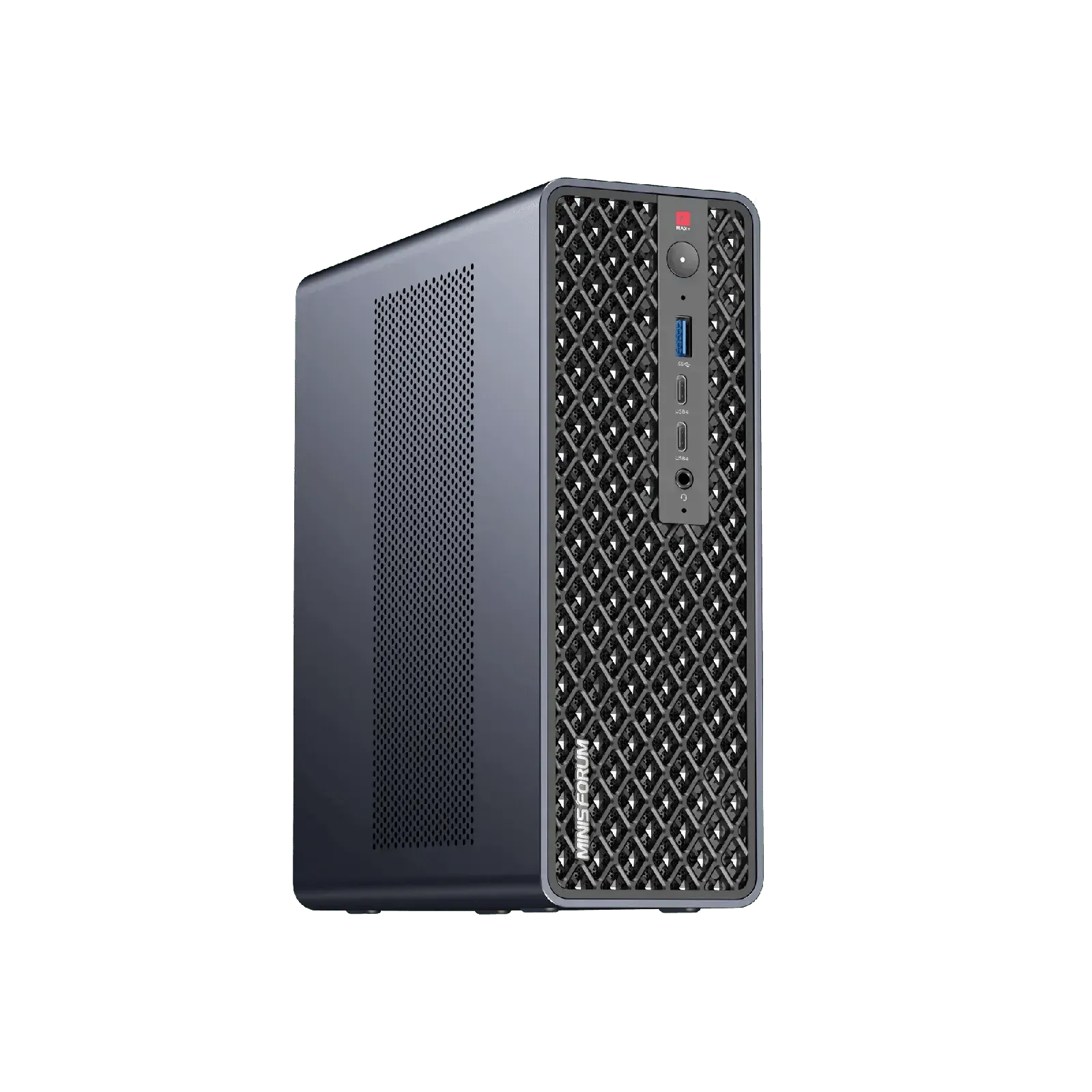
- Early 2026: The original MS-S1 MAX was launched, powered by the Ryzen AI Max+ 395. It was heralded for its innovative use of the Strix Halo architecture, providing a bridge between high-end laptop silicon and workstation performance. It offered up to 128GB of memory, which was considered the "gold standard" for early local AI enthusiasts.
- May 2026: AMD officially introduced the Ryzen AI Max PRO 400 series. This refresh was designed to address the growing demand for memory bandwidth in generative AI tasks. By updating the memory controller and increasing the ceiling for unified memory, AMD aimed to keep its silicon relevant in an era where model parameter counts are skyrocketing.
- Late 2026: Minisforum announces the integration of the 495 silicon into the MS-S1 MAX chassis. This launch marks the transition from "enthusiast workstation" to "compact inference server," signaling that Minisforum is pivoting its product strategy toward the burgeoning local AI market.
The Memory Paradigm: Why 192GB Changes Everything
The most critical upgrade in the P495 model is not the 100 MHz clock bump, but the memory controller’s newfound capability. The 400-series platform supports up to 192GB of LPDDR5X across a 256-bit interface. More importantly, up to 160GB of this pool can be assigned directly to the GPU for inference tasks.
In the world of LLMs, memory capacity is the primary filter. If a model’s parameter requirements exceed the available VRAM/Unified memory, it simply will not run. By jumping from 128GB to 192GB, Minisforum has effectively expanded the library of models that can be run locally by a significant margin.
Furthermore, the memory speed has been pushed from 8,000 MT/s to 8,533 MT/s. This ~7% increase in bandwidth is arguably more impactful than the CPU frequency increase. When dealing with models that have hundreds of billions of parameters, the bottleneck is rarely the arithmetic logic unit (ALU) of the processor, but rather the speed at which weights can be moved from memory to the processor cores.
Performance in Practice: Real-World AI Inference
Minisforum has provided internal benchmarks that highlight the machine’s capability to handle Mixture-of-Experts (MoE) models, which are currently the industry favorite for balancing performance and compute cost.
- DeepSeek V4 Flash (284B parameters): A single MS-S1 MAX-P495 can run this model at approximately 12 tokens per second (t/s) using Q4 quantization.
- Qwen3.5-397B: By linking two units together, users can achieve roughly 16 t/s.
- DeepSeek-R1 (671B parameters): A cluster of four units is capable of loading the 380GB Q4_0 build of this massive model.
It is important to note the nuance of "active parameters." While these models have massive total parameter counts, they are MoE designs. DeepSeek V4 Flash only activates about 13 billion parameters per token, and Qwen3.5-397B activates 17 billion. The 192GB of RAM is sufficient to keep the entire model resident in memory, while the 273 GB/s of bandwidth provided by the system allows for the data throughput necessary to sustain double-digit token generation speeds. This makes the unit a viable tool for privacy-conscious organizations that cannot afford to send sensitive data to cloud-based APIs.
Official Positioning and Market Implications
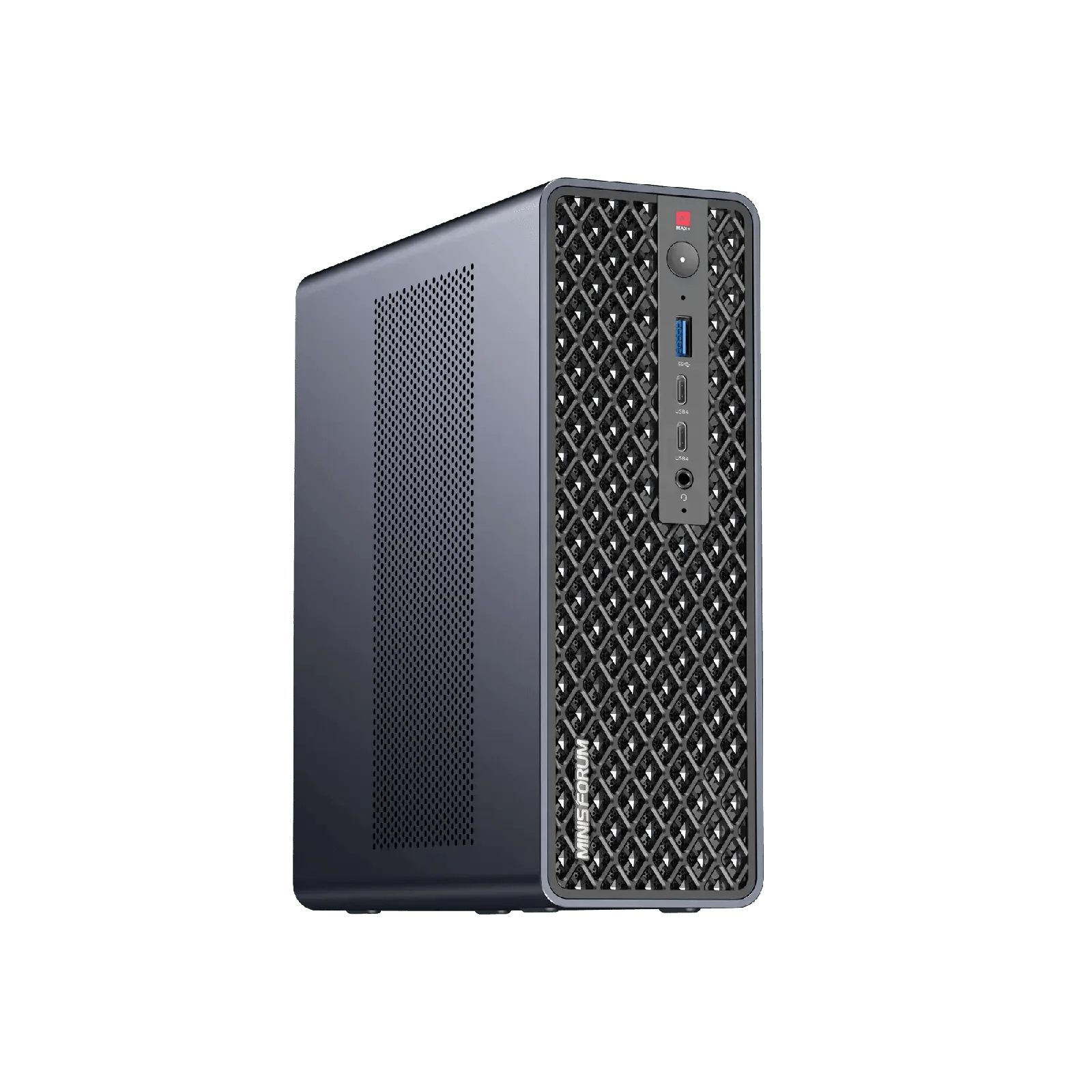
Minisforum is positioning this device as an enterprise tool. Despite the "Mini PC" form factor, the inclusion of dual 10GbE ports, two 80Gbps USB4 v2 ports, and 2U rack support confirms that this machine is intended for professional environments.
However, the price remains a contentious point. At $7,399—even with the promotional "20% off" discount from an implied $9,249 list price—it represents a significant investment. The question for potential buyers is whether the additional 64GB of memory over the standard MS-S1 MAX is worth the premium. For a casual user or a developer working with smaller 7B or 14B models, the answer is almost certainly no. But for a data scientist who requires a local environment to test 200B+ parameter models without relying on expensive GPU clusters, this machine provides a level of cost-efficiency that is difficult to replicate with traditional enterprise server builds.
Conclusion: A Niche Powerhouse
The Minisforum MS-S1 MAX-P495 is a masterclass in focused hardware engineering. It does not attempt to be the fastest gaming PC or the most versatile home office device. Instead, it is a specialized tool built for the age of local AI. By prioritizing memory capacity and bandwidth over marginal CPU gains, Minisforum has created a device that punches well above its weight class.
For those who need to maintain privacy, reduce latency, or simply avoid the recurring costs of cloud AI inference, the P495 offers a compelling—if expensive—solution. While the previous iteration of the MS-S1 MAX remains an excellent value for most, the P495 is a bold statement from Minisforum: the future of AI development isn’t just in the cloud; it’s sitting on a desk, in a box no larger than a stack of books. As we move into 2026 and beyond, this blend of high-density memory and compact, low-power architecture is likely to become the blueprint for professional-grade edge computing.
