

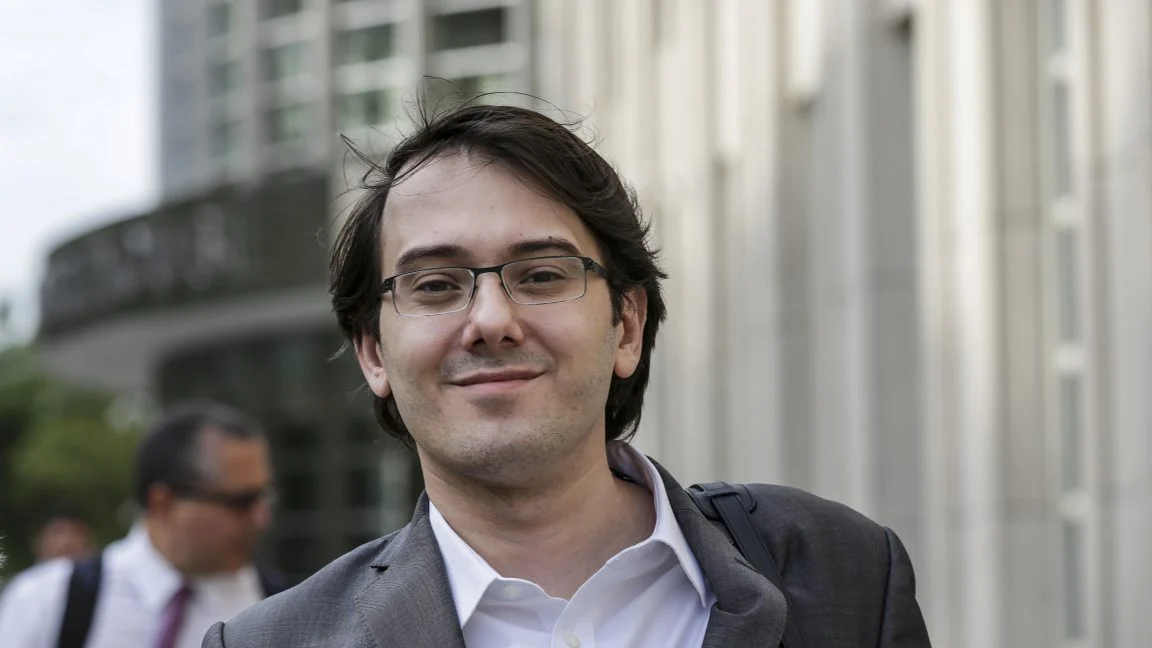
The Federal Trade Commission (FTC), in a rare and aggressive move, has formally accused Martin Shkreli—the former pharmaceutical executive once infamously dubbed the "Pharma Bro"—of flagrantly violating a lifetime ban from the industry. The agency, working in conjunction with several state attorneys general, has filed a comprehensive brief detailing a systematic pattern of behavior that they claim renders Shkreli’s initial court-ordered injunction functionally toothless.
At the heart of the dispute is the 2022 federal court ruling that barred Shkreli from serving as an officer or director of a public company and prohibited him from participating in the pharmaceutical industry. The recent filing suggests that Shkreli has not only ignored these mandates but has turned his post-prison life into a recurring masterclass in regulatory defiance, utilizing social media and livestreaming platforms to influence markets and trade stocks that he was explicitly ordered to avoid.
The FTC’s Stance: "Consequences Commensurate with Seriousness"
FTC Commissioner Mark Meador, in a scathing public statement accompanying the filing, underscored the necessity of strict enforcement. "The extensive record compiled by FTC staff shows that Mr. Shkreli chose to blatantly disregard the order after leaving prison," Meador stated. "Among other actions, he has traded pharmaceutical stocks and actively sought to influence the business and management of multiple pharmaceutical companies through public commentary, in violation of the terms of the injunction."
For the FTC, this is not merely a procedural breach; it is a challenge to the agency’s credibility. "A lifetime industry ban is only effective if breaches are met with consequences commensurate with the seriousness of the order," Meador added. The commission is signaling that the legal system’s inability to keep a high-profile figure from repeating past behaviors undermines the deterrent power of judicial mandates.
Chronology of Defiance: A Four-Phase Breakdown
The FTC and the coalition of states have structured their case around four distinct phases of activity that they argue represent a pattern of "willful and knowing" violations of the 2022 court order.
Phase 1: The 2022 Trading Competition
Shortly after his release, Shkreli engaged in a high-profile trading competition with another prominent YouTuber. While presented to the public as entertainment or a test of skill, the FTC argues this served as the genesis of his return to prohibited market behavior, establishing a framework where he could use his notoriety to move market sentiment.
Phase 2: The 2024 Biotech Shorting Campaign
By 2024, the activity escalated. The filing details how Shkreli transitioned from general trading to targeted shorting of a small biotech firm. By leveraging his large online following, he began to treat his social media presence as a tool for market manipulation, trading in various pharmaceutical stocks that fell under the shadow of his industry ban.
Phase 3: The 2025 "Magic Trick"
The year 2025 marked a significant escalation in both intensity and transparency. Shkreli initiated a trading challenge that involved shorting three small biotech firms. During his livestreams, he openly boasted about his methodology, referring to his ability to destabilize specific stocks as a "magic trick." He infamously told viewers, "It doesn’t matter what trades I make because I can always find a couple of biotech stocks to smoke." His influence was tangible: after he advised his audience to short one particular company, the stock price plummeted by 17 percent within a short window.
Phase 4: The 2026 $10 Million Challenge
The most recent phase, initiated in June 2026, involves a massive $10 million trading account. The FTC notes that Shkreli continues to trade in pharmaceutical company stocks, showing no signs of adhering to the injunction. The scale of this account suggests that Shkreli has successfully rebuilt his capital base and is using it to aggressively speculate in the very sector from which he was banned.
Supporting Data: The "Tip of the Iceberg"
The evidence presented by the FTC is largely drawn from Shkreli’s own digital footprint. By monitoring his livestreams, federal investigators have cataloged instances where Shkreli showcased his trading accounts, provided long-form analysis of pharmaceutical companies, and offered speculative commentary on the outcomes of pivotal clinical trials.
Crucially, the FTC notes that the information they have gathered is likely only the "tip of the iceberg." Because the agency reviewed only a fraction of his total social media presence, they suspect that there are secondary, private, or burner accounts through which Shkreli conducts further prohibited activities.
The filings even cite Shkreli’s own admission of such activities. During a broadcast, he allegedly told his viewers: "I have some other accounts that I’[d] show you, but, like, I know feds are watching, so f[*]ck that." This admission of self-censorship, in the eyes of the FTC, serves as evidence of his intent to deceive regulators and maintain a clandestine presence in the pharmaceutical sector.
Shkreli’s Defense: The "Totalitarian" Narrative
In a characteristically combative response, Shkreli took to social media to characterize the FTC’s filing as an overreach of government power. Expressing surprise at the move, he attempted to frame the legal action as an attack on his fundamental right to free speech.
"I could see totalitarian NY AG Letitia James trying to limit a citizen’s free speech but not from Trump’s FTC," Shkreli wrote. By invoking political figures, he is attempting to reframe the case from one of regulatory compliance to one of ideological warfare. His defense strategy relies on the argument that discussing stocks—even those in a sector he is banned from—constitutes protected public commentary rather than active industry participation or illegal manipulation.
Broader Implications: The Future of Lifetime Bans
The case against Martin Shkreli raises profound questions about the viability of "lifetime bans" in the age of decentralized social media and retail trading. If a high-profile individual can effectively bypass a court order by using their personal platform to influence market outcomes, the regulatory state may find itself forced to develop new tools for oversight.
The Problem of Digital Influence
Traditionally, a ban from an industry meant a prohibition on holding board seats or executive positions. However, the modern financial landscape, driven by influencers and social media "personalities," allows individuals to exert massive influence over companies without ever stepping inside a corporate boardroom. The FTC must now decide whether to seek an expansion of the definition of "industry participation" to include public commentary that results in market movement.
The Enforcement Gap
There is also the matter of resources. Monitoring the digital activity of a prolific content creator across multiple platforms is a monumental task. The FTC’s reliance on "tip of the iceberg" rhetoric suggests that they are struggling to keep pace with the sheer volume of content produced by subjects like Shkreli. This creates a dangerous precedent where bad actors can hide in plain sight, assuming that the sheer volume of their output will eventually exhaust the capacity of government regulators to police them.
What Comes Next?
For Shkreli, the implications are severe. If the court finds that he has violated the injunction, he could face a range of consequences, from substantial monetary fines and the disgorgement of profits gained through illegal trades, to contempt of court charges that could lead to further incarceration.
The legal community is watching this case closely. It serves as a test case for how federal agencies can respond to "influencer-led" financial activity. If the court sides with the FTC, it will send a clear message: the digital age does not provide a safe harbor for those under court-ordered bans. If the court finds for Shkreli, it may signal that current regulatory mechanisms are effectively obsolete in the face of modern digital platforms.
Ultimately, the FTC’s filing is a reminder that while the pharmaceutical industry is highly regulated, the individuals who seek to profit from it—even after being barred—are often as persistent as the systems they once exploited. The battle over Martin Shkreli’s digital footprint is far from over, and its resolution will likely define the parameters of financial enforcement for years to come.
