

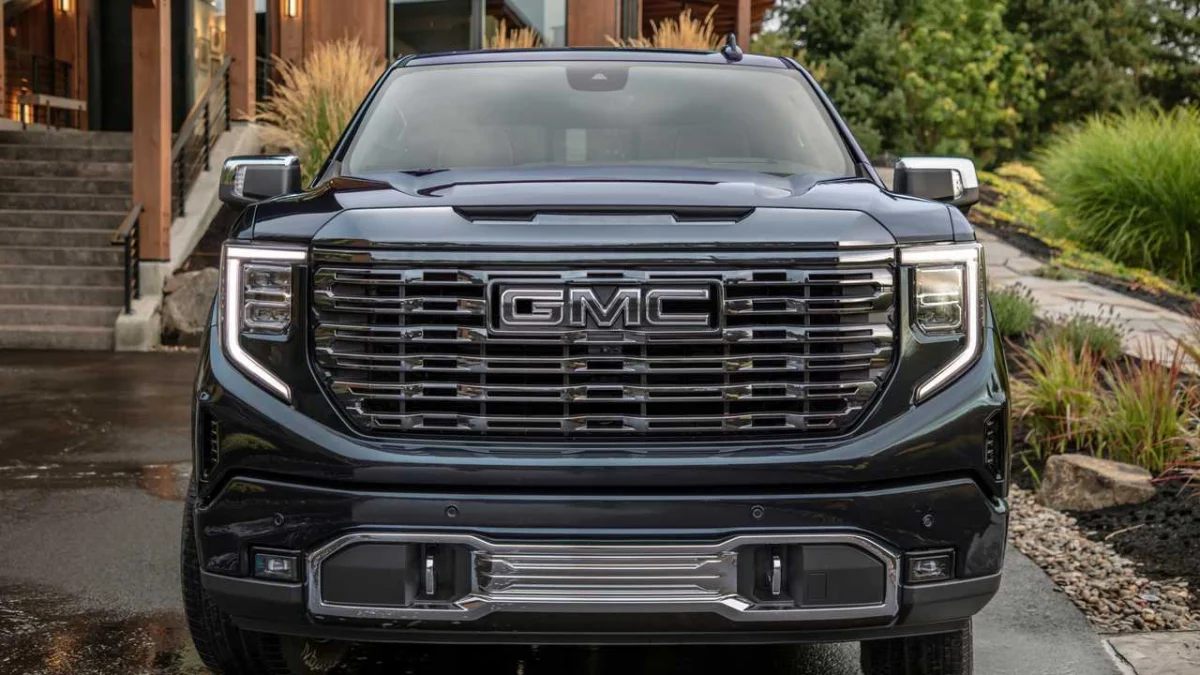
The United States federal government has escalated its oversight of General Motors (GM) following reports that a previously identified safety concern—the detachment of grille components on GMC Sierra 1500 pickup trucks—persists even after vehicles have undergone official repair campaigns. The National Highway Traffic Safety Administration (NHTSA) formally opened an investigation on October 9, 2026, to determine why these structural components continue to fail, potentially posing a significant hazard to other motorists on the road.
The Scope of the Investigation: A Growing Safety Concern
The NHTSA’s investigation, officially designated as RQ26003, focuses on an estimated 535,639 GMC Sierra 1500 trucks produced during the 2022 through 2024 model years. The agency’s inquiry specifically targets the upper grille deflectors—aesthetic and functional trim pieces that, according to numerous owner reports, have a tendency to spontaneously detach from the front fascia, sometimes while the vehicle is traveling at highway speeds.
This probe is particularly concerning to federal regulators because it follows a previous remedial effort. In early 2025, General Motors launched a recall (Recall 25V-060) aimed at reinforcing the attachment tension points of these chrome grille deflectors. However, the sheer volume of new complaints—and the discovery that a significant portion of these reports involves vehicles that were supposedly "fixed"—has prompted the NHTSA to re-examine the efficacy of GM’s initial solution.
Chronology of the Defect and Regulatory Action
To understand the severity of the situation, it is necessary to look at the timeline of events leading up to the current investigation:
- Late 2021/Early 2022: General Motors introduces a mid-cycle update for the Sierra 1500. This update includes a redesigned front fascia featuring prominent chrome grille deflectors.
- Early 2025 (Recall 25V-060): Following an initial surge of consumer reports, the NHTSA and GM reach an agreement on a recall. The campaign covers 2022 Sierra models built between November 9, 2021, and September 29, 2022. Dealers are instructed to apply reinforcements to the attachment points.
- Mid-2025 to Present: Despite the completion of the 25V-060 repair for thousands of trucks, the NHTSA continues to receive reports of detachment.
- October 9, 2026: The NHTSA officially opens investigation RQ26003. This indicates that the agency is no longer satisfied with the previous recall’s results and suspects a deeper design or manufacturing flaw that the original remedy failed to address.
Data Analysis: Why the Complaints Matter
The data currently available to the NHTSA paints a troubling picture. Of the 118 total complaints logged by the agency regarding these specific grille deflectors, 21 involve vehicles that were serviced under the previous recall. This represents a "failure rate" of the repair that regulators find unacceptable.
The reports characterize a range of dangerous scenarios. In many instances, the chrome piece separates from the truck’s front end while the driver is in motion. This creates an immediate road hazard, forcing trailing drivers to perform emergency braking or swerve to avoid striking the flying debris. There have been documented reports of the detached parts causing significant damage to the windshields of following vehicles, as well as near-miss collisions resulting from startled motorists reacting to the sudden loss of vehicle parts on the roadway.
While the NHTSA has not yet confirmed any fatalities or severe injuries directly linked to this specific defect, they emphasize that the potential for a catastrophic incident is high, especially at high speeds.
Engineering Perspectives: Why Only Chrome?
One of the more interesting aspects of this investigation is the specificity of the problem. NHTSA engineers have noted that the issue is primarily isolated to the "chrome" grille deflectors introduced in the 2022 mid-cycle update.

Industry analysts suggest that the addition of heavy chrome plating or the unique physical properties of the chrome-clad material may be altering the stress tolerance of the plastic clips used to mount the deflectors. Non-chrome grilles, which use a different material composition and potentially different mounting tolerances, have not shown the same pattern of failure. This suggests that the issue may not be the assembly process itself, but rather the fundamental design or material choice of the decorative trim pieces.
Official Responses and Corporate Strategy
General Motors has acknowledged the investigation and is currently working with the NHTSA to provide documentation and testing data. A spokesperson for the company, Bill Grotz, reiterated that "customer safety and satisfaction remain the company’s highest priorities."
However, GM has stopped short of announcing a secondary, expanded recall at this stage. From a corporate legal perspective, the automaker is likely waiting for the NHTSA to present the results of their testing before determining whether a new remedy is required. If the investigation concludes that the 25V-060 repair was "inadequate," GM will be legally obligated to issue a new recall, which would involve a more comprehensive replacement of the grille components rather than simple reinforcement.
Implications for Owners and the Market
For owners of 2022–2024 GMC Sierra 1500 trucks, the current situation is one of uncertainty. The primary advice from safety experts and the NHTSA is to remain vigilant.
What Should Owners Do?
- Monitor Your Vehicle: If you own a truck with the chrome grille package, perform a visual check of the front fascia. If you notice any gaps, loose trim, or rattling sounds near the upper grille, do not wait for a recall notification.
- Use Official Tools: Owners can visit the official NHTSA recall lookup website (nhtsa.gov/recalls) and enter their 17-digit Vehicle Identification Number (VIN). This tool will show if your specific truck is covered by any past or current safety actions.
- Document and Report: If you experience a component detachment, it is crucial to report the incident to the NHTSA. These reports are the primary fuel for federal investigations. Documentation—including photos of the damaged part and the vehicle—is vital.
- Contact Your Dealer: Even if your truck was previously "fixed," if you suspect the component is loosening again, contact your local GMC service department. Request that they document your concern in the service history, which creates a paper trail that may be useful if a new, more comprehensive recall is issued.
Long-Term Market Impact
This investigation comes at a sensitive time for GMC. As the brand pushes further into the premium, high-margin truck market with models like the Denali Ultimate and AT4X, public perception of build quality is paramount. A recurring safety defect—particularly one involving external trim that poses a road hazard—can damage consumer confidence and affect the resale value of these high-end trucks.
Furthermore, the outcome of this investigation will set a precedent for how the NHTSA handles "failed remedies." As modern vehicles become more complex and modular, the ability to effectively fix a problem the first time is becoming a critical metric for regulators. If GM is found to have under-engineered the repair for these deflectors, they may face increased pressure to overhaul their quality assurance processes for exterior components.
Conclusion
The investigation into the GMC Sierra 1500’s grille deflectors serves as a reminder of the complexities inherent in modern vehicle manufacturing. What appears to be a simple piece of exterior trim can, under the right conditions, become a significant safety risk. For now, the 535,639 trucks under evaluation remain in a "wait and see" period. As the NHTSA continues its inquiry, owners are urged to keep their contact information updated with GMC to ensure they receive the latest information as soon as the agency releases its findings.
The trucking industry will be watching this case closely, as it highlights the tension between aesthetic design, manufacturing efficiency, and the uncompromising standards of public road safety. Whether this leads to a simple update of the repair protocol or a widespread hardware replacement, the message from the NHTSA is clear: a repair is only as good as its effectiveness in the real world.
