

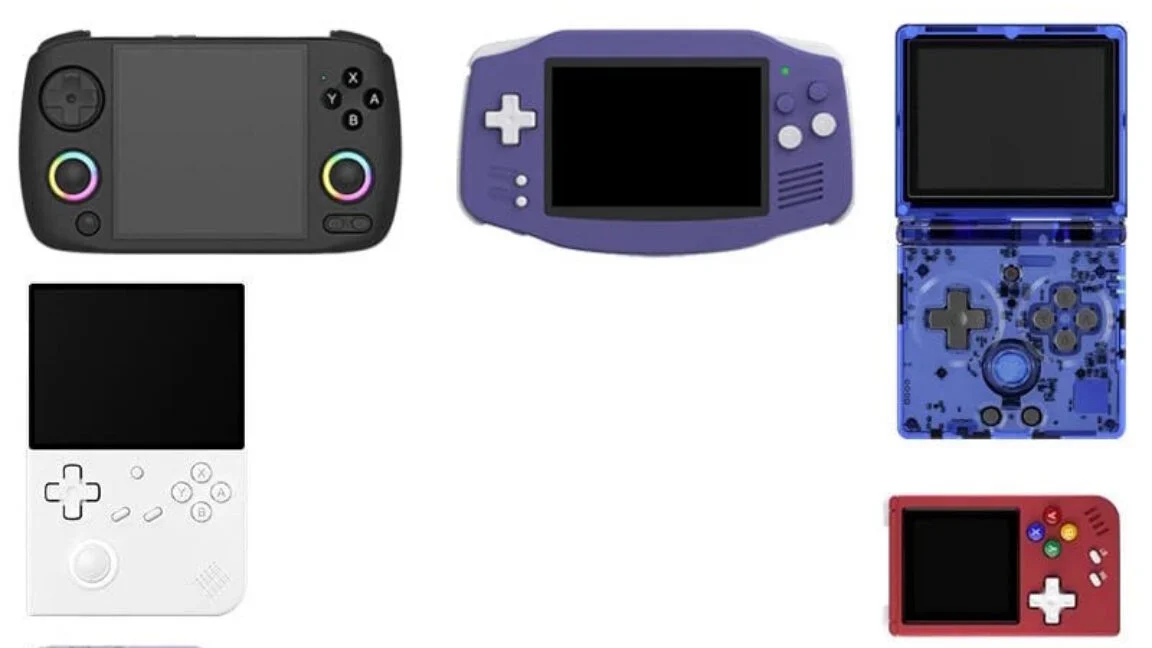
For over a decade, a specialized segment of the hardware industry has flourished in the shadows of the mainstream gaming market. Chinese manufacturers, most notably Anbernic, have gained a cult following by producing high-quality, handheld Android and Linux-based gaming devices. These machines, capable of emulating everything from 8-bit classics to modern, high-fidelity titles, have transformed from niche enthusiast toys into polished consumer electronics.
However, this rapid maturation has finally attracted the attention of the industry’s most powerful gatekeepers. In a significant escalation of intellectual property enforcement, the Entertainment Software Association (ESA)—the influential trade group representing titans like Nintendo, Microsoft, Sony, and Ubisoft—has officially petitioned the United States Trade Representative (USTR) to designate Anbernic as a "Notorious Market." This designation, reserved for entities that engage in or facilitate substantial copyright piracy, marks a potential turning point for the multibillion-dollar emulation hardware industry.
The Core Allegation: "Normalizing" Piracy
The crux of the ESA’s argument is not merely that Anbernic hardware exists, but that it has become a primary vehicle for the distribution of illicit intellectual property. According to a formal filing submitted to the USTR, the ESA asserts that Anbernic devices are "routinely offered or shipped with removable memory cards preloaded with hundreds or thousands of unauthorized copies of copyright-protected video games."
The ESA characterizes this ecosystem as a dangerous evolution of digital piracy. By bundling hardware with massive, curated libraries of pirated ROMs, these sellers are not just providing tools for homebrew enthusiasts; they are creating "superfakes." The ESA argues that these high-quality, polished consumer products serve to "normalize hardware-based piracy," making illegal content accessible to a mainstream audience that might otherwise be intimidated by the technical barriers of traditional emulation.
While Anbernic’s official storefronts often avoid including these pre-loaded SD cards to maintain a veneer of legality, the ESA contends that the secondary market—the third-party retailers and Amazon storefronts where these devices are predominantly sold—operates with the implicit, if not explicit, blessing of the manufacturer. To the ESA, the hardware itself is the Trojan horse for a global, commercial-scale copyright infringement operation.
Chronology: From Underground Hobby to Trade Policy Target
2010–2018: The Era of Tinkering
The handheld emulation scene began in internet forums and obscure electronics bazaars. Early devices were often poorly constructed, using repurposed smartphone components. These devices were almost exclusively marketed to "power users"—enthusiasts willing to spend hours troubleshooting firmware and sourcing their own game files (ROMs) to play legacy titles.
2019–2023: The Professionalization of Retro Gaming
Anbernic and its contemporaries (such as Retroid and Miyoo) shifted the market paradigm. They began prioritizing industrial design, premium materials, and user-friendly operating systems. These devices were no longer "DIY projects"; they were sleek, tactile, and professional. As the hardware quality improved, so did the sales volume, leading to a surge in popularity on platforms like TikTok and YouTube.
2024–2025: The Rise of the "Bundled" Retailer
As demand spiked, the "plug-and-play" model took over. Retailers realized that customers would pay a premium for a device that arrived with 5,000 pre-installed games. This convenience factor effectively decoupled emulation from the "legal" practice of ripping one’s own game collection, creating a direct conflict with major publishers.
August 2026: The USTR Formal Request
The ESA’s recent filing with the USTR serves as the culmination of years of frustration. By formally requesting that Anbernic be placed on the "Notorious Markets" list, the ESA has moved the battle from the courtroom to the sphere of international trade policy. The request, first highlighted by TorrentFreak, signals that the industry is no longer content with playing "whack-a-mole" against individual ROM sites; they are now targeting the supply chain itself.
Supporting Data: The Scale of the "Superfake" Economy
To understand the gravity of the ESA’s request, one must look at the volume of the market. The "Notorious Markets" list is designed to highlight entities that facilitate "substantial" piracy. Data from recent market analyses suggests that the handheld emulation sector has become a multi-hundred-million-dollar industry.
- Market Penetration: During peak holiday shopping periods, top-rated Anbernic devices consistently appear in the "Best Sellers" categories for consumer electronics on major global retail platforms.
- The ROM Multiplier: A single 256GB SD card bundled with a $100 device can house nearly every game released for the PlayStation 1, Super Nintendo, and Game Boy Advance—a library with a retail value in the tens of thousands of dollars if purchased legitimately through modern digital storefronts.
- Commercial Scale: The ESA’s filing points to the ease of acquisition. A consumer can visit an online marketplace, order an Anbernic handheld, and receive a complete, pre-configured library of copyrighted software in under 48 hours. This is not a hobbyist activity; it is a commercial enterprise that bypasses the copyright holder’s ability to monetize their back catalog.
Official Responses and Stakeholder Positions
The ESA’s Stance
The ESA, representing the collective interest of publishers like Nintendo—a company notoriously protective of its intellectual property—has framed the issue as a matter of protecting "American businesses and their workers." Their argument rests on the principle of unfair competition. If publishers are expected to invest millions in remastering and re-releasing classic games, they argue that the state must intervene to stop a flood of "counterfeit" hardware that offers those same games for free.
The Manufacturer’s Dilemma
Anbernic and its peers have historically maintained a policy of "willful ignorance." By producing the hardware without the pre-loaded cards in their official direct-to-consumer sales, they shield themselves from direct liability. However, this defense is becoming increasingly thin. Regulators are beginning to ask whether a company can truly claim to be unaware of how its products are being marketed, sold, and used when the "pre-loaded" feature is the primary selling point in global retail channels.
The Consumer Advocate View
Critics of the ESA’s approach argue that the industry is misinterpreting the consumer need. Many users of these devices argue that they are simply trying to play games that are no longer available for purchase through legitimate means. If companies like Nintendo and Sony offered a comprehensive, reasonably priced library of their back catalogs, the demand for "piracy-ready" hardware would plummet. From this perspective, the ESA’s action is an attempt to force consumers into a subscription-based, restricted ecosystem by destroying the hardware alternatives.
Implications: What Comes Next?
The "Notorious Markets" List Impact
Inclusion on the USTR’s list does not result in an automatic fine or a ban. However, its power is found in "public awareness and pressure." Inclusion acts as a signal to other nations and international law enforcement agencies that a specific entity is a priority target. It often forces retailers like Amazon, eBay, and AliExpress to tighten their own internal policies regarding the products they host.
The Threat of Section 301 Investigations
The most severe potential consequence is a Section 301 investigation. Under the Trade Act of 1974, the USTR has the authority to investigate foreign trade practices that are "unjustifiable" or "unreasonable" and burden U.S. commerce. If the investigation concludes that Anbernic is facilitating massive copyright theft, the U.S. could impose:
- Restrictive Import Controls: Making it significantly harder or more expensive for these devices to clear customs.
- Tariffs: Applying punitive import duties to neutralize the price advantage of these devices.
- Diplomatic Pressure: Forcing the Chinese government to take internal regulatory action against the manufacturers.
The Future of Emulation
If the ESA succeeds, the "golden age" of cheap, high-quality emulation hardware may be coming to an end. The industry could be forced to pivot toward devices that lack the "plug-and-play" nature that made them popular, or toward locked-down, cloud-only streaming hardware that requires a continuous connection to publisher-controlled servers.
For the gaming industry, this is a battle for control over the history of interactive media. For the consumer, it is a battle over the right to own and access the digital games of the past. As the USTR prepares to review the ESA’s petition, the outcome will likely dictate the hardware landscape for years to come, proving that even the most niche gadgets are not immune to the long arm of global trade law.
