

Imagine you are sitting at your desk on a Tuesday afternoon. A report that previously required an entire day of grueling research, drafting, and formatting is now sitting finished on your screen, polished to perfection. You used an artificial intelligence tool to synthesize the data, draft the narrative, and check for inconsistencies. You have saved yourself six hours of labor.
Your boss walks by, glances at the work, and offers a rare word of praise. You feel a surge of pride—not just for the quality of the work, but for the ingenuity of your workflow. Then, the hesitation sets in. Do you mention the AI?
This scenario is playing out in offices across the globe, creating a silent, high-stakes standoff between human ingenuity and corporate efficiency. For many, the very technology that promised to liberate the modern worker has instead become a source of existential anxiety.
The Main Facts: The "Soldiering" of the 21st Century
The core conflict is simple: Efficiency is no longer a guaranteed path to reward. In the industrial age, workers who found ways to produce more often found their quotas raised or their piece-rate wages slashed. Today, the "productivity trap" has returned in digital form.
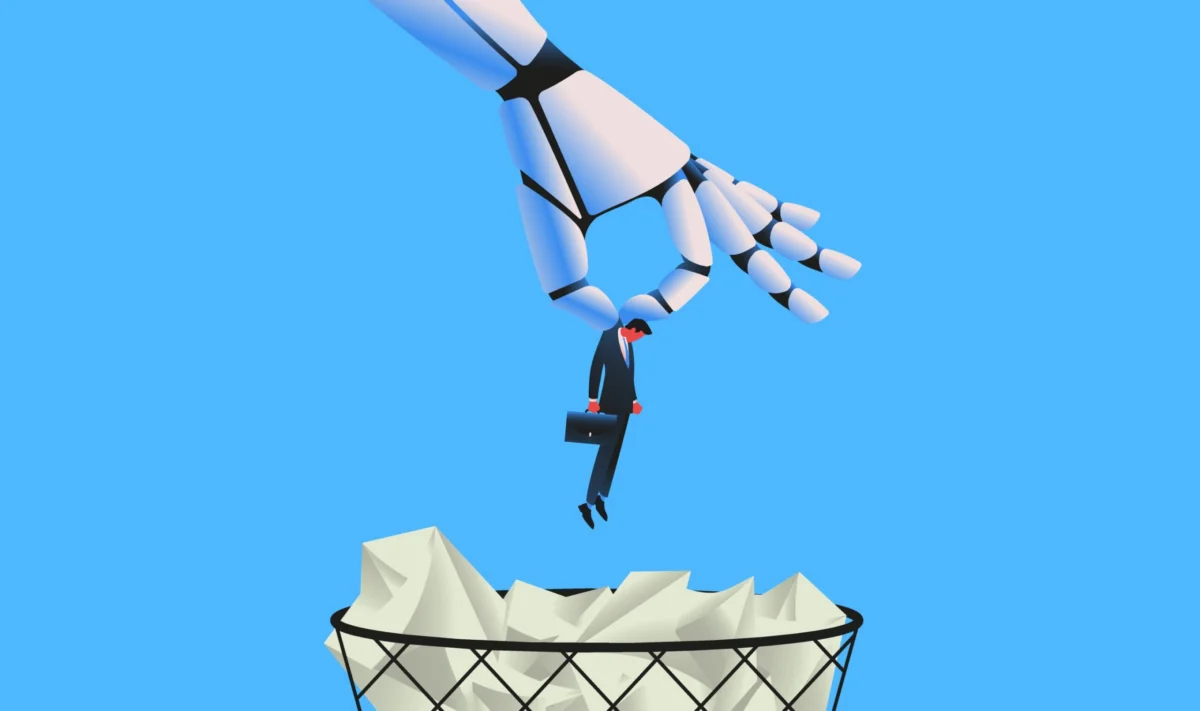
When an employee demonstrates that they can do the work of three people in the time it once took one, they don’t necessarily get a promotion. Instead, they risk becoming a victim of their own success. Management, seeing the increased throughput, may decide that the team is overstaffed, leading to layoffs. Conversely, if the employee keeps their efficiency gains a secret, they enjoy the luxury of a lighter workload, but they miss out on the recognition that leads to career advancement.
This is the "AI Paradox." It is not that employees lack the technical literacy to use these tools; it is that the rational, self-preserving response to automation is to hide it. Data from workplace intelligence firm Glean confirms this trend: in a survey of 6,000 computer-based workers across the U.S., U.K., and Australia, 36% of those who used AI to produce better, faster work admitted to keeping their methods hidden from their superiors.
A Chronological Perspective: From Factory Floors to Server Farms
The tension between management’s desire for efficiency and the worker’s desire for job security is not new. To understand the modern AI panic, one must look back to the early 20th century and the rise of "Scientific Management."
1911: The Birth of Taylorism
Frederick Winslow Taylor, the father of scientific management, famously documented a phenomenon he called "soldiering." In his 1911 treatise, The Principles of Scientific Management, Taylor observed that factory workers deliberately slowed their pace to prevent management from realizing how much they were actually capable of producing.
Taylor understood the logic perfectly. If a worker produced 10 units a day and was paid a set rate per unit, but then found a way to produce 20, the manager would inevitably cut the piece-rate pay. The worker would then be forced to produce 20 units just to earn the same salary they previously made for 10. Taylor, while obsessed with efficiency, admitted that if he were in the workers’ shoes, he would have done the exact same thing.
The 1970s: The Scandinavian Model
Fast forward to the 1970s, when the introduction of early mainframe computing began to threaten white-collar and specialized industrial roles. In Norway, computer scientist Kristen Nygaard pioneered the concept of "participatory design." Working alongside the Iron and Metal Workers’ Union, Nygaard argued that the people who would ultimately use the technology should be involved in the design and implementation process. This move helped establish a culture of transparency and mutual benefit that remains the gold standard for labor relations in Northern Europe.
2024–2025: The Current AI Crisis
Today, the friction has moved from the machine shop to the cubicle. According to a 2024 joint survey by Microsoft and LinkedIn, over half of the employees using AI at work expressed a deep-seated fear that using it for high-stakes tasks would brand them as replaceable. The fear is no longer about the "how" of the technology—most workers are already using it—but about the "what happens next."
Supporting Data: The Cost of Context
The recent report from Glean highlights a critical nuance: while AI saves workers an average of 11 hours per week—nearly a quarter of a standard workweek—that gain is often eroded by a "lack of context." Because workers are hiding their AI usage, they cannot easily collaborate with their teams on how to best utilize these tools.
When employees hide their shortcuts, they create a "silo of efficiency." The organization fails to learn, the AI is not optimized for team-wide workflows, and the individual worker remains in a state of perpetual hyper-vigilance.
Furthermore, labor statistics provide a stark contrast in the regulatory environment. In Norway, where 52.6% of the workforce is unionized, a new government-backed AI agreement has been signed to ensure that productivity gains from AI benefit the workers as well as the businesses. In the United States, by contrast, private-sector union membership sits at a mere 5.9%. Without the collective bargaining power or institutional framework to negotiate how AI gains are distributed, American workers are left to navigate the transition in a climate of isolation and distrust.
Official Responses and Strategic Shifts
The Norwegian agreement, signed on October 2, 2024, between the government and major employer/union organizations, serves as a beacon for what a "just transition" might look like. It mandates that employees must be involved in the rollout of AI tools, relying on existing labor rights to ensure that efficiency gains are shared rather than used as a justification for downsizing.
While this agreement is a statement of intent rather than a guarantee of a pay raise, it signals a fundamental shift in how the state views technological advancement. It acknowledges that if you want the "best" out of your employees, you cannot treat them as expendable variables in an efficiency equation.
In the U.S., corporate responses have been more fragmented. Some tech-forward firms have begun "AI Literacy" programs, but many of these initiatives focus on productivity output without addressing the underlying labor anxiety. Experts argue that until American companies create a "safe harbor" for employees to discuss AI implementation, the "soldiering" of the 21st century will continue.
Implications: The Future of the Workplace
What happens when a manager asks for a demonstration of AI shortcuts? If the environment is one of fear, the worker sees an interrogation. If the environment is one of trust, the worker sees an opportunity to innovate.
The Path Forward: A New Bargain
To break the cycle of secrecy, companies must move beyond mere training and toward a new, transparent bargain. This involves three critical pillars:
- The Six-Month "Safe Harbor" Trial: Companies should formalize a grace period during which employees can experiment with AI without fear of termination or budget cuts. This allows teams to find the true potential of the tools without the immediate threat of headcount reduction.
- Collective Gain-Sharing: If AI saves the company time, those savings should be explicitly reinvested into the workforce. This could take the form of paid training for higher-level tasks, the elimination of "crunch time" and overtime, or professional development that keeps the staff relevant in an AI-augmented world.
- Participatory Implementation: Management must involve employees in the decision-making process. The question should not be "How can we use AI to do this faster?" but rather "How can we use AI to make our work more meaningful, and how should the time saved be redistributed?"
The Consequence of Inaction
If companies continue to prioritize short-term labor savings over long-term employee engagement, the result will be a hollowed-out workforce. When employees hide their efficiency, they are not just hiding a shortcut; they are withholding their best ideas. A company that creates a culture of fear will never see the true potential of the technology it has purchased.
The technology itself is neutral. It is merely a tool that accelerates the existing culture of an organization. If that culture is built on the fear of replacement, AI will accelerate the degradation of the employer-employee relationship. If the culture is built on trust and mutual growth, AI could be the greatest productivity engine in human history.
Ultimately, the choice lies with leadership. Whether an employee decides to share their breakthrough or keep it hidden depends entirely on what happened to the last person who saved the company time. If the answer is a pink slip, the company will never see the next great innovation. If the answer is a shared success, the organization might just survive the most significant labor shift of our time.
