

In a startling development that has sent shockwaves through Silicon Valley’s tight-knit artificial intelligence community, the Federal Bureau of Investigation (FBI) announced on Tuesday the arrest of an OpenAI employee accused of a sophisticated espionage operation from within the company’s San Francisco headquarters.
Abdurahman Alfozan, a 35-year-old Saudi citizen and engineering lead at the firm, has been charged with surreptitiously installing audio recording devices to capture high-level strategic discussions. The arrest marks a watershed moment for the AI industry, highlighting the extreme vulnerability of companies developing "frontier" technologies—systems that represent not just massive commercial value, but significant national security interests.
The Discovery: A Hidden Threat in the Conference Room
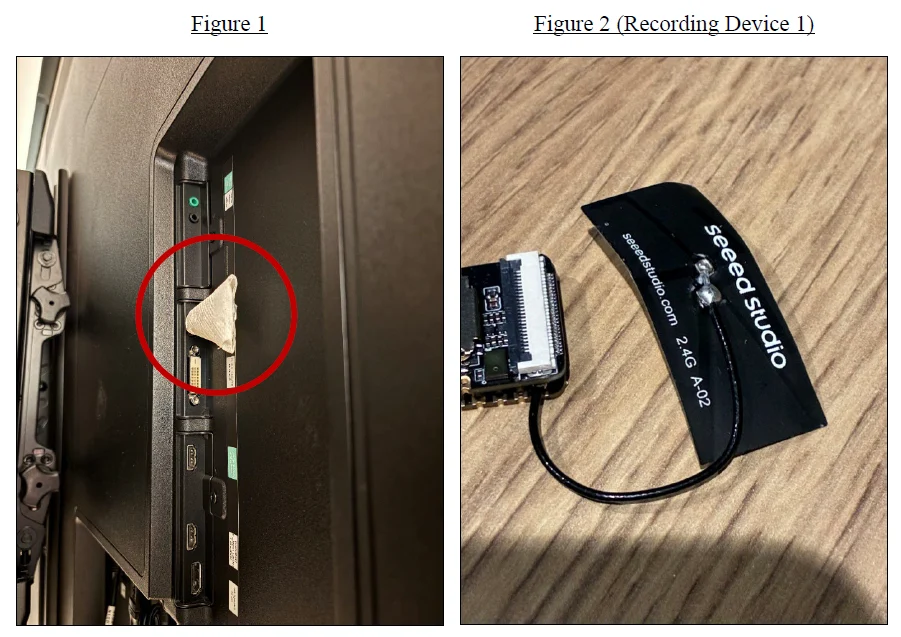
The breach was first identified on September 30 during a routine security sweep conducted by OpenAI’s specialized technical surveillance countermeasures (TSCM) team. While inspecting the company’s conference rooms—spaces where executives frequently engage in sensitive discussions regarding proprietary research, product roadmaps, and government engagements—the team uncovered a recording device inconspicuously attached to the rear USB port of a wall-mounted television.
The device was masked by a crude piece of toilet paper, a low-tech concealment method that belied the sophisticated nature of the hardware. According to the FBI, the device was far from a simple microphone; it featured advanced encryption, persistent audio monitoring capabilities, and a data transmission mechanism specifically engineered to evade standard network detection protocols.
OpenAI immediately alerted the FBI, initiating a delicate, high-stakes investigation that required balancing the immediate need to neutralize a security threat with the broader necessity of gathering evidence to ensure a successful prosecution.
Chronology of an Alleged Betrayal
The timeline of the operation, reconstructed through FBI court filings and corporate internal disclosures, paints a picture of a calculated, albeit flawed, attempt at corporate espionage.
- September 24–30: Alfozan allegedly began researching methods for audio surveillance, utilizing his spouse’s account to query an unnamed AI chatbot regarding the technical specifics of building, installing, and encrypting audio recording hardware. Simultaneously, he reportedly used an internal OpenAI productivity tool to map the company’s infrastructure, specifically targeting meeting room capacities, building addresses, and the calendars of leadership personnel.
- September 30: OpenAI’s security team discovers the device behind the television in a sensitive conference room.
- September 30 – October 9: OpenAI engages in a coordinated “holding pattern” with federal investigators. While the company restricted Alfozan’s access to critical network systems and physical office zones, they did not immediately terminate his employment or make the arrest public, allowing the FBI to monitor his behavior and gather further intelligence.
- October 5: Despite being placed on restricted status, Alfozan allegedly attempted to re-enter the conference room. CCTV footage captured him checking behind the television, likely realizing his initial device had been removed. On the same day, he reportedly left an unattended bag in a different area of the office; investigators discovered his wallet, identification, and a second, similar recording device branded “Seeed Studio” inside.
- October 9: The coordinated operation culminates in the formal termination of Alfozan’s employment and his arrest by federal authorities.
- October 15: Alfozan makes his initial appearance in federal court. He is scheduled for a detention hearing on October 19.
The Suspect: An Insider with High-Level Access
Abdurahman Alfozan’s professional background suggests he was a highly capable engineer, well-positioned to understand the inner workings of a company like OpenAI. According to his professional profiles, he held a leadership role within OpenAI’s “Agents Platform,” a critical area of development for the company.
His credentials are extensive: a 2016 graduate of the Massachusetts Institute of Technology (MIT) and a 2025 graduate of UC Berkeley, Alfozan also spent five years at Meta, one of the primary competitors in the AI race. These roles afforded him high-level clearance and deep insight into the strategic movements of the industry’s most powerful players. The transition from a top-tier engineer to an alleged corporate spy has left colleagues and industry observers questioning the motivations behind such a high-risk gamble.
Official Responses and Corporate Strategy
OpenAI has moved quickly to contain the narrative and reassure investors and the public. In a statement posted to X (formerly Twitter) on Tuesday, the company stated, “At this time, we have no indications of this individual inappropriately accessing or exfiltrating model weights, source code, or customer data.”

The company emphasized its commitment to transparency and security, framing the incident as a litmus test for its own internal tools. Remarkably, OpenAI revealed that it leveraged its own AI models to analyze the intercepted hardware and assist in identifying the culprit, effectively using the technology it builds to defend against human-led threats.
The FBI has taken a similarly aggressive stance. Director Kash Patel addressed the media, framing the protection of "Super Intelligence" as a paramount concern for American national security. "Protecting American SI is essential to safeguarding our nation’s economic strength and national security, and the FBI views that mission as one of our highest counterintelligence priorities," Patel stated.
Implications for the AI Industry
The arrest of Alfozan serves as a wake-up call for the entire artificial intelligence sector. As AI models become more powerful, the value of the intelligence surrounding their development—including strategic partnerships, regulatory lobbying efforts, and breakthroughs in computational efficiency—has reached unprecedented levels.
1. The Vulnerability of "Human Assets"
While companies like OpenAI spend millions of dollars on digital cybersecurity, the Alfozan case demonstrates the vulnerability of the "physical layer." An employee with legitimate badge access can bypass many digital firewalls simply by walking into a room. This incident will likely force a industry-wide pivot toward more rigorous physical security, including more frequent TSCM sweeps and tighter controls over private, high-level meeting spaces.
2. The Rise of "Counter-AI" Espionage
The fact that Alfozan allegedly used an AI chatbot to plan his espionage highlights a disturbing new trend: the weaponization of AI by insiders to commit crimes against the very companies that built them. As AI models become more capable of synthesizing complex technical information, they could potentially become "force multipliers" for corporate spies, assisting in the design of exploits or the mapping of corporate networks.
3. National Security and Corporate Sovereignty
The classification of this case as a "matter of national security" suggests that the U.S. government views the secrets of companies like OpenAI, Google DeepMind, and Anthropic as state-level assets. This shift may lead to increased government oversight or even mandated security protocols for companies involved in "frontier" AI development, blurring the line between private corporate operations and federal intelligence protection.
Conclusion: A Lingering Investigation
While Alfozan faces a potential five-year prison sentence and three years of supervised release if convicted, the damage—or lack thereof—remains the subject of an ongoing federal investigation. For now, the public is left with a snapshot of a breach that was caught just in time, but which exposes the fragile nature of trust in the era of high-stakes AI development.
The case of Abdurahman Alfozan is likely to become a foundational case study in corporate security training, a reminder that even in a world of digital algorithms and automated code, the most unpredictable risk factor remains the human element. As the FBI continues to pore over the digital footprint left by the suspect, the tech industry waits to see what other, perhaps less conspicuous, vulnerabilities may be lurking in the boardrooms of the world’s most powerful AI labs.
