

In the lush, rain-drenched landscape of Camano Island, Washington, finding a garden that mirrors the arid beauty of a desert is a rarity. Yet, tucked away on a sloped cul-de-sac, Joseph has cultivated a horticultural oasis that defies the conventional expectations of Zone 8b. By integrating structural stonework, strategic plant selection, and a touch of serendipity, he has transformed a challenging, inclined property into a textural masterpiece that captures the rugged spirit of the Cascade Mountains.
Main Facts: The Anatomy of a High-Altitude Aesthetic
At the core of Joseph’s garden lies a philosophy of "adaptive design." When he and his family moved into their newly constructed home, the property was essentially a blank, sloped canvas. Faced with the practical necessity of stabilizing the earth, Joseph turned to the timeless medium of stone.
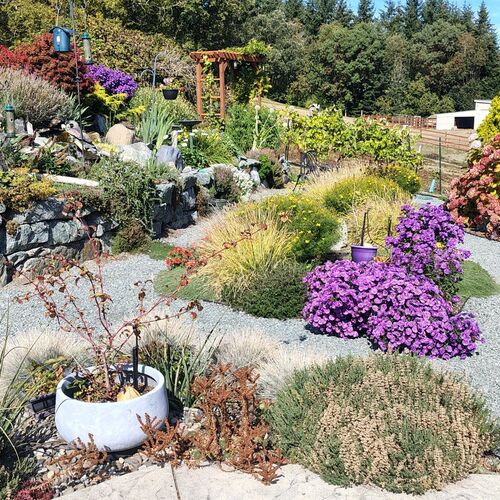
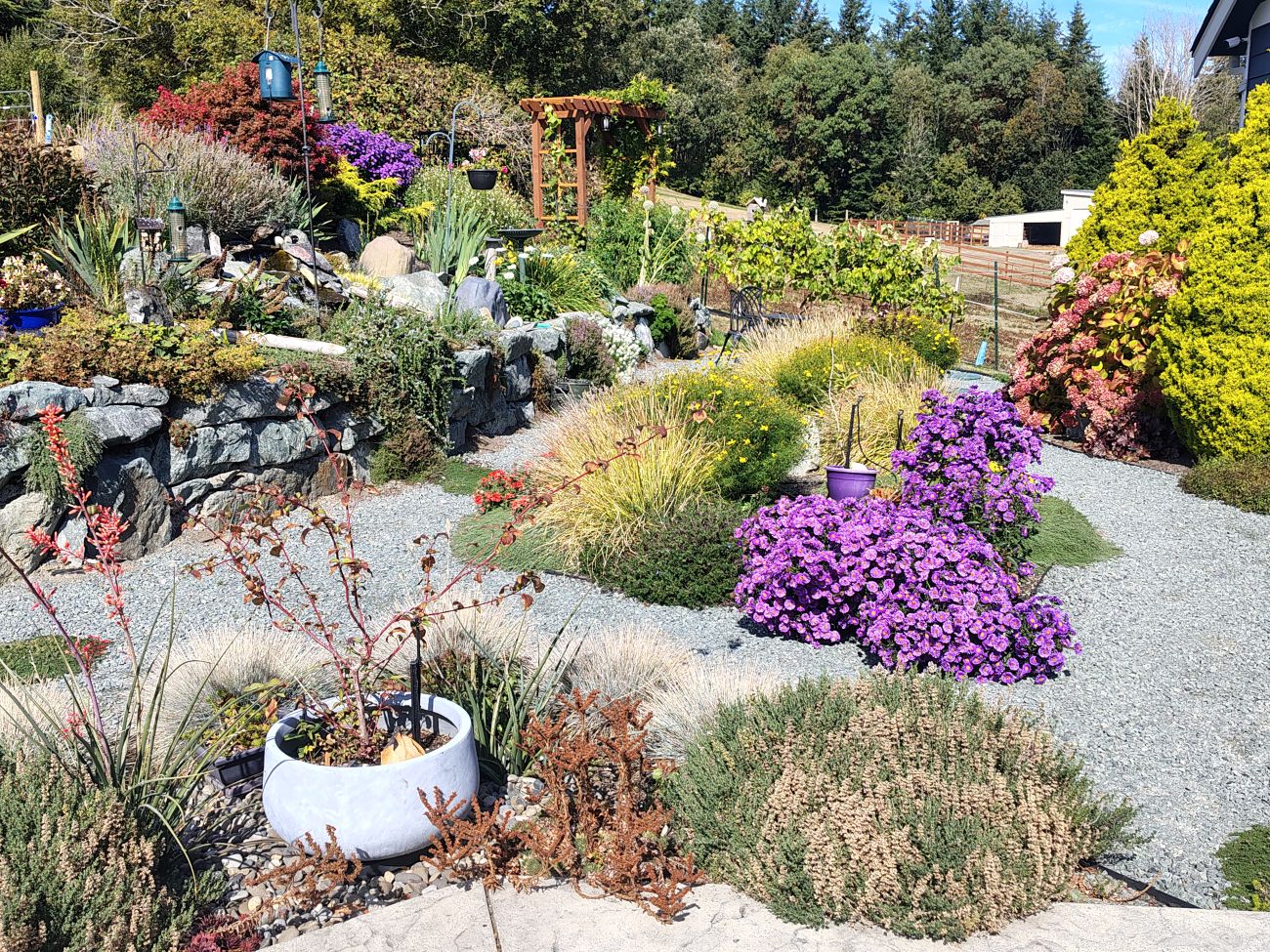
The garden is defined by a sophisticated rock garden architecture, anchored by a robust stone retaining wall and interconnected by winding gravel paths. This structural backbone does more than prevent erosion; it creates a series of microclimates and visual tiers that allow a diverse array of species to thrive. The aesthetic is heavily textural, favoring plants with varying foliage shapes and sizes—from the fine, creeping habit of thyme to the bold, architectural presence of hydrangeas. The resulting vista, framed by the distant, snow-capped Cascade Mountains, offers a sense of expansive serenity that few residential gardens achieve.
A Chronological Evolution: The "Trial and Discovery" Method
The transformation of the property was not the result of a singular, rigid master plan. Instead, Joseph describes the process as one of organic evolution. "The garden was born out of necessity," he explains, noting that the initial stages were driven by the need to hold the soil in place.
As the hardscaping took shape, the planting phase shifted into a spirit of adventure. Joseph’s approach was remarkably straightforward: "This is a nice plant. Let’s put it in the ground and see what happens." This experimental methodology allowed him to learn the specific nuances of his property’s sunlight, drainage, and wind patterns through direct observation. Over the years, this trial-and-error approach has refined the garden into a self-sustaining ecosystem where only the most resilient and compatible plants remain.
The early years focused on structural integrity, while the subsequent seasons have been dedicated to layering. By observing which plants survived the Pacific Northwest winters and which thrived in the summer heat of his south-facing slope, Joseph curated a plant palette that provides year-round interest.
Supporting Data: Botanical Diversity in Zone 8b
The success of the garden relies on a careful selection of species that can handle the drainage requirements of a rock garden while remaining hardy enough for Washington winters. The plant list is a testament to the versatility of Mediterranean-style gardening in the Pacific Northwest:
- Ground Covers and Fillers: Thymus (creeping thyme) provides a soft, fragrant carpet that knits the stone elements together, while Salvia rosmarinus (trailing rosemary) adds depth and a woody, evergreen texture.
- Vertical Interest: Liatris and Symphyotrichum (asters) provide height and late-season blooms that attract pollinators, essential for the garden’s health.
- The Flowering Core: Hydrangeas serve as the anchor for the mid-layers, providing lush, showy blooms that contrast sharply with the sharper, more rugged textures of the stone.
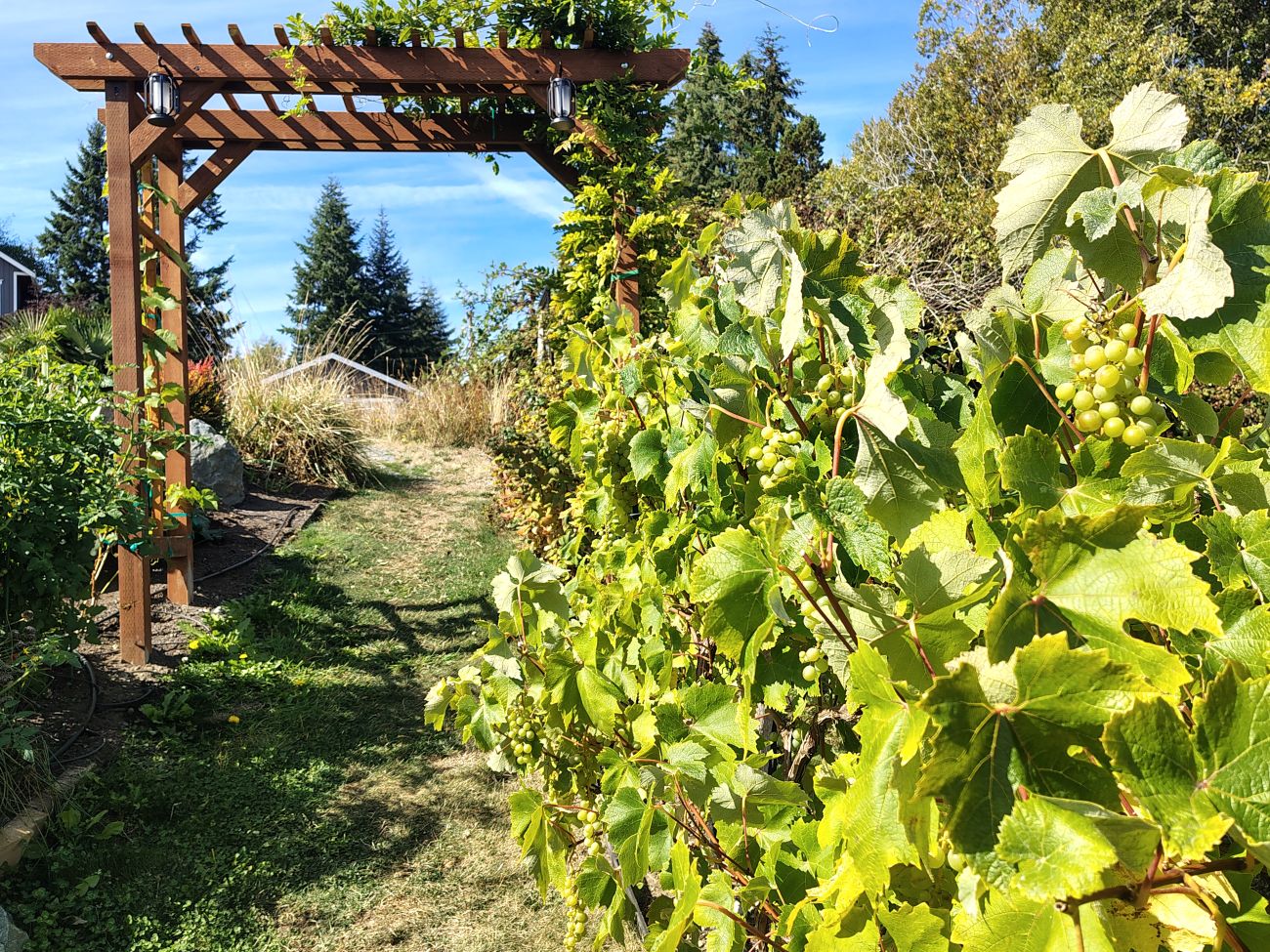
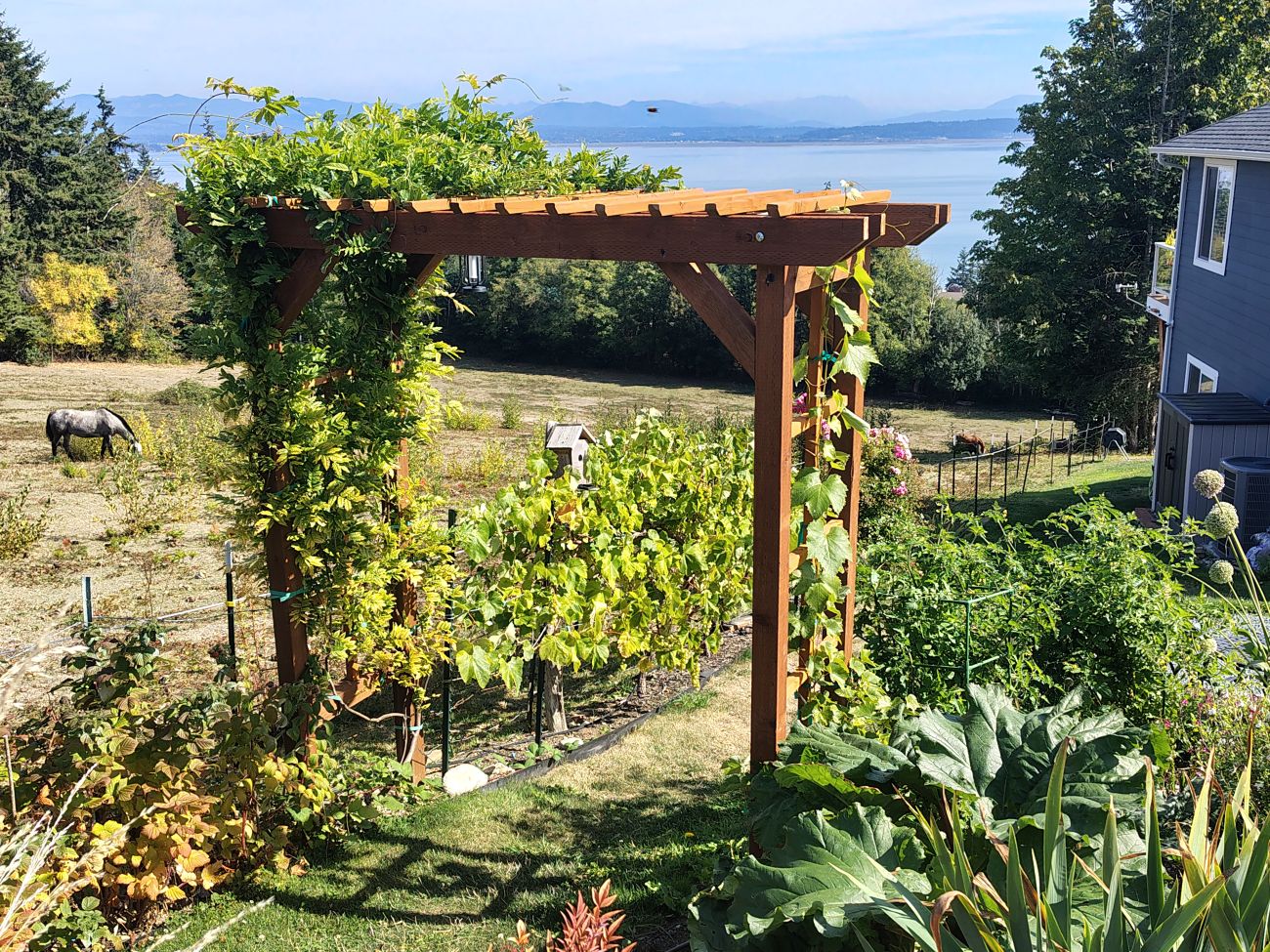
- Perimeter and Privacy: Along the shared fence line, a combination of Rosa (roses), Rubus (raspberries), Clematis, and grapevines creates a living curtain. These are not merely decorative; they serve as a windbreak and a source of seasonal fruit, blending utility with ornamental appeal.
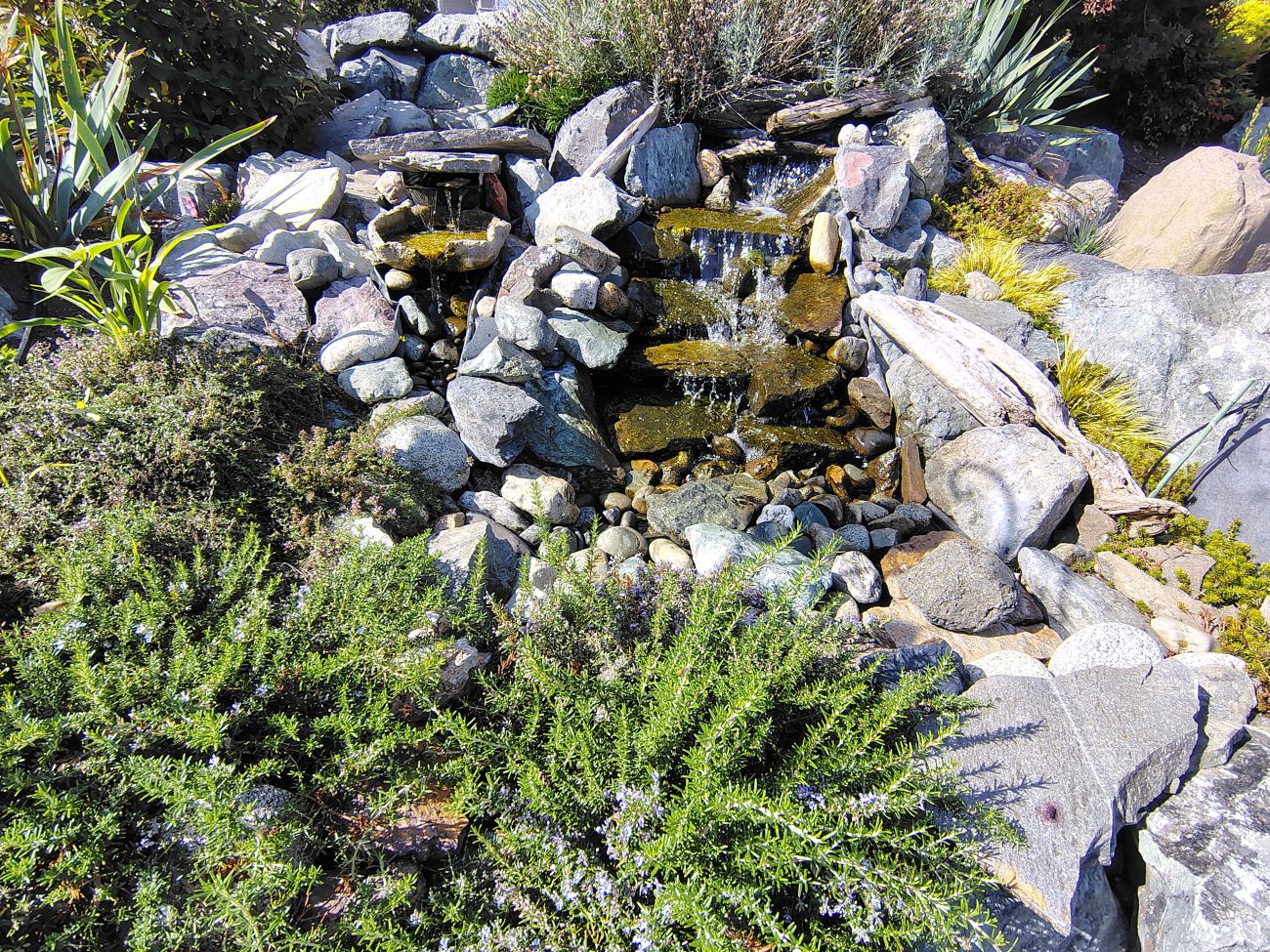
The inclusion of a water feature, built directly into the slope, acts as a nexus for local biodiversity. It has become a vital resource for native robins, finches, chickadees, and the occasional Steller’s jay, turning the garden into a living laboratory for local avian life.
Official Observations: The Art of Color and Texture
Beyond the individual plants, the garden excels in its use of color theory. The juxtaposition of purple asters against chartreuse foliage is a standout design choice that draws the eye and highlights the varying light conditions throughout the day. This is a classic lesson in garden design: when blooms are sparse, texture—provided by the stone, the gravel, and the foliage—must carry the weight of the visual experience.
The garden’s layout, specifically the wooden arbor looking east, is positioned to frame the bay and the mountains. This deliberate framing forces the visitor to pause and appreciate the relationship between the cultivated garden and the wild, untamed nature of the Pacific Northwest. By masking the industrial reality of a shared fence with climbing vines, Joseph has successfully blurred the line between his private property and the horse pasture next door, creating an illusion of infinite space.
Implications for Future Gardeners
Joseph’s project serves as a compelling case study for homeowners struggling with sloped, difficult terrain. His success carries several key implications for modern landscaping:
- Stonework as Stability: Using rock gardens to manage slopes is not just an aesthetic choice; it is a structural necessity that reduces soil erosion and creates natural drainage, which is critical in rainy climates.
- The "Desert" Aesthetic is Universal: By utilizing gravel paths and drought-tolerant Mediterranean plants, gardeners in cooler, wetter zones can achieve a low-maintenance, high-impact landscape that requires less water and chemical intervention.
- Encouraging Experimentation: The "plant it and see" philosophy is a liberating approach for amateur gardeners. It encourages a deeper connection with the land and fosters resilience, as the garden eventually "chooses" the plants that are best suited to the environment.
- Integrating Biodiversity: The inclusion of water features and native-friendly plantings transforms a private yard into a vital corridor for local wildlife, proving that residential gardens can play a significant role in ecological conservation.
Essential Tools for the Slope-Conscious Gardener
For those inspired by Joseph’s approach, professional-grade tools are a significant asset in managing a multi-tiered, sloped environment.
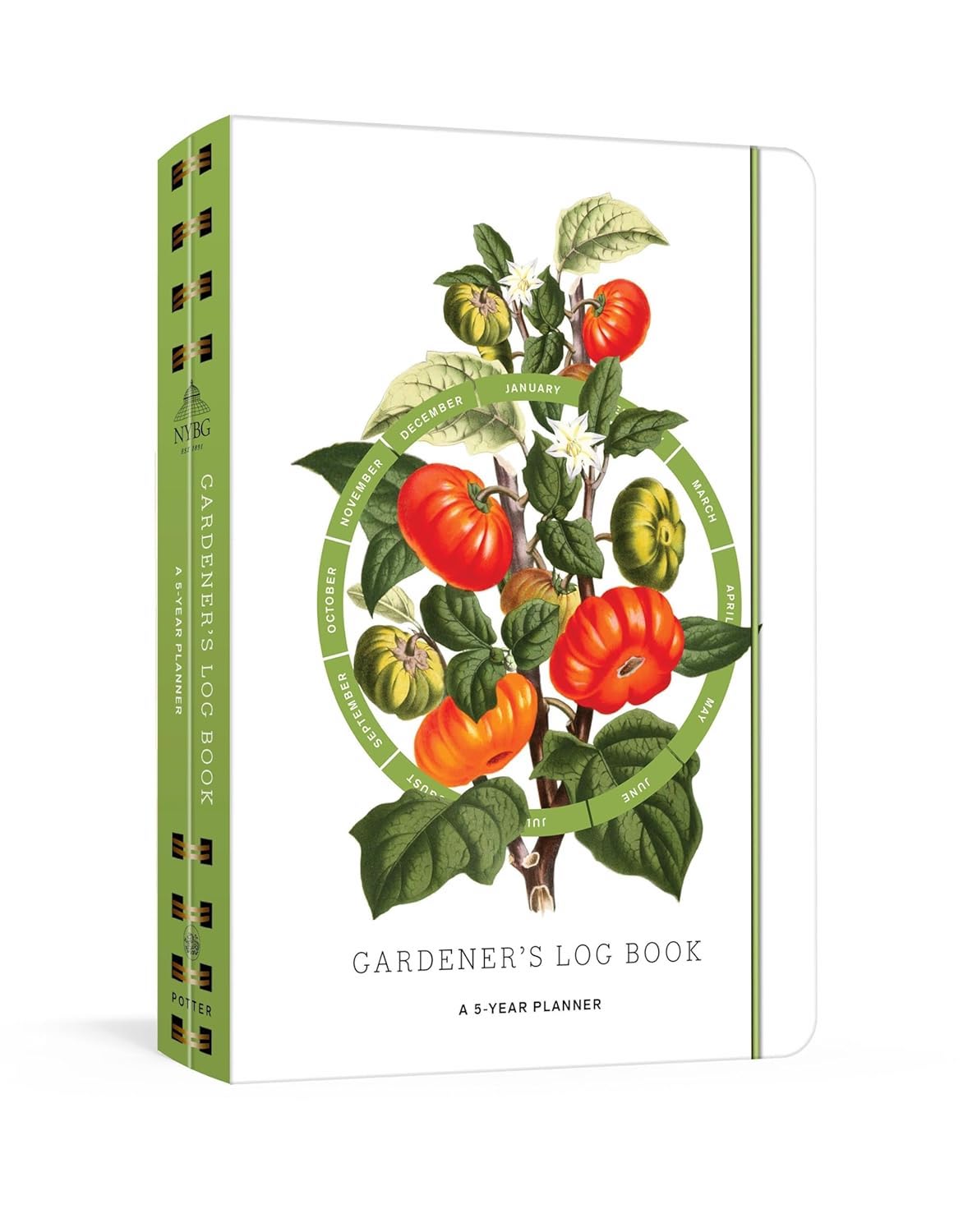
- Documenting Growth: A high-quality logbook, such as those provided by the New York Botanical Garden, is indispensable for tracking the "experimentation" phase. Recording what thrives and what fails allows for data-driven adjustments in subsequent years.
- Precision Pruning: On a sloped garden, accessibility is key. Telescoping long-reach pruners are essential for maintaining the height of vines and shrubs on retaining walls without the need for constant ladder work, which can be dangerous on uneven ground.
- Specialized Knowledge: Books dedicated to crevice and rock gardening provide the technical background necessary to create stable, plant-friendly environments. Understanding the "how-to" of rock placement is as important as the selection of the plants themselves.
Final Thoughts: A Call to the Community
Joseph’s garden is a reminder that a home is not just a structure, but an evolving relationship with the land. Whether it is a tiny herb patch or a sprawling sloped landscape, every garden tells a story of the person who tends it.
We invite our readers to share their own journeys. Whether you are battling a steep slope, cultivating a collection of rare succulents, or simply enjoying the seasonal changes in your backyard, your experience is invaluable to the gardening community. We are currently accepting submissions for our "Garden Photo of the Day" series. By sharing your triumphs and your "failures"—which are often the most instructive moments—you help cultivate a broader understanding of what is possible in the world of horticulture.
As we look toward the future, let us be inspired by the resilience of the stone and the adaptability of the vine. In the face of changing climates and challenging topographies, the gardener’s greatest tools remain their curiosity, their patience, and a willingness to simply put a plant in the ground and see what happens.
