

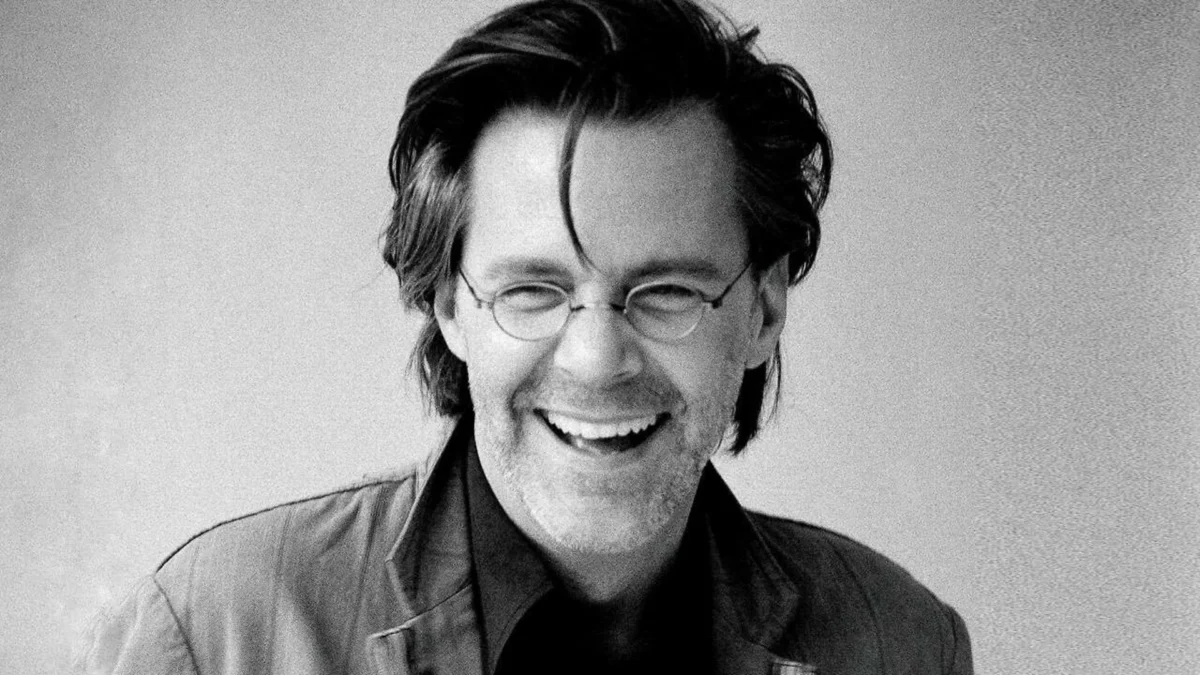
Peter Nagy, the transformative gallerist, artist, and curator whose pioneering spirit reshaped the landscape of contemporary Indian art, passed away on October 13 in New Delhi. He was sixty-seven. His death, following a long and private illness, marks the end of a remarkable career that bridged the gritty, avant-garde energy of 1980s New York with the rapidly evolving art scene of the Indian subcontinent.
As the founder of the legendary Nature Morte gallery, Nagy was more than a merchant of aesthetics; he was a cultural conduit. He possessed an uncanny, almost clairvoyant ability to identify talent at the precipice of public recognition, providing a global platform for South Asian artists whose conceptual rigor and experimental output were previously ignored by the Eurocentric market. Despite his monumental impact on the art world, Nagy maintained a famously self-effacing demeanor, often describing his role with a shrug of modest pragmatism.
The Architect of an Aesthetic Bridge
Nagy’s professional philosophy was rooted in the idea of the "gallery model." In a 2022 interview with Artnet News, he famously remarked, "All I really did was bring the New York model of the art gallery to India, much as Pierre Matisse, Ileana Sonnabend, and Leo Castelli brought the European model to New York before I was born."
While he attributed his success to the replication of a structural template, those who worked with him remember a man of far more complexity. Nagy did not simply transplant a business; he cultivated a dialogue. By integrating the rigorous professional standards of the New York gallery scene with the vibrant, deeply intellectual, and socio-political context of modern India, he forced international collectors to engage with South Asian art on its own merit, rather than as a peripheral exoticism.
A Life in Art: From Bridgeport to the East Village
Born on January 6, 1959, in Bridgeport, Connecticut, Nagy’s trajectory toward the center of the art world was deliberate. He honed his aesthetic sensibilities at New York’s Parsons School of Design, graduating in 1981 with a degree in communication design. It was a formative era for the young artist, who found himself drawn to the raw, unpolished energy of the city.
In 1982, mere months after his graduation, Nagy joined forces with fellow artist Alan Belcher to establish Nature Morte in the heart of New York’s East Village. At the time, the neighborhood was a radical departure from the polished, corporate-adjacent environment of SoHo. It was a hotbed of "rabble-rousing" avant-garde activity, a place where the boundaries between high art and street-level subculture were constantly being blurred.
Under their stewardship, Nature Morte became a sanctuary for the experimental. The gallery showcased pivotal figures such as Vito Acconci, Gretchen Bender, Sherrie Levine, and Steven Parrino. During this period, Nagy also cultivated his own practice as an artist. He became known for his fascination with the photocopy—a medium he used to dissect the machinery of consumerism. By clipping, collaging, and serially reproducing advertisements, he interrogated how contemporary mass media and corporate entertainment began to rewrite, and eventually replace, history.

The Dual Identity: The Artist-Dealer Dilemma
Nagy’s career was defined by a unique, often fraught, duality: he was simultaneously a market-maker and a market-critic. In a candid 1999 feature for Artforum, he addressed the professional prejudice he faced for wearing both hats.
"I am conscious of being penalized for being a dealer: Artists aren’t supposed to be interested in the market (ha ha), and my choice is, apparently, seen by some as opportunistic and manipulative," he wrote. "I prefer the combination of market, media, creativity, and personality that comes together in a gallery."
This friction, however, was precisely what made him a brilliant observer of the art ecosystem. Like Andy Warhol, whom he was often compared to, Nagy viewed the commodification of art not as an evil to be avoided, but as a phenomenon to be analyzed, mapped, and navigated. His work—which shifted in the 1990s from photocopy-based collage to brightly hued, geometric canvases and immersive installations—served as a ledger of his observations on capital flows, corporate power, and the fragility of authenticity in a digital age.
The Indian Chapter: A New Frontier
The closure of the East Village iteration of Nature Morte in 1988 did not signal the end of Nagy’s ambition; rather, it served as a pivot. By 1992, he had begun splitting his time between New York and New Delhi, a city that offered him the blank canvas he needed to reinvent his curatorial vision.
In 1997, he made the move permanent, reestablishing Nature Morte in New Delhi. It was a bold, unconventional choice. At the time, the Indian market was dominated by traditional, figurative painting. Nagy, however, doubled down on the conceptual. He introduced audiences to artists like Subodh Gupta, Jitish Kallat, Bharti Kher, Mrinalini Mukherjee, and the Raqs Media Collective.
"Peter was able to identify artists who at the time had few opportunities, and was able to provide them with an amplified sense of what was possible in their practice and career," noted poet and curator Ranjit Hoskote in a 2011 Caravan Magazine profile. By championing these voices, Nagy became the primary architect of the contemporary South Asian art boom, facilitating institutional acquisitions and private collections that spanned continents.
Legacy and Contemporary Resonance
Nagy’s influence was cemented by a 2020 retrospective at Deitch Projects in New York, which introduced his earlier works to a new generation of collectors and critics. Reviewing the show for Artforum, Jan Avgikos noted the chilling relevance of Nagy’s early output: "How amazing to discover that Nagy’s early output, which shows the artist’s penchant for mapping transformations wrought by expanded media, increased corporate power, and concentrated flows of capital, felt downright prescient today."

The market for Nature Morte remained resilient, even through the economic shifts of the 2010s. Nagy’s ability to pivot toward the burgeoning Indian domestic market proved vital. The gallery’s expansion—including two additional New Delhi branches in 2021, a Mumbai outpost in 2024, and the recent opening of a new space in South Delhi’s Gulmohar Park—testifies to his relentless work ethic. The inaugural exhibition at the Gulmohar Park space, "The Evolution of the Soothsayer," which celebrates thirty years of Nature Morte in India, serves as a fitting final testament to his foresight.
Looking Forward: A Gallery Without End
In accordance with his wishes, the Nature Morte galleries in New Delhi and Mumbai will continue to operate, a decision that speaks to the ethos he instilled in his team. As the gallery stated in a recent release, "To him, an exhibition was never about the gallery. It belonged to the artist who had poured themselves into it and to everyone who came to see it. He believed an artist’s moment should never be put on hold."
Peter Nagy leaves behind a legacy that is permanently etched into the global art canon. His work is held in the permanent collections of the Museum of Contemporary Art, Los Angeles; the Brooklyn Museum; the Metropolitan Museum of Art; and the Whitney Museum of American Art.
However, his true monument is not found in the archives of these institutions, but in the careers of the artists he nurtured. He bridged the gap between the local and the global, the conceptual and the commercial, and the past and the future. He taught a generation that the "New York model" was not merely about selling art—it was about providing a stage where the complexities of the human condition could be rendered, debated, and finally, understood.
As the art world mourns, it also reflects on the "clairvoyance" that Nagy brought to his craft. He understood that the art market was, ultimately, a mechanism for documenting our collective anxieties about truth and authenticity. In his absence, that mechanism continues to hum, fueled by the vision of a man who looked at a chaotic, shifting world and saw not just a market, but a masterpiece in progress.
