

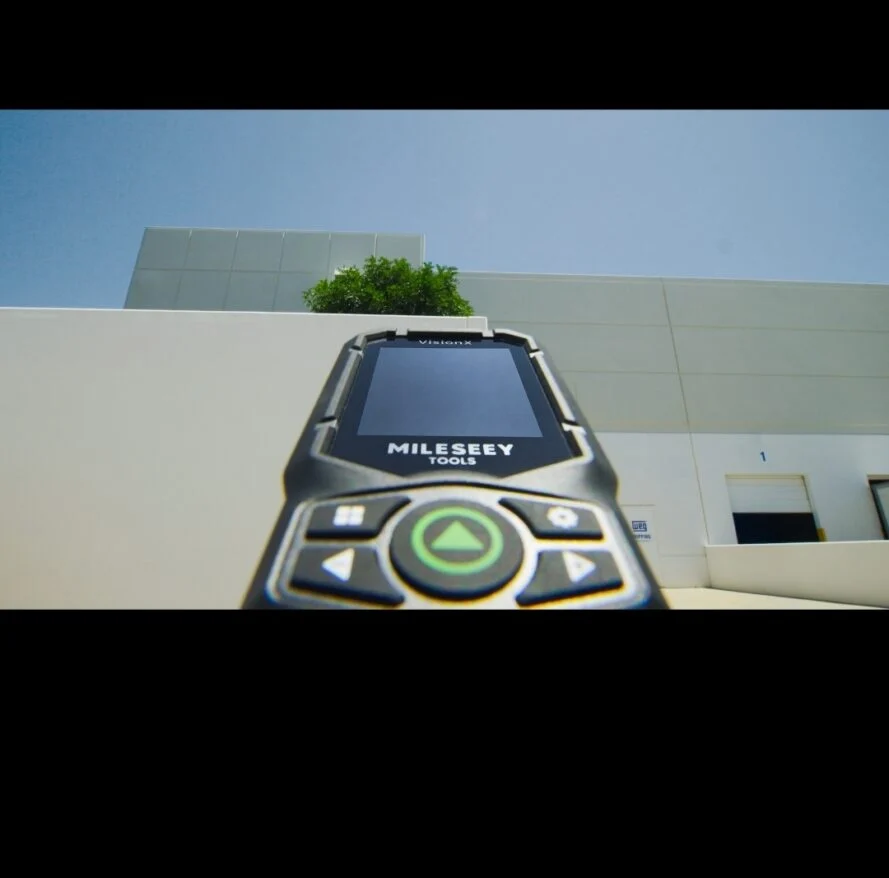
The construction and renovation industries are currently undergoing a profound digital transformation. As sustainability mandates tighten and project margins shrink, the demand for high-fidelity data has never been greater. In this era of Building Information Modeling (BIM) and cloud-based project management, the humble laser distance meter—long a staple of the architect’s belt—is evolving from a simple measuring device into a critical node in a broader, data-driven ecosystem. At the forefront of this shift are the MILESEEY S50 and S50C, tools designed not merely to measure space, but to contextualize it.
The Architecture of Information: Why Precision Matters
The most impactful sustainability decisions in any construction project occur long before the first shovel hits the dirt or the first stud is set. Every renovation begins with a fundamental requirement: understanding the existing conditions of a structure. In the past, this was a manual, error-prone process involving tape measures, paper pads, and the inevitable "measure-twice, cut-once" philosophy that often failed to account for the complexities of aging buildings.
When site records are incomplete or inaccurate, the ripple effects are felt throughout the entire project lifecycle. Inaccurate dimensions lead to over-ordering materials, which results in unnecessary waste—both of physical resources and financial capital. Furthermore, they necessitate repeated site visits, additional labor hours for remedial work, and, in the worst cases, costly structural adjustments once construction has already commenced. By digitizing the point of capture, tools like the MILESEEY S50 and S50C mitigate these risks, ensuring that the foundation of the project—the data itself—is robust and reliable.
Chronology of Measurement Evolution
To understand the significance of the S50 series, one must look at the trajectory of measurement technology over the last four decades:

- The Analog Era (Pre-1990s): Precision was limited by the human factor. Physical tape measures were the industry standard, making large-scale surveys time-consuming and prone to cumulative error.
- The Laser Revolution (1990s–2010s): The introduction of handheld laser distance meters (LDMs) allowed for rapid, single-person measurement. This drastically increased speed but kept data "siloed"—the measurements existed only on the device or in a notebook, disconnected from the design software.
- The Connected Era (2015–Present): Measurement is now treated as an input for digital twins and cloud-based collaboration platforms. The focus has shifted from "how fast can I measure" to "how effectively can this data be integrated into a project workflow."
The MILESEEY S50 and S50C represent the latest milestone in this timeline. They do not exist in a vacuum; they are designed to bridge the gap between the physical site and the digital project file, allowing for a seamless transition from site visit to design office.
Supporting Data: The Cost of Inefficiency
Industry studies consistently suggest that rework—often caused by poor documentation or inaccurate field data—accounts for roughly 5% to 12% of total project costs in the construction sector. In a multi-million dollar renovation, this represents a significant portion of the budget that is essentially "lost" to inefficiency.
By moving toward smart measurement, project teams can realize:
- Reduction in Rework: Automated, digital logging of measurements prevents transcription errors common with manual note-taking.
- Optimized Material Procurement: High-precision data ensures that material orders (flooring, drywall, insulation) are exact, reducing the carbon footprint associated with excess manufacturing and site waste.
- Enhanced Collaboration: When a contractor can share a measurement file synced with a photo or floor plan, the architect and the client gain a shared understanding of the site, reducing the likelihood of communication-based errors.
The MILESEEY Advantage: S50 and S50C Features
The S50 and S50C are engineered to address the specific pain points of modern site professionals.

The S50: Precision for the Modern Contractor
The S50 is designed for versatility in residential and light-commercial renovation. Its compact form factor is paired with high-performance sensor technology. Key to its utility is "Point-to-Point" measurement capability. In environments where walls or obstacles block a direct line of sight, the S50 uses advanced geometry to calculate distances that would otherwise be inaccessible. When linked to the MILESEEY mobile application, these measurements are stored chronologically and tagged with metadata, creating a digital audit trail of the site.
The S50C: Outdoor Durability and Visibility
The S50C addresses the challenges of outdoor environments, where ambient light often renders standard laser dots invisible. By incorporating camera-assisted targeting, the S50C allows users to align their measurements precisely, even at long distances in bright daylight. This makes it an essential tool for landscape architects, exterior contractors, and surveyors who require the same level of digital integration as their indoor counterparts.
Official Perspectives on the Digital Shift
Industry experts suggest that the integration of such tools is a prerequisite for the "Smart Site" of the future. "Measurement is no longer an isolated task," says one industry analyst. "It is the start of a digital conversation."
By treating the measurement device as an extension of the Building Information Model (BIM), firms are moving away from reactive management—fixing problems as they arise—and toward proactive management. The S50 series provides the "project intelligence" required to make this switch. Rather than just recording a length of 12.5 meters, the device records a 12.5-meter measurement associated with a specific wall, linked to a floor plan, and shared with the project manager’s cloud drive. This context is what transforms raw data into actionable project intelligence.

Implications for the Built Environment
The implications of this shift are twofold: sustainability and professional efficacy.
Environmental Sustainability
The most significant impact of smarter measurement is the reduction of "hidden waste." Construction and demolition waste is a massive contributor to global landfill volumes. Much of this waste is avoidable; it is the result of incorrect cuts, miscalculated material needs, or designs that had to be altered due to poor site analysis. By providing a "single source of truth" via digital documentation, the S50 series acts as a tool for waste prevention.
The Human Element
Furthermore, the use of these tools changes the nature of the work for the professional. By offloading the burden of manual documentation to a digital system, contractors and architects can spend more time on value-added tasks: design, client communication, and quality control. The "quieter work" of measurement—accurate, reliable, and connected—ultimately allows for a more creative and less stressful construction process.
Conclusion: A New Standard for Project Intelligence
As we look toward the future, it is clear that building more sustainably requires a dual approach. We need the physical innovations of green materials, low-carbon concrete, and energy-efficient systems, but we also need the digital infrastructure to manage these assets effectively.

MILESEEY’s S50 and S50C are emblematic of this second pillar. They prove that technology does not always need to be a flashy, high-cost overhaul to be revolutionary. Sometimes, the most meaningful progress comes from refining the fundamentals. By elevating the process of measurement, these tools are helping the construction industry move toward a more transparent, collaborative, and sustainable future. In the complex world of modern architecture and construction, better information is the most important material of all.
