

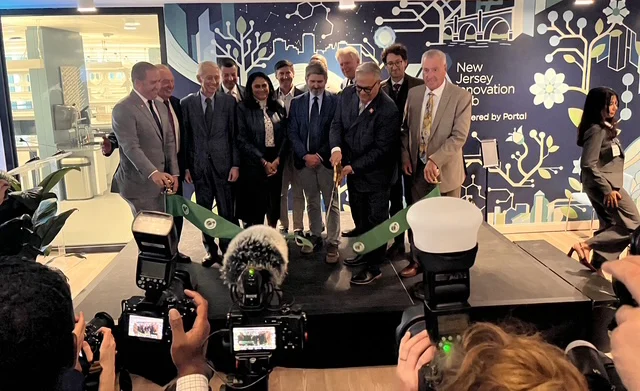
The landscape of New Jersey’s life sciences sector is undergoing a profound transformation. At the heart of this evolution lies the New Jersey Innovation Hub, situated within the Health + Science Exchange (HELIX) in New Brunswick. Since its official launch in July, the facility has acted as a powerful magnet for high-growth startups, expanding its footprint from an initial cohort of 16 companies to a robust ecosystem of 21 members in just a few short months.
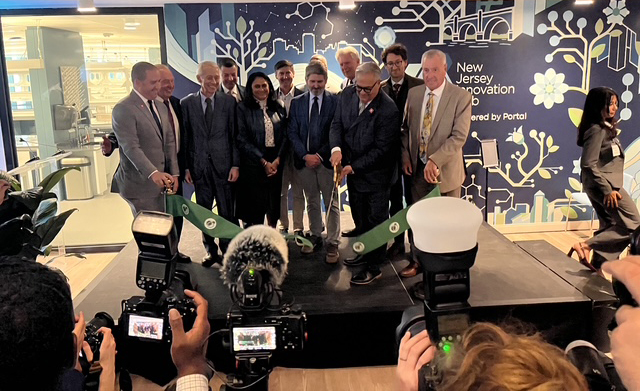
On October 6, a capacity crowd gathered at the Johnson & Johnson Exchange to celebrate this rapid ascent. The event served not merely as a ribbon-cutting ceremony, but as a formal declaration that New Jersey—the traditional “medicine chest of the world”—is successfully pivoting to meet the demands of the 21st-century digital and biotech economy.
The Genesis of the Hub: A Vision Realized
For years, stakeholders in the Garden State have grappled with a singular challenge: how to retain the intellectual capital generated by the state’s world-class research universities and translate that talent into local, scalable commercial enterprises.
"What we needed was a place to bring it together," remarked Christopher Paladino, CEO of the New Brunswick Development Corp. (DEVCO), during the event. Paladino’s sentiment underscores the philosophy behind the NJ Innovation Hub. The project was conceived as a physical manifestation of a collaborative ecosystem where entrepreneurs, venture capitalists, and academic researchers could collide in a shared space designed to foster rapid iteration and development.
The hub, which occupies 30,000 square feet on the ninth floor of 20 French St., is powered by Portal Innovations. This partnership is central to the project’s strategy, providing not just the physical real estate, but the venture capital expertise and operational support necessary for early-stage companies to bridge the "valley of death"—the precarious period between initial research and full-scale commercialization.
Chronology of Development: From Concept to Commerce
The trajectory of the NJ Innovation Hub is a masterclass in public-private partnership. The project’s timeline reveals a deliberate, multi-year strategy to revitalize New Brunswick’s downtown core:
- Early Planning and Site Selection: Identifying the need for a modern, mixed-use research facility in proximity to Rutgers University and the state’s pharmaceutical giants.
- The Launch of HELIX: The development of the Health + Science Exchange (HELIX) was established as the anchor, providing a high-tech environment for collaboration.
- July 2024: The formal launch of the NJ Innovation Hub. The initial intake of 16 companies highlighted the latent demand for incubator space in the region.
- Strategic Growth (July – October 2024): Through rigorous vetting and recruitment, the hub added five additional startups, bringing the total to 21. This rapid growth serves as a key performance indicator for the facility’s viability.
- October 6, 2024: The "Next Wave" Celebration. This event signaled the transition from the startup phase to the growth phase, with high-profile stakeholders confirming their long-term commitment to the project.
Supporting Data: Why New Brunswick?
The success of the NJ Innovation Hub is not accidental; it is rooted in favorable geographic and economic conditions. New Jersey remains the global leader in pharmaceutical research, but the state has faced stiff competition from hubs like Boston and San Francisco.
Data supporting the Hub’s importance includes:
- Concentration of Talent: New Brunswick’s proximity to Rutgers University—a Tier 1 research institution—ensures a constant pipeline of scientific talent.
- Infrastructure Investment: The HELIX development represents hundreds of millions of dollars in investment into laboratory-grade infrastructure, which is notoriously expensive and difficult for early-stage startups to build on their own.
- Capital Access: With the commitment of organizations like Johnson & Johnson and the involvement of venture partners like Portal Innovations, the Hub effectively lowers the barrier to entry for startups seeking Series A and B funding.
- Growth Trajectory: A 31% increase in member companies in just over 90 days indicates that the market for collaborative lab space in New Jersey is significantly underserved.
Official Responses and Stakeholder Perspectives
The event drew a "who’s who" of New Jersey’s political and economic leadership, reflecting the project’s significance to the state’s fiscal health.
Johnson & Johnson CEO Joaquin Duato highlighted the necessity of an open innovation model. "Innovation does not happen in a vacuum," Duato stated. By housing the exchange within the company’s namesake facility, J&J is signaling that it intends to be an active participant in mentoring the next generation of life science leaders, rather than merely an observer.
U.S. Rep. Frank Pallone emphasized the federal perspective, noting that the Hub aligns with national goals for medical self-sufficiency. "This space is about more than just business; it is about the security and health of our nation," Pallone noted. By fostering local production and research, the Hub helps reduce reliance on offshore supply chains for critical medications and technologies.
New Jersey Economic Development Authority (NJEDA) CEO Evan Weiss focused on the state’s economic competitiveness. "Our goal is to ensure that when a scientist leaves a lab at Rutgers with a breakthrough idea, they don’t have to pack a suitcase for Boston," Weiss said. The EDA has been instrumental in providing the tax incentives and infrastructure support that made the Hub’s financial model viable.
New Brunswick Mayor Jim Cahill spoke to the transformation of the city. For Cahill, the Hub is the culmination of decades of urban renewal efforts. "New Brunswick is no longer just a transit hub or a college town; it is a center of global innovation," the Mayor stated, highlighting the integration of the research facilities into the city’s residential and commercial fabric.
Implications: The Long-Term Impact on New Jersey
The establishment and expansion of the NJ Innovation Hub carry significant implications for the future of the state’s economy.
1. Retention of Intellectual Capital
Historically, New Jersey has suffered from "brain drain," where top graduates from Rutgers, Princeton, and Stevens Institute of Technology migrated to other states for professional opportunities. The Hub creates a localized ecosystem that provides these graduates with a clear path to employment and entrepreneurship without leaving the state.
2. Diversification of the Economy
While New Jersey’s reliance on the pharmaceutical industry is a strength, the Hub aims to diversify the types of companies operating in the state. By focusing on digital health, biotech, and medical devices, the Hub ensures that New Jersey is positioned to lead in the convergence of AI and biology.
3. Creating a "Network Effect"
The presence of 21 companies in one building creates a network effect. When entrepreneurs share coffee or lab equipment, they share knowledge. This informal exchange of ideas often leads to cross-pollination, where a sensor technology developed for one company might solve a data processing problem for another.
4. Setting the Stage for HELIX’s Full Potential
The NJ Innovation Hub is just the first phase of the broader HELIX vision. As the facility continues to grow, it will likely attract larger corporate partners looking to co-locate with the startup ecosystem. This creates a sustainable cycle of innovation where startups are acquired or partnered with by larger firms, who in turn reinvest in the ecosystem.
Conclusion: A New Chapter for the Garden State
The scene at the Johnson & Johnson Exchange on October 6 was one of optimism. In an industry where failure is common and the cost of entry is prohibitively high, the NJ Innovation Hub offers a lifeline to those with the potential to change the world of medicine.
As the Hub prepares to welcome more companies and finalize its next round of expansion, the eyes of the global biotech community are increasingly fixed on New Brunswick. The message from the stakeholders is clear: New Jersey is no longer content to rely on its historical reputation. By building the infrastructure for the future today, the state is ensuring its place at the center of the next great wave of scientific and technological advancement.
For the 21 companies currently operating on the ninth floor of 20 French St., the journey has just begun. But for the state of New Jersey, the foundation has been laid for a new, prosperous era of innovation that promises to redefine the region for decades to come. As the dust settles from the October celebration, the focus now turns to the lab bench, where the real work of transformation continues.
