

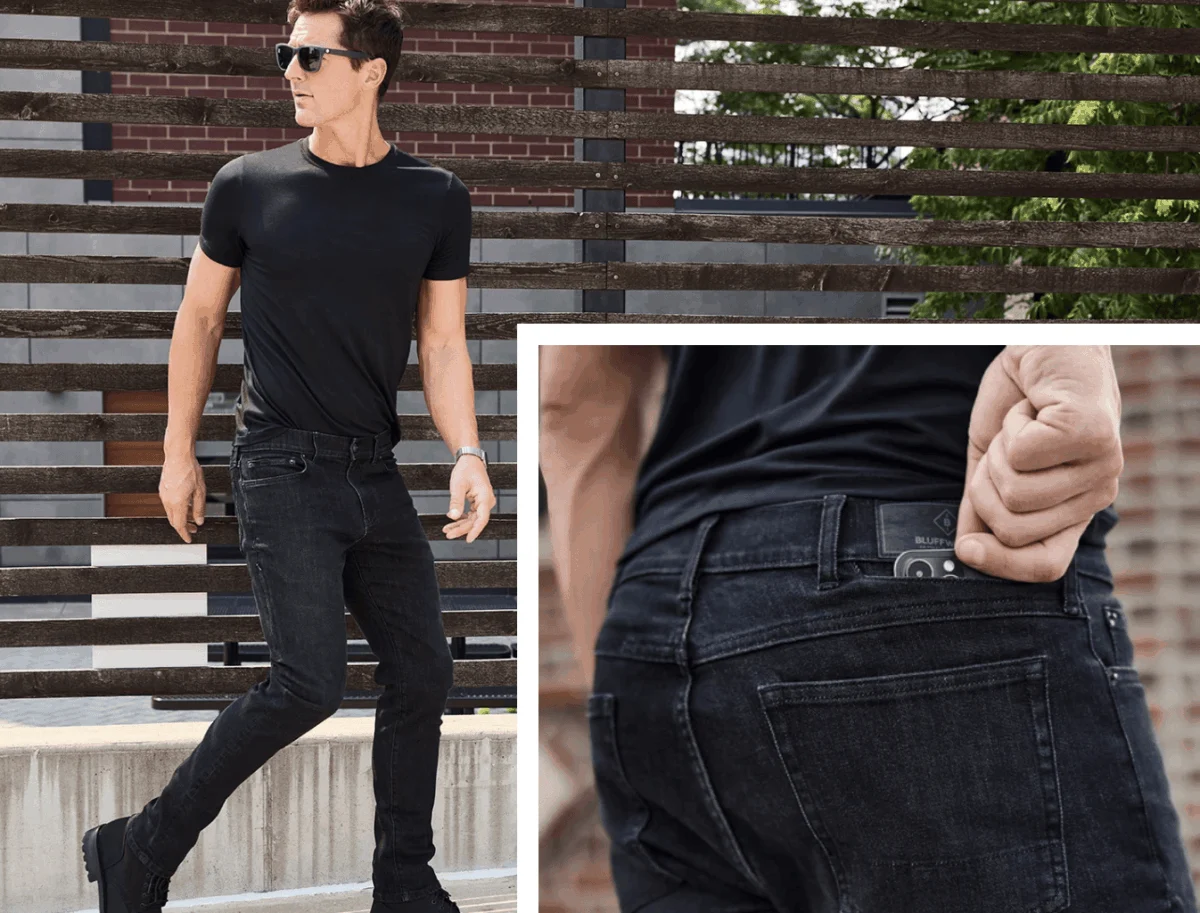
In an era where e-commerce margins are increasingly squeezed by rising shipping costs and complex supply chain demands, travel apparel innovator Bluffworks has announced a pivotal shift in its domestic operations. The company has officially selected Cart.com, a leading provider of comprehensive commerce solutions, as its exclusive fulfillment partner within the United States. This strategic migration, which saw Bluffworks relocate its entire inventory and fulfillment apparatus to Cart.com’s state-of-the-art facility in Terrell, Texas, marks a significant turning point for the brand as it seeks to scale its operations while maintaining its reputation for high-quality customer service.
The partnership comes at a critical juncture for the retail industry, as brands prepare for the high-volume holiday shopping season. By centralizing its logistics in the heart of Texas, Bluffworks aims to leverage Cart.com’s advanced technological infrastructure to drive down costs, improve order accuracy, and gain unprecedented visibility into its supply chain.
I. Main Facts: A Partnership Built on Efficiency and Technology
The core of the agreement centers on the total consolidation of Bluffworks’ fulfillment operations. Previously managed through a facility in Memphis, Tennessee—a traditional logistics hub—the brand’s inventory has now been fully transitioned to Cart.com’s Terrell, Texas, fulfillment center.
The move is not merely a change of address; it represents a fundamental upgrade in the brand’s operational capabilities. Cart.com, which provides a "unified commerce" suite including logistics, software, and growth services, was chosen specifically for its ability to integrate high-tech inventory management with physical warehouse operations.
Key highlights of the partnership include:
- Exclusive Fulfillment Rights: Cart.com now handles 100% of Bluffworks’ U.S. distribution.
- Significant Cost Savings: Bluffworks leadership projects a minimum 20% reduction in fulfillment costs as a direct result of the transition.
- Technological Integration: The use of Cart.com’s proprietary software allows for real-time tracking of inventory, damaged goods, and order status without the need for manual intervention or constant communication with warehouse staff.
- Strategic Location: The Terrell facility offers a central geographic advantage, potentially reducing transit times to both coasts while tapping into the robust logistics infrastructure of the Dallas-Fort Worth metroplex.
II. Chronology: The Three-Week Sprint to Texas
The transition from Memphis to Terrell was characterized by an aggressive timeline and a high level of logistical precision. For many mid-sized apparel brands, moving an entire inventory can take months and often results in significant "dark periods" where sales must be paused. However, the Bluffworks-Cart.com transition was notable for its speed and lack of disruption.
Phase 1: Evaluation and Selection (Early Q2)
Bluffworks, led by founder and CEO Stefan Loble, began seeking a partner that could match the brand’s specific needs for accuracy and technological transparency. With a background in software development, Loble sought a provider whose digital interface was as robust as its physical sorting capabilities.
Phase 2: The Rapid Migration (Late June)
Once the agreement was finalized, the physical relocation began. Cart.com managed the transition from the previous Memphis provider in less than three weeks. This involved the auditing of existing stock, the secure transport of garments—including specialized travel suits and technical apparel that require specific handling to maintain their "wrinkle-free" properties—and the integration of Bluffworks’ e-commerce storefront with Cart.com’s warehouse management system (WMS).
Phase 3: Going Live (Early July)
The Terrell operation went online in the first week of July. This timing was intentional, allowing the brand several months of "burn-in" time to refine processes and stabilize the supply chain before the onset of the Q4 holiday rush.
Phase 4: Immediate Operational Success (August – Present)
Within weeks of going live, the partnership was put to the test. A shipment of products arrived at the Terrell facility having sustained damage during transit from the manufacturer. The Cart.com team immediately identified, photographed, and categorized the damaged goods, uploading the documentation to their shared platform. This allowed Bluffworks to settle a claim with their supplier instantly, demonstrating the immediate value of the new system.
III. Supporting Data: The Economics of Modern Fulfillment
The decision to move to Cart.com was driven largely by the need to protect margins in a volatile economic climate. The projected 20% savings in fulfillment costs is a substantial figure that could potentially be reinvested into product development or marketing.
The "Texas Advantage"
While Memphis is home to the FedEx SuperHub, Texas has emerged as a fierce competitor for e-commerce fulfillment. The Terrell facility benefits from lower state taxes, a competitive labor market, and proximity to major interstate arteries (I-20 and I-30). By moving to a more central location, Bluffworks can optimize "zone skipping"—a method of shipping that bypasses some of the higher-cost shipping zones, thereby reducing the per-package cost.
Error Reduction and Quality Control
In the apparel industry, the "cost of quality" is high. For a brand like Bluffworks, which caters to frequent travelers who depend on the durability and appearance of their clothes, a single error in fulfillment (such as shipping a stained or wrinkled garment) can result in a lost customer for life.
Data provided by Cart.com suggests that their integrated technology reduces picking errors by significant margins compared to legacy 3PL (Third-Party Logistics) providers. For Bluffworks, the ability to see the "status of the whole operation" through software reduces the administrative overhead—the "hidden costs" of fulfillment—where employees previously spent hours on email chains trying to track down specific cartons or order updates.
IV. Official Responses: Leadership Perspectives
The leadership of both companies has expressed a shared vision for how technology should serve the modern consumer.
The CEO’s Perspective: Stefan Loble
Stefan Loble’s reaction to the transition was one of surprise at the stark difference between providers. “I’ve spent my career on both sides of logistics, first building supply chain systems as a software developer and then relying on them to run a brand,” Loble stated. “I am still stunned at how different the accuracy, cost, and level of service can be between two large, similar-looking fulfillment providers.”
Loble emphasized that the transparency of Cart.com’s software was the deciding factor. “I can open Cart.com’s software and see the status of the whole operation without emailing anyone to ask. When something goes wrong—like a shipment turning up damaged, which happens in this business—you find out fast whether you’re in good hands on the other end. With Cart.com, we are.”
The Logistics Perspective: Joe Barth
Joe Barth, President of Fulfillment at Cart.com, highlighted the unique pressures faced by established brands with loyal customer bases. “Brands with high repeat purchase volume put a different kind of demand on a fulfillment operation,” Barth explained. “A first-time buyer has nothing to compare the experience to. A customer on their fifth pair of the same pants notices everything, including a garment that spent time in a carton that got wet somewhere between the factory and the dock.”
Barth noted that Bluffworks has spent over a decade earning that loyalty, and Cart.com’s primary mission is to ensure the "unboxing experience" remains flawless. “Our job is to keep the operation from giving anyone a reason to reconsider,” he added.
Regarding the upcoming holiday season, Barth offered a sobering look at the industry. “With shipping costs up and margins thin, the brands that win this holiday season will be the ones that refine their fulfillment strategy before peak. Bluffworks made that move early, and they’re heading into the busiest weeks of the year on a stable, lower-cost footing.”
V. Implications: The Future of E-Commerce Logistics
The partnership between Bluffworks and Cart.com serves as a case study for the broader "Direct-to-Consumer" (DTC) sector. As the "growth at all costs" era of e-commerce ends, replaced by an era of "profitability and efficiency," the role of the 3PL is evolving.
1. The Rise of "Visibility as a Service"
The fact that a CEO with a software background was "stunned" by the visibility offered by Cart.com suggests that many traditional logistics providers are still lagging in their digital offerings. The implication is that "black box" fulfillment—where a brand sends inventory and simply hopes it gets shipped correctly—is no longer viable. Brands now demand real-time data to make agile business decisions.
2. Strategic "De-risking" Before Peak Season
By completing their move in July, Bluffworks has effectively de-risked their most important sales quarter. Many brands wait until they experience a failure during the holidays to seek a new partner, which is often too late. The Bluffworks strategy suggests a proactive approach to infrastructure: fixing the "pipes" before the water pressure increases.
3. The Impact of Centralized Fulfillment on Sustainability
While not explicitly mentioned as a primary driver, centralizing fulfillment in a location like Texas can also have environmental implications. By reducing the distance packages travel to reach a national audience (compared to a coastal hub), brands can slightly reduce their carbon footprint. Furthermore, the efficiency in handling damaged goods at the dock—rather than shipping them back and forth—reduces unnecessary transportation waste.
4. Loyalty through Logistics
As Joe Barth pointed out, logistics is now a key pillar of brand marketing. In a world where product quality can be easily replicated, the reliability of the delivery and the condition of the product upon arrival become the primary differentiators. For Bluffworks, the 20% cost savings is a financial win, but the "loyalist" retention facilitated by perfect fulfillment is the long-term strategic win.
Conclusion
The transition of Bluffworks’ fulfillment to Cart.com’s Terrell facility is more than a simple vendor change; it is a calculated move to modernize a decade-old brand for the challenges of the 2020s. By prioritizing technological transparency and operational speed, Bluffworks has positioned itself to navigate a challenging holiday season with a leaner, more responsive supply chain. For Cart.com, the successful three-week migration of a major apparel brand serves as a powerful validation of their "unified commerce" model, proving that in the modern retail landscape, the software is just as important as the warehouse.
