

By Lakshmi Rivera Amin
In the quiet, clinical space of a New York City gallery, an unlikely dialogue is unfolding across time. It is a conversation between two painters who, despite being separated by a century and disparate cultural landscapes, share an obsession with the fragility of the biological form. Chaim Soutine, the Jewish-Belarusian expressionist whose brushwork carried the weight of a world collapsing into the horrors of two World Wars, is paired here with Ilana Savdie, a Colombian-American contemporary artist whose work navigates the fluid, often chaotic terrain of modern identity.
The exhibition is more than a mere juxtaposition of styles; it is a visceral excavation of the human condition. By placing Soutine’s agonizing, textural carcasses alongside Savdie’s neon-drenched, morphing chimeras, the curators have created a space that forces the viewer into an uncomfortable but necessary introspection. As we stand amidst these paintings, we are invited to consider how the "skin" of history—whether it be the trauma of the 1940s or the digital, fragmented anxiety of the 2020s—is shed, reformed, and ultimately laid bare.
The Chronology of Agony: A Century of Disquiet
To understand the weight of this exhibition, one must first look at the timeline that bridges these two artists. Soutine’s life was defined by the transition from the shtetls of the Russian Empire to the bohemian crucible of early 20th-century Paris. His work is inextricably linked to the rising tide of antisemitism and the eventual Nazi occupation of France, a period during which he lived in hiding, his physical health failing as his psychological state mirrored the collapse of European order.
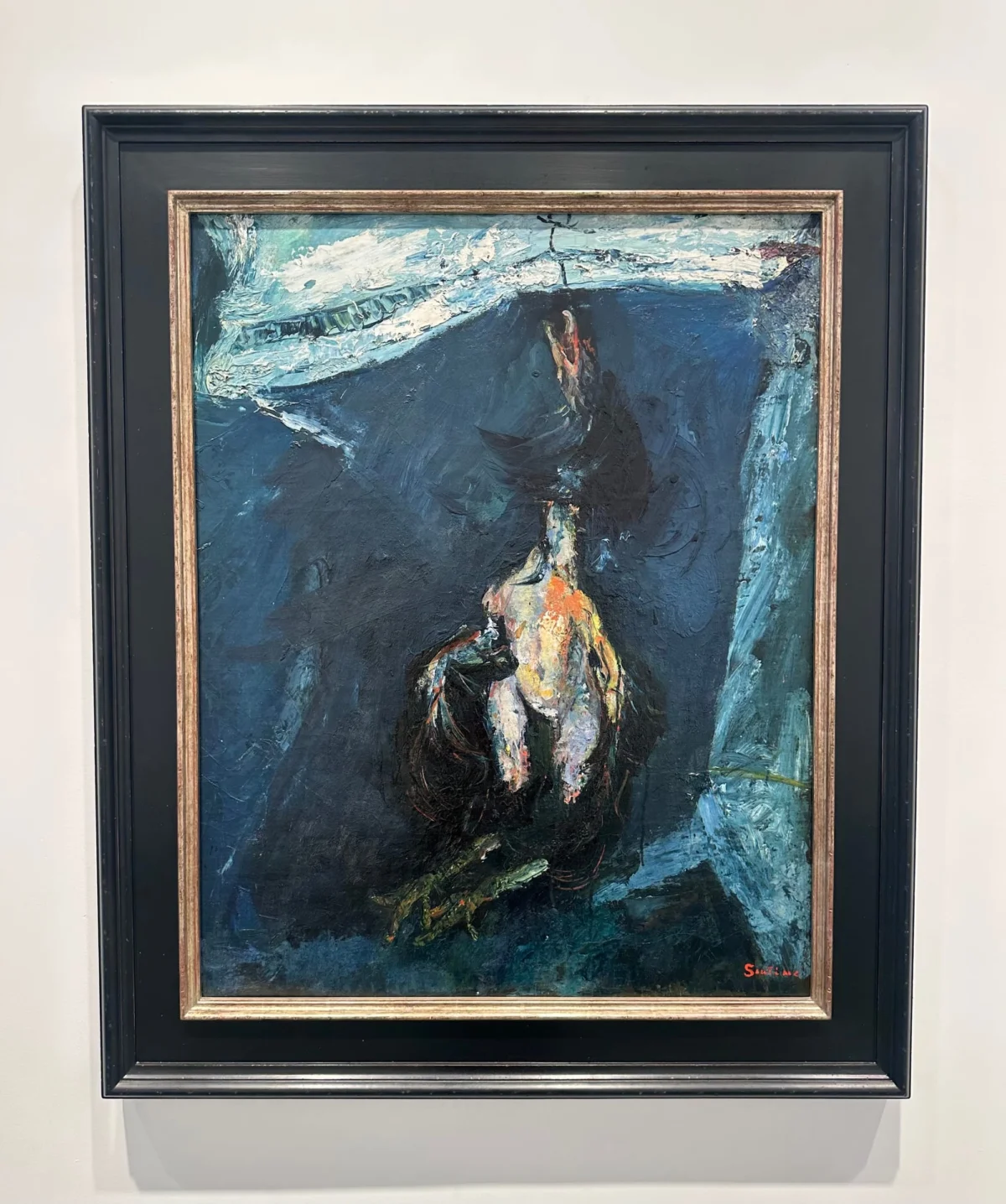
His painting, Hanging Turkey (c. 1925), serves as the anchor for the exhibition’s historical narrative. In this piece, Soutine displays a reverence for the Old Masters—specifically El Greco—but twists the tradition into something modern and frantic. The turkey is not merely a bird; it is a decapitated, martyred saint. Its open beak suggests a final, gasping cry that echoes across the decades, reminding the viewer that for Soutine, the act of painting was an act of survival.
Fast forward to the present day, and we find Ilana Savdie. Her work, such as the 2026 piece Galactophore, acts as a modern response to the visceral legacy Soutine left behind. If Soutine was recording the death of an old world, Savdie is documenting the messy, oozing, and often absurd birth of a new one. Her process—incorporating oil, acrylic, and beeswax—mirrors the layering of memory and the biological processes of the body itself. Where Soutine used heavy, impasto strokes to suggest the weight of flesh, Savdie uses translucency and vibrant, synthetic hues to suggest the fluidity of identity in a digital age.
Supporting Data: The Anatomy of the Brushstroke
The technical rigor displayed by both artists provides the "supporting data" for this exhibition’s thematic premise. Soutine’s technique was notoriously manic. Observers of his time noted that he would work himself into a state of physical exhaustion, his canvases becoming battlegrounds of layered paint that often looked like raw, exposed muscle.
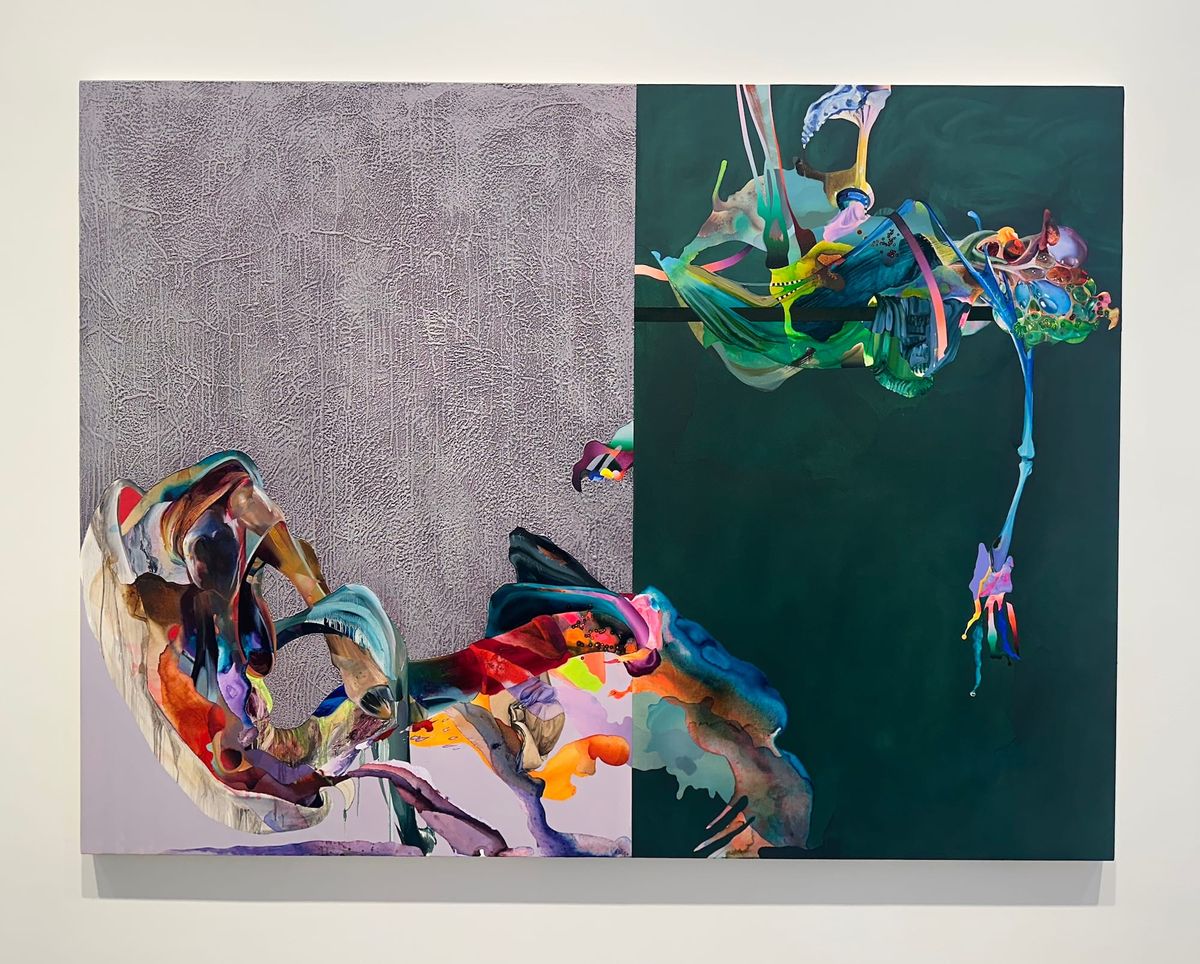
Savdie, conversely, approaches the canvas with a surgical precision that feels paradoxical given the chaotic, abstract nature of her figures. In Galactophore, the composition is not merely a smear of color; it is a calculated arrangement of biological suggestion. Her use of beeswax creates a sculptural quality that invites the viewer to step closer, to observe the depth of the layers.
Comparative Table: Aesthetic Approaches
| Feature | Chaim Soutine | Ilana Savdie |
|---|---|---|
| Primary Medium | Oil on canvas | Oil, acrylic, beeswax on panel |
| Historical Context | WWII, Displacement, Exile | Digital age, Globalization, Fluidity |
| Visual Motif | The Carcass, The Martyr | The Chimera, The Mutation |
| Thematic Focus | Mortality and Suffering | Identity and Transformation |
The synergy between these two is found in the "grotesque." Both artists utilize the grotesque not to shock for the sake of shock, but to reveal truths that more polite, representational painting cannot reach. Soutine’s turkeys and hanging beef reflect the dehumanization of war; Savdie’s creatures reflect the alienation of the self in an era where we are constantly performing and consuming our own identities.
Official Perspectives and Critical Discourse
The curatorial choice to pair these artists has sparked significant dialogue within the New York art community. Critics have noted that while Soutine’s work is often categorized as "Expressionist," this pairing forces us to see him as a precursor to the "post-human" explorations currently being pioneered by artists like Savdie.
"Soutine was painting the interiority of the body as a way to understand the fragility of the human soul in a time of genocide," says Dr. Elena Rossi, an art historian who has written extensively on the intersection of trauma and materiality. "Savdie, by contrast, is painting the body as an interface. She is asking: if we are constantly shifting, if our boundaries are porous, what does it mean to be a ‘whole’ person? Both artists answer this by stripping away the skin."
In discussions surrounding the exhibition, there is a clear consensus that the pairing is not a suggestion of direct influence, but rather a recognition of shared psychological topography. Savdie herself has spoken in interviews about the necessity of engaging with the "ghosts" of art history. By placing her work alongside Soutine, she is not merely mimicking his intensity; she is attempting to translate the language of early-century trauma into a lexicon that can speak to the anxieties of the 21st century.
Implications: The Body as a Battleground
What are the implications of this exhibition for the future of figurative painting? It suggests a move away from the cool, detached irony that dominated much of the late 20th century. We are seeing a return to "visceralism"—an artistic movement that prioritizes the felt, physical experience of the viewer over conceptual distance.
When one stands before a Savdie painting, there is a physical pull—a desire to touch the textured, waxy surface. This is a direct inheritance from the "static shocks" of Soutine’s early work. The exhibition forces us to confront the reality that we are, at our core, biological entities prone to suffering and decay.
Furthermore, the exhibition poses a radical question: Is the "monstrous" in art actually a more honest representation of the human experience than the "beautiful"? By documenting the ways in which both artists transform the mundane—a turkey, a human limb, a distorted face—into something otherworldly, the exhibition argues that the act of creation is an act of reclamation. We take the things that scare us, the things that are broken or dead, and we force them back into the light of the gallery.
Conclusion: Shedding the Skin
As we navigate the chambers of this exhibition, we realize that the "skin" mentioned in the title is both literal and metaphorical. It is the protective layer that separates us from the world, and it is the barrier that prevents us from truly seeing one another.
Soutine’s work remains a terrifying reminder of what happens when that skin is forcibly removed by the machinery of war. Savdie’s work is a daring exploration of what happens when we choose to shed our skins voluntarily, attempting to construct new selves in the wreckage of the old.
To visit this show is to participate in a ritual of recognition. We see the agony of the past in Soutine’s frantic strokes, and we see our own restless, shifting reflections in the layered surfaces of Savdie’s panels. It is a sobering, yet strangely vital experience. In the tension between the carcass and the chimera, we find a fleeting, fragile sense of what it means to be human in a world that is always on the verge of coming apart at the seams.
This is not merely an exhibition; it is an autopsy of our shared history, conducted with the tenderness and violence that only the greatest painting can provide. By the time we leave the gallery, stepping back out into the cacophony of the modern street, the world looks different. We carry the ghosts of Soutine’s turkeys and the ghosts of Savdie’s chimeras with us, a reminder that underneath the surface of our own lives, there is always a story waiting to be told—if only we have the courage to look at it.
