

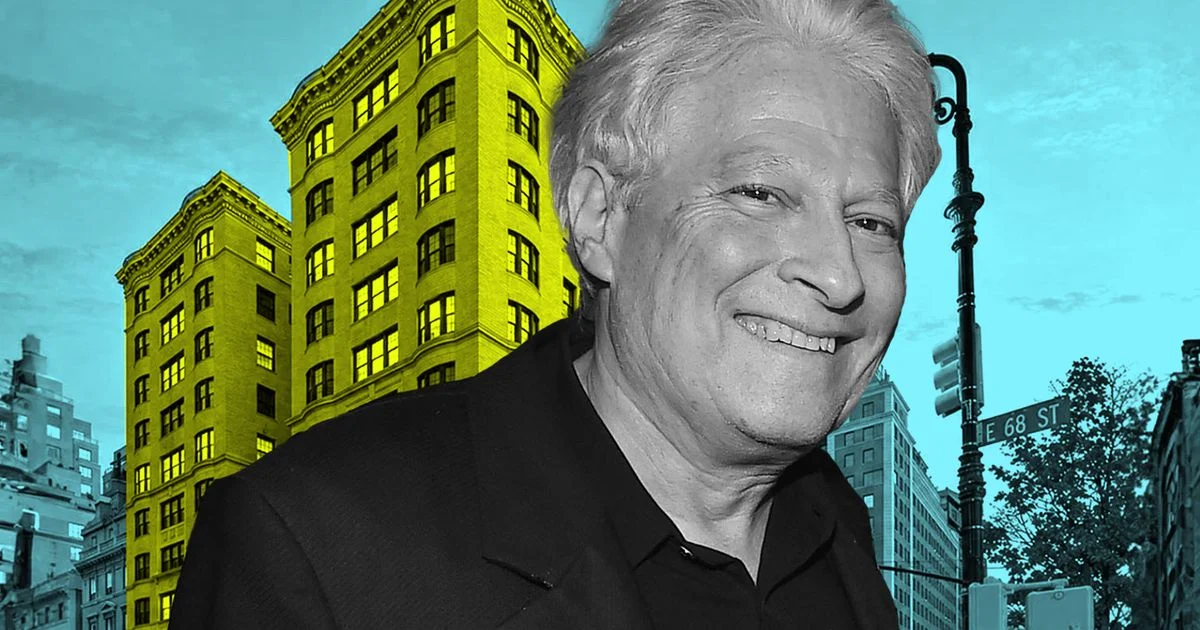
In the rarefied air of Manhattan’s Upper East Side, where the prevailing aesthetic is often defined by understated elegance, pale palettes, and prewar symmetry, developer Ziel Feldman once carved out a sanctuary that defied every convention. His triplex penthouse at The Marquand—the 11 East 68th Street building he transformed into ultra-luxury condominiums over a decade ago—was not merely a residence; it was a manifestation of a developer’s unbridled ambition.
Today, that monument to personal taste is on the market. Listed for $27.5 million, the 21-room property serves as a stark reminder of the "flusher days" of the mid-2010s, a period when Feldman, the co-founder of HFZ Capital Group, was riding the crest of a wave that would eventually crash in a spectacular display of legal, financial, and reputational ruin.
A "Lair" of Dark Marble and High-Stakes Ambition
While most new-development marketing teams advise developers to stick to "safe" neutrals to maximize marketability, Feldman’s private residence took a different path. The triplex is a moody, bold interior, often described by those who have seen it as a "lair." It is a space defined by deep blacks, rich browns, and the aggressive, dramatic veining of book-matched marble that seems to swallow the light.
Spanning 6,100 square feet, the residence is as much an art gallery as it is a home. Against its dark hardwood floors and obsidian-hued walls, high-profile contemporary works by artists such as Tracey Emin, Sanford Biggers, John Chamberlain, and George Condo were once curated to glow with intensity. The home also features a massive 2,600-square-foot terrace, a rare commodity in the dense geography of the Upper East Side, offering a private oasis that sits in direct opposition to the clinical, staged look of most modern luxury listings.
Chronology: From the High Line to a Lower Profile
The story of this penthouse is inextricably linked to the rise and fall of HFZ Capital Group. To understand the significance of the $27.5 million listing, one must look at the timeline of Feldman’s trajectory through the New York real estate ecosystem.
- 2013: Feldman completes the conversion of The Marquand, a historic prewar building, into ultra-luxury condos. He retains the crowning jewel: the triplex penthouse.
- 2015: HFZ Capital Group launches "The XI," a landmark project on the High Line designed by starchitect Bjarke Ingels. It was intended to be the project that solidified Feldman’s status among the city’s elite real estate titans, such as the Zeckendorfs or the Dursts.
- 2018–2019: The cracks begin to show. Financial strain, project delays, and internal discord begin to plague the firm.
- 2020: As the pandemic hits and the walls close in on HFZ due to investor lawsuits and mounting debt, Feldman makes his first attempt to offload the penthouse, listing it for $39 million. Simultaneously, he sells his massive Englewood mansion and a Bridgehampton estate for $50 million, signaling a retrenchment of his lifestyle.
- 2021: The internal conflict at HFZ reaches a breaking point. Feldman and his partner, Nir Meir, part ways in a bitter, public fallout. Meir is later arrested and charged with an $86 million fraud scheme related to the XI project.
- 2026: Having spent years in the shadows, Feldman quietly re-emerges in the industry, partnering with his daughter to launch "GoodHomes," a firm focused on affordable and workforce housing—a far cry from the glass-and-steel supertowers of his past.
The Financial and Structural Data
The listing for 11 East 68th Street, represented by Madeline Hult Elghanayan and Sabrina Saltiel of Douglas Elliman, is not just a real estate transaction; it is a financial recalibration.
Property Specifications:
- Square Footage: 6,100 sq. ft. of interior space.
- Outdoor Space: 2,600 sq. ft. of private terraces.
- Room Count: 21 rooms, including five bedrooms and four full bathrooms.
- Notable Amenities: Private elevator access, multiple fireplaces, a formal dining room capable of seating 22 guests, and a wet bar.
The $27.5 million price tag represents a significant haircut from the original $39 million asking price sought in 2020. This adjustment reflects both the cooling of the ultra-luxury market in certain segments and the reality that a highly bespoke, dark-toned property requires a very specific buyer profile. Recognizing this hurdle, the current listing includes digital renderings that reimagine the space in lighter, more conventional "creams and neutrals," effectively attempting to strip away the "Feldman signature" to appeal to a broader demographic.
Official Responses and Industry Sentiment
Neither the listing brokers nor representatives for the Feldman family have provided official commentary regarding the sale, a silence that is typical in the high-stakes world of Manhattan luxury listings. However, the industry’s assessment of Feldman has shifted significantly over the past decade.
Once hailed as a visionary who could inject "razzle-dazzle" into the New York skyline, Feldman is now viewed through the lens of a cautionary tale. Peers and competitors point to the XI project as a case study in over-leveraging and poor internal oversight. While the building itself was eventually rescued and brought to success by developer Steve Witkoff, the legacy of the HFZ implosion remains a defining shadow over Feldman’s professional history.
Implications for the Luxury Market
The sale of the Marquand penthouse carries several implications for the current state of the Manhattan real estate market:
1. The "Customization Trap"
High-end buyers are increasingly wary of "trophy" properties that are overly customized to the seller’s specific, eccentric tastes. While the dark marble and velvet aesthetic was a reflection of the "old-money" bravado Feldman once projected, modern buyers are prioritizing flexibility. The need for digital "staging" to neutralize the space underscores the difficulty of selling a home that functions as a personal monument.
2. The Shift in Developer Priorities
The transition of a developer like Feldman from the glitz of the High Line to the practical, utilitarian focus of affordable housing reflects a broader shift in the city’s development priorities. With land costs high and the luxury market saturated, the focus has moved toward workforce housing—a sector that, while less "glamorous," offers a path to stability that the volatile ultra-luxury market no longer provides.
3. The End of the "Titan" Era
Feldman’s exit from his personal triplex serves as a symbolic conclusion to the era of the solo-developer "titan." The legal battles and financial wreckage left in the wake of the HFZ collapse have led to increased scrutiny, tighter lending standards, and a move toward institutional-backed projects rather than the ego-driven developments of the early 2010s.
Conclusion
The triplex at 11 East 68th Street remains a masterpiece of a certain type of 2010s excess. Whether it will find a buyer who appreciates its moody, marble-clad soul, or whether it will be gutted and sanitized to fit the tastes of a new owner, remains to be seen. What is certain is that the listing marks a final, definitive step for Ziel Feldman—moving on from the remnants of his past to navigate a new, more modest, and arguably more grounded chapter in his career. The "lair" is open for business, but the era that built it has long since closed.
