

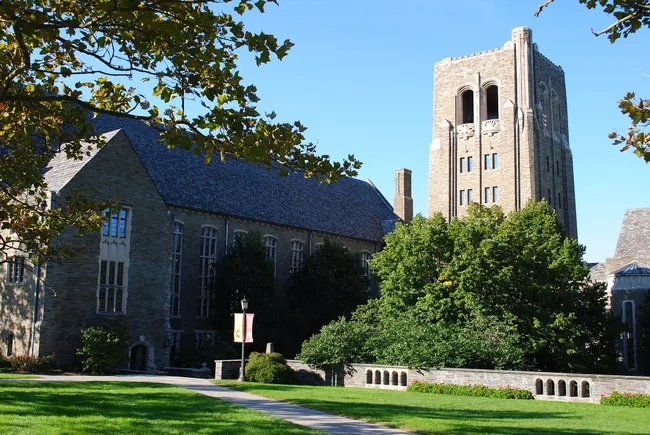
The halls of Cornell University, once synonymous with academic prestige, are currently mired in a profound institutional crisis. At the center of this turmoil is a harrowing case of alleged sexual violence involving a student identified as "Jane Doe," whose pursuit of justice has evolved from a private trauma into a national flashpoint for campus accountability. As the university administration, led by President Michael Kotlikoff, struggles to regain control of the narrative, a growing coalition of faculty members is openly calling for his resignation, citing a systemic culture of silence and a failure to protect the student body.
The Allegations: A Case That Shook the Campus
In October 2024, the student identified as Jane Doe allegedly suffered a horrific assault: she was drugged and gang-raped at the Cornell chapter house of the Chi Phi fraternity. Doe reported the incident to the university the following month, initiating a Title IX investigation that would ultimately result in the permanent closure of the fraternity’s chapter and its expulsion from campus.
However, the closure of the fraternity did little to satisfy the demands for justice. This past September, Doe filed a civil lawsuit against the men she identifies as her attackers, as well as against Cornell University itself. The lawsuit alleges that the university failed to adequately address the assault or support the victim in the wake of the incident. The defendants named in the suit have categorically denied the allegations.
The lawsuit brought the details of the case into the public eye, igniting a firestorm of scrutiny regarding the administration’s conduct. Critics, including student activists and faculty members, argue that Cornell’s handling of the case reflects a broader, more insidious pattern of prioritizing institutional reputation and liability over the safety and well-being of its students.
A Chronology of Conflict
The timeline of this institutional collapse is marked by mounting tension between the administration and the community it serves:
- October 2024: The alleged assault occurs at the Chi Phi fraternity house.
- November 2024: Jane Doe reports the assault to Cornell officials.
- Late 2024–Early 2025: Cornell conducts a Title IX investigation, resulting in the eventual shuttering of the Chi Phi chapter.
- September 2026: Jane Doe files a civil lawsuit. Cornell issues a public statement affirming that it took "restrictive measures" and issued sanctions ranging from suspensions to expulsions against those involved.
- October 14, 2026: The Cornell Faculty Senate begins formal deliberations on a potential vote of no-confidence against President Kotlikoff.
- October 14, 2026 (Same Day): Jane Doe sends a letter to the Dean of Faculty and the Faculty Senate speaker, detailing a conversation in which she claims Kotlikoff questioned her delay in reporting the assault.
- October 20, 2026: The full content of Doe’s letter is made public by The New York Times, revealing that the Faculty Senate had been allegedly withheld from seeing the document during their deliberations.
The Faculty Revolt: A Demand for Accountability
The friction between the faculty and the administration reached a boiling point this month with the publication of an open letter signed by a significant number of Cornell professors. The letter paints a scathing portrait of a campus environment where sexual violence is normalized and institutional power is used to shield perpetrators.
"We will not allow the horrific sexual violence experienced by Jane Doe and others in our community to be swept under the rug," the faculty signatories declared. They drew a provocative parallel between the university’s disciplinary priorities and its treatment of student activists: "It is not lost on us that students found responsible for sexual violence have been punished far less harshly, for example, than nonviolent student protestors arrested for speaking up during panel discussions or banging pots and pans."
The faculty further argued that Cornell’s stringent free speech and conduct policies have fostered a "chilling effect." According to the letter, the culture of "unquestioned loyalty" encourages groupthink and provides a veil of protection for those who commit acts of violence. The signatories took the rare step of apologizing to the student body for their own failure to act as a more robust bulwark against administrative overreach, signaling that the divide between the faculty senate and the President’s office is at its widest point in recent memory.
The Disputed Conversation: The "Why Did You Wait" Controversy
Perhaps the most damaging revelation in this saga is the letter Jane Doe sent to faculty leaders regarding her interaction with President Kotlikoff. Doe recounted that Kotlikoff questioned a sorority president about why Doe had waited to report the assault. To Doe, this was not a neutral inquiry but a direct expression of skepticism regarding her credibility.
"It diminished my confidence in the administration’s ability to approach my experience with the understanding, sensitivity, and fairness I had hoped for," Doe wrote.
The controversy intensified when three members of the faculty senate alleged that this letter was never shared with them by the administration during their no-confidence deliberations. A Cornell spokesperson has since denied the allegation, stating that Doe’s account is "incorrect." The spokesperson clarified that Kotlikoff’s question was directed at bystanders who had allegedly ignored social media chatter regarding the incident, rather than at Doe herself. Despite this defense, the fact that the letter was effectively hidden from the faculty senate until it appeared in the national press has significantly damaged the administration’s remaining credibility.
Official Responses and Independent Oversight
In an effort to stem the tide of public outrage, Cornell has taken several high-profile steps. Most notably, the university has retained former U.S. Deputy Attorney General Sally Yates to lead an independent investigation into the university’s sexual misconduct response infrastructure. Additionally, the university has moved to suspend all social events at fraternity houses for the remainder of the academic year and has pledged to increase staffing in its civil rights and Title IX offices.
In a video message addressed to the campus community on October 10, President Kotlikoff acknowledged the "public frustration" and the "distrust" caused by the university’s perceived lack of transparency. He cited "legal and privacy limits" as the primary reason for the lack of detailed disclosures regarding disciplinary actions against students involved in the case. However, for many students and faculty, these explanations have proven insufficient.
Implications: A Morbid Pattern
The crisis at Cornell is emblematic of a wider struggle within elite higher education institutions. The editorial board of The Cornell Daily Sun summarized the sentiment of the student body by characterizing the current situation not as an anomaly, but as a "morbid pattern."
The implication of these allegations is that the university’s administrative structure is designed to function as a self-protecting entity. By relying on "ambiguity" and "familial connections," critics argue that Cornell has allowed a culture of impunity to flourish, where the powerful can evade consequences that would be ruinous for ordinary students.
As the faculty senate continues its deliberations and the civil lawsuit makes its way through the courts, Cornell University stands at a crossroads. The outcome will likely depend on whether the administration can prove that it is capable of radical transparency or if the faculty and students will force a total overhaul of the institution’s leadership. For now, the "Jane Doe" case remains a stark reminder that when an institution loses the trust of those it is sworn to protect, the damage to its reputation may take years, if not decades, to repair. The demand for justice, in this case, has transcended the courtroom—it has become an existential demand for the soul of the university.
