

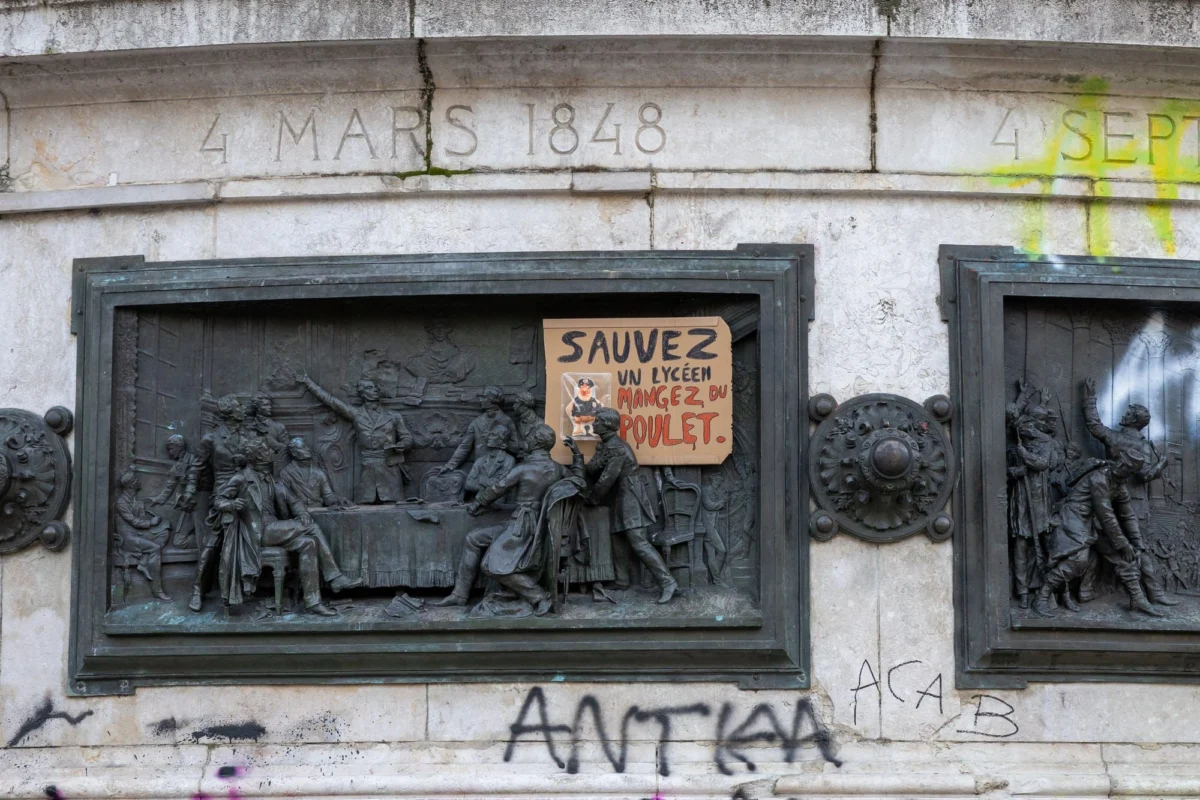
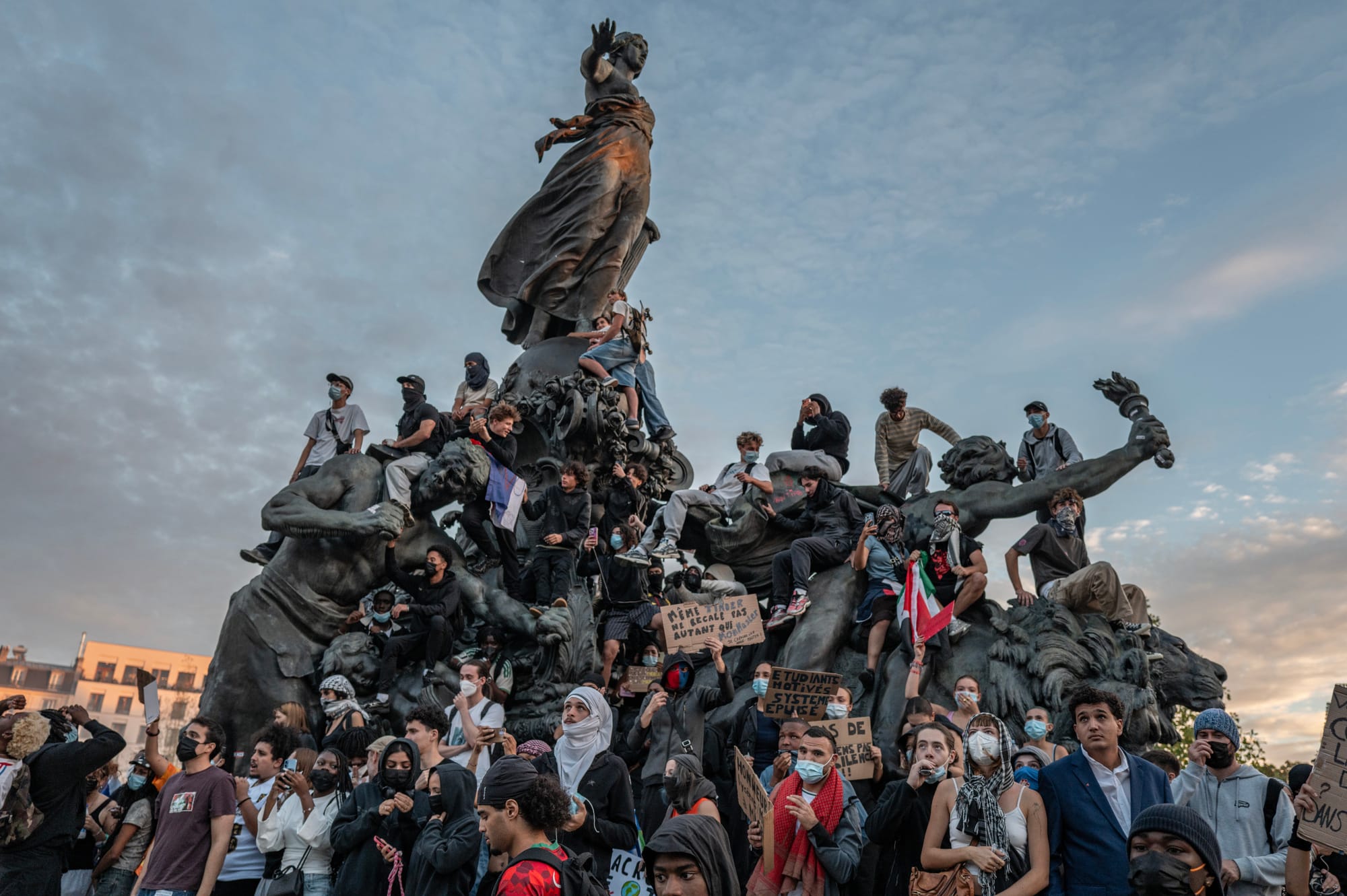
In the heart of Paris, the iconic "Monument à la République" has undergone a radical transformation. Where once stood a stoic, bronze representation of Marianne—the steadfast personification of the French Republic—now hangs a stark, white banner bearing the handwritten indictment: "Neglected high schools, youth sacrificed."
This act of symbolic appropriation is not an isolated incident of vandalism; it is a calculated, artistic reclamation of public space by a new generation of French students. As demonstrations against under-resourced schools, a deepening cost-of-living crisis, and aggressive police tactics roil the country, the youth of 2026 are turning to the same visual lexicon employed by their predecessors in May 1968. By dressing, defacing, and occupying the nation’s most sacred monuments, these protesters are forcing the state to confront a painful contradiction: the gap between the democratic ideals etched in stone and the reality of life on the streets.
A Legacy of Uprising: The Echoes of May ’68
To understand the current student movement, one must look back to the seismic shifts of late spring 1968. When students at Paris Nanterre University initiated protests in March of that year, they quickly recognized that the rigid, hierarchical nature of the French educational system was mirrored in the rigid, patriarchal statues dotting the city’s squares.
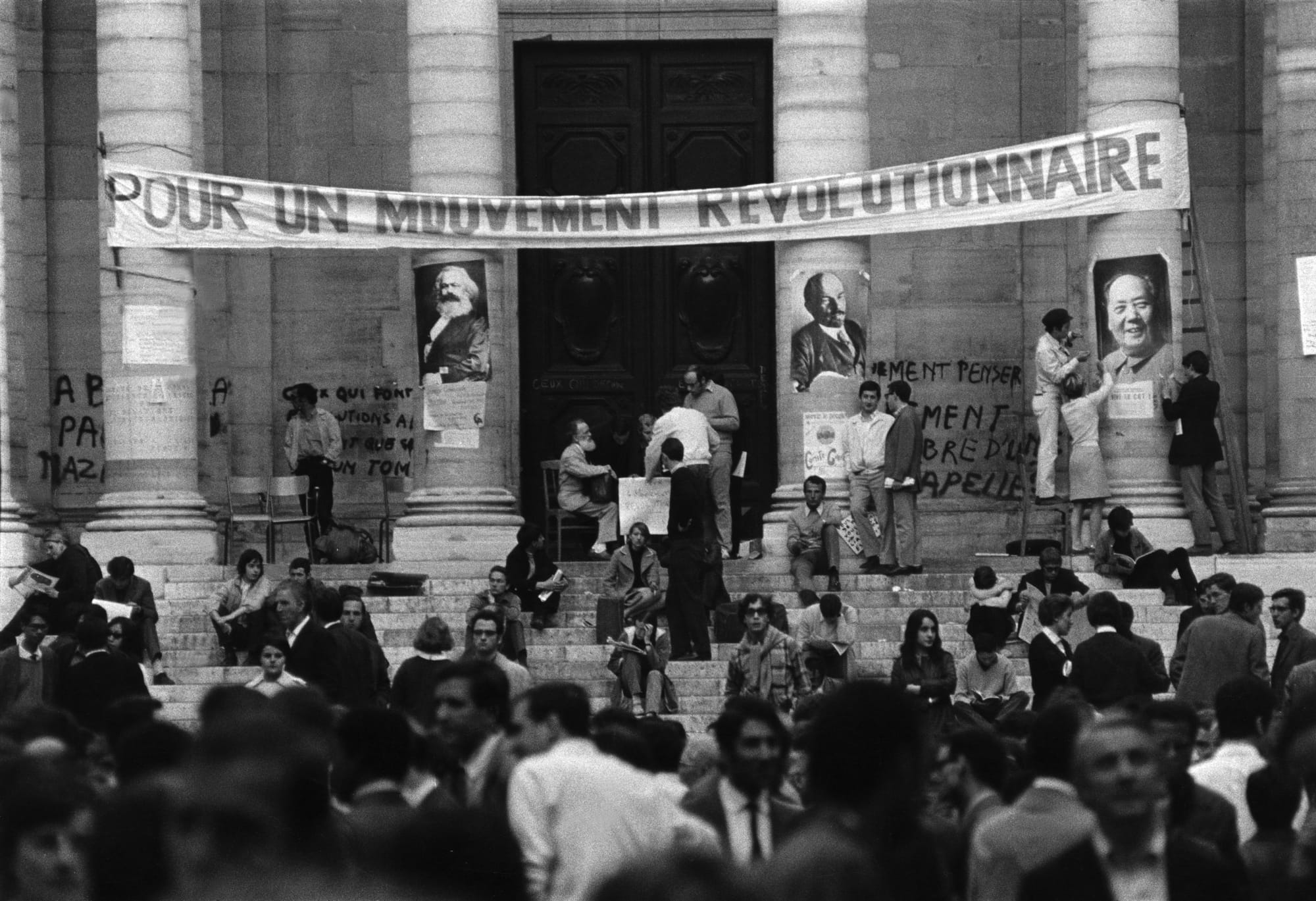
During the height of the ’68 unrest, the Sorbonne became a laboratory for revolutionary aesthetics. Portraits of Karl Marx, Vladimir Lenin, and Chairman Mao Zedong were suspended from the pillars of the university’s 17th-century facade, turning an academic institution into an altar of radical change. Statues of national icons like Louis Pasteur and Victor Hugo were not merely bypassed; they were conscripted into the cause, adorned with red flags and protest literature. When protestors climbed the Monument à la République on May 13, 1968, they were doing more than finding a vantage point—they were claiming ownership of the Republic itself.

Today’s activists are not just mirroring these tactics; they are evolving them. They understand that public monuments are the "third-party" observers of history, and by altering their appearance, they compel the public to engage with their grievances in a visceral way.
Chronology of a Resurgent Movement
The current wave of unrest began to swell in early autumn, characterized by a series of school blockades and decentralized marches.

- Early October: Protests intensify as student unions demand increased funding for vocational and secondary schools. The first major instances of "statue-dressing" occur in Paris and Toulouse.
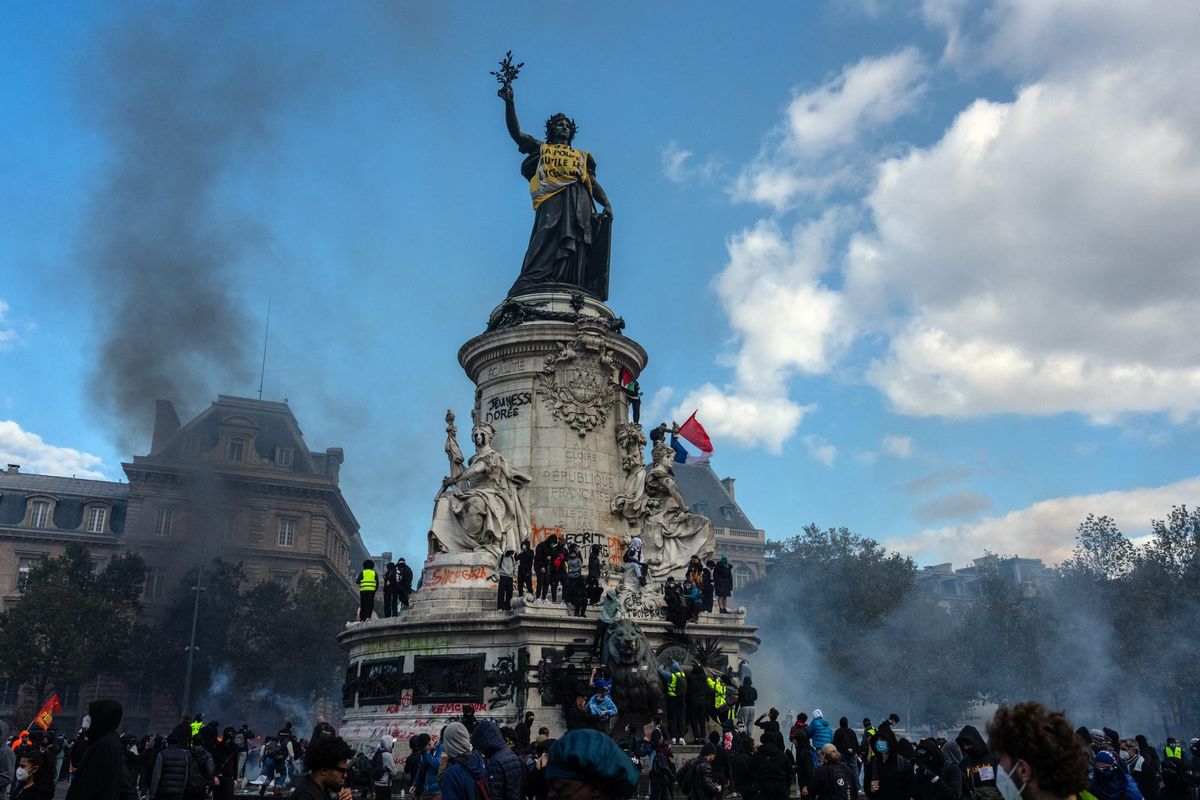
- October 4: Large crowds gather at the Place de la République, where students climb the central plinth to hang banners, marking a significant escalation in the physical occupation of monuments.
- October 17: In a poignant nod to the gilets jaunes (Yellow Vest) movement of 2018–2020, protestors drape a yellow vest over the statue of Marianne. The message, "2026: The police mutilates high schoolers," links the current struggle to the recent history of socio-economic frustration.
- October 19: Tensions boil over as students from the École du Louvre block the entrance to the Louvre Museum, forcing its closure. Simultaneously, in Marseille, a bust of Marianne is knocked from its pedestal in City Hall—an act that sparked national debate over the limits of political expression.
- Late October: The movement continues to spread, with the "Column of July" serving as a focal point for Gen-Z protesters, who have begun using the hashtag #RevolteInternationalGenZ to organize and share imagery of their monument interventions.
The Cost of Dissent: Police Violence and Public Fissures
The intensity of the students’ actions is matched, if not exceeded, by the state’s response. Reports from French rights groups and legal collectives paint a harrowing picture of police conduct. Since the start of the demonstrations, thousands of minors have been detained, and hundreds of students have sustained injuries.
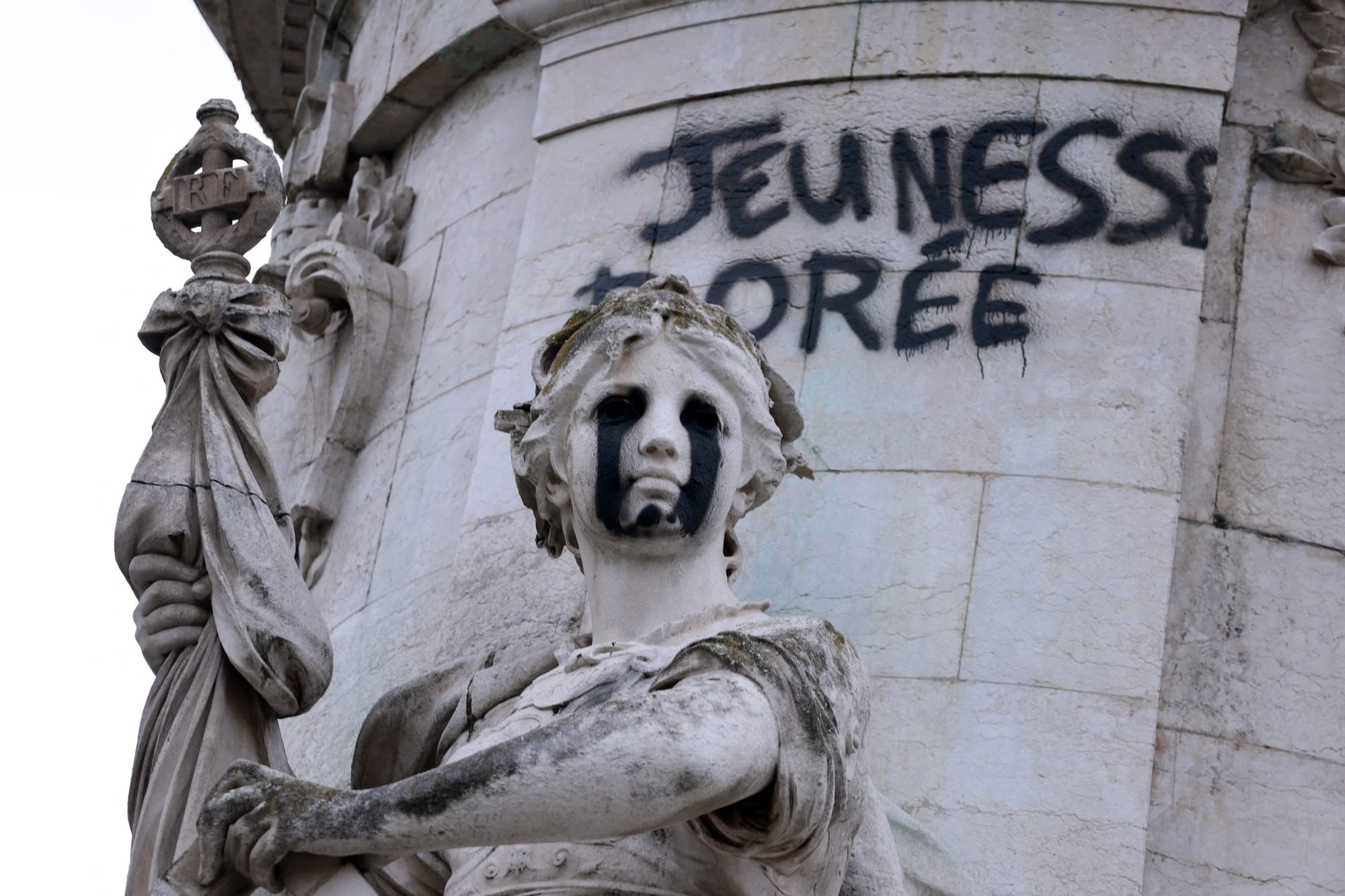
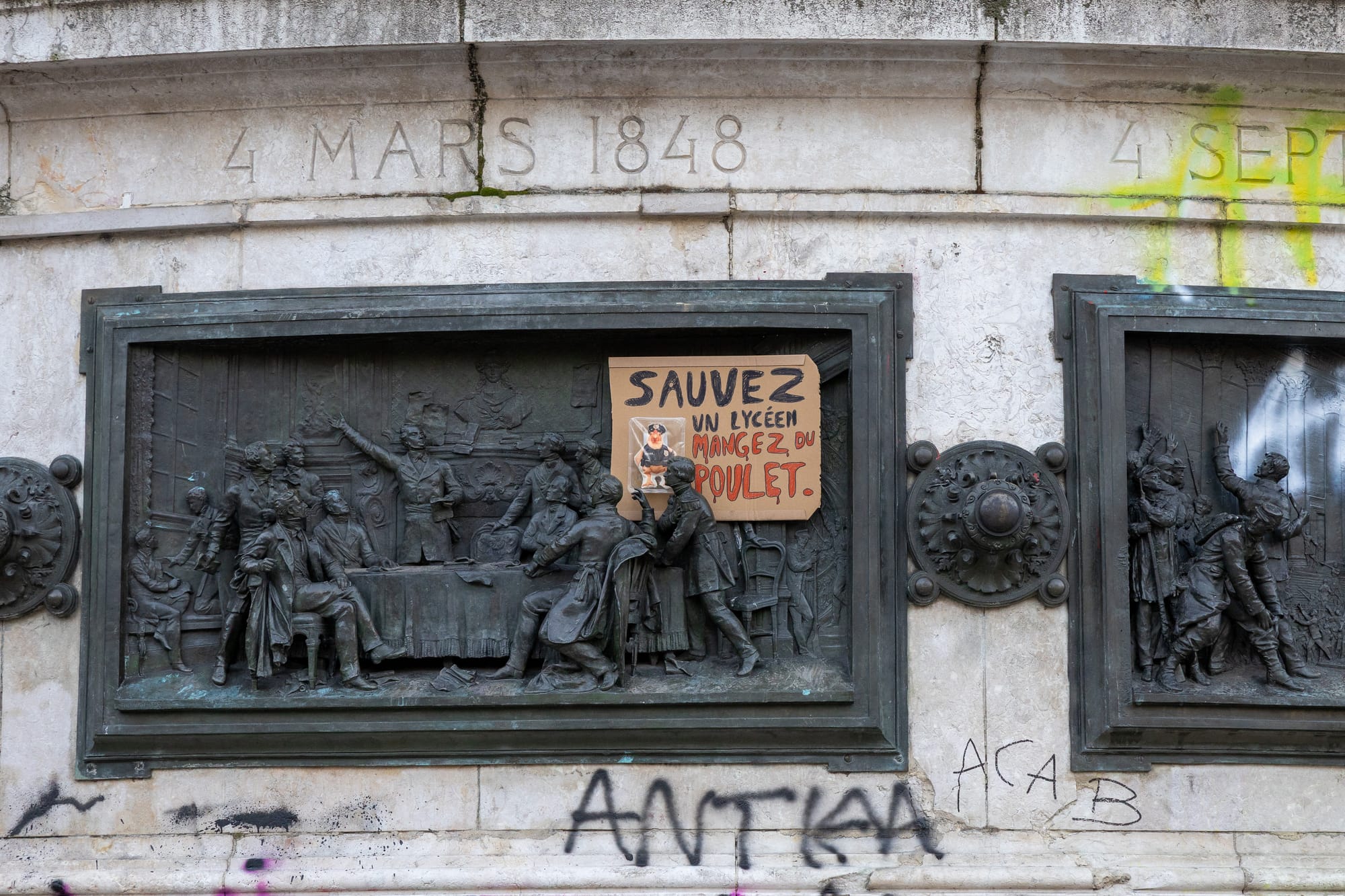
Lawyers have raised alarms regarding "war-like injuries" inflicted by riot officers. In a harrowing incident in a Parisian suburb, a 14-year-old was left maimed after being struck by a tear gas grenade. These accounts have transformed the monuments themselves; at the Place de la République, demonstrators painted black "tears" onto the eyes of the statues representing Liberty, Equality, and Fraternity. The gesture is a damning critique: the state claims to uphold these values, yet its enforcement arms are seen as actively dismantling them through the brutalization of the youth.
Global Context: Monuments as Contested Terrain
The French student movement is part of a broader, global shift in how protesters treat the built environment. From the toppling of Confederate statues in the United States during the 2020 Black Lives Matter movement to the covering of colonial-era monuments in Belgium and the UK, the "monumental" has become a primary site of political negotiation.
When activists in Toulouse placed a Palestinian flag on a statue of Joan of Arc, the reaction was polarized. For some, it was an affront to national identity; for others, it was an attempt to create a universal bridge between local suffering and international human rights struggles. This tension highlights the core function of the modern protest: to force the viewer to reconcile the past—represented by the bronze and stone figures—with the urgent, often uncomfortable, demands of the present.
Official Responses and Political Implications
The French government has responded with a mixture of condemnation and concern. Officials have labeled the defacement of state monuments as "attacks on the foundation of the Republic," with the Minister of the Interior calling for the swift prosecution of those who damage public property.
However, this "law and order" approach has arguably backfired, fueling the perception that the government is more interested in protecting stone statues than in protecting living students. By prioritizing the sanctity of a statue over the safety of a child, the state has provided the protestors with a powerful narrative: the government is disconnected from the material reality of the people it governs.
Educational officials have attempted to open dialogues regarding school funding, but for many students, the concessions offered thus far are viewed as performative. The slogan, "If you screw us over, we will give you a May 68," has become a rallying cry that transcends the specific policy grievances of 2026. It is an existential threat to the current administration, signaling that the youth no longer believe in the slow, bureaucratic process of reform.
Conclusion: A Mirror to the Nation
The statues of France were built to tell a specific story—one of national unity, progress, and democratic triumph. By altering these monuments, the current generation of students is rewriting that narrative. They are inserting themselves into the historical record, ensuring that the "cost-of-living crisis" and the "neglect of youth" are not footnotes in a textbook, but are literally attached to the faces of their national icons.
As long as the state remains focused on the maintenance of these monuments rather than the resolution of the underlying social fractures, the protest art will only grow more daring. The students of 2026 are not just asking for better schools; they are asking to be seen. And by turning the nation’s monuments into mirrors, they are ensuring that, for the first time in a long time, the Republic cannot look away.
