

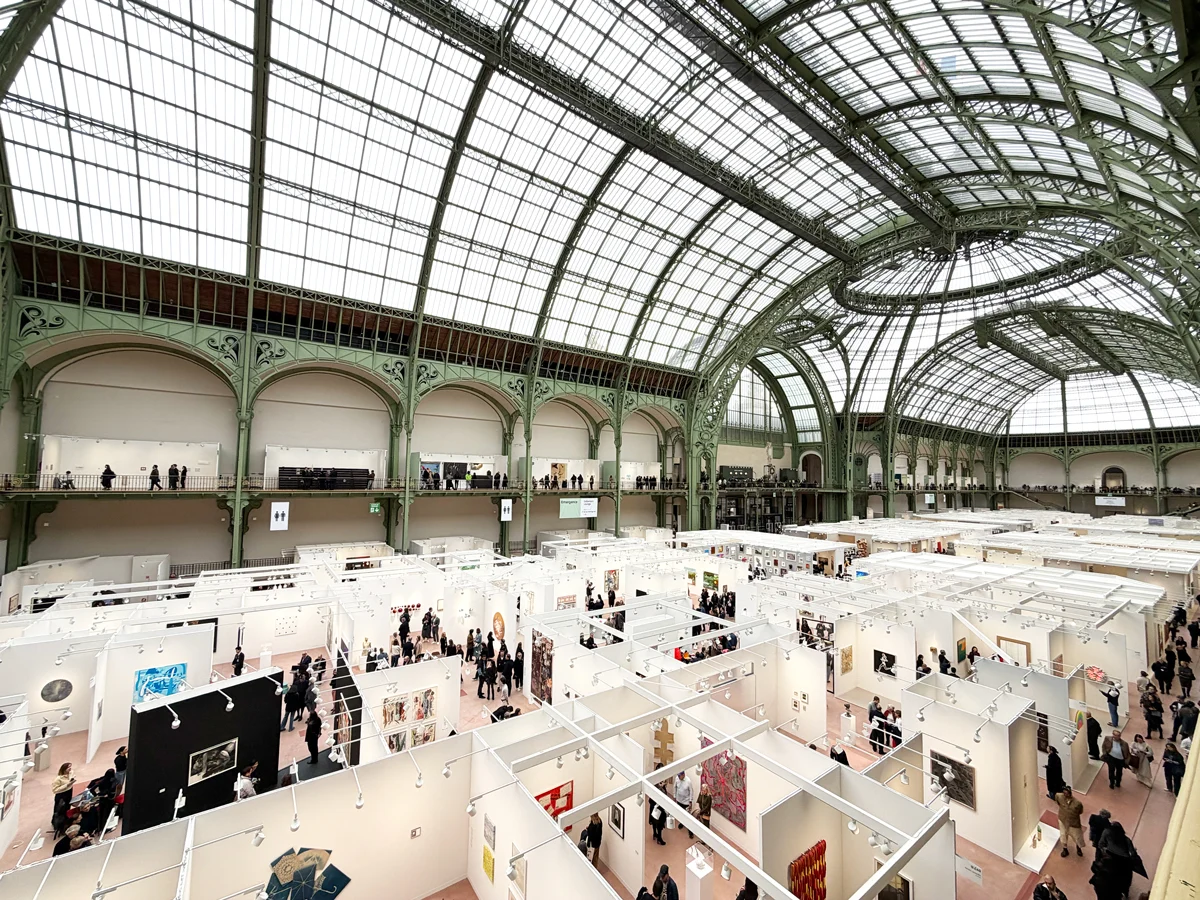
The return of Art Basel Paris to the majestic Grand Palais is not merely an exhibition; it is a declaration of the French capital’s enduring dominance in the global art market. As the fair matures into its latest iteration, it has undergone a palpable shift in temperament. No longer content to be a mere discovery platform for emerging talent, Art Basel Paris has firmly established itself as a fortress of blue-chip commerce, where the hum of high-finance transactions echoes against the iconic glass and steel rafters of its historic venue.
With over 200 galleries occupying the sprawling floor plan, the 2026 edition presents a curated landscape that prioritizes pedigree and historical weight. For collectors, institutional buyers, and art world luminaries, the fair is now a critical juncture in the calendar, a place where eight-figure masterpieces are traded with the same clinical efficiency as blue-chip stocks.

The Evolution of the Paris Fair: From Discovery to Command
The transformation of Art Basel’s French satellite is a study in institutional growth. When the fair first arrived in Paris, there was a palpable sense of experimentation—a mix of avant-garde risk-taking and local charm. However, by the time the VVIP "Avant-Première" opened its doors this past Tuesday, it was clear that the fair has entered a more aggressive, mature phase.
The current atmosphere is one of deliberate prestige. Galleries have curated their booths to reflect a “best-of-the-best” mentality, prioritizing artists who have already secured their place in the canon. This shift has drawn criticism from those who miss the "discovery" spirit of smaller fairs, yet the commercial data suggests this is exactly what the market demands. The concentration of wealth on the ground floor is staggering, signaling that Paris has successfully consolidated its position as the premier European hub for high-end art transactions.

Chronology of the 2026 Opening
The momentum of the fair was set in motion during the early hours of the VVIP preview. Below is the progression of the event’s opening days:
- Tuesday, October 20: The Avant-Première preview. Within the first three hours, major international galleries reported a flurry of sales, signaling a robust appetite for investment-grade art. The energy was electric, with high-net-worth individuals and museum acquisition committees navigating the floor with focused intent.
- Wednesday, October 21: The momentum sustained itself through the second day. By the close of business, galleries reported that their initial portfolios had been significantly depleted, leading to the "refreshing" of several high-profile booths with secondary inventory held in reserve.
- Thursday, October 22: The focus shifted toward broader public engagement, though the private, "by-appointment-only" rooms continued to see heavy traffic, as collectors sought out specific works away from the bustling aisles.
- Ongoing through October 25: The fair continues its run, with programming shifting toward panel discussions and local gallery collaborations across the city.
Supporting Data: The Market Pulse
While final sales figures are rarely disclosed in their entirety by private galleries, the sentiment index of the 2026 edition is overwhelmingly positive. According to preliminary reports, the median price point for works sold during the first 48 hours hovered well into the seven-figure range.

Several key metrics define this year’s commercial success:
- High-Value Transactions: Several works by 20th-century masters—including names like Gerhard Richter and Georg Baselitz—were reported as sold before the public opening on Wednesday.
- Gallery Retention: Over 95% of the galleries invited to return in 2026 accepted, indicating that the cost of entry is seen as a necessary investment for firms looking to maintain their market share in Europe.
- Institutional Footprint: Attendance by curators from major institutions—such as the Centre Pompidou, the Tate, and the MoMA—is at a five-year high, reflecting the perceived quality of the work on display.
Perspectives from the Frontlines
The sentiment among exhibitors is one of cautious optimism tempered by the reality of a changing economic climate.

"The Paris fair has reached a level of sophistication that allows us to bring our most challenging and valuable works," noted a representative from a top-tier London-based gallery. "The collectors here are not just looking for decoration; they are looking for historical anchors. The Grand Palais provides the stage that these works deserve."
Conversely, some smaller galleries have expressed concern regarding the "gentrification" of the fair. "When you fill 80% of the space with safe, blue-chip investments, you risk stagnation," remarked an independent dealer based in the Marais. "We need to ensure that the fair doesn’t lose the edge that made Paris exciting in the first place."

In response to these concerns, Art Basel leadership has emphasized the importance of the upper levels of the Grand Palais. "If you find the ground floor too focused on the blue-chip market, you are missing half the story," one spokesperson noted. "The upstairs booths are where the true, vibrant, and experimental dialogue is happening."
The Architectural Context: The Grand Palais as an Asset
It is impossible to discuss the success of Art Basel Paris without acknowledging the venue itself. The Grand Palais, with its vast, green-painted steel-and-glass ceiling, serves as more than just a roof; it is an architectural masterpiece that elevates the art beneath it.

The light quality in the nave during the late afternoon, filtered through the complex ironwork of the ceiling, provides a natural, atmospheric lighting that few white-cube venues can replicate. For many attendees, the aesthetic experience of walking the aisles under such a monumental structure is as much a draw as the art itself. It serves as a reminder that in Paris, art and history are inseparable.
Implications for the Global Art Market
The implications of the 2026 Art Basel Paris are significant for the broader art market. As geopolitical instability impacts other hubs, Paris has emerged as a safe harbor for capital.

- The London-Paris Pivot: Since the structural shifts in the European economy, Paris has steadily eroded London’s status as the sole capital of the European art trade. The success of this year’s fair solidifies this transition.
- The Rise of the "Institutional Fair": As galleries face rising costs, they are increasingly focusing their resources on fewer, more high-impact fairs. Art Basel Paris is now firmly in the "must-attend" category, meaning that funds once spread across smaller European fairs are now being concentrated here.
- Digital Integration: The 2026 fair has seen a seamless integration of digital sales platforms, allowing for a hybrid experience that extends the life of the fair beyond the physical closing date of October 25.
Looking Forward: The Final Days
As the fair approaches its conclusion on October 25, the focus turns to the final deals and the legacy of the event. Collectors who have waited for the "lull" period to negotiate are expected to descend upon the Grand Palais this weekend.
For those who have yet to visit, the advice from veterans of the circuit is simple: start at the top. The upper galleries offer a respite from the intensity of the main floor and often house the most intellectually stimulating work of the entire fair.

Art Basel Paris 2026 has proven that the art market is not merely surviving—it is thriving in a state of high-end, institutionalized grandeur. Whether this shift toward the "blue-chip-first" model will prove sustainable in the long term remains to be seen, but for the next few days, the Grand Palais remains the undisputed center of the art-world universe.
