

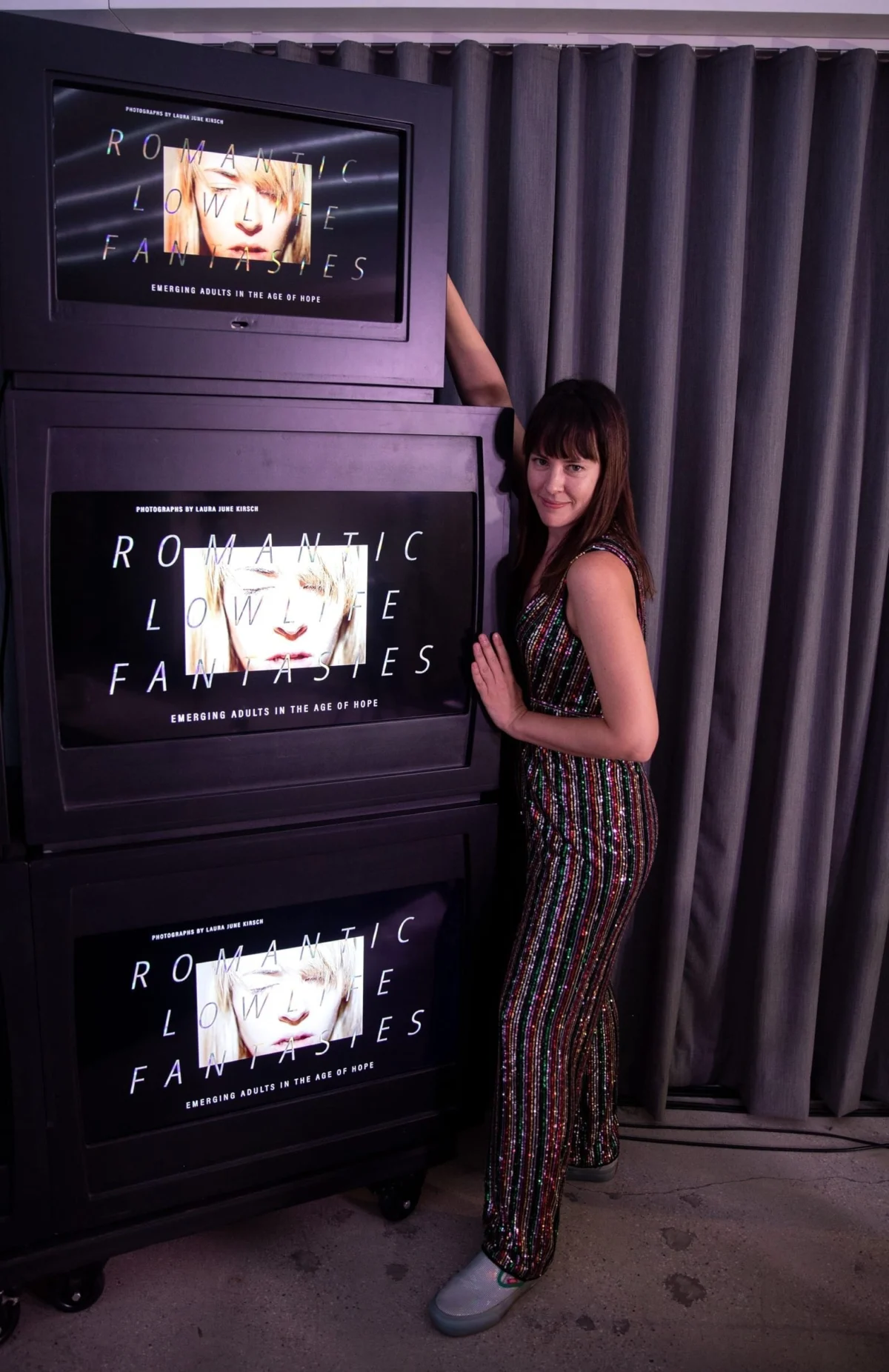
In the vast, interconnected ecosystem of the internet, Wikipedia serves as the final arbiter of cultural relevance. For the modern artist, author, or public figure, the existence of a Wikipedia page is more than a mere vanity project; it is a digital seal of legitimacy, a citation-heavy resume that influences search engine optimization, professional opportunities, and the general public’s perception of one’s career.
However, as photographer and author Laura June Kirsch recently discovered, the process of being "Wikipedia-official" is not a democratic meritocracy. Instead, it is a complex, often opaque arena where anonymous editors—frequently operating with their own ideological biases—wrestle over who deserves a place in the digital record.
A Chronology of a Digital Identity
The ordeal began in February, a quiet month interrupted by a startling notification. A Google Alert signaled that a Wikipedia entry for Kirsch had been created.
"I immediately texted my mom," Kirsch recalls. "She was confused—was it a good thing? Who makes these pages? She’d heard mixed things about Wikipedia."
The mother’s skepticism was well-founded. Wikipedia, while touted as the "encyclopedia that anyone can edit," is governed by a rigid, often labyrinthine set of rules regarding "notability." To be considered notable, an individual must demonstrate significant coverage in reliable, independent secondary sources. Without these, even the most prolific artists can find themselves erased from the platform.
Kirsch, initially curious about the provenance of her digital footprint, reached out to a contact in the tech sector to investigate the page’s origin. The trail led to an anonymous editor, an individual who appeared to specialize in creating biographical pages for female artists. The initial entry was sparse but accurate, describing Kirsch as an "American photographer known for her work documenting music, nightlife and alternative subcultures," and citing her 2021 publication, Romantic Lowlife Fantasies: Emerging Adults In The Age of Hope.
For a few months, the page existed in a state of quiet acceptance. Then, the vulnerability of such digital existence was laid bare.
The Predatory Ecosystem of "Wikipedia Cleanup"
Three months after the page’s inception, the tenor of the situation shifted. Kirsch received an unsolicited email from a stranger claiming to represent a digital marketing firm. The firm, which specialized in the sort of high-volume, automated content often disparagingly referred to as "AI slop," delivered a classic ultimatum: Kirsch’s Wikipedia page had been flagged for deletion due to "lack of notability" or insufficient information.

The offer was clear: for a fee, the firm could intervene, bolster the page’s citations, and ensure its survival.
This interaction exposed a shadowy sub-industry that has emerged in the margins of the Wikimedia Foundation’s operations. These "reputation management" firms often prey on creators who are sensitive about their online presence. By weaponizing the fear of digital erasure, they create a market for services that essentially amount to "pay-to-play" PR, attempting to manipulate the very system designed to be objective.
Kirsch, though skeptical, chose to engage with the reality of the situation. She realized that if her career was to be documented, she would have to provide the evidence herself, rather than relying on the whims of anonymous editors or the predatory tactics of marketing firms. She began the arduous task of compiling a robust biography and a comprehensive list of citations, forcing her way through the platform’s strict verification process.
The Anatomy of Notability: Data and Bias
The debate surrounding Kirsch’s page eventually migrated to the platform’s internal "Talk" pages, where anonymous users—often exhibiting a distinctly masculine tone—debated whether her body of work reached the threshold of "credibility" required to justify an independent entry.
This discourse highlights a significant, long-standing criticism of Wikipedia: the demographic imbalance of its volunteer editor base. Studies have consistently shown that the vast majority of Wikipedia editors identify as male. This skew can lead to systemic biases in which subjects are deemed "notable."
For female artists, this often results in a "double bind." If an artist is not the subject of extensive mainstream media coverage, their work may be dismissed by editors who prioritize conventional definitions of success. Conversely, if an artist attempts to contribute to their own page, they are often flagged for "conflict of interest," a rule that is applied with varying degrees of severity depending on the gender and profile of the user.
Implications for the Creative Class
The struggle over a Wikipedia page is more than a personal grievance for Laura June Kirsch; it is a case study in the democratization of history. As we move further into an age where AI-driven search engines (like Perplexity or ChatGPT) scrape Wikipedia to provide answers to user queries, the platform has become the foundational data layer of the internet.
If an artist is scrubbed from Wikipedia, they effectively cease to exist in the eyes of the algorithms that power modern discovery.
"I was flattered that somebody made the page at all," Kirsch notes. "What artist doesn’t appreciate getting recognition for their work? But I did find it curious how little information was included. Was I supposed to fill in the gaps? How does this work?"
The answer to "how it works" is frustratingly complex. It involves:
- The Citation Trap: An artist must be written about by others before they can write about themselves.
- The Deletionists vs. The Inclusionists: The perpetual tug-of-war within the community between those who want to strip Wikipedia down to "encyclopedic" facts and those who want to preserve the cultural record.
- The Professionalization of PR: The rise of agencies that exploit the platform’s rules to offer "restoration" services, muddying the waters of editorial integrity.
Conclusion: Who Owns the Archive?
The experience of Laura June Kirsch underscores a critical tension in the digital age: the tension between the desire for an accurate, objective record and the reality of the human (and increasingly automated) biases that construct that record.
When anonymous users—often lacking deep knowledge of a niche subculture—act as gatekeepers of an artist’s legacy, the risk of "cultural erasure" becomes significant. If the standards for notability are too rigid, or if they are applied unevenly, the digital archive becomes a reflection not of artistic contribution, but of who is loudest, who has the most aggressive PR team, or who best fits the narrow, pre-conceived definitions of the volunteer editor base.
As Kirsch continues to navigate the process of documenting her career, her story serves as a reminder to the creative community: your digital presence is not a given. It is a battlefield. In the age of information, the most important work an artist may have to do is not just creating the art itself, but ensuring that the record of that art survives the scrutiny of the digital censors.
For now, the page stands, but the questions remain: Is Wikipedia truly a reflection of human knowledge, or is it merely a reflection of the small, often insular group of individuals who hold the keys to the kingdom? As the platform evolves, the burden of proof remains firmly on the creator—a testament to the fact that in the digital era, one must be their own archivist, their own defender, and, ultimately, their own witness.
