

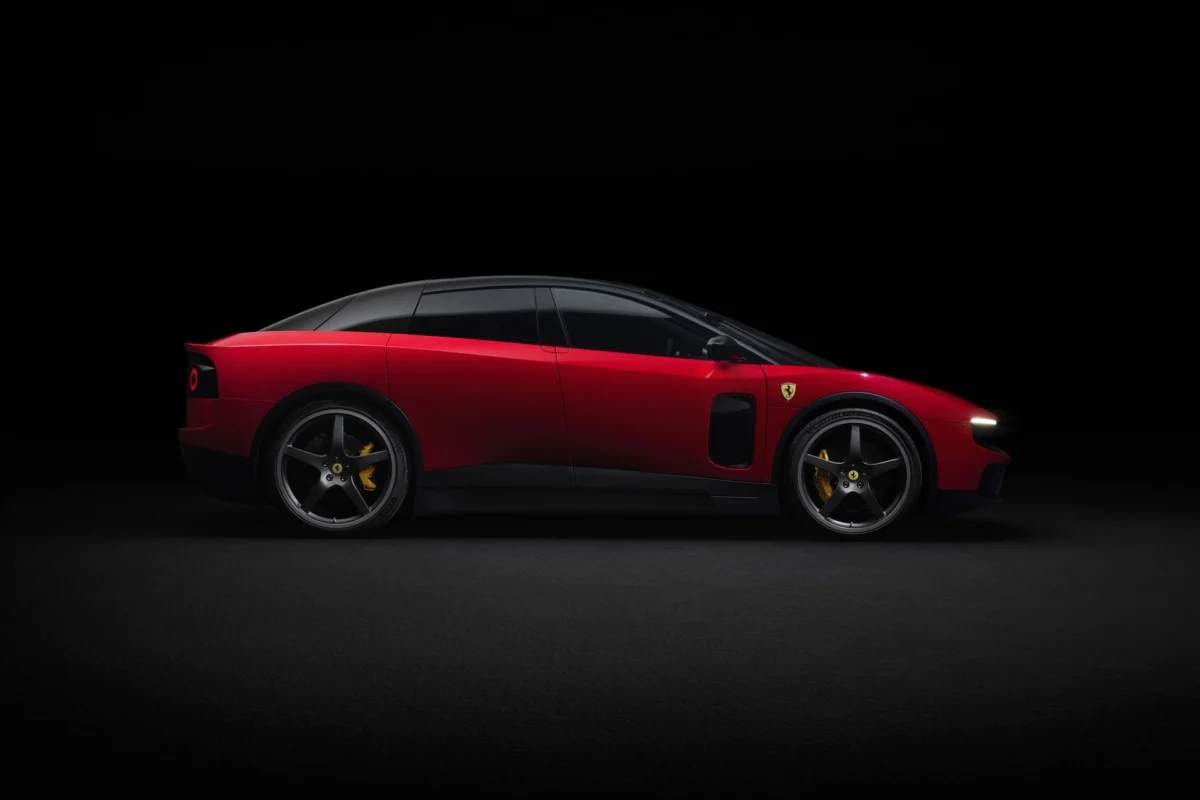
The automotive world has long held its collective breath, waiting for the day Maranello would bridge the gap between its storied internal combustion heritage and the inexorable rise of electrification. That day has officially arrived with the unveiling of the 2028 Ferrari Luce. By shedding the V12 roar for the silent, instant torque of a quad-motor electric powertrain, Ferrari is not just pivoting—it is attempting to redefine what it means to be a supercar in the modern age.
With a Canadian price tag of CDN$676,400, the Luce represents a significant financial barrier to entry, even by the lofty standards of exotic car ownership. Yet, as the first details regarding its performance, architecture, and pricing emerge, it is clear that Ferrari is betting on a future where performance and soul are not mutually exclusive, even when the fuel tank is replaced by a high-density battery.
Main Facts: The Anatomy of a Milestone
The 2028 Ferrari Luce is a radical departure from anything the brand has previously produced. While the silhouette retains the aggressive, aerodynamic sculpting synonymous with the Ferrari badge, the chassis and powertrain are entirely new territory.
At the heart of the Luce is a sophisticated four-motor all-electric architecture. By placing one motor at each wheel, Ferrari has achieved a level of torque-vectoring precision that mechanical systems simply cannot replicate. This "all-wheel-drive" EV system generates a staggering 1,035 horsepower, enabling the vehicle to sprint from zero to 100 km/h in a blistering 2.5 seconds.
Key specifications include:
- Powertrain: Quad-motor electric drive.
- Total Output: 1,035 horsepower.
- Battery Capacity: 122-kWh high-density lithium-ion pack.
- Range: Approximately 450 km (280 miles) under EPA testing standards.
- Seating Configuration: Five-seat layout—a rarity for the Maranello marque.
The inclusion of five seats is arguably the most controversial and significant design choice, signaling that the Luce is intended to be more than a track toy; it is designed to be a high-performance daily driver for the ultra-wealthy.
Chronology: The Road to the Luce
The development of the Luce did not happen in a vacuum. It is the culmination of a decade of strategic shifts within Ferrari’s R&D department.
- 2019-2021: Ferrari begins hinting at "alternative powertrains" during investor calls, emphasizing that hybrid and eventually electric vehicles would be necessary to meet global emission regulations without sacrificing performance.
- 2023: The "e-building" facility in Maranello is completed, dedicated exclusively to the production of high-performance electric motors, battery packs, and power inverters.
- Late 2025: Prototypes of the "Project Luce" are spotted testing in Northern Sweden and at the Nürburgring, confirming a quad-motor setup.
- October 2026: Ferrari officially confirms the name "Luce" and releases preliminary technical specifications.
- Late October 2026: Pricing for the North American market is confirmed at CDN$676,400.
- Q2 2027 (Projected): First North American customer deliveries are expected to commence.
This timeline reflects a disciplined, calculated approach to innovation, ensuring that the brand’s first EV meets the rigorous standards expected of a Ferrari before it ever reaches a customer’s driveway.
Supporting Data: Pricing and Market Positioning
When initial rumors of the Luce’s pricing began to circulate, there was widespread concern that the vehicle would be prohibitively expensive, with some estimates suggesting a price tag approaching the CDN$900,000 mark. These estimates were largely based on early European pricing projections.
However, the official reveal has brought a sigh of relief to the luxury market. At US$560,800 (CDN$676,400), the Luce enters the market roughly $80,000 cheaper than initial analyst predictions. While this is objectively expensive, it positions the Luce competitively against ultra-luxury competitors like the Rimac Nevera or the high-end electric variants of the Porsche Taycan and Lucid Air Sapphire.
The Canadian pricing structure highlights the complexity of international luxury vehicle sales. Despite the exchange rates and import variables, Ferrari has managed to keep the entry price within a range that makes it a viable, albeit exclusive, acquisition for the brand’s loyalists. However, Ferrari has yet to confirm how many units will be allocated to Canadian retailers, leaving potential buyers in a state of anxious speculation.
Official Responses and Strategic Implications
Ferrari’s leadership has been cautious yet optimistic about the transition to electrification. In official statements released alongside the pricing announcement, the company emphasized that the Luce is "not a concession to the future, but a conquest of it."
The Engineering Philosophy
Ferrari engineers have noted that the 122-kWh battery pack was selected specifically to balance weight and range. "We did not want to create an EV that weighed three tons," a spokesperson stated. By utilizing advanced carbon-fiber composites in the chassis construction, the Luce aims to maintain the nimble handling characteristics that define the Ferrari driving experience.
The Five-Seat Decision
The decision to include five seats has drawn significant attention. Critics argue that a Ferrari should be a focused, two-seat cockpit. However, the company argues that the Luce is designed for the "modern, multi-faceted owner." By offering more utility, Ferrari is positioning the Luce to take market share from the growing segment of high-performance electric SUVs and luxury sedans, proving that the brand can be versatile without losing its soul.
Implications for the Industry
The arrival of the 2028 Ferrari Luce is a bellwether for the exotic car industry. If Ferrari—a company built entirely on the prestige and mechanical symphony of internal combustion engines—can successfully pivot to electric, it effectively validates the EV format for the entire high-performance sector.
1. The Death of the "Slow Adoption" Narrative
For years, boutique supercar manufacturers argued that batteries were too heavy and lacked the emotional engagement required for high-end motoring. Ferrari’s investment in the Luce suggests they have solved the "engagement" problem, likely through synthetic sound generation and sophisticated chassis tuning that mimics the weight transfer of a gas engine.
2. The Infrastructure Challenge
With 1,035 horsepower on tap, the Luce is a power-hungry machine. The implication for owners is a massive investment in home-charging infrastructure. Ferrari has indicated it will offer bespoke "Ferrari Energy" home charging solutions, ensuring that the ownership experience remains premium from the road to the garage.
3. Residual Values and Collectability
Perhaps the most significant question for collectors is how an electric Ferrari will hold its value. Historically, Ferraris are investments. The Luce, being the first all-electric production model, is almost certain to become a "future classic" simply by virtue of its place in history. Whether it will experience the same appreciation as a 250 GTO or a LaFerrari remains to be seen, but its status as a "first" is a powerful driver for long-term value.
Conclusion: A New Horizon
The 2028 Ferrari Luce is more than just a car; it is a statement of intent. It proves that Maranello is not afraid of the electric transition, provided that the transition is executed on their terms. With a price point that positions it at the peak of the luxury market and performance figures that rival the fastest machines ever built, the Luce sets the stage for a new era.
As the second quarter of 2027 approaches, all eyes will be on the first test drives. Can the Luce truly capture the spirit of the Prancing Horse without a piston in sight? If the technical specifications are any indication, the answer is a resounding yes. Ferrari has taken the silent potential of the electric motor and, through sheer force of engineering, turned it into something that screams, even if you cannot hear it.
For the lucky few who secure an allocation, the Luce will not just be a vehicle; it will be the centerpiece of a new automotive history—a history that is fast, silent, and undeniably, distinctively Ferrari.
