

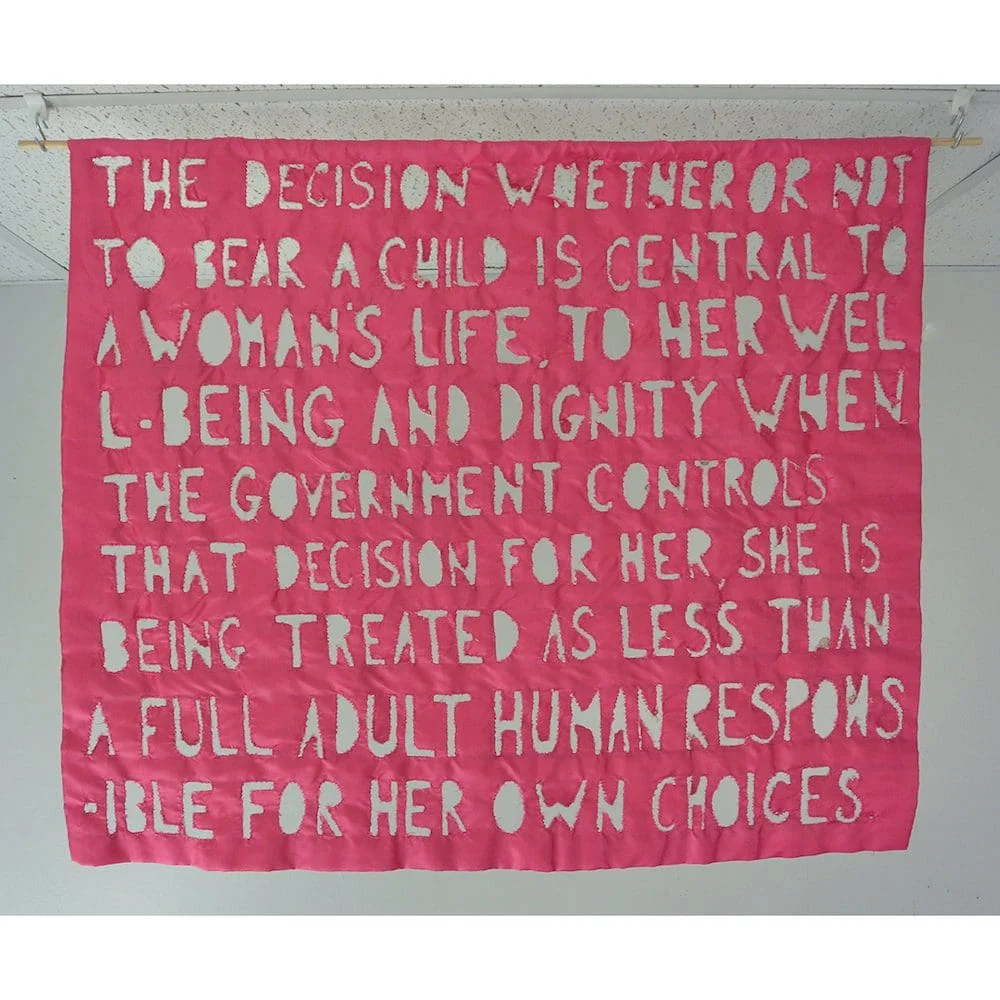
In the vibrant, evolving landscape of the Newark contemporary art scene, few voices resonate with the same tactile urgency as Patricia Dahlman. A featured artist in The Newark Museum of Art’s "Studio Snapshot" series, Dahlman has garnered attention for her intricate, mixed-media works that weave together social commentary, personal history, and the physical materiality of fabric and thread. Her work serves as a profound reflection on the current state of American civic life, transforming the domestic medium of sewing into a vehicle for political and social discourse.
The Intersection of Craft and Commentary: Main Facts
Patricia Dahlman’s practice is defined by its hybridity. She is not merely a fiber artist; she is a visual narrator who utilizes canvas, fabric, thread, and wood to construct three-dimensional "quotes" and cultural artifacts. Her creative process involves a meticulous transformation of everyday materials into statements of profound depth.
The centerpiece of her recent exposure at The Newark Museum of Art is a 2019 piece titled "Quote from Ruth Bader Ginsburg." Measuring 62" x 34" x 1", this work exemplifies Dahlman’s ability to imbue soft textiles with the weight of legal and societal legacy. By transposing the spoken words of the late Supreme Court Justice onto physical, sewn canvases, Dahlman forces the viewer to engage with the permanence of feminist advocacy and the fragility of the materials used to memorialize it.
Dahlman’s inclusion in the "Studio Snapshot" series highlights the museum’s commitment to fostering a dialogue between the institution and the local creative ecosystem. These short-form documentaries are designed to demystify the artistic process, allowing the public to enter the private sanctuaries where these complex works are conceived.
A Chronology of Artistic Development
To understand the trajectory of Dahlman’s work, one must look at the timeline of her development within the New Jersey arts community.
- Early Influences: Emerging from a tradition of fine art education, Dahlman initially focused on traditional painting. However, the limitation of the two-dimensional surface prompted a pivot toward sculpture and fiber arts in the early 2010s.
- The Transition to Textile: By the mid-2010s, Dahlman began experimenting with "soft sculpture," treating fabric as a sculptural medium that could be manipulated, layered, and stitched to create depth.
- The 2019 Breakthrough: The creation of the Ruth Bader Ginsburg piece marked a turning point in her career. It signaled a move toward explicitly political subject matter, connecting her private studio practice to the broader national conversation regarding gender equality and judicial integrity.
- 2021–2022: Institutional Recognition: The Newark Museum of Art began featuring her work in its digital initiatives, placing her at the forefront of the city’s post-pandemic cultural resurgence.
- 2024: The Studio Snapshot Series: Her featured role in the "Studio Snapshot" series confirms her status as a pivotal figure in Newark’s contemporary art scene, bridging the gap between historical influence and modern artistic innovation.
The Materiality of the Message: Supporting Data and Analysis
The physical nature of Dahlman’s work is not incidental; it is central to her message. In contemporary art, the use of fabric—long categorized as "craft" or "women’s work"—is a radical act of reclamation. When Dahlman stitches words into canvas, she is engaging in a process of endurance.
Data from the contemporary fiber art movement suggests a growing appreciation for this medium, with major institutions like the Whitney and the MoMA increasingly acquiring textile-based works for their permanent collections. Dahlman’s work aligns with this trend, yet she distinguishes herself through the sheer scale and architectural presence of her pieces.
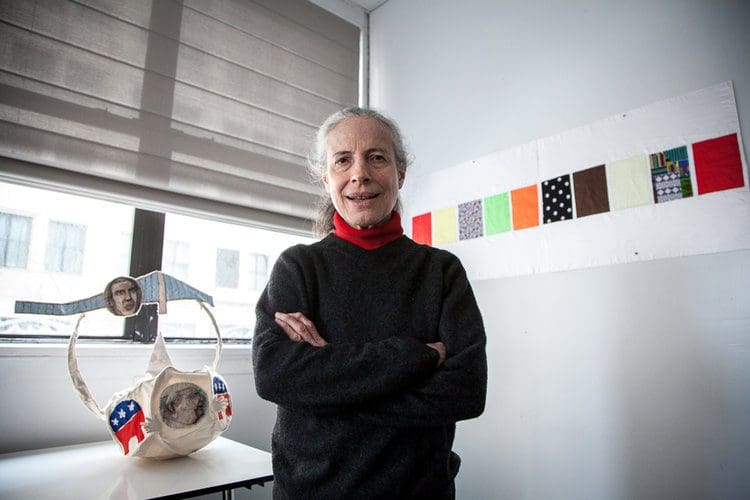
Her work often involves:
- Fabric Manipulation: The use of various weaves and textures to create a sense of movement within a static object.
- Structural Integrity: The incorporation of wood to provide a rigid skeletal structure for the soft textiles, a metaphor for the rigidity of laws and the softness of human life.
- Typography and Legibility: The challenge of rendering text through embroidery and appliqué, requiring a high level of technical proficiency and patience.
Perspectives and Official Responses
The Newark Museum of Art, through its ongoing documentation of local talent, has provided a platform for artists like Dahlman to contextualize their practice for a global audience. The "Studio Snapshot" series serves as a critical bridge. According to institutional statements, the series aims to "highlight the intersection of regional identity and global artistic movements."
"Patricia Dahlman’s work is a testament to the power of the artist’s hand in a digital age," notes one museum curator involved in the project. "By taking the words of leaders and the texture of the home, she creates a dialogue that is accessible yet intellectually rigorous."
Critics have noted that Dahlman’s work resonates particularly well within the Newark context—a city with a storied history of social activism and industrial production. Her ability to synthesize the "roughness" of urban life with the "softness" of her medium mirrors the dual nature of Newark itself: a city of grit and grace.
The Implications: Why Her Work Matters Now
The significance of Patricia Dahlman’s work extends far beyond the gallery walls. In a contemporary climate defined by rapid, often ephemeral digital discourse, her work offers a counter-narrative of permanence and physical engagement.
The Preservation of Memory
By memorializing quotes from figures like Ruth Bader Ginsburg, Dahlman is engaging in a form of visual archiving. In an era where information is fleeting and subject to revisionist history, the labor-intensive process of sewing these words into a permanent, tactile structure forces a slowing down of the viewing process.
The Reevaluation of Gendered Labor
Historically, the techniques Dahlman employs—embroidery, appliqué, and quilting—were relegated to the domestic sphere. By bringing these techniques into the realm of high art, she challenges the historical hierarchy of artistic mediums. This has significant implications for how we value labor, specifically the labor traditionally performed by women.

Regionalism in a Globalized World
Finally, Dahlman’s work underscores the importance of regional artistic hubs. While the global art market often focuses on New York or London, artists like Dahlman demonstrate that vital, innovative work is happening in cities like Newark. Her success is a victory for community-based art ecosystems that foster long-term growth rather than immediate market trends.
Conclusion: The Path Forward
As the arts community continues to navigate the complexities of the 21st century, artists like Patricia Dahlman will remain essential. Her work is a reminder that art is not just a visual experience but a physical and historical one. Through her commitment to the craft of the needle and the integrity of the message, she provides a roadmap for how contemporary artists can engage with the issues of their time without losing the intimacy of the studio.
For those interested in exploring her work further, the "Studio Snapshot" video remains an accessible entry point. It captures not just the finished products—the bold, structured canvases that command a room—but the process itself: the quiet, repetitive motion of the needle, the selection of color, and the intentional placement of thread.
In the final analysis, Patricia Dahlman’s practice is a call to action. It invites us to consider what we choose to stitch into our collective history and how we, as a society, choose to preserve the words and ideas that define our era. Whether displayed in the grand halls of The Newark Museum of Art or viewed through the digital lens of a laptop, her work remains a bold, tactile testament to the enduring power of the human spirit.
For more information on the current exhibitions and the Studio Snapshot series, visitors are encouraged to visit the official website of The Newark Museum of Art. The museum maintains strict privacy policies regarding site analytics, ensuring that the digital engagement of its patrons is handled with the same care that artists like Dahlman bring to their creative practice.
