

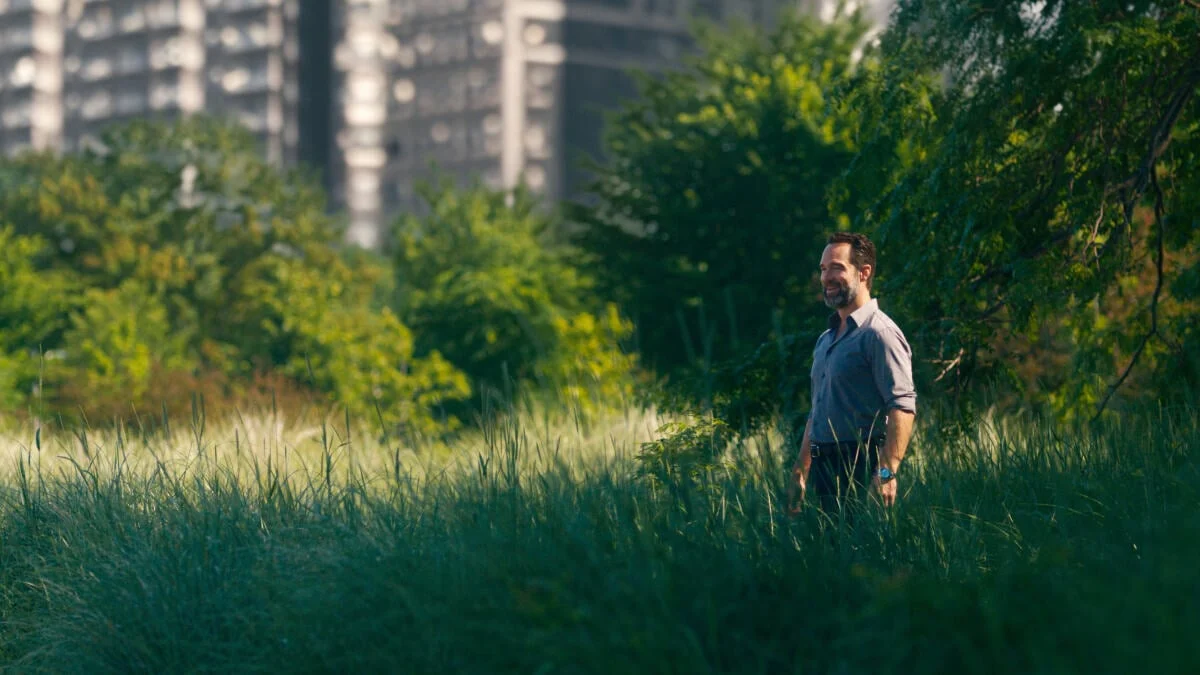
The second season of Blake Crouch’s mind-bending sci-fi odyssey, Dark Matter, has officially entered its endgame. While the debut season established the terrifying reality of the "Box"—a quantum gateway to infinite versions of the self—the current season has escalated the narrative stakes, transforming a singular story of displacement into a complex, multi-layered tapestry of existential dread. As we barrel toward the season finale, the penultimate ninth episode has left audiences reeling, offering a masterclass in tension, betrayal, and the high cost of playing god with the fabric of reality.
The narrative momentum has reached a fever pitch, with various iterations of Jason Dessen (Joel Edgerton) now competing for survival, dominance, or simple redemption across a sprawling multiverse. For those struggling to keep track of the diverging timelines and the tactical maneuvers of the series’ core cast, the events of episode nine represent the most significant shift in the power dynamic since the show’s inception.
A Chronology of Deception: The Siege of the Box
To understand the weight of the penultimate episode, one must revisit the fractured state of the protagonists. The episode’s primary focus settles on the grim reality of a "lost" Jason, a variant who has spent two grueling years as a captive of the Department of Defense. Under the relentless interrogation of Agent Mitchel MacNamara (Chris Diamantopoulos), this version of Jason has been subjected to psychological and physical torture, with MacNamara desperate to unlock the secrets of the Box.
The arrival of Daniela (Jennifer Connelly) into this specific reality—driven by her frantic search for their son, Charlie (Oakes Fegley)—functions as the episode’s catalyst. Her capture by MacNamara’s forces might have seemed like a death sentence, but it provided the necessary leverage for a desperate gambit.
The Shell Game
The turning point occurs when Daniela and the imprisoned Jason orchestrate a high-stakes ruse. Daniela, maintaining her composure despite the trauma of her displacement, convinces MacNamara that she possesses the "key" to the Box’s internal mechanisms. In a tense sequence, she leads the agent into the device under the guise of demonstrating its operation.
The "key" is, of course, a fabrication—a hollow shell hiding a syringe filled with the consciousness-altering compound required for inter-dimensional travel. The execution is swift and cold: once inside the transitional corridor, the pair neutralize MacNamara. They then subject him to a final, cruel irony, depositing him into a reality that is fundamentally incompatible with survival.
Supporting Data: The Anatomy of an Apocalyptic Reality
The visual language of Dark Matter has always been one of its strongest assets, but the destination chosen for Agent MacNamara represents a thematic peak. The world they discard him in initially appears to be a Utopian paradise—a tranquil Chicago beach scene where civilians gather in communal mourning or celebration.
However, the reality is far more sinister. The scene is a countdown. As the people on the beach reach the final seconds of their existence, Jason slams the door of the Box shut, leaving the agent to witness the inevitable: a rain of meteorites signaling total planetary annihilation. This is not merely a random hellscape; it is a manifestation of the trauma and nihilism that has plagued Jason throughout his confinement. It is a world he imagined while bouncing a ball against the reinforced glass of his cell, a testament to the idea that in an infinite multiverse, humanity’s darkest fantasies are bound to manifest as objective truths.
The Web of Implications: Where Do We Go From Here?
As the series approaches its final hour, the narrative board is littered with scattered pieces. The implications of the season’s trajectory suggest that a clean resolution is unlikely. The "original" Jason remains in the pre-tech version of Chicago, now collaborating with a coalition of survivors, including Ryan (Jimmi Simpson), Amanda (Alice Braga), and Blair (Amanda Brugel). Their mission is clear but daunting: the total destruction of the original Box to prevent further fracturing of reality.
Simultaneously, the stakes for the Dessen family have reached a breaking point:
- Daniela’s Arc: Now drifting between worlds with a version of Jason who has proven capable of lethal violence, Daniela is no longer the victim of her circumstances; she is a participant in the multiverse’s cruelty.
- Charlie’s Quest: Currently isolated in a reality where his twin brother, Max, is still alive, Charlie represents the emotional heart of the series. His story serves as a reminder of the human cost of these experiments—the pursuit of a "perfect" life is often just a pursuit of a different kind of grief.
- The Architects’ Remorse: Perhaps the most compelling subplot involves Leighton (Dayo Okeniyi) and the original inventor of the Box. Their creeping realization that they have unleashed a force that cannot be controlled or contained adds a layer of existential horror to the finale. They are no longer the masters of their invention; they are its first witnesses to the coming collapse.
Official Commentary and Critical Reception
While Apple TV+ has kept the specific beats of the finale under strict embargo, the production team has hinted at the "inevitability of consequences." Blake Crouch, whose source material serves as the bedrock for the series, has previously spoken about the theme of "the road not taken" as being central to the human experience.
"The show isn’t really about the technology," an insider close to the production noted. "The Box is a metaphor for the ‘what ifs’ that keep us up at night. The tragedy of the show is that even when you get to see those other versions of your life, you realize that none of them are truly ‘perfect.’ Every version of Jason and every version of Daniela carries the weight of their choices. By the end of this season, the question isn’t whether they can go home; it’s whether ‘home’ even exists anymore."
Critics have lauded the show for its refusal to provide easy answers. The decision to make the penultimate episode an exploration of the "lost" Jason’s trauma has been particularly praised, as it highlights the show’s willingness to focus on character development amidst high-concept sci-fi spectacle.
The Finale: A Convergence of Realities
The looming question for the series finale is how the showrunners intend to reconcile these divergent threads. Can the Box be destroyed, or is the damage to the multiverse permanent? Is there a version of the Dessen family that can truly reconcile with the events of the past two seasons, or is the entropy of the multiverse too great to overcome?
The tension currently surrounding the series is palpable. With new episodes dropping every Friday, the digital discourse has become a frenzy of fan theories, ranging from the hope of a heroic reunion to the grim expectation of a total, reality-resetting sacrifice.
As we look toward the final chapter, one thing remains certain: the characters of Dark Matter are no longer fighting for their lives in the traditional sense. They are fighting for the integrity of their own identities. In a universe where every version of you has lived a different life, who is the "real" you? And more importantly, does it matter if you are the only one left to remember?
The final countdown is on. Whether the characters find a way to anchor themselves back to a single, coherent reality or whether they are destined to wander the corridors of the infinite forever remains to be seen. One thing is certain: the end of Dark Matter Season 2 will be anything but quiet. It is the culmination of a journey that has pushed the boundaries of television sci-fi, asking viewers to confront the uncomfortable truth that our choices are the only thing that truly define the universes we inhabit.
As the meteorites fall on that lonely beach in the penultimate episode, we are reminded that in the world of Dark Matter, silence is often the loudest sound of all. The stage is set for a finale that promises to be as emotionally resonant as it is intellectually provocative. The Box is open, the doors are shifting, and the end—in all its infinite forms—is nearly here.
