

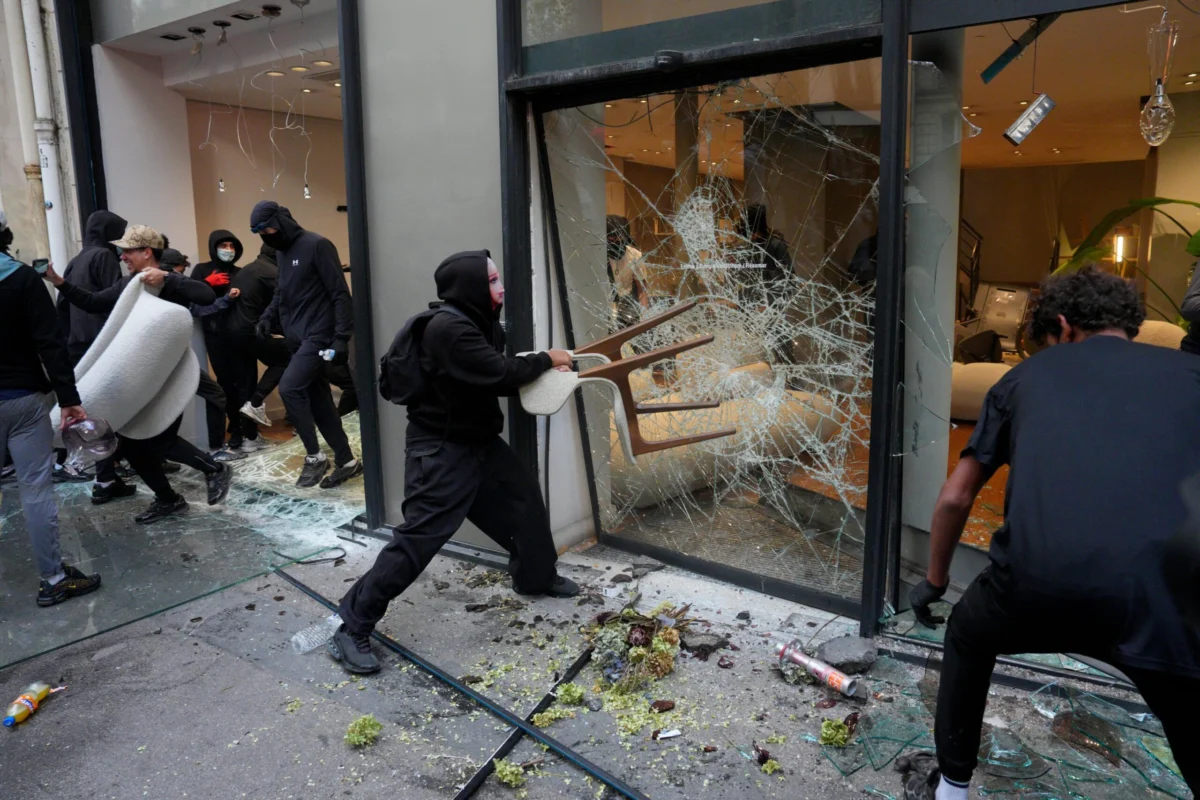
As France grapples with a combustible mix of political gridlock, an escalating national debt crisis, and systemic decay in its public education sector, the streets of Paris and beyond have become flashpoints for civil unrest. However, the chaos has birthed an unintended and lucrative secondary industry: the rapid, digital liquidation of looted retail goods. As protesters and opportunists target high-end storefronts, a new battlefront has opened in the virtual space, forcing government officials and global e-commerce giants into an uneasy alliance to scrub the internet of stolen merchandise.
The Anatomy of the Crisis: A Retail Sector Under Siege
The unrest that gripped France this past weekend saw more than 3,000 businesses damaged or looted, according to Commerce Minister Serge Papin. The scale of the destruction is staggering, with iconic shopping districts—most notably the Les Halles neighborhood in Paris—transformed into scenes of organized plunder. High-end retailers, including Hermès, North Face, and Louis Vuitton, were systematically stripped of inventory.
The transition from the physical street to the digital marketplace was almost instantaneous. Within hours of the windows being shattered, social media platforms and resale marketplaces began to see a surge in listings for luxury handbags, premium skincare, and high-end cosmetics. This rapid deployment of stolen goods onto the secondary market represents a sophisticated evolution in organized retail crime, where the "fence"—the traditional middleman who buys and sells stolen property—has been replaced by the frictionless, global reach of e-commerce algorithms.
A Chronology of Chaos and Crackdown
The timeline of this digital crime wave moved with alarming speed, reflecting the modern synchronization between civil unrest and opportunistic theft.
- October 17–18: Protests intensify across France. Widespread looting begins in major urban centers. Luxury boutiques and retail chains report mass inventory theft.
- October 19: Within hours of the initial looting, listings for high-end luxury goods begin appearing on platforms such as Vinted, Leboncoin, and eBay. Savvy observers note an unusual spike in "new with tags" luxury items priced well below market value.
- October 20: French Commerce Minister Serge Papin and Digital Minister Anne Le Hénanff, recognizing the digital nature of the crime, summon representatives from Vinted, Leboncoin, Amazon, Meta, and TikTok to an emergency videoconference.
- October 21: The French retail giant Carrefour officially slashes its fiscal 2026 profit outlook, citing riot-related losses of between €80 million and €200 million. The market reacts violently, wiping €1.7 billion off the company’s valuation.
- October 22: The French government prepares for the introduction of the "casseurs-payeurs" (rioters pay) bill, designed to hold participants in disruptive gatherings collectively liable for resulting damages.
The Economic Toll: Beyond the Broken Glass
The financial implications of the current unrest are profound and multifaceted. While the visual impact of smashed storefronts is what grabs headlines, the fiscal fallout is far more durable. Morningstar DBRS estimates that insured losses from the riots could reach €1.2 billion, a figure that assumes no further escalation in violence.
Carrefour’s 15% share price drop serves as a canary in the coal mine for the French retail sector. CEO Alexandre Bompard’s blunt assessment—that the damage is "considerable"—highlights the vulnerability of retail supply chains to civil disruption. When businesses are forced to shutter for safety or face mass inventory loss, the ripple effects are felt by shareholders, employees, and the national economy at large.
The broader context is an international crisis of retail crime. According to the security firm Pinkerton, organized retail crime is projected to balloon from a $45 billion problem in 2024 to a staggering $53 billion by 2027. This isn’t merely petty shoplifting; it is a complex, industrial-scale enterprise involving gift card fraud, sophisticated phone scams, and coordinated smash-and-grab operations. The British Independent Retailers Association (Bira) has estimated that as much as 60% of shoplifted goods are eventually funneled into the online secondary market, turning platforms intended for sustainable circular fashion into the primary distribution centers for criminal syndicates.
Official Responses and the "Casseurs-Payeurs" Legislation
The French government’s response has been both swift and punitive. President Emmanuel Macron, addressing the nation, promised that the state would track down those responsible, noting that the act of handling stolen goods in France is punishable by up to five years in prison and a fine of €375,000.
Beyond the criminal prosecution of individual looters, the French Senate is currently fast-tracking the "casseurs-payeurs" bill. Scheduled for debate on October 27, the legislation proposes a controversial collective liability clause. If passed, it would effectively make anyone participating in a protest that turns violent legally and financially responsible for the damages incurred, a move intended to deter the "opportunistic destruction" that has become a hallmark of the recent protests.
E-Commerce Platforms: The New Gatekeepers
At the emergency meeting held on October 20, the government extracted four key commitments from the major digital platforms:
- Direct Reporting: Platforms must report suspicious listings to law enforcement immediately.
- Algorithm Vigilance: Marketplaces are required to monitor for abnormally low prices, bulk lots of new items, and goods appearing with anti-theft tags still attached.
- Consumer Education: Sites must explicitly warn buyers that purchasing stolen goods is a criminal offense.
- Transparency: Platforms must publish weekly tallies of removed listings, with the first report due within 48 hours of the summit.
Vinted, Europe’s leading secondhand marketplace, has maintained a stance of "zero tolerance." In a statement to Fortune, a spokesperson noted that the company is actively collaborating with French authorities and adapting its internal processes to detect the patterns associated with this recent spike in luxury goods. Similarly, eBay has emphasized its use of advanced algorithms and data-driven tools designed to identify suspicious patterns, such as sudden volume spikes from new or untrusted seller accounts.
TikTok, which operates TikTok Shop, has taken a different approach by restricting consumer-to-consumer sales. The platform requires registered businesses to provide proof of legitimate acquisition—such as wholesaler certifications—and has established a dedicated task force to scrub suspicious videos that act as storefronts for stolen inventory.
The Dark Underbelly: Money Laundering and Financial Crime
While the immediate concern is the loss of retail goods, experts warn that the problem is deeply linked to systemic financial crime. Serpil Hall, a strategic advisor at Datos Insights, warns that the resale of stolen goods is frequently the final stage of a much larger, more dangerous money-laundering scheme.
"Looted items are often sold quickly, in bulk and below market price, and the proceeds move through payment accounts that are themselves a fraud problem," Hall explains. This process, often referred to as "cashing out," allows criminals to move illicit funds through traditional banking systems, credit card processors, and payment apps.
The scale of this issue is evidenced by the rise of "money mules"—individuals who, either knowingly or unknowingly, facilitate the movement of illegal funds. Europol’s recent "European Money Mule Action" identified over 10,000 such individuals in a single year, while the UK’s Financial Conduct Authority reported the closure of over 238,000 suspicious accounts in 2025 alone.
Conclusion: A Paradigm Shift for Digital Retail
The current crisis in France has exposed a critical vulnerability in the digital economy. As retail criminals become more sophisticated, the line between legitimate secondhand commerce and the "digital fence" has blurred.
For e-commerce giants, the challenge is clear: they can no longer remain neutral hosts for user-generated listings. They must become active participants in the policing of their own platforms. The government’s move to mandate transparency and reporting signifies a shift in the regulatory landscape, where the convenience of the digital marketplace is being balanced against the imperative of maintaining law and order.
As the French Senate prepares to debate the "casseurs-payeurs" bill, the world will be watching to see if a combination of strict liability laws and increased digital oversight can stem the tide of a crisis that has turned the simple act of selling a used handbag into a high-stakes encounter with organized crime. For now, the lesson is clear: in an age of instant, global digital commerce, the cost of civil unrest is no longer limited to the street level—it is a bill that will be paid by the entire digital economy.
