

Bentonville, AR – October 21, 2026 – In a significant stride towards integrating artificial intelligence into the fabric of online shopping, Walmart is rolling out a suite of new tools designed to give consumers unprecedented control over AI-driven purchases. This initiative aims to foster trust and transparency in the burgeoning field of agentic commerce, ensuring that shoppers remain firmly in the driver’s seat as AI agents become increasingly sophisticated in their ability to shop on their behalf.
The retail giant announced on Wednesday that it is implementing new features that allow customers to oversee, streamline, and set explicit boundaries for AI agent purchases across both Walmart and Sam’s Club digital platforms. This proactive approach acknowledges that while the convenience of AI shopping is appealing to many, a significant portion of consumers may approach it with caution. Walmart’s stated goal is to establish its platform as the "most trusted" experience in agentic commerce by embedding robust safeguards into the shopping journey.
This strategic move builds upon Walmart’s existing investments in AI, which include its proprietary AI shopping assistant, Sparky, and integrations with leading AI models like Meta’s Muse, OpenAI’s ChatGPT, and Google’s Gemini. By prioritizing user control, Walmart seeks to demystify AI shopping and encourage broader adoption, while simultaneously preparing its vast marketplace sellers for the evolving landscape of AI-powered product discovery.
The Dawn of Agentic Commerce: A New Era of Shopping
Agentic commerce refers to a paradigm where AI agents act autonomously on behalf of consumers to perform complex tasks, such as researching products, comparing prices, and executing purchases. This represents a significant evolution from traditional e-commerce, where human users directly interact with websites and applications. The potential benefits are immense, promising hyper-personalized shopping experiences, increased efficiency, and the ability to offload tedious tasks. However, concerns surrounding data privacy, security, and the potential for unauthorized spending have cast a shadow over its widespread adoption.
Walmart’s latest announcement directly addresses these concerns, positioning the company as a leader in responsible AI integration within the retail sector. By providing granular control mechanisms, Walmart is not only aiming to alleviate customer apprehension but also to set a new industry standard for ethical AI commerce.
Agent Profiles: Putting Shoppers in Command
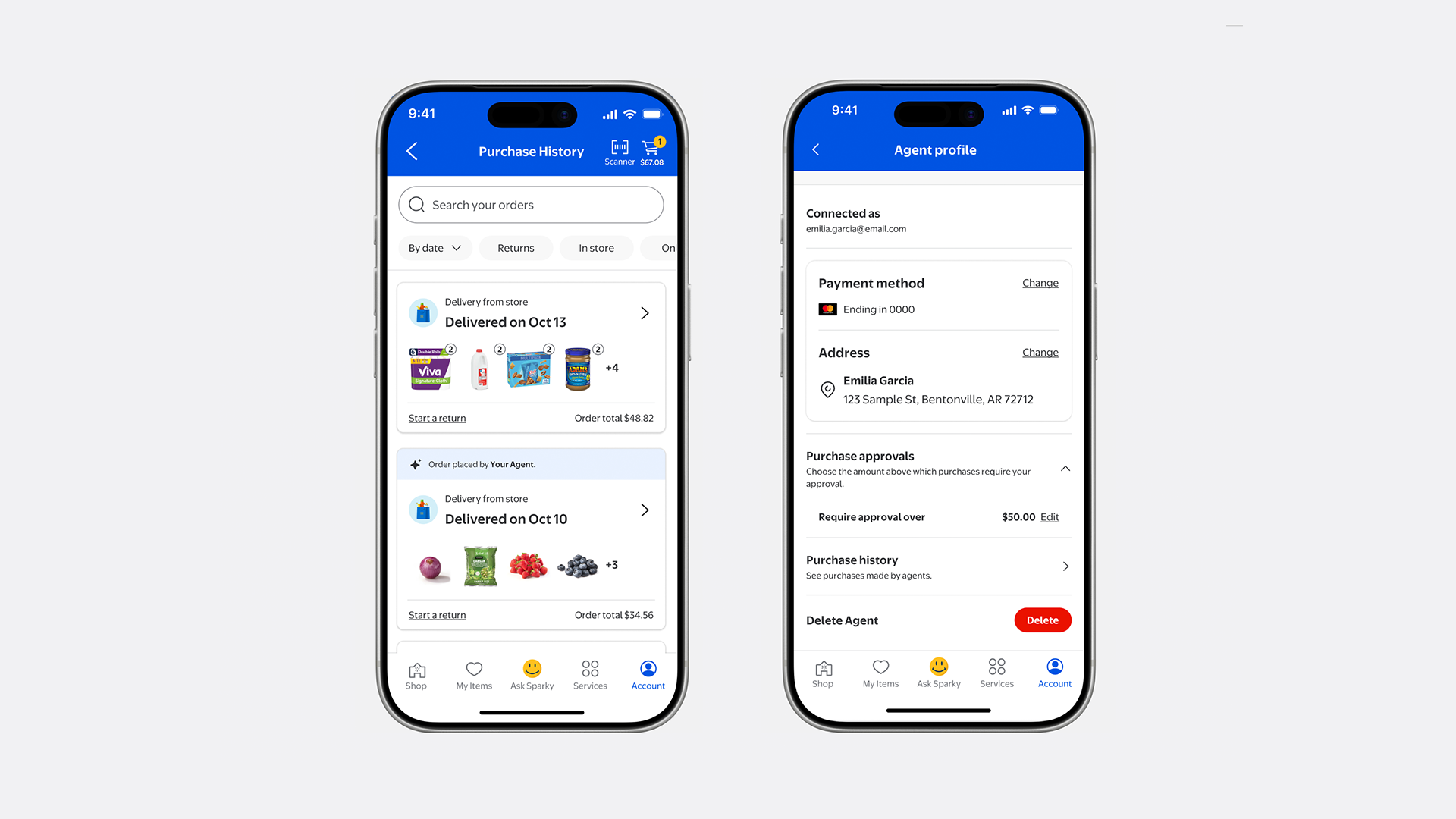
At the heart of Walmart’s new offering are "Agent Profiles," a feature designed to create a clear distinction between purchases made by a human shopper and those executed by an AI agent. Currently, AI-generated transactions are often indistinguishable from a customer’s own orders, leading to potential confusion and a lack of oversight. Agent Profiles will rectify this by enabling dedicated profiles for each AI agent linked to a customer’s account.
Daniel Danker, Walmart’s Executive Vice President of AI Acceleration, Product, and Design, explained the significance of this development in a LinkedIn post. "Customers can approve purchases, set spending limits, and see which purchases were made by an agent," Danker stated, highlighting the core functionalities of the new system. This granular control empowers shoppers to tailor the AI’s capabilities to their comfort level.
Key functionalities of Agent Profiles include:
- Purchase Approval: Shoppers can opt to review and approve each AI-generated purchase individually before it is finalized. This offers the highest level of oversight and ensures that no transaction occurs without explicit customer consent.
- Spending Limits: For those who prefer a more automated yet still controlled experience, Agent Profiles allow customers to set predefined spending limits. For example, a shopper could authorize an AI agent to spend up to $50, $100, or $200 on a particular shopping trip or for specific categories of goods. This acts as a financial safeguard, preventing unexpected overspending.
- Transaction Visibility: All purchases made by an AI agent will be clearly demarc
