

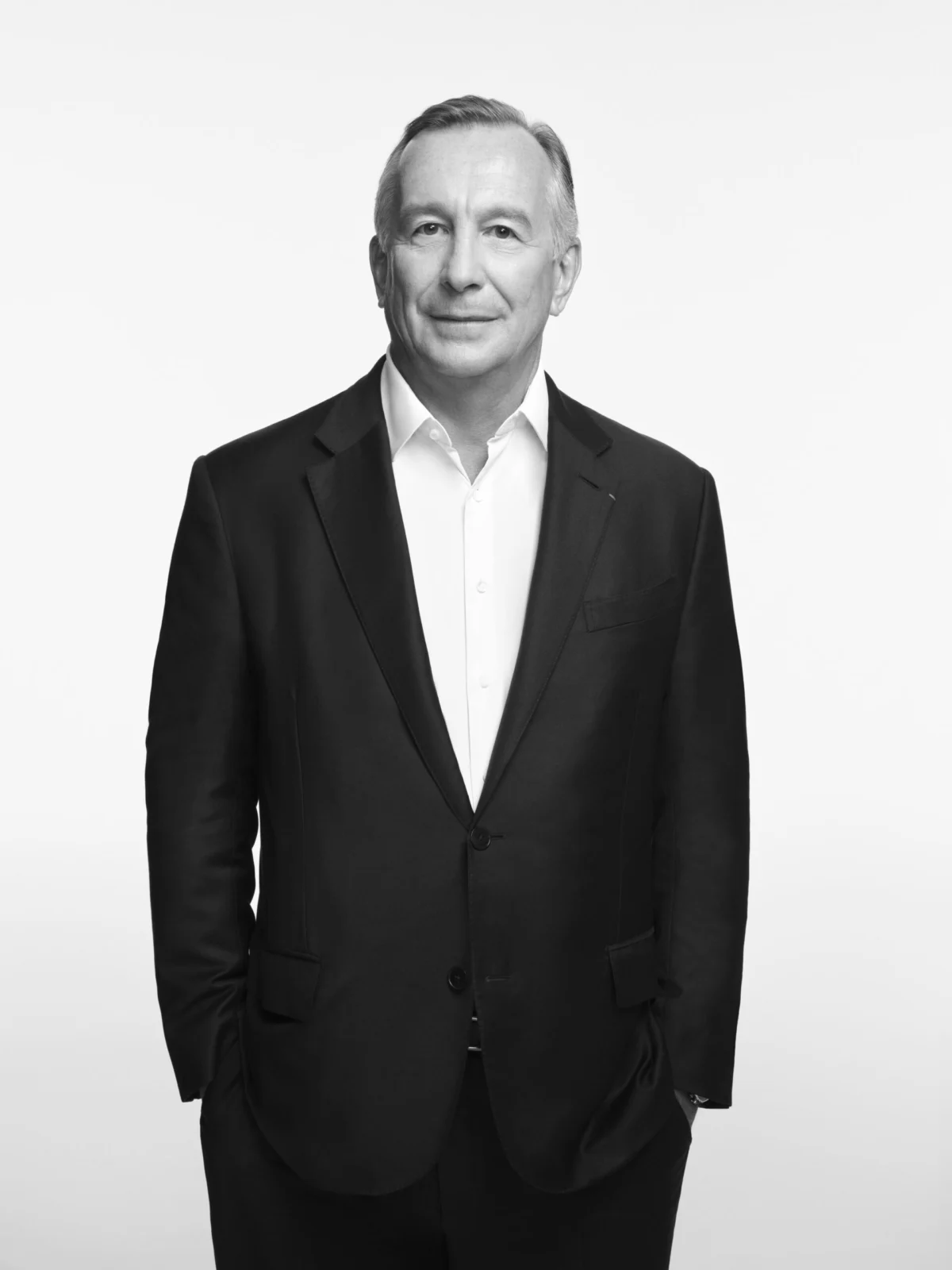
PARIS — In a move that signals the final stages of a multi-year corporate restructuring, Chanel has announced that Bruno Pavlovsky, one of the most influential figures in global luxury, has resigned from the board of Chanel Limited. While the departure from the board marks a significant shift in the house’s governance structure, the company was quick to clarify that Pavlovsky will retain his pivotal operational roles as President of Fashion at Chanel and President of Chanel SAS.
The transition comes at a time of immense change for the privately held fashion house, which has spent the last five years professionalizing its leadership under the direction of the Wertheimer family and Global CEO Leena Nair. As the last of a "golden generation" of executives who worked alongside the late Karl Lagerfeld, Pavlovsky’s shift away from board-level governance reflects a broader industry trend toward independent oversight and modernized corporate agility.
The Strategic Shift: Independent Oversight and Executive Focus
The resignation, confirmed by Chanel in a statement to WWD on Thursday, is described not as an exit, but as the "completion of the board’s evolution." According to the house, the goal of this restructuring has been to cultivate a board comprised of independent directors who can provide diverse external expertise and objective perspectives.
By moving away from a board dominated by long-term internal executives, Chanel aims to align itself with the governance standards of the world’s largest publicly traded luxury conglomerates, such as LVMH and Kering, while remaining a private entity. The board will continue to retain executive representation through its most senior leadership: Global Executive Chairman Alain Wertheimer and Global Chief Executive Officer Leena Nair.
“Bruno Pavlovsky remains fully committed to his role as president of Chanel’s fashion activities and president of Chanel SAS,” the company stated. This ensures that while the high-level governance becomes more independent, the day-to-day operational brilliance that has defined Chanel’s fashion division for two decades remains under Pavlovsky’s seasoned stewardship.
Chronology: Three Decades of Influence
To understand the weight of this transition, one must look at Pavlovsky’s trajectory within the house—a career that spans the most transformative period in the history of modern luxury.
- 1990: The Beginning: Pavlovsky joined Chanel from the consulting firm Deloitte. He arrived at a time when the luxury industry was beginning to shift from niche European craft to a globalized powerhouse.
- 2004: Ascending to the Helm: After fourteen years within the organization, Pavlovsky was named President of Chanel’s fashion division. In this role, he became the business architect behind the creative visions of the house’s artistic directors.
- The Lagerfeld Era: For fifteen years, Pavlovsky worked in lockstep with Karl Lagerfeld, navigating the brand through a period of unprecedented growth. He was instrumental in scaling the "Métiers d’Art" shows and expanding Chanel’s retail footprint globally.
- 2019: The Transition: Following Lagerfeld’s passing, Pavlovsky managed the seamless transition to Virginie Viard, ensuring brand stability and continued double-digit growth during a period of mourning and industry uncertainty.
- 2021: The Arrival of Leena Nair: The appointment of the former Unilever executive as Global CEO signaled a new chapter. Pavlovsky became the bridge between the "old guard" and Nair’s new vision for a more inclusive, digitally savvy, and structurally modernized Chanel.
- 2022–2024: Industry Leadership: Pavlovsky’s influence extended beyond Chanel when he was elected President of the Fédération de la Haute Couture et de la Mode (FHCM) in 2022, a post he was re-elected to in July 2024.
- 2025: The Blazy Era: Pavlovsky oversaw the debut of Matthieu Blazy as Creative Director, further cementing his role as the ultimate curator of the brand’s creative lineage.
Supporting Data: Financial Resilience and Market Performance
The governance changes at Chanel are taking place against a backdrop of robust financial performance, even as the broader luxury market faces headwinds.
In 2025, Chanel reported revenues of $19.3 billion, a 3 percent increase at reported exchange rates. While this represented a modest 1.8 percent increase in comparable terms, the house’s long-term strategy appears to be paying dividends.
Early reports for the first half of 2026 suggest a significant acceleration. Unconfirmed data indicates that comparable sales rose by 16 percent during the first six months of 2026. Analysts attribute this surge to the successful commercial reception of Matthieu Blazy’s inaugural collections, which have reportedly resonated with both the brand’s traditional "VICs" (Very Important Clients) and a younger demographic seeking "quiet luxury" with an avant-garde edge.
Furthermore, Pavlovsky’s oversight of the "Le19M" project—Chanel’s 25,500-square-meter craftsmanship hub in Northern Paris—has solidified the brand’s supply chain. By centralizing the house’s various specialty ateliers (lesage, lemarié, lognon, etc.), Pavlovsky has protected the artisanal skills that justify Chanel’s premium pricing strategy.
Official Responses and Corporate Context
The company’s official communication emphasizes continuity. The messaging suggests that Pavlovsky’s move allows him to focus more deeply on the "creative-business" nexus—managing the relationship between the design studio and the global markets—without the administrative burdens of a statutory board seat.
Industry insiders view this as a graceful part of the succession plan initiated by the Wertheimer family five years ago. The Wertheimers, known for their extreme privacy and long-term thinking, have been slowly pivoting the company to ensure it can thrive for another century.
The departure of other veterans, such as John Galantic (who served as President and COO of Chanel Inc. for nearly two decades), indicates that Leena Nair is successfully installing a new leadership tier. However, Pavlovsky’s retention of his operational titles suggests he remains indispensable to the "magic" of the fashion division.
Implications: What This Means for Chanel and the Industry
The implications of Pavlovsky’s resignation from the board are threefold:
1. The Modernization of the "Independent" Board
Chanel is signaling to the financial and luxury worlds that it is no longer a "family business" in the traditional sense. By populating the board with independent directors, it gains access to expertise in technology, sustainability, and global geopolitics that internal executives may not possess. This makes the company more resilient to global economic shifts.
2. Safeguarding the Creative Legacy
By keeping Pavlovsky as President of Fashion and Chanel SAS, the brand ensures that the "soul" of the house remains intact. Pavlovsky is the primary keeper of the brand’s history and its relationship with the French government. His role at the FHCM and his recognition by President Emmanuel Macron as an Officer of the French Order of Merit make him a de facto ambassador for French culture. His presence ensures that even as the board modernizes, the brand’s Parisian heritage will not be diluted.
3. The "Blazy" Factor
The reported 16 percent jump in sales following Matthieu Blazy’s arrival suggests that Pavlovsky’s most recent creative gamble is paying off. Managing a creative director transition is one of the most high-stakes tasks in luxury. Pavlovsky’s continued focus on fashion operations suggests he will be the primary mentor and protector of Blazy’s vision, much as he was for Lagerfeld and Viard.
4. A Model for Succession
The fashion industry has often struggled with "founder syndrome" or the "veteran vacuum"—where the departure of long-term leaders causes a collapse in brand identity. Chanel’s slow, deliberate approach to Pavlovsky’s transition serves as a blueprint for other heritage houses. It allows for the infusion of new leadership (Nair) while retaining the institutional memory (Pavlovsky).
Conclusion: The Guardian of the Camellia
At 63, Bruno Pavlovsky remains at the height of his influence. His resignation from the board of Chanel Limited is not a sunsetting of his career, but rather a refining of his focus. By stepping away from the board, he provides the space for Chanel’s governance to evolve into a modern, transparent entity. By remaining at the head of Fashion, SAS, and Le19M, he ensures that the craftsmanship, the runway spectacles, and the commercial dominance of the brand remain unchallenged.
As Chanel moves into the latter half of the 2020s, the "Pavlovsky-Nair" partnership will be the defining force in whether the house can maintain its status as the ultimate arbiter of luxury in an increasingly volatile global market. For now, the numbers suggest that the strategy of "evolution without disruption" is working.
